


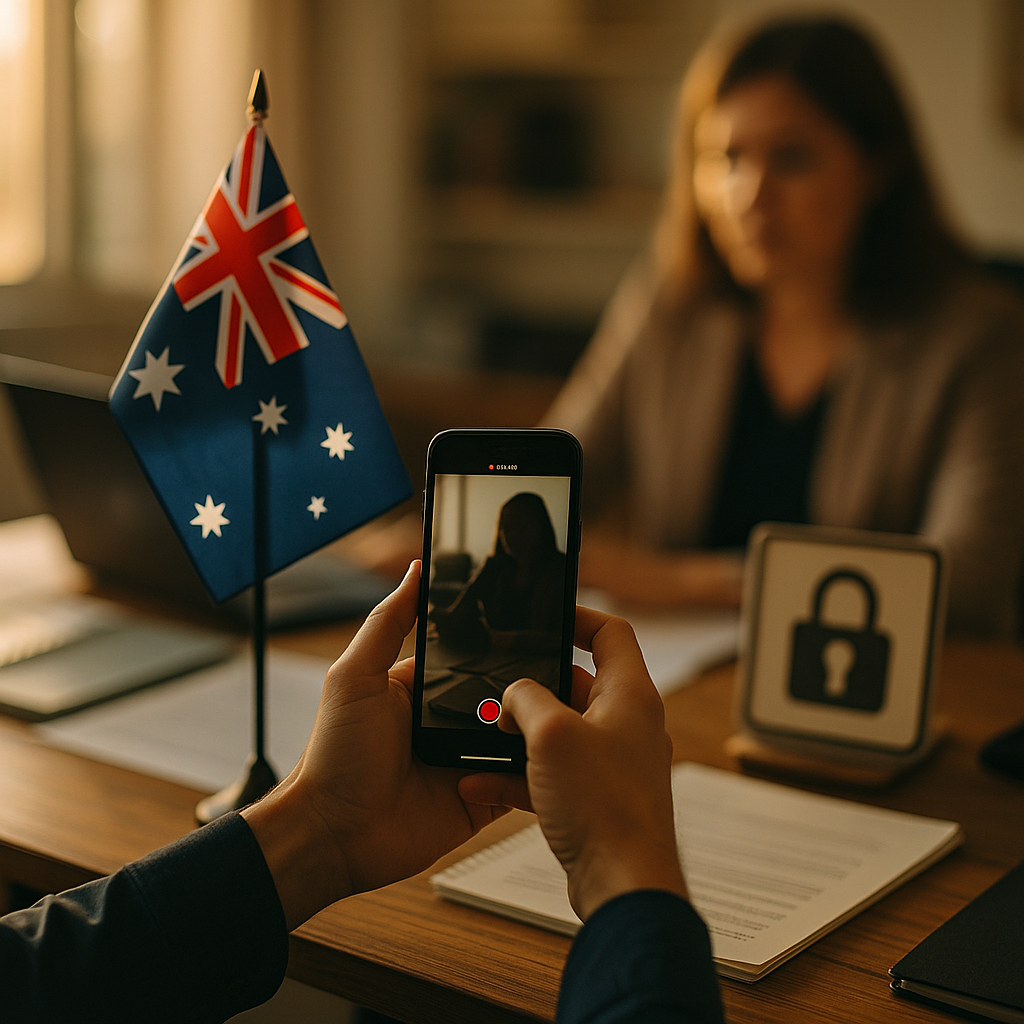
Australia’s eSafety Commissioner can now impose penalties exceeding AUD 782,500 per day for serious non-compliance under the Online Safety Act. If your brand runs creator programs touching Australian audiences, that number should be in your risk register today.
What Changed — and Why Global Brands Are the Ones Exposed
The expansion of the eSafety Commissioner’s enforcement powers isn’t a minor regulatory tweak. It represents a structural shift in how Australia treats platform accountability, and it drags brand advertisers into the frame more directly than most legal teams have acknowledged. The doubled civil penalty units, combined with expanded enforcement scope across social platforms, mean that a poorly structured creator campaign promoting age-restricted products to Australian audiences now carries quantifiable financial exposure at the campaign level, not just reputational risk.
Global brands with APAC creator programs often assume that liability stops at the platform. It doesn’t. If your brand brief instructs a creator to post content without verifying audience composition, or if your media buy amplifies that content to unverified minors, your campaign architecture itself becomes the compliance failure point.
Under the expanded eSafety framework, brand advertisers can no longer treat age-verification as a platform-side responsibility. The obligation now extends to how campaign briefs are structured, how creators are contracted, and how paid amplification is targeted.
This matters especially for categories like alcohol, gaming, financial services, and supplements — sectors where Australian regulatory appetite for enforcement is already demonstrated. But any brand using creator content to drive awareness or conversion in the Australian market needs to treat this as a live compliance issue, not a legal team back-burner item.
Platform Age-Verification Audits: What Your APAC Stack Actually Needs
Most brand-side platform audits for APAC focus on content localization and community management SLAs. That’s no longer sufficient. A platform age-verification audit for the Australian market now needs to assess three specific dimensions.
First, platform-level age assurance status. Meta, TikTok, Snapchat, and YouTube each operate different age-verification and age-estimation frameworks. None are fully standardized to eSafety’s preferred age assurance models. You need documented evidence of what each platform’s current verification capability is, what gaps exist, and how those gaps interact with your content categories. For brands running creator compliance programs across multiple platforms simultaneously, this is especially complex because the same content may face different risk profiles depending on which platform it lives on.
Second, paid amplification targeting parameters. Organic creator posts carry lower direct brand liability than paid dark posts or boosted content. When your brand uses creator content as paid media inventory, your targeting configuration becomes a documented compliance artifact. Age-floor settings, interest-based exclusions, and lookalike audience seed data all need to be audited against Australian population segments. The eSafety Commissioner’s guidance specifically addresses content that is “likely to be accessed” by minors, which pulls paid targeting into scope.
Third, creator audience demographics on file. This is where most programs have the largest gap. If you cannot produce documented audience data showing the age composition of a creator’s Australian followers at the time of contract execution, you have no defensible basis for asserting the campaign was not targeting minors. Platforms like TikTok for Business and Meta Business Suite provide audience insights at the creator level for formal partnerships. That data needs to be captured, stored, and tied to the campaign record.
Campaign Architecture Adjustments That Reduce Structural Exposure
Compliance in this environment isn’t just about saying no to certain creators. It’s about building campaign structures that create auditable evidence trails.
Start with content category classification. Every brief sent to an APAC creator should carry an explicit content category designation tied to Australian regulatory sensitivity. This classification should trigger automatic review gates: does this category require age-restricted distribution? Does the creator’s audience composition support that restriction? Can the platform enforce it at the placement level?
Separate organic and paid amplification workflows. Many brands treat creator-generated content as a single asset that flows freely between organic posting and paid media. Under the expanded eSafety framework, this single-asset model creates problems. A creator posting organically to their own audience is different from your brand paying to extend that content to a broader, less-verified audience. Those two use cases need separate compliance sign-off, and your campaign management platform needs to enforce that separation structurally, not just as a documented policy.
For brands already navigating similar issues in other markets, the EU and UK youth safety rules provide a useful parallel framework. The underlying logic, that brands bear responsibility for the targeting architecture of their campaigns regardless of platform-side controls, is consistent. Australia’s enforcement posture is arguably more aggressive on timelines and penalty stacking.
Rewriting Creator Agreement Language for the Doubled-Penalty Environment
Standard creator agreements for APAC programs were not drafted with eSafety enforcement exposure in mind. Most contain disclosure obligations, content approval rights, and basic compliance warranties. None of that is sufficient now.
Four clauses need immediate attention.
- Audience composition representation: The creator must warrant, at the time of contract execution, that their Australian audience skews above the applicable age threshold for the content category. This isn’t just a declaration — it should require the creator to provide platform analytics screenshots as an exhibit to the agreement.
- Notification obligation: If the creator’s audience composition changes materially during the contract term, they must notify the brand within a defined window. This clause matters because audience demographics on fast-growing accounts can shift quickly.
- Age-restricted content prohibition: The agreement should define which content categories are prohibited from organic or paid Australian distribution without prior written approval and documented age-verification confirmation from the brand’s compliance team.
- Indemnification alignment: If the creator’s failure to disclose accurate audience data results in an eSafety enforcement action, the indemnification structure in the agreement needs to reflect where liability actually sits. A boilerplate indemnity clause that was designed for FTC disclosure failures won’t map cleanly to Australian civil penalty exposure.
For a broader look at how creator contract language needs to evolve across enforcement environments, the framework around restructuring creator studio contracts is worth reviewing. The Australian context adds a layer of regulatory specificity, but the structural contract logic carries over.
Similarly, the cross-border creator compliance checklist is a useful operational tool for brands running programs across multiple APAC markets simultaneously, where Australian obligations sit alongside comparable frameworks in New Zealand, Singapore, and Hong Kong.
A creator agreement that was adequate for FTC and ASA compliance is not adequate for Australia’s expanded eSafety enforcement environment. The penalty quantum is different. The documentation requirements are different. The contract needs to reflect that.
The Operational Reality: Who Owns This Inside Your Organization?
This is the question that determines whether any of the above actually gets implemented. In most global brand organizations, eSafety compliance for creator programs sits in a gap between the legal team (who know the regulations), the influencer marketing team (who run the programs), and the paid media team (who control the amplification). Nobody owns the intersection.
Assigning a named compliance lead for APAC creator programs is not optional at this penalty level. That person needs authority to pause campaigns, pull creator approvals, and modify paid targeting configurations without waiting for a committee cycle. They also need a documented escalation path to legal counsel with Australian regulatory expertise, not just a general external counsel relationship.
The creator program risk audit framework provides a structural model for how to build this ownership model into your program governance. Adapt it specifically for the eSafety context by adding age-verification checkpoints at the creator approval, brief distribution, content review, and paid amplification stages. Each checkpoint should produce a documented artifact. In an enforcement action, documentation is the difference between a resolved inquiry and a penalty notice.
For brands already tracking comparable eSafety age-blocking requirements for APAC, integrate the doubled-penalty enforcement parameters into your existing compliance calendar now rather than treating this as a separate workstream.
The Australian Communications and Media Authority and the Online Safety Act text remain the primary source documents for understanding how enforcement discretion will be exercised. Read them in conjunction with eSafety’s published compliance guidance, not as substitutes for it.
Start Here: The 30-Day Action List
Pull every active APAC creator agreement and flag contracts lacking audience composition warranties. Run a paid amplification audit against your current Australian targeting configurations. Brief your influencer marketing team on what “documented age-verification” means operationally before your next campaign cycle launches. Those three actions, done in the next 30 days, move you from exposed to defensible.
Frequently Asked Questions
Who does Australia’s eSafety Commissioner enforcement actually apply to?
The eSafety Commissioner’s enforcement powers under the Online Safety Act apply to online service providers and, in the context of brand-sponsored content, to any party that causes or materially contributes to content reaching Australian audiences. Global brands that pay creators to distribute content targeting Australian users, or that use paid media to amplify creator content to Australian audiences, sit within the enforcement perimeter — not just the social platforms themselves.
What counts as an age-verification failure for a brand campaign?
An age-verification failure, from a campaign compliance perspective, occurs when a brand cannot produce documented evidence that age-restricted content was distributed in a manner that reasonably prevented access by minors. This includes situations where creator audience demographics weren’t documented at contract execution, where paid amplification targeting didn’t include age-floor restrictions, or where content category classifications weren’t applied to trigger the appropriate review process.
Do these obligations apply to micro-influencers and nano-creators, or only large accounts?
There is no follower-count threshold in the eSafety framework that exempts smaller creators from brand compliance obligations. If your brand is paying a creator, regardless of their audience size, you have a compliance obligation relative to the content distributed and the audience it reaches. In practice, micro-creator programs require more operational infrastructure to manage this compliance at scale, not less.
How should brands handle creators who refuse to provide audience demographic data?
A creator’s refusal to provide audience demographic data is itself a compliance signal. For age-sensitive content categories, brands should treat the absence of documented audience data as grounds to either exclude the creator from the program or restrict their content to non-age-sensitive campaign formats. Including this requirement explicitly in the contract, with a data-provision deadline, creates a legally documented basis for those decisions.
Are there parallel obligations in other APAC markets brands should be aware of?
Yes. Singapore’s IMDA content standards, New Zealand’s Harmful Digital Communications Act, and South Korea’s youth protection laws all create comparable, though not identical, obligations for brand-sponsored creator content. The Australian eSafety framework is currently among the most aggressively enforced, but brands running regional APAC programs should treat each market’s youth safety and online safety obligations as distinct compliance requirements, not a single unified framework.
Top Influencer Marketing Agencies
The leading agencies shaping influencer marketing in 2026
Agencies ranked by campaign performance, client diversity, platform expertise, proven ROI, industry recognition, and client satisfaction. Assessed through verified case studies, reviews, and industry consultations.
Moburst

-
2

The Shelf
Boutique Beauty & Lifestyle Influencer AgencyA data-driven boutique agency specializing exclusively in beauty, wellness, and lifestyle influencer campaigns on Instagram and TikTok. Best for brands already focused on the beauty/personal care space that need curated, aesthetic-driven content.Clients: Pepsi, The Honest Company, Hims, Elf Cosmetics, Pure LeafVisit The Shelf → -
3

Audiencly
Niche Gaming & Esports Influencer AgencyA specialized agency focused exclusively on gaming and esports creators on YouTube, Twitch, and TikTok. Ideal if your campaign is 100% gaming-focused — from game launches to hardware and esports events.Clients: Epic Games, NordVPN, Ubisoft, Wargaming, Tencent GamesVisit Audiencly → -
4

Viral Nation
Global Influencer Marketing & Talent AgencyA dual talent management and marketing agency with proprietary brand safety tools and a global creator network spanning nano-influencers to celebrities across all major platforms.Clients: Meta, Activision Blizzard, Energizer, Aston Martin, WalmartVisit Viral Nation → -
5

The Influencer Marketing Factory
TikTok, Instagram & YouTube CampaignsA full-service agency with strong TikTok expertise, offering end-to-end campaign management from influencer discovery through performance reporting with a focus on platform-native content.Clients: Google, Snapchat, Universal Music, Bumble, YelpVisit TIMF → -
6

NeoReach
Enterprise Analytics & Influencer CampaignsAn enterprise-focused agency combining managed campaigns with a powerful self-service data platform for influencer search, audience analytics, and attribution modeling.Clients: Amazon, Airbnb, Netflix, Honda, The New York TimesVisit NeoReach → -
7

Ubiquitous
Creator-First Marketing PlatformA tech-driven platform combining self-service tools with managed campaign options, emphasizing speed and scalability for brands managing multiple influencer relationships.Clients: Lyft, Disney, Target, American Eagle, NetflixVisit Ubiquitous → -
8

Obviously
Scalable Enterprise Influencer CampaignsA tech-enabled agency built for high-volume campaigns, coordinating hundreds of creators simultaneously with end-to-end logistics, content rights management, and product seeding.Clients: Google, Ulta Beauty, Converse, AmazonVisit Obviously →