


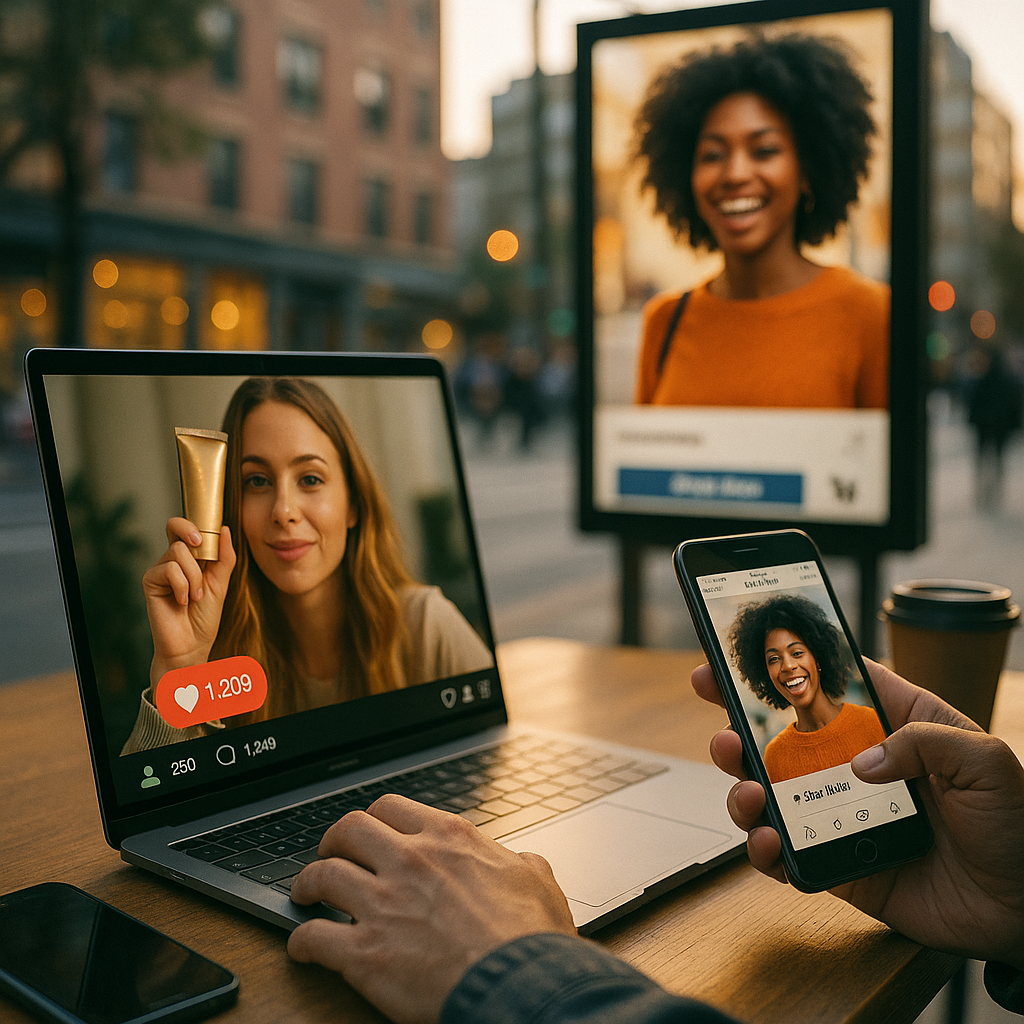
Nearly 70% of Gen Z and Millennial consumers require five or more brand touchpoints before converting. If your influencer program lives entirely inside a single platform’s feed, you are not running a distribution strategy. You are running a content experiment.
The Problem With Single-Channel Influencer Campaigns
Most brands still build influencer programs around one axis: organic reach on TikTok, Instagram Reels, or YouTube Shorts. The creator posts, the algorithm decides who sees it, and the brand waits. This model made sense when organic reach was reliable and audiences stayed on one platform. Neither of those things is true anymore.
Gen Z moves between TikTok, YouTube, Snapchat, Reddit, and physical retail in a single purchase journey. Millennials do the same, with LinkedIn, podcasts, and CTV layered on top. A hybrid distribution strategy acknowledges this fragmentation and builds deliberately around it, connecting platform-native creator content to paid amplification layers and offline touchpoints in a sequenced, measurable way.
The brands winning right now are not producing more content. They are routing the same content asset through more paid and physical distribution channels, each one engineered for a specific stage of the decision journey.
Distribution is the multiplier. A well-produced creator video that reaches its organic audience and stops there is leaving 80% of its potential conversion impact on the table.
What a Hybrid Distribution Strategy Actually Looks Like
The architecture has three layers, and each one has a distinct job.
Layer 1: Platform-native organic feed. This is where trust gets built. A creator posts authentically to their audience, in their voice, with the format native to that platform. The algorithm rewards content that fits its environment. The brand’s job here is briefing, not controlling. A tight creator brief architecture ensures the content performs organically while capturing the usage rights needed to fuel layers two and three.
Layer 2: Whitelisted programmatic amplification. This is where scale gets added without sacrificing trust. Whitelisting (also called allowlisting) lets the brand run paid ads from the creator’s handle, meaning the ad appears to come from the creator rather than a corporate account. The result is lower CPMs, higher view-through rates, and audience targeting precision that organic posts can never deliver. Brands using this model consistently see CPA reductions of 30% or more, with some whitelisting strategies cutting CPA by 50% compared to standard brand-run paid social.
Layer 3: Out-of-home (OOH) integration. This is where recall gets cemented. Digital billboards, transit panels, retail screen networks, and in-store displays intercept the consumer in physical space, often at or near the point of purchase. When the OOH creative references or mirrors the creator content the consumer already saw in their feed, brand recognition jumps. The familiarity effect is real, and it is measurable through geo-lifted foot traffic studies.
Why OOH Is Back in the Influencer Marketing Conversation
Three years ago, OOH felt like a legacy channel being politely tolerated by digital teams. That perception has reversed. Programmatic DOOH (digital out-of-home) platforms like Lamar, Clear Channel, and Vistar Media now allow dayparting, audience-indexed targeting, and creative swaps tied to real-time data feeds. A brand can serve a creator’s face and quote on a Times Square screen during morning commute hours while running the same asset as a whitelisted TikTok ad to a look-alike audience at 9 PM. That is not coincidence; that is coordinated frequency management.
For purchase-ready audiences, the physical touchpoint matters more than marketers typically give it credit for. Research from Statista and several retail lift studies consistently show that OOH exposure within 30 minutes of a purchase decision point increases conversion probability significantly for CPG, QSR, and fashion categories, all high-index Gen Z and Millennial segments.
The key is creative coherence. If your OOH execution looks like a corporate campaign and your TikTok feed looks like creator content, you have two disconnected campaigns running in parallel. The hybrid model requires the OOH layer to carry visual and tonal cues from the creator content, not replace them with polished brand ads.
Sequencing Matters More Than Simultaneous Launch
Timing is where most hybrid strategies fall apart. Brands tend to launch all three layers simultaneously, treating them as parallel campaigns rather than a sequenced funnel. That approach wastes budget and muddies attribution.
A better model: let the organic creator post run for 48 to 72 hours first. Use that window to identify the highest-performing content through platform analytics, then greenlight the whitelisted programmatic spend on the assets that have already proven organic resonance. This is the core logic behind a UGC routing engine approach, where organic performance data gates paid investment decisions in near real-time. Some teams have compressed this cycle to under 24 hours.
The OOH layer typically activates in week two or three, once the paid amplification has established sufficient digital frequency with the target audience. At that point, the physical touchpoint functions as reinforcement, not introduction. That sequencing is why it drives incremental conversion rather than redundant impressions.
For brands operating in retail environments, consider integrating the Gen Z in-store creator strategy into the OOH layer, using AR activations or QR-linked creator content on point-of-sale displays to bridge the physical and digital legs of the journey.
The brands getting the most from hybrid distribution are not those with the biggest budgets. They are the ones sequencing channels around the consumer decision journey rather than their own campaign calendar.
Attribution: The Hard Part No One Talks About Enough
Running three distribution layers creates an attribution problem that standard last-click models cannot solve. If a consumer sees a creator’s TikTok, gets retargeted via a whitelisted Instagram ad three days later, and then converts after walking past a DOOH panel near a retail location, which touchpoint gets credit?
The honest answer is: all of them, weighted by contribution. Multi-touch attribution (MTA) models are imperfect but functional for this use case. Tools like Northbeam, Triple Whale, and Rockerbox allow brands to assign fractional credit across paid social, OOH (via geo-fencing and mobile device ID matching), and direct response. Connecting that data to influencer ROI metrics beyond impressions gives the marketing team a defensible performance story for the CFO.
Rights management is equally critical. The creator content powering all three layers needs clearly scoped usage rights covering platform-native posting, paid social amplification, and OOH display. Without that scoping upfront, the brand either faces renegotiation friction mid-campaign or legal exposure when the billboard goes live. Proper UGC rights capture for paid media should be a contract requirement before any content goes into production, not an afterthought once distribution plans solidify.
Budget Allocation Guidance
There is no universal split, but directionally: brands running hybrid strategies at scale tend to allocate 30 to 40% of campaign budget to creator fees and organic production, 40 to 50% to paid amplification (whitelisted programmatic and social), and 15 to 20% to OOH placement and production. The OOH share can flex upward for brands with high retail presence or event-driven campaigns.
For teams newer to the model, starting with a strong whitelisting foundation is the highest-ROI entry point. The CPA comparison between whitelisting and standard sponsored posts is compelling enough to justify reallocation from organic-only spend before the OOH layer is even introduced.
Platform-specific guidance is available through Meta Business for Instagram and Facebook whitelisting setup, and TikTok Ads Manager for Spark Ads, which is TikTok’s native whitelisting product. Both platforms have improved their creator authorization workflows significantly, reducing the friction that used to make whitelisting operationally painful.
For compliance across paid influencer content, particularly as FTC enforcement priorities continue to evolve, teams should stay current with FTC disclosure guidelines before scaling any whitelisted or dark post campaign.
Making It Operational
A hybrid distribution strategy fails at the process level more often than the strategy level. The coordination between creator management, paid media, and OOH planning teams is genuinely hard, especially inside organizations where those functions sit in different reporting lines with different agency partners.
The brands that have solved this tend to do one specific thing: designate a single campaign lead who owns the distribution sequencing across all three layers, with authority to delay or accelerate each layer based on real-time performance data. Without that accountability structure, the layers drift out of sync and the sequencing logic breaks down.
Frameworks like the blended intelligence campaign governance model offer a policy-level structure for exactly this coordination problem, balancing automated decision triggers with human judgment at critical escalation points.
The most reliable benchmarks and competitive context for paid social and programmatic performance can be found through resources like eMarketer, which tracks cross-channel spend and audience behavior data that is useful for validating internal assumptions before committing to a hybrid budget allocation.
Start with one creator, one campaign, all three layers. Measure the sequenced lift. Then build the playbook from that proof of concept rather than from a theoretical framework.
Frequently Asked Questions
What is a hybrid distribution strategy in influencer marketing?
A hybrid distribution strategy combines platform-native creator content (organic posts on TikTok, Instagram, YouTube, etc.) with whitelisted programmatic paid amplification and out-of-home (OOH) placements. The goal is to reach purchase-ready consumers across multiple touchpoints in a coordinated, sequenced way that mirrors how they actually move through a decision journey, rather than relying on any single channel to carry the full funnel.
Why is whitelisting better than standard paid social for Gen Z campaigns?
Whitelisting (or allowlisting) allows brands to run paid ads from the creator’s handle rather than a corporate account. Gen Z audiences are significantly more receptive to creator-attributed content than brand-attributed ads. This translates to lower CPMs, higher view-through rates, and better CPA performance. Studies and platform benchmarks consistently show whitelisted campaigns outperforming standard brand-run paid social in engagement and conversion metrics for younger audiences.
How do brands measure OOH impact in a multi-channel influencer campaign?
OOH measurement in a hybrid strategy typically uses geo-fencing and mobile device ID matching to correlate exposure to a physical placement with downstream digital behavior or in-store visits. Tools like Vistar Media and Lamar provide built-in attribution reporting. Brands layer this with multi-touch attribution platforms such as Northbeam or Triple Whale to assign fractional credit across OOH, paid social, and organic influencer touchpoints.
What usage rights do brands need to run creator content across all three layers?
Brands need clearly scoped usage rights that cover organic platform posting, paid social amplification (including whitelisting and dark posts), and out-of-home display. These rights should specify the duration, geographic scope, and specific platforms or media types permitted. Rights should be negotiated and contracted before content production begins. Retroactive rights negotiation is a common source of campaign delays and cost overruns.
How should brands sequence the three layers for maximum conversion impact?
The recommended sequence is: let the organic creator post run for 48 to 72 hours first to establish authentic reach and gather performance data, then activate whitelisted paid amplification on the best-performing content assets, and deploy OOH placements in week two or three once digital frequency has been established. This sequencing ensures each layer builds on the previous one rather than competing with it, and it avoids wasting paid budget on content that has not yet proven organic resonance.
Top Influencer Marketing Agencies
The leading agencies shaping influencer marketing in 2026
Agencies ranked by campaign performance, client diversity, platform expertise, proven ROI, industry recognition, and client satisfaction. Assessed through verified case studies, reviews, and industry consultations.
Moburst

-
2

The Shelf
Boutique Beauty & Lifestyle Influencer AgencyA data-driven boutique agency specializing exclusively in beauty, wellness, and lifestyle influencer campaigns on Instagram and TikTok. Best for brands already focused on the beauty/personal care space that need curated, aesthetic-driven content.Clients: Pepsi, The Honest Company, Hims, Elf Cosmetics, Pure LeafVisit The Shelf → -
3

Audiencly
Niche Gaming & Esports Influencer AgencyA specialized agency focused exclusively on gaming and esports creators on YouTube, Twitch, and TikTok. Ideal if your campaign is 100% gaming-focused — from game launches to hardware and esports events.Clients: Epic Games, NordVPN, Ubisoft, Wargaming, Tencent GamesVisit Audiencly → -
4

Viral Nation
Global Influencer Marketing & Talent AgencyA dual talent management and marketing agency with proprietary brand safety tools and a global creator network spanning nano-influencers to celebrities across all major platforms.Clients: Meta, Activision Blizzard, Energizer, Aston Martin, WalmartVisit Viral Nation → -
5

The Influencer Marketing Factory
TikTok, Instagram & YouTube CampaignsA full-service agency with strong TikTok expertise, offering end-to-end campaign management from influencer discovery through performance reporting with a focus on platform-native content.Clients: Google, Snapchat, Universal Music, Bumble, YelpVisit TIMF → -
6

NeoReach
Enterprise Analytics & Influencer CampaignsAn enterprise-focused agency combining managed campaigns with a powerful self-service data platform for influencer search, audience analytics, and attribution modeling.Clients: Amazon, Airbnb, Netflix, Honda, The New York TimesVisit NeoReach → -
7

Ubiquitous
Creator-First Marketing PlatformA tech-driven platform combining self-service tools with managed campaign options, emphasizing speed and scalability for brands managing multiple influencer relationships.Clients: Lyft, Disney, Target, American Eagle, NetflixVisit Ubiquitous → -
8

Obviously
Scalable Enterprise Influencer CampaignsA tech-enabled agency built for high-volume campaigns, coordinating hundreds of creators simultaneously with end-to-end logistics, content rights management, and product seeding.Clients: Google, Ulta Beauty, Converse, AmazonVisit Obviously →