


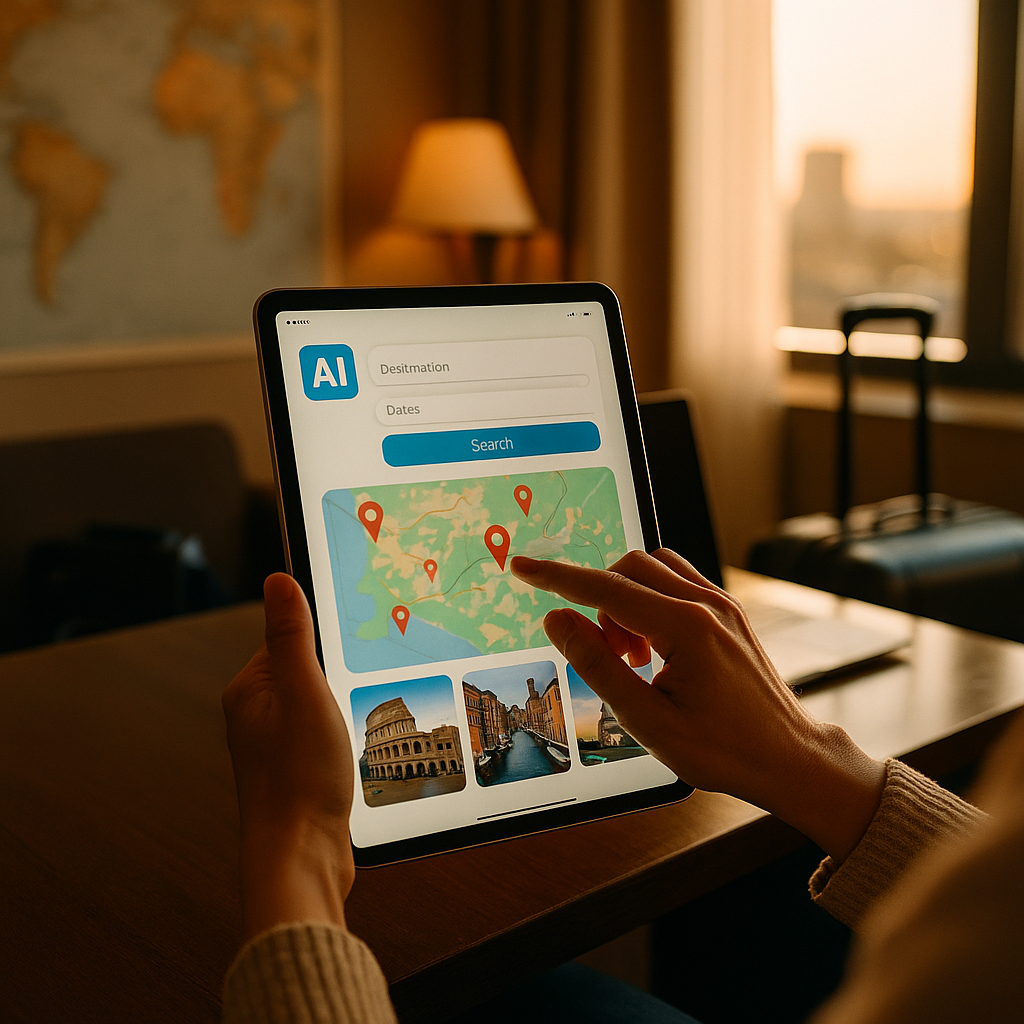
Eighty-two percent of AI-generated hotel recommendations trace back to third-party sources: OTAs, editorial outlets, and review aggregators. If your hospitality brand’s creator strategy isn’t engineered to feed those sources, you’re not just losing social reach. You’re losing the AI answer layer entirely.
Why OTAs and Editorial Media Are Winning the AI Recommendation Race
Platforms like Booking.com, Expedia, TripAdvisor, and Condé Nast Traveler have spent years building exactly what large language models reward: structured data, consistent schema markup, high-volume authoritative backlinks, and dense semantic content tied to specific properties and destinations. They didn’t optimize for AI. They optimized for search, and AI inherited search’s trust signals.
The result is a structural advantage that most hospitality brands haven’t accounted for. When a traveler asks ChatGPT, Perplexity, or Google’s AI Overview to recommend boutique hotels in Lisbon for a long weekend, the model isn’t surfacing your brand’s Instagram campaign. It’s pulling from the sources it was trained to trust: Booking.com property pages, Condé Nast editorial, Fodor’s guides, Lonely Planet destination articles.
For hospitality brands, the AI recommendation layer is now a media placement problem. If your property or destination doesn’t appear in the sources LLMs cite, you effectively don’t exist in AI-assisted trip planning.
The implication isn’t that brands should abandon owned content. It’s that owned content must now be architected to flow into third-party citation ecosystems, not just perform on brand-controlled channels.
The Creator Content Disconnect
Most hospitality influencer programs are optimized for the wrong outcome. A creator posts a gorgeous reel of a Santorini infinity pool. Engagement is strong. Story views are solid. The brand reports a healthy EMV figure and calls the campaign successful.
But none of that content becomes a citation in an AI recommendation. TikTok videos don’t train LLMs. Instagram carousels don’t get indexed in ways that feed generative AI retrieval systems. The content performs on platform and then evaporates from the discovery funnel at exactly the moment it matters most: when a high-intent traveler asks an AI assistant where to stay.
This is the creator content disconnect. Brands are funding production for social performance while the AI layer rewards indexable, linkable, structured editorial. The gap between these two content types is where hospitality marketing budgets are quietly bleeding.
Savvy brands are already restructuring. They’re shifting creator briefs to require long-form written content, not just video. They’re requiring creators to publish to their own SEO-indexed blogs or contribute to editorial publications that OTAs and AI aggregators actually cite. Understanding how to structure creator briefs for this outcome is no longer optional; it’s foundational to AI-era hospitality marketing.
GEO Strategy Isn’t Optional Anymore
Generative Engine Optimization (GEO) is the practice of structuring content to be retrieved and cited by AI systems. For hospitality brands, this means treating every piece of content as a potential source document for an LLM, not just a social post.
The mechanics differ from traditional SEO in important ways. GEO favors:
- Factual specificity: Room counts, amenity details, neighborhood context, proximity to landmarks. Vague lifestyle copy doesn’t get cited.
- Third-party publication: Content published on authoritative editorial domains carries far more retrieval weight than content on a brand’s owned blog.
- Structured entity markup: Schema.org Hotel, LodgingBusiness, and TouristDestination markup helps AI systems classify and retrieve property information accurately.
- Citation diversity: Appearing across multiple independent sources signals authority to LLMs the same way backlink diversity signaled authority to Google.
Brands that have already invested in AI search visibility infrastructure are seeing compounding advantages. Properties cited across Booking.com, TripAdvisor, a Travel + Leisure editorial feature, and three independent travel blogs have a dramatically higher probability of appearing in AI recommendations than properties with strong Instagram presence but thin third-party citation footprints.
Restructuring Creator Programs Around AI Citation Architecture
The practical restructuring looks like this. You stop briefing creators purely for social performance and start briefing them as content sources for the AI retrieval layer. This requires a genuine shift in how deliverables are defined, how creators are selected, and how output is distributed.
Selection criteria changes. Domain authority and publication footprint matter more than follower count for GEO-oriented campaigns. A travel writer with a well-indexed personal blog and regular contributions to outlets like Afar, The Points Guy, or Condé Nast Traveler generates more AI citation value than a 500K Instagram account with no indexable written output. This doesn’t mean abandoning social reach; it means adding a GEO-contribution score to your creator evaluation matrix.
Deliverable structure changes. Written content must be part of the brief. Require a minimum of one long-form written piece (1,000+ words) per campaign, published to an indexed platform. Specific property details, amenity descriptions, neighborhood context, and direct booking links should be required elements, not optional. This is the kind of content that feeds OTA review ecosystems and editorial aggregators.
Distribution architecture changes. Negotiate creator content syndication rights aggressively. A creator’s long-form property review published on their blog should also be pitched to editorial outlets, contributed to travel aggregators, and structured for OTA review submission where platform policies allow. The same content asset should work across three to five distribution touchpoints to build the citation density LLMs reward. The broader case for rebalancing creator budgets toward distribution is directly applicable here.
The hospitality brands that will dominate AI recommendations aren’t the ones with the best social content. They’re the ones with the widest, most structured editorial footprint across the sources LLMs actually cite.
What This Means for OTA Relationship Strategy
Here’s a reframe that some brand teams resist: OTAs are now media partners, not just distribution channels. If 82% of AI recommendations originate from third-party sources and OTAs represent a significant portion of that ecosystem, your OTA profile quality directly affects your AI discoverability.
This means property descriptions on Booking.com, Expedia, and Hotels.com deserve the same creative investment as brand website copy. It means actively soliciting and responding to reviews to build the engagement signals that both OTA algorithms and LLMs interpret as quality indicators. It means ensuring your OTA listings include complete structured data: property type, amenities, room categories, sustainability certifications, accessibility features.
Lessons from how major chains are handling this are instructive. Research into how Hilton, Marriott, and Booking.com approach AI data strategy reveals that the most AI-visible properties invest heavily in structured OTA data completeness, not just organic social presence.
The LLM Discoverability Signal Stack
For hospitality brands building a GEO strategy from scratch, prioritize this signal stack in order of impact:
- OTA listing completeness and review volume on Booking.com, Expedia, TripAdvisor, and Google Hotels
- Editorial coverage in publications LLMs demonstrably cite: Travel + Leisure, Condé Nast Traveler, Afar, Forbes Travel Guide, Lonely Planet
- Independent travel blog coverage from creators with high-domain-authority indexed sites
- Schema markup on owned web properties using Hotel and LodgingBusiness structured data from Schema.org
- Google Business Profile completeness, which feeds directly into Google’s AI Overviews for hotel queries
- Community signals: forum mentions on TripAdvisor community boards, Reddit travel threads (r/travel, r/solotravel), and destination-specific subreddits that LLMs crawl for real user sentiment
Understanding the community engagement signals that drive LLM discoverability requires recognizing that AI systems increasingly weight authentic conversation data. Brands that understand these community signals and create conditions for genuine traveler conversation are building durable discoverability assets.
Budget Allocation Implications
The financial case is straightforward. If your current influencer budget is 80% allocated to social-first content and 20% to anything with GEO impact, you have it roughly inverted relative to where AI-assisted travel discovery is heading. That doesn’t mean gutting social. Social content still drives upper-funnel awareness and emotional affinity. But the conversion layer is increasingly happening in AI chat interfaces, and that layer responds to editorial citation, not Instagram aesthetics.
A practical reallocation framework: dedicate 35-40% of influencer program budget to GEO-oriented content creation and distribution (editorial pitching, long-form creator content, OTA content investment). Maintain social-first content at 45-50% for awareness. Reserve 15-20% for paid amplification of content that has already proven citation potential on indexable platforms. For brands benchmarking against larger players, Unilever’s creator budget framework offers a useful structural model that scales down to hospitality program sizes.
Measurement must evolve in parallel. Track AI citation share (how often does your property appear in AI recommendations for your destination category?) alongside traditional influencer metrics. Tools like Perplexity’s API, manual AI query audits, and emerging GEO tracking platforms from companies like SEMrush and Ahrefs are beginning to build AI visibility reporting into their dashboards.
Beyond standard metrics, rethinking how you measure creator impact to include citation-based attribution is the next frontier for hospitality marketing analytics.
The brands that treat AI recommendation visibility as a media coverage problem, with structured editorial outreach, OTA data investment, and creator briefs built around indexable output, will own the AI travel discovery layer. Start by auditing your top five properties’ AI citation presence today. Query ChatGPT, Perplexity, and Google’s AI Overviews for your destination category and see whose names appear. If yours doesn’t, you have your roadmap.
Frequently Asked Questions
What does it mean that 82% of AI travel recommendations come from third-party sources?
It means large language models and AI recommendation engines like ChatGPT, Perplexity, and Google AI Overviews pull the vast majority of hotel and destination suggestions from sources they were trained to trust: OTAs like Booking.com and Expedia, editorial publications like Condé Nast Traveler and Travel + Leisure, and established review platforms. Brand-owned social content and Instagram campaigns rarely factor into this retrieval layer, which means hospitality brands must restructure their content strategy to feed these third-party citation ecosystems.
How is GEO different from traditional SEO for hospitality brands?
Traditional SEO optimizes for ranking in a list of blue links. GEO (Generative Engine Optimization) optimizes for being retrieved and cited as a source within AI-generated answers. For hospitality, this means prioritizing factual, structured content published on authoritative third-party platforms, complete schema markup on owned properties, and diverse citation footprints across OTAs, editorial outlets, and independent travel blogs, rather than keyword-stuffed landing pages designed for click-through.
Should hospitality brands stop investing in social influencer content?
No. Social influencer content still drives upper-funnel awareness and emotional brand affinity. The shift is in how budgets are weighted and how creator deliverables are structured. Brands should add GEO-oriented outputs (long-form indexed written content, editorial pitching, OTA data investment) as core deliverables alongside social-first content, not replace social entirely. A practical reallocation targets 35-40% of influencer budgets toward GEO-impact content.
Which OTA platforms matter most for AI recommendation visibility?
Booking.com, Expedia, TripAdvisor, and Google Hotels are the highest-priority platforms based on their established domain authority and confirmed presence as training and retrieval sources for major LLMs. Complete, detailed, and regularly updated listings with high review volume on these platforms directly correlate with increased AI recommendation frequency. Google Hotels is particularly important given Google’s AI Overviews integration with its hotel search product.
How can hospitality brands measure their AI citation share?
AI citation share can be tracked through manual query audits: regularly querying ChatGPT, Perplexity, Claude, and Google AI Overviews with destination and category-specific prompts to see which properties are cited. Emerging tools from SEMrush, Ahrefs, and dedicated GEO platforms are building AI visibility tracking into their dashboards. Brands should establish a baseline audit immediately and run quarterly re-audits to track GEO strategy impact over time.
What role do creator briefs play in a GEO strategy for hospitality?
Creator briefs must be restructured to require indexable, long-form written output alongside social content. This means mandating minimum word counts, requiring specific property details (amenities, room types, neighborhood context, proximity data), and specifying publication to indexed platforms rather than social-only channels. Creators should also be briefed on pitching their content to editorial outlets and travel aggregators to maximize citation distribution across the sources LLMs draw from.
Top Influencer Marketing Agencies
The leading agencies shaping influencer marketing in 2026
Agencies ranked by campaign performance, client diversity, platform expertise, proven ROI, industry recognition, and client satisfaction. Assessed through verified case studies, reviews, and industry consultations.
Moburst

-
2

The Shelf
Boutique Beauty & Lifestyle Influencer AgencyA data-driven boutique agency specializing exclusively in beauty, wellness, and lifestyle influencer campaigns on Instagram and TikTok. Best for brands already focused on the beauty/personal care space that need curated, aesthetic-driven content.Clients: Pepsi, The Honest Company, Hims, Elf Cosmetics, Pure LeafVisit The Shelf → -
3

Audiencly
Niche Gaming & Esports Influencer AgencyA specialized agency focused exclusively on gaming and esports creators on YouTube, Twitch, and TikTok. Ideal if your campaign is 100% gaming-focused — from game launches to hardware and esports events.Clients: Epic Games, NordVPN, Ubisoft, Wargaming, Tencent GamesVisit Audiencly → -
4

Viral Nation
Global Influencer Marketing & Talent AgencyA dual talent management and marketing agency with proprietary brand safety tools and a global creator network spanning nano-influencers to celebrities across all major platforms.Clients: Meta, Activision Blizzard, Energizer, Aston Martin, WalmartVisit Viral Nation → -
5

The Influencer Marketing Factory
TikTok, Instagram & YouTube CampaignsA full-service agency with strong TikTok expertise, offering end-to-end campaign management from influencer discovery through performance reporting with a focus on platform-native content.Clients: Google, Snapchat, Universal Music, Bumble, YelpVisit TIMF → -
6

NeoReach
Enterprise Analytics & Influencer CampaignsAn enterprise-focused agency combining managed campaigns with a powerful self-service data platform for influencer search, audience analytics, and attribution modeling.Clients: Amazon, Airbnb, Netflix, Honda, The New York TimesVisit NeoReach → -
7

Ubiquitous
Creator-First Marketing PlatformA tech-driven platform combining self-service tools with managed campaign options, emphasizing speed and scalability for brands managing multiple influencer relationships.Clients: Lyft, Disney, Target, American Eagle, NetflixVisit Ubiquitous → -
8

Obviously
Scalable Enterprise Influencer CampaignsA tech-enabled agency built for high-volume campaigns, coordinating hundreds of creators simultaneously with end-to-end logistics, content rights management, and product seeding.Clients: Google, Ulta Beauty, Converse, AmazonVisit Obviously →