


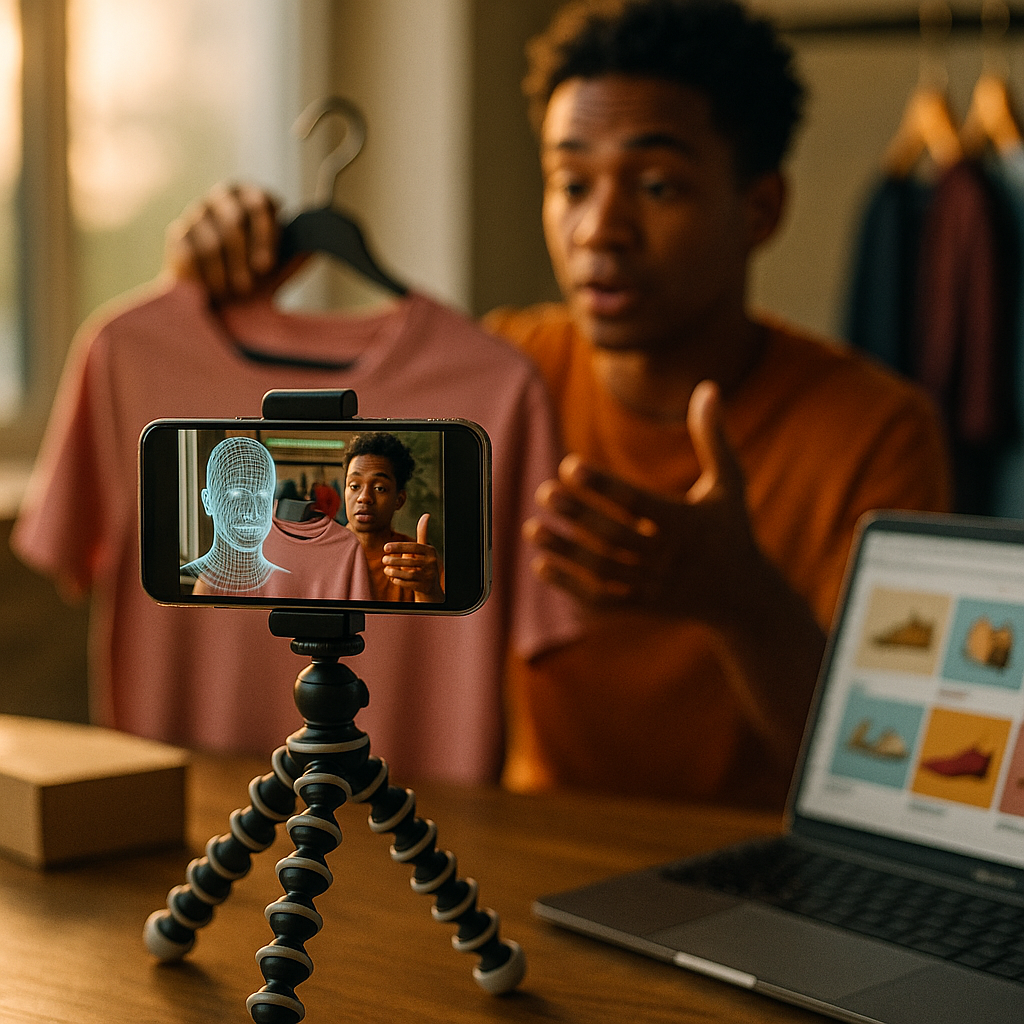
Social commerce video with AI enhancements converts at rates up to 30% higher than standard UGC — but brands briefing creators incorrectly are watching those assets get buried by the same platforms they’re paying to reach. Here’s how to get it right.
Why AI-Enhanced Commerce Video Is a Minefield Right Now
TikTok Shop, Instagram Checkout, and YouTube Shopping have all invested heavily in native commerce tools. At the same time, every major platform has deployed AI-content detection systems designed to flag low-quality, synthetic, or misleading material. The problem? Legitimate AI-enhanced creator content — think CapCut’s auto-caption overlays, Runway-generated backgrounds, or TikTok’s own built-in product sticker tools — is getting caught in those same filters when creators and brands don’t follow platform-specific implementation protocols.
This isn’t a hypothetical risk. Brands running TikTok Shop affiliate programs have reported organic reach suppression on AI-enhanced videos at rates that correlate directly with how synthetic the content appears to the platform’s classifier. The irony is sharp: TikTok builds CapCut, CapCut applies AI effects, and then TikTok’s algorithm penalizes those effects if applied incorrectly.
Platform AI-content suppression doesn’t target “AI” as a concept — it targets signals of inauthenticity: uniform pacing, synthetic voiceovers without natural cadence, abrupt visual cuts, and product overlays applied without dwell-time logic.
Understanding the distinction between what triggers suppression and what doesn’t is now a core briefing competency. Most creative briefs in circulation don’t address it at all.
What Platforms Are Actually Detecting
Before you can brief creators correctly, you need to understand what the detection systems are looking for. Platform classifiers across TikTok, Meta, and YouTube are trained to flag several overlapping signals:
- Voiceover uniformity: AI-generated narration with no breath variation, tonal shift, or natural filler creates a flat audio fingerprint that classifiers can identify with high accuracy.
- Static product overlays: Product stickers or shopping tags that remain locked in position throughout a clip without any motion or contextual integration look machine-placed to algorithmic reviewers.
- Background replacement with zero parallax: Runway or Pika-generated backgrounds that don’t respond to the creator’s physical movement create depth-of-field inconsistencies that detection layers catch immediately.
- Caption timing misalignment: Auto-captions applied via third-party tools that don’t sync properly with spoken content signal post-production AI layering rather than native platform captioning.
- Abrupt scene transitions without contextual logic: AI-generated B-roll spliced into creator footage without natural audio bridges triggers editing-pattern classifiers.
None of these are prohibited. All of them become problems when layered together without thoughtful integration protocols in the brief.
Building the Brief: Four Non-Negotiable Sections
A commerce creator brief that covers AI enhancement needs to go further than most brand teams are comfortable with. You’re essentially writing technical production guidelines inside a creative document. Here’s how to structure it without making the creator feel micromanaged.
Section 1: Approved Tools List with Platform-Native Priority. Specify which AI tools are cleared for use and rank them by platform-nativity. TikTok’s own CapCut templates, for instance, carry lower suppression risk on TikTok than equivalent Runway-generated assets because platform classifiers are trained on CapCut output patterns. Your brief should state explicitly: “Prefer native platform tools for captions and transitions. Use third-party AI tools (Runway, Pika, ElevenLabs) only for elements that cannot be replicated natively.” This is the single most impactful briefing change a brand can make. If you’re working on TikTok commerce briefs more broadly, this hierarchy principle applies across content types.
Section 2: Captioning Protocol. Auto-captions should be generated using the platform’s native captioning tool first. Only export and re-upload if the creator is distributing across multiple platforms simultaneously. When third-party caption tools (Submagic, Captions.ai) are used, instruct creators to manually review sync alignment at 1.0x and 0.5x playback before export. Your brief should include a literal checklist line: “Verify caption sync before export. Misaligned captions are a primary suppression trigger.”
Section 3: Product Overlay Integration Rules. This is where most brands fail. Product tags and shopping overlays need contextual logic, not just placement. Brief creators to introduce the product physically before applying the digital overlay. The human hand touching the product, the creator looking at the item, a genuine reaction moment — all of these create a contextual anchor that the classifier reads as authentic. Overlays that appear at second 2 of a clip before any human interaction have a measurably higher suppression rate. Timing guidance in the brief should be specific: “Apply product overlay tag no earlier than 3 seconds in, following a direct physical interaction with the product.”
Section 4: AI Visual Enhancement Disclosure and Labeling. FTC guidelines now require disclosure of material AI enhancements in commerce content. More practically: platforms including Meta and TikTok have their own AI content labeling systems that, when used proactively by creators, actually reduce suppression risk. Brief creators to use platform-native AI content labels when any AI-generated visual element (background, B-roll, product render) is integrated. Counterintuitive as it sounds, transparent labeling signals compliance rather than deception to the algorithm.
Voiceover and Audio: The Underestimated Variable
AI voiceover is one of the highest-value enhancements for scaled commerce content — and one of the fastest paths to suppression. Tools like ElevenLabs and Adobe’s text-to-speech engine produce increasingly convincing output, but platform classifiers have kept pace. The tell isn’t accent or vocabulary. It’s cadence uniformity and the absence of environmental audio bleed.
Your brief should address this directly. If creators are using AI voiceover for B-roll segments or product explanation inserts, they need to record ambient room tone separately and layer it under the AI audio at -18dB to -12dB. This creates the environmental bleed that classifiers associate with authentic recording. It’s a small technical instruction that has a significant impact on how the content is classified. Consider including a link to a short Loom tutorial in the brief itself rather than expecting creators to figure it out from a text description. This is especially relevant if you’re scaling AI video production across a large creator roster.
Platform-Specific Nuances Brands Must Communicate
Not all platforms suppress AI-enhanced content the same way, and a single-brief-for-all approach is a false economy.
TikTok: Strongest classifier sophistication. Native CapCut tools are lowest risk. Third-party background generation is highest risk. Product overlays using TikTok Shop’s native sticker tool perform significantly better than exported graphics.
Instagram Reels/Shop: Meta’s systems are more tolerant of AI-generated backgrounds but more sensitive to voiceover authenticity. Collab posts between creators and brand accounts also appear to receive lower suppression rates on AI-enhanced content — possibly because the dual-account signal suggests genuine partnership.
YouTube Shorts Shopping: The least aggressive suppression environment for AI content currently, but the most stringent for product claim accuracy. AI-generated captions that misrepresent product specs (even due to transcription error) create compliance and moderation risk that is separate from suppression.
If you’re building modular briefs that adapt by platform, the framework in multi-surface distribution briefs provides a useful structural template for managing these distinctions at scale.
Brands that build platform-specific AI enhancement protocols into creator briefs — rather than relying on creators to self-navigate — report higher first-submission approval rates and measurably better organic reach on commerce content.
Briefing for Creator Autonomy Without Losing Control
The risk of over-specifying is real. Creators who feel their creative instincts are being overridden produce worse content, full stop. The goal of a well-structured AI enhancement brief isn’t to turn creators into production technicians. It’s to set clear guardrails inside which their instincts can operate freely.
Frame the technical requirements as problem-prevention, not brand control. “Here’s how to make sure your video reaches the audience we’re paying to reach” lands differently than “Here’s what you must do.” Experienced creators working in social commerce understand that reach suppression hurts their metrics too. Align incentives, then deliver the technical guidance as a service to their performance, not a constraint on their creativity.
For deeper guidance on brief construction that balances creative latitude with brand requirements, the principles covered in creator production standards apply directly here. And if you’re integrating AI enhancements into longer episodic formats, see how AI talent layering in scripted content changes the briefing calculus.
The practical next step: audit your current commerce creator brief against the four sections above, add a platform-specific AI tool hierarchy, and run one test batch with the captioning and product overlay timing protocols in place before scaling. The suppression delta is measurable within a single campaign cycle.
FAQs
Do platforms explicitly prohibit AI-generated content in commerce videos?
No major platform currently prohibits AI-generated content outright in creator commerce videos. What they penalize through algorithmic suppression are signals of inauthenticity — synthetic audio patterns, static overlays, and background replacements without physical integration cues. Using AI tools within platform-native ecosystems (like CapCut on TikTok) and following proper disclosure practices significantly reduces suppression risk.
Which AI tools are safest to specify in a creator brief for TikTok Shop content?
TikTok’s native CapCut tools carry the lowest suppression risk on TikTok because the platform’s classifiers are trained on CapCut output patterns. For captions, TikTok’s built-in auto-caption tool is preferred over third-party alternatives. Third-party tools like Runway or Pika for background generation carry higher risk and should be reserved for elements that cannot be produced natively. Always specify a tool hierarchy in your brief rather than leaving tool selection to creator discretion.
Should creators disclose AI-generated visuals in social commerce content?
Yes, on two grounds. FTC guidelines require disclosure of material AI enhancements in commercial content. Beyond compliance, proactively using platform-native AI content labels (available on TikTok and Meta) has been observed to reduce suppression rates, likely because the label signals compliance intent rather than deception. Brief creators to use these labels when AI-generated backgrounds, B-roll, or product renders are integrated into commerce assets.
How do product overlay timing and placement affect suppression risk?
Product overlays applied within the first 1-2 seconds of a clip, before any physical human interaction with the product, are significantly more likely to trigger suppression classifiers. Brief creators to introduce the product physically — touching it, looking at it, reacting to it — before applying digital shopping tags or overlays. A practical guideline is to apply product overlays no earlier than 3 seconds into the clip, following a direct product interaction moment.
Can AI voiceover be used in short-form commerce content without suppression?
Yes, with the right production technique. AI voiceover tools like ElevenLabs or Adobe’s text-to-speech produce audio that classifiers can detect partly through the absence of environmental background noise. Creators using AI voiceover should record ambient room tone separately and layer it beneath the AI audio track at low volume to simulate authentic recording conditions. This single technique meaningfully reduces the audio fingerprint that suppression classifiers target.
Top Influencer Marketing Agencies
The leading agencies shaping influencer marketing in 2026
Agencies ranked by campaign performance, client diversity, platform expertise, proven ROI, industry recognition, and client satisfaction. Assessed through verified case studies, reviews, and industry consultations.
Moburst

-
2

The Shelf
Boutique Beauty & Lifestyle Influencer AgencyA data-driven boutique agency specializing exclusively in beauty, wellness, and lifestyle influencer campaigns on Instagram and TikTok. Best for brands already focused on the beauty/personal care space that need curated, aesthetic-driven content.Clients: Pepsi, The Honest Company, Hims, Elf Cosmetics, Pure LeafVisit The Shelf → -
3

Audiencly
Niche Gaming & Esports Influencer AgencyA specialized agency focused exclusively on gaming and esports creators on YouTube, Twitch, and TikTok. Ideal if your campaign is 100% gaming-focused — from game launches to hardware and esports events.Clients: Epic Games, NordVPN, Ubisoft, Wargaming, Tencent GamesVisit Audiencly → -
4

Viral Nation
Global Influencer Marketing & Talent AgencyA dual talent management and marketing agency with proprietary brand safety tools and a global creator network spanning nano-influencers to celebrities across all major platforms.Clients: Meta, Activision Blizzard, Energizer, Aston Martin, WalmartVisit Viral Nation → -
5

The Influencer Marketing Factory
TikTok, Instagram & YouTube CampaignsA full-service agency with strong TikTok expertise, offering end-to-end campaign management from influencer discovery through performance reporting with a focus on platform-native content.Clients: Google, Snapchat, Universal Music, Bumble, YelpVisit TIMF → -
6

NeoReach
Enterprise Analytics & Influencer CampaignsAn enterprise-focused agency combining managed campaigns with a powerful self-service data platform for influencer search, audience analytics, and attribution modeling.Clients: Amazon, Airbnb, Netflix, Honda, The New York TimesVisit NeoReach → -
7

Ubiquitous
Creator-First Marketing PlatformA tech-driven platform combining self-service tools with managed campaign options, emphasizing speed and scalability for brands managing multiple influencer relationships.Clients: Lyft, Disney, Target, American Eagle, NetflixVisit Ubiquitous → -
8

Obviously
Scalable Enterprise Influencer CampaignsA tech-enabled agency built for high-volume campaigns, coordinating hundreds of creators simultaneously with end-to-end logistics, content rights management, and product seeding.Clients: Google, Ulta Beauty, Converse, AmazonVisit Obviously →