


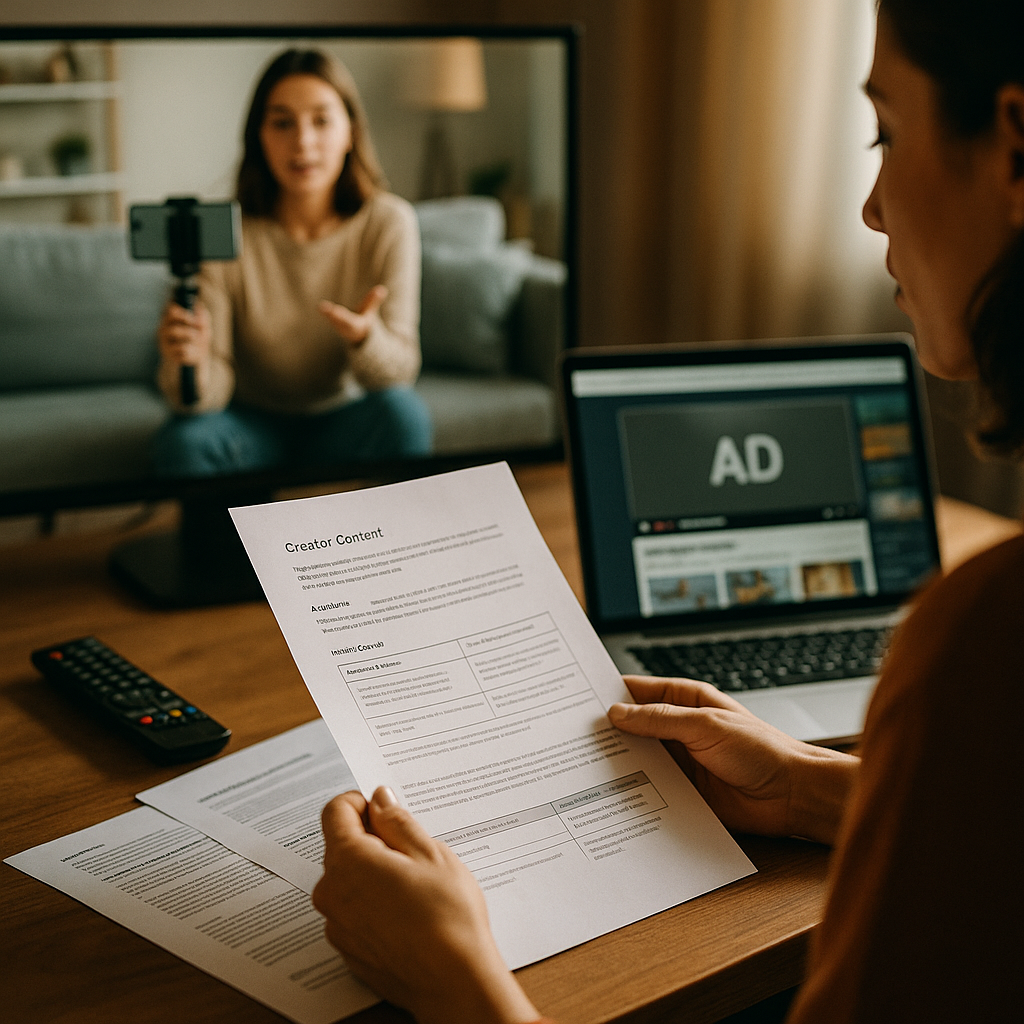
Google’s ad-supported CTV inventory now reaches 96 percent of U.S. streaming households. Most brand media teams are still treating creator content and programmatic CTV as separate budget lines. That gap is costing them both reach and creative performance on the fastest-growing video channel in the plan.
Why Creator Content Belongs in Your CTV Buy
The conventional media plan keeps creator assets in social and saves “real” video production for broadcast and streaming. That logic made sense when CTV inventory required broadcast-grade specs and agency-produced spots. It no longer does. Platforms including YouTube TV, Peacock, Hulu, and the expanded Google Display and Video 360 (DV360) ecosystem now accept short-form creator assets, provided they meet specific technical thresholds.
The efficiency argument is hard to ignore. A creator-produced 30-second asset costs a fraction of a traditional TV spot, carries authentic social proof, and already has performance data from its organic run. Repurposing that asset into programmatic CTV inventory through DV360 or The Trade Desk lets buyers test creative at scale before committing to expensive production cycles.
For brands already running creator native content campaigns with programmatic amplification on social, the CTV extension is a logical next step, not a reinvention of the workflow.
Asset Reformatting: What Actually Changes When You Move From Social to Streaming
Short-form creator content is built for vertical 9:16 viewing on a phone screen. CTV is predominantly 16:9 on a 55-inch display. That single difference triggers a cascade of technical requirements that media buyers need to brief into their creative ops or post-production partners before a single impression is purchased.
Resolution and aspect ratio. CTV inventory through DV360 requires a minimum of 1920×1080 at 16:9. Most creator-produced vertical video shot on a smartphone at 4K can be reframed without quality loss, but the crop has to be art-directed, not automated. If a creator’s key visual (face, product, text overlay) sits in the vertical center third, a letterbox or pillarbox approach may be acceptable. If it doesn’t, you need a reframe edit.
Audio loudness standards. Broadcast and streaming inventory adheres to the ATSC A/85 loudness standard, targeting -24 LKFS. Creator content recorded on a smartphone microphone or a lav without post-processing will almost always fail this spec. A loudness normalization pass in Adobe Premiere, DaVinci Resolve, or a purpose-built audio tool is non-negotiable before submission.
Bitrate and codec requirements. DV360 and most premium CTV supply-side platforms require H.264 or H.265 encoding with a minimum bitrate of 15 Mbps for 1080p. The compressed MP4 files creators export for TikTok or Instagram Reels (typically 2-8 Mbps) will not pass quality review on premium inventory.
Safe zones and text overlays. Creator content often relies on on-screen text, captions, and callouts positioned for a vertical mobile frame. On a 16:9 CTV canvas, these elements can appear off-safe-zone or illegible at distance. A viewing distance of 9-10 feet is standard for TV; any text smaller than roughly 32-point equivalent in a 1080p frame becomes unreadable. Re-caption the asset for the new format.
Skipping the audio loudness pass is the single most common reason creator-produced CTV assets fail inventory quality review. Fix it before trafficking, not after a rejected insertion order.
The reformatting workflow adds cost, but it is bounded cost. A competent editor can reformat a single 30-second creator asset for CTV in two to four hours. Build that into your creator production brief from the start, not as a retroactive step. For guidance on writing briefs that account for multi-platform technical requirements, see how a single creator brief can serve multiple platforms.
Attribution Window Configuration for CTV Inventory
This is where most media teams undercount CTV’s contribution. The default attribution windows on most DSPs are built around click-through behavior. CTV has no click. A viewer watching your creator-produced spot on a Roku device can’t tap a link. That doesn’t mean the impression is unmeasured—it means you have to configure your measurement stack differently.
For programmatic CTV campaigns running through DV360, the recommended approach is a view-through attribution window of 7 to 14 days, paired with a household IP match to cross-device conversion events. Google’s own Campaign Manager 360 supports cross-device attribution that connects a CTV impression to a subsequent mobile or desktop conversion within the defined window. This is not perfect, but it is significantly more accurate than ignoring the channel entirely.
The configuration specifics matter. In DV360, set your CTV line item to use a separate attribution window from your social and display line items. Running a unified 30-day window across all channels will overweight last-touch social clicks and systematically undervalue CTV’s upper-funnel contribution. Brands running incrementality tests via Measured or iSpot.tv have consistently found that CTV view-through contributes 15-25 percent lift to site visits and conversion events that last-touch models miss entirely.
For deeper thinking on how attribution window choices affect creator contract performance, the analysis on attribution windows in creator contracts is directly relevant to how you structure CTV measurement agreements with partners.
One practical note: if you are running creator content on FAST platforms like Tubi or Samsung TV Plus alongside your programmatic CTV buy, the attribution models differ by platform. FAST inventory does not always pass household IP data to third-party attribution vendors. Understand what your FAST platform ROI measurement approach actually captures before consolidating reporting.
Creator Usage Rights: The Contract Clause That Breaks CTV Deals
Here is where legal and media operations collide in ways that kill campaigns at the last minute. Most standard influencer agreements grant the brand a license to repurpose creator content on “owned channels” or “paid social.” CTV streaming inventory is neither. It is a paid media placement on a third-party distribution network. If your usage rights clause doesn’t explicitly cover programmatic streaming inventory, you are operating without a license.
The distinction matters for several reasons. Music licensing is one. A creator who sourced a trending audio track through TikTok’s music library has a license for TikTok distribution only. That same track played in a CTV ad requires a separate sync license, and the creator’s original agreement provides no coverage. The same applies to any third-party footage, stock imagery, or brand assets the creator incorporated under a social-only license.
When negotiating creator contracts for assets you intend to repurpose in CTV, the rights clause needs to specify: programmatic streaming inventory, specific DSP platforms (DV360, The Trade Desk, Amazon DSP), geographic scope, impression volume or spend cap, and duration. A broad “paid media” grant without these specifics creates legal exposure when the creator or their manager later reviews campaign reporting and sees CTV impressions.
Compensation expectations shift too. Creators increasingly understand that CTV placement carries different value than a social boost. Expect usage fees for streaming rights to run 20-40 percent above social-only paid amplification rights, particularly for macro and premium mid-tier creators. Build that into your program budget before the brief goes out, not during contract negotiation under a campaign launch deadline.
Disclosure compliance adds another layer. The FTC’s endorsement guidelines apply to creator content regardless of distribution channel. A CTV spot derived from an influencer post still requires clear material connection disclosure if it presents as authentic content rather than a traditional ad. Consult your legal team on whether a verbal or visual disclosure within the 30-second CTV asset is required for your specific use case. For a systematic approach to disclosure compliance across channels, review our creator campaign ad disclosure audit framework.
Securing explicit streaming distribution rights at the brief stage costs almost nothing. Renegotiating them after a creator asset has already trafficked through DV360 will cost significantly more—in both dollars and relationship capital.
Building the Operational Bridge
The brands executing this well are not doing anything exotic. They have built a checklist-driven handoff between their influencer marketing team and their programmatic media team, with three control points: rights clearance before production wraps, technical QC before trafficking, and attribution configuration before the line item goes live.
The production brief specifies CTV delivery alongside social specs from day one. The creator contract includes explicit streaming distribution rights with platform and duration parameters. Post-production handles the reformat, loudness normalization, and caption revision as standard deliverables. The media team traffics through DV360 with a dedicated CTV view-through attribution window. Measurement runs through Campaign Manager 360 or a third-party vendor like iSpot.tv.
That workflow is repeatable, scalable, and defensible to finance when they ask why creator content spend went up while production costs stayed flat. The answer is simple: you are getting more distribution surface from the same asset.
For brands assessing how paid amplification fits into a broader creator content strategy, the shift from organic to paid amplification covers the strategic rationale in detail. And if you are evaluating how YouTube Shorts creator briefs intersect with CTV asset requirements, the format overlap is more significant than most teams realize.
Start with one creator asset from a current campaign, run it through the reformatting checklist, clear the rights, configure a 14-day view-through window in DV360, and measure the incremental contribution against your existing social spend. That single test will tell you more about your program’s CTV potential than any industry benchmark.
FAQs
What technical specs does creator content need to run on programmatic CTV through DV360?
At minimum: 1920×1080 resolution at 16:9 aspect ratio, H.264 or H.265 encoding at 15 Mbps or higher, and audio normalized to -24 LKFS per the ATSC A/85 standard. Text overlays must be repositioned for a 16:9 safe zone and legible at a 9-10 foot viewing distance. Most creator-exported social files require a dedicated post-production pass before they meet these requirements.
How should media buyers configure attribution windows for CTV creator content campaigns?
Use a dedicated view-through attribution window of 7 to 14 days for CTV line items, separate from your social and display windows. Pair this with household IP cross-device matching in Campaign Manager 360 or a third-party tool like iSpot.tv or Measured. Avoid applying a unified last-touch attribution model across all channels, as it will systematically undervalue CTV’s contribution to downstream conversions.
Does a standard influencer agreement cover CTV streaming distribution rights?
In most cases, no. Standard influencer contracts typically grant rights for owned channels and paid social, which does not cover programmatic streaming inventory. You need explicit contract language specifying streaming distribution, named DSP platforms, geographic scope, impression or spend caps, and duration. Music and third-party assets used by the creator under a social-only license also require separate clearance for CTV distribution.
How much more should brands budget for CTV streaming usage rights versus social amplification rights?
Expect CTV streaming usage rights to cost 20-40 percent more than social-only paid amplification rights for mid-tier and macro creators. This premium reflects the broader distribution footprint and the perceived prestige of streaming placement. Negotiate these rights at the brief stage before production begins to avoid renegotiation under campaign deadline pressure.
Do FTC disclosure rules apply to creator content repurposed as CTV ads?
Yes. FTC endorsement guidelines apply regardless of the distribution channel. If a creator-produced asset presents as authentic content rather than a traditional advertisement, material connection disclosure is required even in a CTV placement. Consult legal counsel on whether verbal or on-screen disclosure within the ad unit is sufficient for your specific campaign format and category.
Top Influencer Marketing Agencies
The leading agencies shaping influencer marketing in 2026
Agencies ranked by campaign performance, client diversity, platform expertise, proven ROI, industry recognition, and client satisfaction. Assessed through verified case studies, reviews, and industry consultations.
Moburst

-
2

The Shelf
Boutique Beauty & Lifestyle Influencer AgencyA data-driven boutique agency specializing exclusively in beauty, wellness, and lifestyle influencer campaigns on Instagram and TikTok. Best for brands already focused on the beauty/personal care space that need curated, aesthetic-driven content.Clients: Pepsi, The Honest Company, Hims, Elf Cosmetics, Pure LeafVisit The Shelf → -
3

Audiencly
Niche Gaming & Esports Influencer AgencyA specialized agency focused exclusively on gaming and esports creators on YouTube, Twitch, and TikTok. Ideal if your campaign is 100% gaming-focused — from game launches to hardware and esports events.Clients: Epic Games, NordVPN, Ubisoft, Wargaming, Tencent GamesVisit Audiencly → -
4

Viral Nation
Global Influencer Marketing & Talent AgencyA dual talent management and marketing agency with proprietary brand safety tools and a global creator network spanning nano-influencers to celebrities across all major platforms.Clients: Meta, Activision Blizzard, Energizer, Aston Martin, WalmartVisit Viral Nation → -
5

The Influencer Marketing Factory
TikTok, Instagram & YouTube CampaignsA full-service agency with strong TikTok expertise, offering end-to-end campaign management from influencer discovery through performance reporting with a focus on platform-native content.Clients: Google, Snapchat, Universal Music, Bumble, YelpVisit TIMF → -
6

NeoReach
Enterprise Analytics & Influencer CampaignsAn enterprise-focused agency combining managed campaigns with a powerful self-service data platform for influencer search, audience analytics, and attribution modeling.Clients: Amazon, Airbnb, Netflix, Honda, The New York TimesVisit NeoReach → -
7

Ubiquitous
Creator-First Marketing PlatformA tech-driven platform combining self-service tools with managed campaign options, emphasizing speed and scalability for brands managing multiple influencer relationships.Clients: Lyft, Disney, Target, American Eagle, NetflixVisit Ubiquitous → -
8

Obviously
Scalable Enterprise Influencer CampaignsA tech-enabled agency built for high-volume campaigns, coordinating hundreds of creators simultaneously with end-to-end logistics, content rights management, and product seeding.Clients: Google, Ulta Beauty, Converse, AmazonVisit Obviously →