


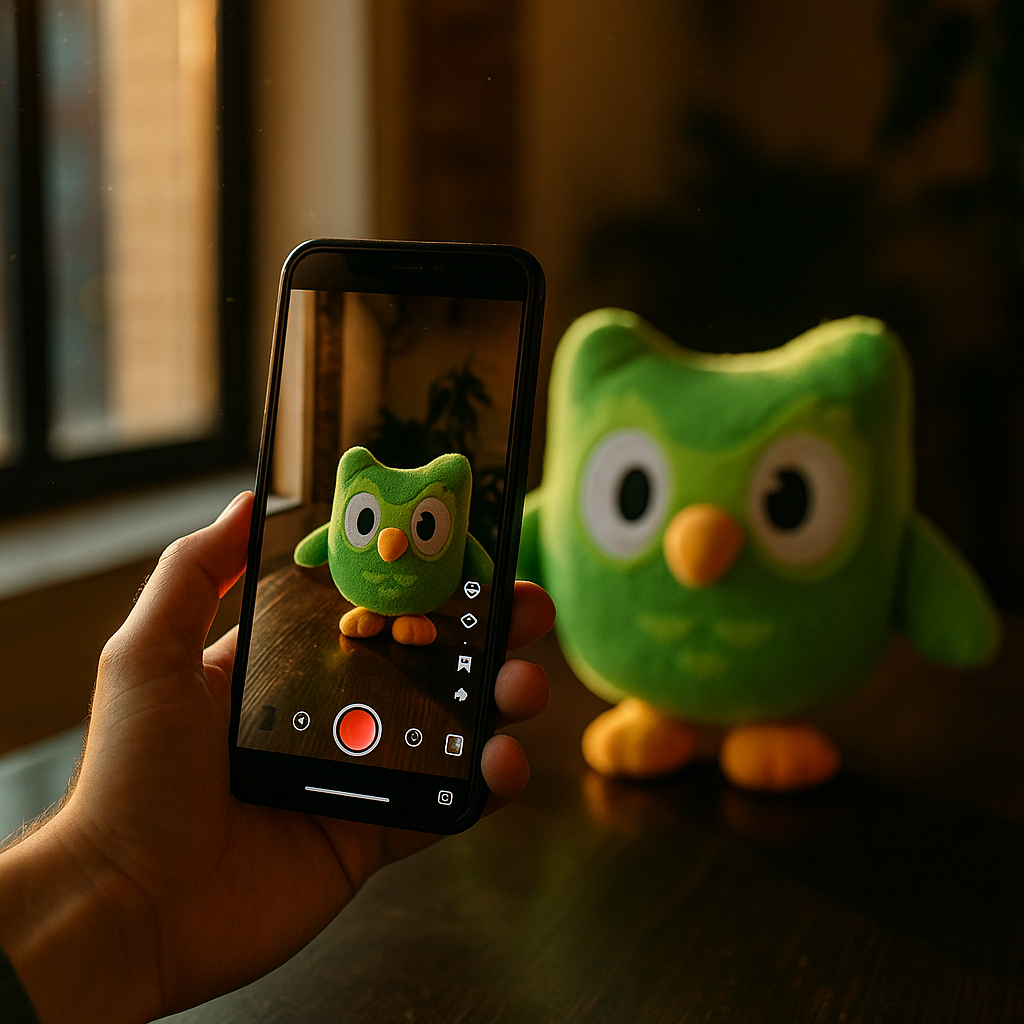
One unhinged owl mascot. Zero paid media budget. A near-permanent perch atop the App Store education charts. If you’re still measuring Duolingo TikTok owl persona success as a “fun brand experiment,” you’re missing the actual case study: this is one of the clearest proofs that organic social can outperform paid acquisition at scale.
Marketers love to dismiss Duolingo’s owl as a meme that got lucky. It didn’t. It was engineered, iterated, and operationalized like any performance channel, just without a media buy behind it. That distinction matters if you’re a brand strategist trying to replicate any piece of this without torching your budget on influencer fees and paid amplification.
The Setup: A Language App With a Marketing Problem
Back when Duolingo started building its social presence, the brand faced the same wall every edtech and utility app hits: nobody wakes up excited to talk about a language-learning app. There’s no glamour in flashcards. No aspirational lifestyle to sell. Compare that to beauty, fashion, or travel brands, where creators have built-in visual hooks, and Duolingo’s challenge looks almost unfair.
So the team did something counterintuitive. Instead of promoting the product, they built a character. Duo, the green owl mascot, became the face (beak?) of the brand’s TikTok account, and the strategy shifted entirely away from feature messaging and toward persona-driven entertainment.
That’s a critical pivot for any brand stuck in a low-interest category. You’re not marketing the product. You’re marketing a character people want to follow.
Why “Unhinged” Was a Deliberate Brand Choice
The owl’s persona wasn’t cute. It was chaotic, thirsty, a little threatening, and self-aware about its own reputation as the app that guilt-trips you into practicing Spanish. Duo showed up in trending audios, inserted itself into pop culture moments, and leaned into the “unhinged corporate account” aesthetic that TikTok’s algorithm rewards.
This worked because it matched platform norms instead of fighting them. TikTok users can smell a brand account trying to “do TikTok” from a mile away. Duo didn’t try to do TikTok. Duo became a TikTok native, posting like a creator, not a marketing department.
Duolingo’s owl succeeded not because it was clever advertising, but because it stopped behaving like advertising altogether.
That’s the operational lesson brand strategists keep missing: platform-native content isn’t a tone, it’s a production model. Duolingo reportedly ran its TikTok presence with a lean, dedicated social team empowered to post fast, react to trends same-day, and skip the multi-layer approval chains that kill timeliness at most enterprise brands. Speed was the actual differentiator, not humor.
No Paid Spend, No Problem: The Distribution Mechanics
Here’s the part that should make CMOs uncomfortable: Duolingo built category-leading App Store visibility largely through earned reach, not paid promotion. No influencer retainers. No boosted posts. No brand safety-vetted creator rosters running scripted content.
Instead, the brand relied on:
- Trend-jacking in near real time — publishing reaction content within hours of a cultural moment, not days.
- Cross-platform character consistency — the owl showed up on Instagram, X, and YouTube Shorts with the same chaotic tone, reinforcing recall without additional creative spend.
- Community-driven amplification — fans made their own owl memes and stitched Duo’s content, extending reach organically with zero media dollars behind it.
- App Store category timing — spikes in social engagement correlated with App Store ranking movement, particularly during viral moments like Duo’s staged “death” stunt, which generated widespread press coverage and app install spikes without a single paid unit running.
This is the part agencies don’t want clients to hear: a lot of what gets sold as “always-on paid social strategy” is actually compensating for weak organic instincts. Duolingo proved that a strong persona, posted consistently and fast, can do the job paid media is usually hired to do.
What This Means for App Store Rankings
App Store category leadership isn’t purely a downloads game. Apple and Google’s ranking algorithms weight velocity of installs, retention signals, and engagement, not just raw volume. Viral social moments that spike installs in short bursts, especially ones tied to press coverage, can meaningfully move category rank faster than steady, paid-acquisition drip campaigns.
Duolingo’s owl stunts routinely triggered install spikes correlated with earned media pickup, the kind of coverage brands normally pay PR agencies a fortune to manufacture. When Duo “died” in a social stunt, it wasn’t just a TikTok moment. It became a news story, covered by outlets far outside the marketing trade press, which fed back into App Store search demand.
That’s the flywheel: organic social content generates cultural buzz, buzz generates press, press generates branded search and direct app-store visits, and app-store visits convert better than paid-acquired installs because the user already has intent. No paid media line item required.
The Uncomfortable Truth for Brands Without a Mascot
Not every brand has a green owl to work with, and that’s the objection I hear most from CMOs when this case study comes up. Fair point. But the transferable lesson isn’t “get a mascot.” It’s “build a consistent, recognizable character-driven voice that can carry content without leaning on product shots.”
Brands like Ryanair, Wendy’s, and Scrub Daddy have run similar playbooks with different mechanics, proving this isn’t a one-off fluke tied to Duolingo’s specific asset. The common thread: a genuinely funny, fast, in-house social team empowered to post without twelve rounds of legal review.
If your organization can’t move that fast internally, the alternative isn’t necessarily paid media. It’s often creator partnerships that borrow existing platform-native trust. That’s a different operational model, but it follows the same underlying principle Duolingo proved: audience interest matters more than reach when you’re trying to build organic velocity.
Risk Management: What Could Have Gone Wrong
It’s easy to only celebrate the wins here. But brand safety and legal teams should study the risk model too, because “unhinged” personas walk a fine line.
A chaotic brand voice invites scrutiny. One poorly timed joke, one trend-jack that reads as tone-deaf, and the same virality that built the owl’s fame could just as easily torch it. Compare this to the backlash risk brands face when creative choices misjudge audience sentiment, as explored in this analysis of an authenticity misstep. The margin for error in this kind of always-on, fast-reacting content strategy is thin.
Duolingo mitigated this by keeping the humor self-deprecating rather than punching at competitors or culture-war topics. The owl roasted itself and its own users’ bad learning habits, never anyone else. That’s a deliberate risk-reduction choice, not an accident, and it’s one every brand experimenting with edgier organic content should study closely.
The safest “unhinged” brand voice is one that only ever mocks itself.
Operational Takeaways for Marketing Leaders
If you’re a VP of marketing looking at this case study and wondering what’s actually replicable without a viral mascot or a risk appetite for chaos, here’s the operational checklist worth stealing:
- Decentralize approval for social-first content. Speed beats polish on trend-reactive platforms. Waiting three days for legal sign-off kills the moment.
- Separate your brand voice from your product messaging. Duo never talked about “streaks” or “gamified learning” in the viral content. The character carried the brand, the app spoke for itself in the App Store listing.
- Track install correlation with social spikes, not just engagement metrics in isolation. Category ranking movement is the real KPI here, not likes.
- Build a self-deprecating tone, not an aggressive one. It’s lower risk and ages better than content that punches outward.
- Treat organic social as a growth channel with its own budget line for headcount and tooling, even if there’s no media spend attached. The team, not the ad dollars, is the investment.
This mirrors what other brands have learned when comparing creator-led sales lift against traditional sponsored posts: organic, character-led, or creator-native content frequently outperforms paid amplification on cost-efficiency, even when raw reach numbers look smaller on paper.
Industry data backs the broader shift too. Organic social engagement and short-form video consumption continue to climb according to eMarketer’s platform usage research, while Statista’s social media data consistently shows short-form video as the fastest-growing content format across demographics. Meanwhile, platforms like TikTok’s advertising resources increasingly emphasize creative authenticity over production value as a ranking signal, reinforcing that the algorithm itself rewards what Duolingo was already doing organically.
Where This Fits in the Broader Creator Economy Shift
Zoom out, and Duolingo’s owl isn’t an isolated stunt. It’s part of a broader pattern where brands are realizing that owned, character-driven content can do what influencer budgets used to be required for. Compare it to how Skimpies hit the top of TikTok Shop with zero ad spend, or how brands are increasingly weighing single-creator ROI against sprawling rosters. The throughline across all these cases: concentrated, authentic, platform-native content is consistently beating diluted, broadly distributed, paid-first strategies.
That’s not a trend brands can ignore much longer, especially with paid social costs climbing and platforms like Meta’s advertising resources confirming rising CPMs across most verticals.
The takeaway for marketing leaders isn’t “build a mascot.” It’s this: audit how much of your paid media budget exists to compensate for a weak organic voice, then ask if that money would be better spent building a faster, funnier, more platform-native in-house team instead.
Frequently Asked Questions
What made the Duolingo TikTok owl persona different from typical brand mascots?
The owl was written and produced like a creator account rather than a corporate mascot. It posted fast, reacted to trends same-day, and used self-deprecating humor instead of polished brand messaging, which matched TikTok’s native content style rather than fighting it.
Did Duolingo really achieve App Store category leadership without paid media spend?
Yes, largely. Viral social moments and earned press coverage, particularly around stunts like the owl’s staged “death,” correlated with install spikes and App Store ranking movement, without dedicated paid user-acquisition campaigns driving those specific spikes.
Can smaller brands replicate this strategy without a mascot?
The transferable lesson isn’t the owl itself, it’s the operating model: fast internal approval, a consistent character-driven voice, and content that entertains before it sells. Brands without a mascot can still apply this through creator partnerships or a distinct social-first brand voice.
What are the risks of an “unhinged” brand voice on social media?
Chaotic, trend-reactive content invites scrutiny and can misfire if humor punches outward at competitors or sensitive topics. Duolingo mitigated this by keeping jokes self-deprecating, which lowered reputational risk while still generating virality.
How should marketing leaders measure success for organic, character-led social content?
Track correlation between social engagement spikes and App Store or website conversion metrics, not just likes and shares in isolation. Category ranking movement and install velocity are stronger indicators of real business impact than vanity engagement metrics.
Next step: before approving another paid social budget increase, run an internal audit of your organic content approval process. If it takes longer than 24 hours to post reactive content, that bottleneck, not your media budget, is likely the real growth constraint.
FAQs
What made the Duolingo TikTok owl persona different from typical brand mascots?
The owl was written and produced like a creator account rather than a corporate mascot. It posted fast, reacted to trends same-day, and used self-deprecating humor instead of polished brand messaging, which matched TikTok’s native content style rather than fighting it.
Did Duolingo really achieve App Store category leadership without paid media spend?
Yes, largely. Viral social moments and earned press coverage, particularly around stunts like the owl’s staged “death,” correlated with install spikes and App Store ranking movement, without dedicated paid user-acquisition campaigns driving those specific spikes.
Can smaller brands replicate this strategy without a mascot?
The transferable lesson isn’t the owl itself, it’s the operating model: fast internal approval, a consistent character-driven voice, and content that entertains before it sells. Brands without a mascot can still apply this through creator partnerships or a distinct social-first brand voice.
What are the risks of an “unhinged” brand voice on social media?
Chaotic, trend-reactive content invites scrutiny and can misfire if humor punches outward at competitors or sensitive topics. Duolingo mitigated this by keeping jokes self-deprecating, which lowered reputational risk while still generating virality.
How should marketing leaders measure success for organic, character-led social content?
Track correlation between social engagement spikes and App Store or website conversion metrics, not just likes and shares in isolation. Category ranking movement and install velocity are stronger indicators of real business impact than vanity engagement metrics.
Top Influencer Marketing Agencies
The leading agencies shaping influencer marketing in 2026
Agencies ranked by campaign performance, client diversity, platform expertise, proven ROI, industry recognition, and client satisfaction. Assessed through verified case studies, reviews, and industry consultations.
Moburst

-
2

The Shelf
Boutique Beauty & Lifestyle Influencer AgencyA data-driven boutique agency specializing exclusively in beauty, wellness, and lifestyle influencer campaigns on Instagram and TikTok. Best for brands already focused on the beauty/personal care space that need curated, aesthetic-driven content.Clients: Pepsi, The Honest Company, Hims, Elf Cosmetics, Pure LeafVisit The Shelf → -
3

Audiencly
Niche Gaming & Esports Influencer AgencyA specialized agency focused exclusively on gaming and esports creators on YouTube, Twitch, and TikTok. Ideal if your campaign is 100% gaming-focused — from game launches to hardware and esports events.Clients: Epic Games, NordVPN, Ubisoft, Wargaming, Tencent GamesVisit Audiencly → -
4

Viral Nation
Global Influencer Marketing & Talent AgencyA dual talent management and marketing agency with proprietary brand safety tools and a global creator network spanning nano-influencers to celebrities across all major platforms.Clients: Meta, Activision Blizzard, Energizer, Aston Martin, WalmartVisit Viral Nation → -
5

The Influencer Marketing Factory
TikTok, Instagram & YouTube CampaignsA full-service agency with strong TikTok expertise, offering end-to-end campaign management from influencer discovery through performance reporting with a focus on platform-native content.Clients: Google, Snapchat, Universal Music, Bumble, YelpVisit TIMF → -
6

NeoReach
Enterprise Analytics & Influencer CampaignsAn enterprise-focused agency combining managed campaigns with a powerful self-service data platform for influencer search, audience analytics, and attribution modeling.Clients: Amazon, Airbnb, Netflix, Honda, The New York TimesVisit NeoReach → -
7

Ubiquitous
Creator-First Marketing PlatformA tech-driven platform combining self-service tools with managed campaign options, emphasizing speed and scalability for brands managing multiple influencer relationships.Clients: Lyft, Disney, Target, American Eagle, NetflixVisit Ubiquitous → -
8

Obviously
Scalable Enterprise Influencer CampaignsA tech-enabled agency built for high-volume campaigns, coordinating hundreds of creators simultaneously with end-to-end logistics, content rights management, and product seeding.Clients: Google, Ulta Beauty, Converse, AmazonVisit Obviously →