


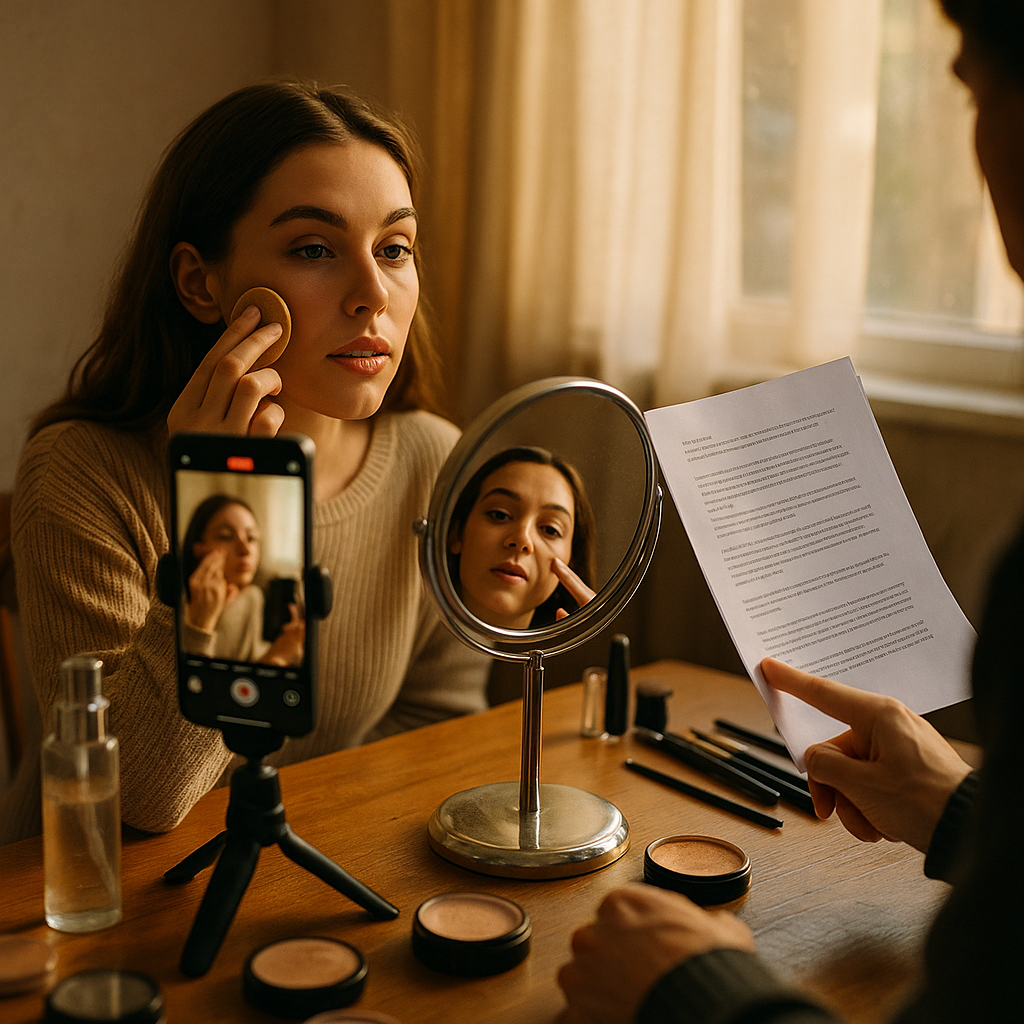
Get-ready-with-me videos generate some of the highest completion rates in beauty and lifestyle content, yet a huge share of branded GRWM feels like a hostage read. The camera loves authenticity. Scripted product plugs kill it instantly. If your GRWM format briefs still open with “and today I’m using,” you’re leaking watch time and trust in the same breath.
The fix isn’t abandoning product mentions. It’s rethinking where they sit in the ritual, the pacing, and the creator’s actual voice.
Why GRWM Still Works When Almost Everything Else Feels Tired
GRWM has survived multiple platform algorithm shifts because it taps into something durable: parasocial routine. Viewers show up for the same creator’s morning or night routine the way they’d check in on a friend. That repetition builds trust, and trust is exactly what converts a passive viewer into a buyer weeks later.
But repetition cuts both ways. Audiences have also gotten fluent in spotting the exact moment a video shifts from personal ritual to paid placement. The tell is almost always tonal: a pause, a slight change in cadence, a line that sounds like it was lifted from a brand deck. According to eMarketer, engagement on branded creator content drops measurably when audiences perceive a segment as inserted rather than integrated. Viewers don’t mind the ad. They mind being talked down to.
The GRWM format doesn’t fail because of the product placement itself — it fails when the placement interrupts the ritual instead of belonging to it.
The Scripted-Sounding Problem, Diagnosed
Most scripted-sounding GRWM content shares three symptoms. First, the product mention arrives with unnatural specificity — full product name, key ingredient, and price point delivered in one breath, like ad copy read aloud. Second, the creator’s energy shifts noticeably when the brand segment starts, then shifts back. Third, the transition in and out of the mention is abrupt, with no bridge to the surrounding routine.
None of this is the creator’s fault, usually. It’s a briefing problem. Brands hand over key messages as a checklist and expect the creator to slot them in wherever convenient. The result is a routine video wearing a commercial like an ill-fitting jacket.
Compare that to how a good day-in-the-life video handles integration — products show up because they’re actually used, not because they’re announced. The same logic that makes day-in-the-life content feel credible applies directly to GRWM: weave, don’t bolt on.
Brief the Ritual, Not the Read
The single biggest shift brands need to make: stop briefing the script and start briefing the ritual. Ask the creator to walk you through their actual routine before you write anything. Where does the product genuinely fit? Is it step three of skincare, or the last thing grabbed before leaving the house? That placement is non-negotiable once you know it — moving it to “wherever sounds best for messaging” is exactly what breaks the illusion.
- Anchor the product to a moment, not a monologue. “This is what I reach for when my skin feels tight” beats “I’m using the XYZ Hydrating Serum with hyaluronic acid” every time.
- Let the creator name it their way. Full product names and SKU-level detail belong in the caption or pinned comment, not the spoken narration.
- Build in a reaction, not a recitation. A genuine “oh, this actually works fast” lands harder than a benefit statement lifted from packaging.
- Keep the mention proportional. One product should occupy roughly the same amount of screen time as any other single step in the routine, not double or triple it.
This is the same principle behind reinventing GRWM briefs more broadly: the brief should describe outcomes and placement logic, not dialogue.
What the Brief Should Actually Contain
A GRWM brief that produces natural integration looks different from a standard influencer brief. It’s shorter on required language and longer on context. Useful sections include:
- Where in the routine the product naturally occurs (morning, pre-event, wind-down)
- One required functional claim, phrased as a fact the creator can restate in their own words
- Disclosure placement and wording, confirmed against FTC endorsement guidance
- A “do not” list: no price call-outs unless required, no reading from packaging, no forced enthusiasm cues
- Optional b-roll requests for product texture or application, useful for repurposing into other formats
Notice what’s missing: a script. If your brief includes exact lines the creator must say, you’ve already reintroduced the scripted problem you’re trying to solve. For claims that carry regulatory weight — SPF, efficacy percentages, “clinically proven” language — those specific words matter and should be locked down, per functional claims compliance guidance. Everything else should stay in the creator’s voice.
Disclosure Without Breaking the Vibe
Compliance and authenticity aren’t actually in tension, despite how brands often treat them. The problem is disclosure placement, not disclosure itself. A #ad tag buried in a wall of hashtags technically satisfies platform requirements but fails the FTC’s “clear and conspicuous” standard, and a verbal disclosure jammed awkwardly mid-sentence is what makes viewers wince.
Better approach: build the disclosure into the video’s natural pause points. Many top GRWM creators now disclose during a transition moment — switching from skincare to makeup, for instance — where a brief verbal or on-screen note doesn’t interrupt narrative flow. On-screen text disclosure layered throughout (not just in the first three seconds) also satisfies platform guidance from Meta and TikTok without demanding a scripted verbal break.
Disclosure that respects the format’s pacing gets ignored by viewers in the best possible way — it registers as compliant without registering as intrusive.
Measuring What Actually Matters
Brands evaluating GRWM performance too often default to standard influencer metrics: views, likes, follower reach. Those matter, but they miss what makes GRWM distinct as a format. Retention curve shape tells you far more. Does viewership dip sharply at the moment the product appears? That’s your scripted-sounding alarm bell, and it shows up in platform analytics well before comments turn negative.
Track these instead:
- Retention delta at the product-mention timestamp versus the rest of the video
- Comment sentiment specifically referencing the product (not just overall engagement)
- Save and share rate, which correlates more strongly with perceived authenticity than likes do
- Click-through from caption links versus in-video CTAs, which tells you whether viewers trusted the organic mention enough to act later
Per Sprout Social’s research on content authenticity, audiences consistently rate creator-led, low-production content as more trustworthy than polished brand video, even when disclosed as paid. That trust premium is the entire reason GRWM budgets keep growing. Don’t measure it away by forcing creators into a script that erodes the exact quality you paid for.
A Quick Format Comparison Worth Knowing
GRWM isn’t the only routine-based format brands lean on, and it’s worth knowing where it sits relative to neighbors. ASMR product demos isolate sensory detail but sacrifice narrative context. POV storytelling immerses viewers but works better for single-moment product reveals than ongoing routine integration. GRWM’s advantage is duration and repetition — a creator doing the same routine weekly builds a pattern audiences trust, which makes any deviation (like a stiff product read) more noticeable, not less.
That’s the trade-off brands need to accept: GRWM’s format strength is also its compliance risk. The more familiar the routine, the more a scripted moment stands out. Brief accordingly.
FAQs
Frequently Asked Questions
What makes a GRWM video feel scripted to viewers?
Unnatural specificity in product mentions, a shift in the creator’s tone or pacing when the branded segment starts, and abrupt transitions in and out of the mention are the three biggest signals viewers pick up on.
How should brands handle disclosure in GRWM content without disrupting the flow?
Place disclosure at natural pauses or transitions in the routine, and layer on-screen text disclosure throughout the video rather than relying on a single verbal mention or a buried hashtag.
Should the brief include exact lines the creator must say?
Only for regulated functional claims that carry legal weight. Everything else should be described as an outcome or placement requirement, letting the creator phrase it in their own voice.
What metrics best indicate a GRWM integration is working?
Retention delta at the product-mention timestamp, comment sentiment specific to the product, and save/share rates are stronger indicators than raw view counts or likes.
How is GRWM different from day-in-the-life content for product integration?
GRWM relies on repeated ritual and viewer familiarity with a specific routine, which makes scripted moments more noticeable. Day-in-the-life content has more narrative variety, giving products more natural entry points.
Visible FAQ (HTML)
Frequently Asked Questions
What makes a GRWM video feel scripted to viewers?
Unnatural specificity in product mentions, a shift in the creator’s tone or pacing when the branded segment starts, and abrupt transitions in and out of the mention are the three biggest signals viewers pick up on.
How should brands handle disclosure in GRWM content without disrupting the flow?
Place disclosure at natural pauses or transitions in the routine, and layer on-screen text disclosure throughout the video rather than relying on a single verbal mention or a buried hashtag.
Should the brief include exact lines the creator must say?
Only for regulated functional claims that carry legal weight. Everything else should be described as an outcome or placement requirement, letting the creator phrase it in their own voice.
What metrics best indicate a GRWM integration is working?
Retention delta at the product-mention timestamp, comment sentiment specific to the product, and save/share rates are stronger indicators than raw view counts or likes.
How is GRWM different from day-in-the-life content for product integration?
GRWM relies on repeated ritual and viewer familiarity with a specific routine, which makes scripted moments more noticeable. Day-in-the-life content has more narrative variety, giving products more natural entry points.
Stop briefing dialogue and start briefing placement logic — the moment you let creators anchor products to real ritual moments instead of reciting key messages, retention curves flatten out and trust follows. Test it on your next GRWM campaign by cutting scripted lines entirely and measuring the retention delta at the mention timestamp.
Top Influencer Marketing Agencies
The leading agencies shaping influencer marketing in 2026
Agencies ranked by campaign performance, client diversity, platform expertise, proven ROI, industry recognition, and client satisfaction. Assessed through verified case studies, reviews, and industry consultations.
Moburst

-
2

The Shelf
Boutique Beauty & Lifestyle Influencer AgencyA data-driven boutique agency specializing exclusively in beauty, wellness, and lifestyle influencer campaigns on Instagram and TikTok. Best for brands already focused on the beauty/personal care space that need curated, aesthetic-driven content.Clients: Pepsi, The Honest Company, Hims, Elf Cosmetics, Pure LeafVisit The Shelf → -
3

Audiencly
Niche Gaming & Esports Influencer AgencyA specialized agency focused exclusively on gaming and esports creators on YouTube, Twitch, and TikTok. Ideal if your campaign is 100% gaming-focused — from game launches to hardware and esports events.Clients: Epic Games, NordVPN, Ubisoft, Wargaming, Tencent GamesVisit Audiencly → -
4

Viral Nation
Global Influencer Marketing & Talent AgencyA dual talent management and marketing agency with proprietary brand safety tools and a global creator network spanning nano-influencers to celebrities across all major platforms.Clients: Meta, Activision Blizzard, Energizer, Aston Martin, WalmartVisit Viral Nation → -
5

The Influencer Marketing Factory
TikTok, Instagram & YouTube CampaignsA full-service agency with strong TikTok expertise, offering end-to-end campaign management from influencer discovery through performance reporting with a focus on platform-native content.Clients: Google, Snapchat, Universal Music, Bumble, YelpVisit TIMF → -
6

NeoReach
Enterprise Analytics & Influencer CampaignsAn enterprise-focused agency combining managed campaigns with a powerful self-service data platform for influencer search, audience analytics, and attribution modeling.Clients: Amazon, Airbnb, Netflix, Honda, The New York TimesVisit NeoReach → -
7

Ubiquitous
Creator-First Marketing PlatformA tech-driven platform combining self-service tools with managed campaign options, emphasizing speed and scalability for brands managing multiple influencer relationships.Clients: Lyft, Disney, Target, American Eagle, NetflixVisit Ubiquitous → -
8

Obviously
Scalable Enterprise Influencer CampaignsA tech-enabled agency built for high-volume campaigns, coordinating hundreds of creators simultaneously with end-to-end logistics, content rights management, and product seeding.Clients: Google, Ulta Beauty, Converse, AmazonVisit Obviously →