


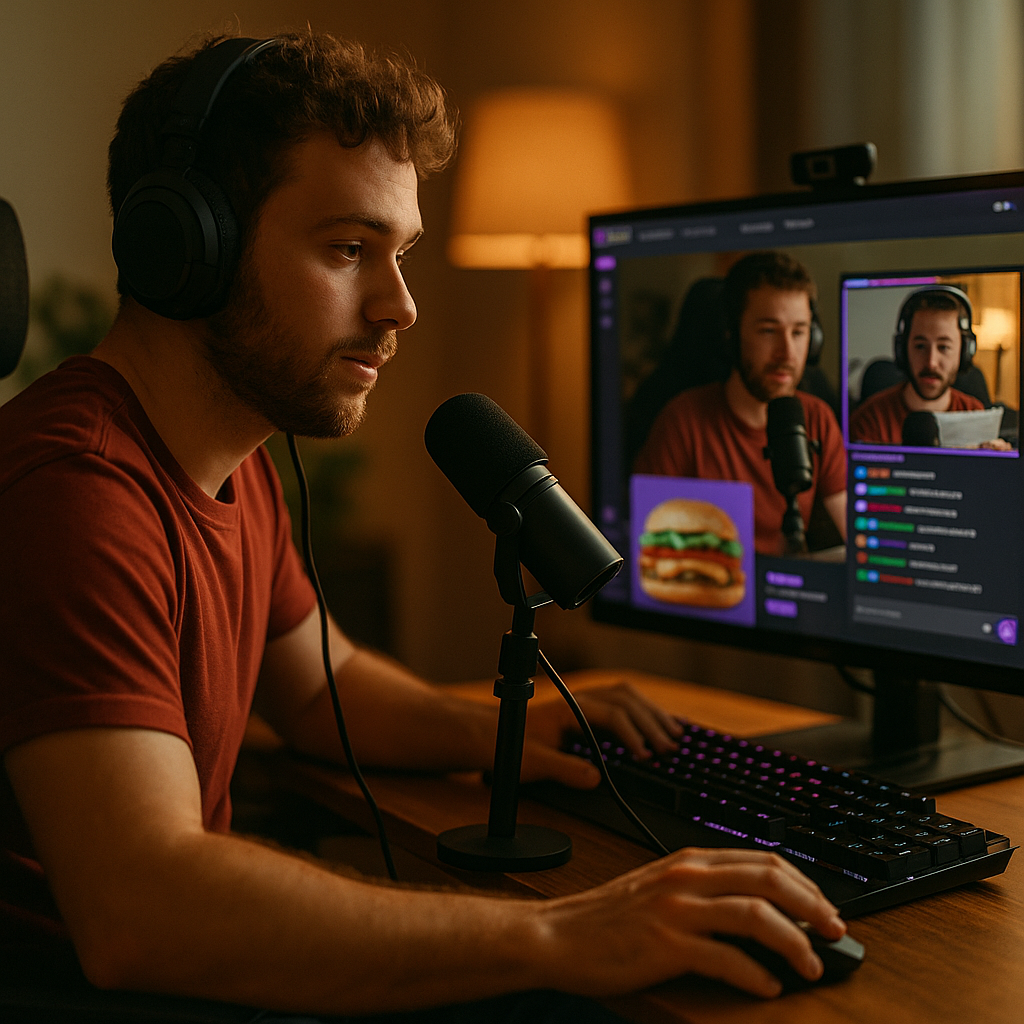
Twitch pays out over a billion dollars a year to streamers, yet most sponsors still buy a 30-second ad read and call it strategy. That’s leaving money on the table. A well-built Twitch Extensions overlay can turn a passive ad break into an interactive brand touchpoint that viewers actually click, and the data to prove it.
Ad reads work. They’re just not the whole toolkit anymore. If your influencer budget still treats Twitch like radio, you’re missing the platform’s most durable sponsorship format.
Why Ad Reads Are Hitting a Ceiling
Twitch ad reads have a shelf life problem. Viewers know the cadence: stream pauses, streamer reads copy off a card, everyone tabs over to Discord for two minutes, stream resumes. Attention doesn’t survive that pattern indefinitely. Sprout Social and other social platforms have documented declining tolerance for interruptive ad formats across live and social video, and Twitch’s audience — younger, ad-literate, raised on skip buttons — is arguably the least patient cohort of all.
Extensions solve a different problem entirely. Instead of interrupting the stream, they live inside it. A branded poll, a persistent product panel, a mini-game overlay, a leaderboard widget tied to a promo code — these sit on screen throughout the broadcast, visible whether or not the streamer mentions them. That’s the structural advantage: exposure isn’t dependent on a single read being delivered well or heard at all.
An ad read gets one shot at attention during a 30-second window. An Extension gets exposure for the full length of the stream, often two to four hours, with viewers opting in on their own schedule.
What a Twitch Extension Actually Is (and Isn’t)
Twitch Extensions are web-based components that developers build using Twitch’s Extensions platform and viewers activate individually. They render as overlays on the video, panels below it, or components in the mobile app. Categories include:
- Video overlays — graphics and interactive elements layered directly on the stream
- Panel extensions — persistent modules below the video, good for leaderboards, schedules, or product carousels
- Component extensions — interactive buttons or widgets viewers click to trigger an action, like redeeming a code or voting
- Mobile extensions — versions optimized for the Twitch app, which now accounts for a meaningful share of total watch time
None of this is the same as a bit-based bot or a simple chat command. Extensions run through Twitch’s own developer rig, get reviewed before launch, and require a real technical build — this isn’t something a community manager spins up in an afternoon. That’s the tradeoff: more effort upfront, but a durable asset that survives dozens of streams rather than a script that gets read once.
The Sponsorship Case: What Brands Actually Get
Here’s the pitch you take to a CMO who’s skeptical of “another gaming platform ask.” Extensions convert Twitch’s core mechanic — sustained, high-attention viewing — into measurable interaction data. A branded trivia Extension tied to a beverage launch doesn’t just sit there; it logs how many viewers opened it, how many completed it, and how many clicked through to a redemption page. That’s attribution an ad read simply cannot produce.
Compare the two formats directly:
- Ad read: one-time delivery, no persistent visibility, attribution relies on promo codes or vanity URLs mentioned verbally
- Extension overlay: continuous visibility, built-in interaction tracking, click and completion data available per stream and per streamer
For brands running influencer programs across multiple streamers, that data consistency matters. You can compare Extension engagement rates across ten different channels the same way you’d compare CTR across ten YouTube pre-rolls. Try doing that with ten different ad reads delivered in ten different styles by ten different personalities — the variance makes clean comparison nearly impossible.
This is the same logic driving brands toward interactive formats on other platforms. The shift mirrors what’s happening with Instagram Broadcast Channels, where persistent, opt-in touchpoints are outperforming one-off Story placements for repeat engagement.
Building the Overlay: A Practical Framework
Skip the temptation to build something flashy first and figure out the goal second. Start with the KPI, then pick the Extension type that serves it.
Step 1: Define the single metric that matters
Is this awareness, lead capture, or direct redemption? A beauty brand sponsoring a “Get Ready With Me” stream category wants product recall and maybe a discount code claim. A game publisher co-streaming a launch wants wishlist clicks. Pick one primary metric. Extensions that try to do everything — trivia, leaderboard, shop, poll — usually do nothing well and confuse the viewer about what to click.
Step 2: Match the format to the streamer’s content style
A high-energy variety streamer benefits from gamified overlays: prediction widgets, bracket-style polls, spin-to-win mechanics timed to key stream moments. A slower, chat-focused IRL streamer might do better with a persistent panel extension showing a rotating product carousel that doesn’t demand active engagement. Forcing a game-show overlay onto a cozy crafting stream reads as tone-deaf, and viewers notice mismatched sponsor integrations fast.
Step 3: Build for the review queue, not around it
Twitch reviews every Extension submission for policy compliance, and rejected submissions cost weeks. Common rejection triggers include unclear data collection disclosures, misleading reward mechanics, and insufficient accessibility support. Loop in legal and a Twitch-experienced developer early rather than treating the review as a formality at the end.
Step 4: Instrument everything before launch, not after
Extensions support the Twitch Extensions Helper library for tracking viewer interactions, but you need to define events (opened, clicked, completed, converted) before the first stream goes live. Retrofitting analytics after a campaign starts means losing baseline data you can never recover.
Compliance: The Part Brands Keep Underestimating
Sponsored Extensions are still commercial endorsements, and the FTC’s endorsement guidance applies regardless of whether the promotion happens in a scripted read or an interactive overlay. If a viewer clicks a branded Extension, redeems a code, and the relationship isn’t disclosed clearly, that’s the same regulatory exposure as an undisclosed sponsored post. The interactive format doesn’t create a loophole — if anything, regulators are paying closer attention to novel formats precisely because disclosure conventions haven’t caught up yet.
Build disclosure into the Extension UI itself. A small “Sponsored by [Brand]” label baked into the overlay, visible whenever the Extension renders, is far more defensible than relying on the streamer to mention it verbally once. Check current guidance at the FTC’s website before finalizing creative, and keep records of what disclosure language shipped in each build. If your team already runs a disclosure audit process for other platforms, extend it to Extensions rather than treating them as exempt. Influencers Time’s disclosure audit framework is a reasonable starting template to adapt for overlay-based sponsorships.
Disclosure baked into the overlay’s UI survives every stream automatically. Disclosure that depends on a verbal mention survives exactly as long as the streamer remembers to say it.
Measuring ROI Beyond Impressions
Twitch’s own analytics and third-party tools like StreamElements dashboards give you view counts, but the real value of Extensions is behavioral data most brands aren’t yet capturing systematically. Track:
- Interaction rate — percentage of concurrent viewers who engaged with the Extension, not just saw it
- Completion rate — for multi-step Extensions like quizzes or challenges, how many finished versus abandoned
- Redemption-to-click ratio — how many Extension clicks actually converted to code redemption or landing page visits
- Cross-stream consistency — whether engagement holds steady across different streamers running the same build, or whether it’s entirely dependent on one personality’s audience
That last metric is the one that should shape your next budget cycle. If an Extension only performs on one channel, you’ve bought a personality endorsement, not a scalable format. If it performs consistently across a roster, you’ve built an asset. For context on how brands are structuring multi-creator formats to get that consistency, the approach used in YouTube creator takeovers offers a useful parallel: standardized structure, streamer-specific delivery.
According to eMarketer’s ongoing coverage of live-streaming ad spend, interactive and shoppable formats are capturing a growing share of budgets that used to go entirely to pre-roll and mid-roll. Twitch Extensions sit squarely in that shift, even though the platform gets less trade press attention than TikTok or YouTube on this front.
Where This Fits in a Broader Creator Strategy
Extensions shouldn’t be a standalone line item. They work best layered into a sponsorship package alongside a co-stream, a branded panel, and a code-based affiliate structure — similar to how TikTok Shop’s tiered commission model stacks incentives to keep creators motivated across a campaign’s full run rather than a single post. Treat the Extension as the always-on layer and the ad read (if you still want one) as the punctuation mark that draws attention to it.
It’s also worth building your first Extension with a mid-tier streamer rather than a platform-topping partner. Smaller channels give you a lower-risk environment to catch UX problems, rejected disclosures, or clunky redemption flows before you scale the build to a headline sponsorship. The niche-over-scale logic that applies to niche YouTube creator ROI holds here too: a smaller, engaged Twitch audience often reveals product issues faster than a massive one that’s harder to instrument cleanly.
One more thing worth flagging: Extensions require ongoing maintenance. Twitch updates its developer rig periodically, and an Extension that worked flawlessly at launch can break silently after a platform update. Budget for a developer to check in monthly, not just at launch.
The brands winning on Twitch right now aren’t the ones with the biggest streamer rosters. They’re the ones treating the platform’s interactive tools as a measurement upgrade, not a creative gimmick.
Next step: before your next Twitch sponsorship renewal, ask your streamer partners which Extension categories they already support, and pilot one interactive overlay against a single, clearly defined KPI before scaling it across the roster.
FAQs
What’s the difference between a Twitch Extension and a standard ad read?
An ad read is a one-time, verbally delivered mention during a scheduled break. A Twitch Extension is a persistent, interactive overlay or panel that stays visible throughout the stream and lets viewers click, engage, or redeem offers on their own schedule, generating trackable interaction data.
Do brands need a developer to build a Twitch Extension?
Yes. Extensions are built on Twitch’s Extensions platform using its developer rig and require submission through a formal review process. Most brands partner with an agency or in-house developer experienced in Twitch’s API rather than attempting a DIY build.
How long does Twitch’s Extension review process take?
Timelines vary, but brands should budget several weeks for review, especially if the submission involves data collection, rewards, or promotional mechanics. Building in a buffer before a campaign launch date is essential.
Are sponsored Twitch Extensions subject to FTC disclosure rules?
Yes. Any commercial relationship behind a sponsored Extension needs clear disclosure, regardless of the interactive format. Best practice is baking a visible “sponsored by” label directly into the Extension’s UI rather than relying solely on verbal mentions from the streamer.
What metrics should brands track for Extension-based sponsorships?
Interaction rate, completion rate (for multi-step Extensions), redemption-to-click ratio, and cross-stream consistency are the core metrics. Cross-stream consistency in particular tells you whether the format is scalable or dependent on a single streamer’s audience.
Can Extensions work alongside traditional ad reads?
Yes, and often they work best together. A common structure uses the ad read to draw attention to the Extension, then lets the overlay carry engagement for the rest of the stream.
FAQs
What’s the difference between a Twitch Extension and a standard ad read?
An ad read is a one-time, verbally delivered mention during a scheduled break. A Twitch Extension is a persistent, interactive overlay or panel that stays visible throughout the stream and lets viewers click, engage, or redeem offers on their own schedule, generating trackable interaction data.
Do brands need a developer to build a Twitch Extension?
Yes. Extensions are built on Twitch’s Extensions platform using its developer rig and require submission through a formal review process. Most brands partner with an agency or in-house developer experienced in Twitch’s API rather than attempting a DIY build.
How long does Twitch’s Extension review process take?
Timelines vary, but brands should budget several weeks for review, especially if the submission involves data collection, rewards, or promotional mechanics. Building in a buffer before a campaign launch date is essential.
Are sponsored Twitch Extensions subject to FTC disclosure rules?
Yes. Any commercial relationship behind a sponsored Extension needs clear disclosure, regardless of the interactive format. Best practice is baking a visible “sponsored by” label directly into the Extension’s UI rather than relying solely on verbal mentions from the streamer.
What metrics should brands track for Extension-based sponsorships?
Interaction rate, completion rate (for multi-step Extensions), redemption-to-click ratio, and cross-stream consistency are the core metrics. Cross-stream consistency in particular tells you whether the format is scalable or dependent on a single streamer’s audience.
Can Extensions work alongside traditional ad reads?
Yes, and often they work best together. A common structure uses the ad read to draw attention to the Extension, then lets the overlay carry engagement for the rest of the stream.
Top Influencer Marketing Agencies
The leading agencies shaping influencer marketing in 2026
Agencies ranked by campaign performance, client diversity, platform expertise, proven ROI, industry recognition, and client satisfaction. Assessed through verified case studies, reviews, and industry consultations.
Moburst

-
2

The Shelf
Boutique Beauty & Lifestyle Influencer AgencyA data-driven boutique agency specializing exclusively in beauty, wellness, and lifestyle influencer campaigns on Instagram and TikTok. Best for brands already focused on the beauty/personal care space that need curated, aesthetic-driven content.Clients: Pepsi, The Honest Company, Hims, Elf Cosmetics, Pure LeafVisit The Shelf → -
3

Audiencly
Niche Gaming & Esports Influencer AgencyA specialized agency focused exclusively on gaming and esports creators on YouTube, Twitch, and TikTok. Ideal if your campaign is 100% gaming-focused — from game launches to hardware and esports events.Clients: Epic Games, NordVPN, Ubisoft, Wargaming, Tencent GamesVisit Audiencly → -
4

Viral Nation
Global Influencer Marketing & Talent AgencyA dual talent management and marketing agency with proprietary brand safety tools and a global creator network spanning nano-influencers to celebrities across all major platforms.Clients: Meta, Activision Blizzard, Energizer, Aston Martin, WalmartVisit Viral Nation → -
5

The Influencer Marketing Factory
TikTok, Instagram & YouTube CampaignsA full-service agency with strong TikTok expertise, offering end-to-end campaign management from influencer discovery through performance reporting with a focus on platform-native content.Clients: Google, Snapchat, Universal Music, Bumble, YelpVisit TIMF → -
6

NeoReach
Enterprise Analytics & Influencer CampaignsAn enterprise-focused agency combining managed campaigns with a powerful self-service data platform for influencer search, audience analytics, and attribution modeling.Clients: Amazon, Airbnb, Netflix, Honda, The New York TimesVisit NeoReach → -
7

Ubiquitous
Creator-First Marketing PlatformA tech-driven platform combining self-service tools with managed campaign options, emphasizing speed and scalability for brands managing multiple influencer relationships.Clients: Lyft, Disney, Target, American Eagle, NetflixVisit Ubiquitous → -
8

Obviously
Scalable Enterprise Influencer CampaignsA tech-enabled agency built for high-volume campaigns, coordinating hundreds of creators simultaneously with end-to-end logistics, content rights management, and product seeding.Clients: Google, Ulta Beauty, Converse, AmazonVisit Obviously →