


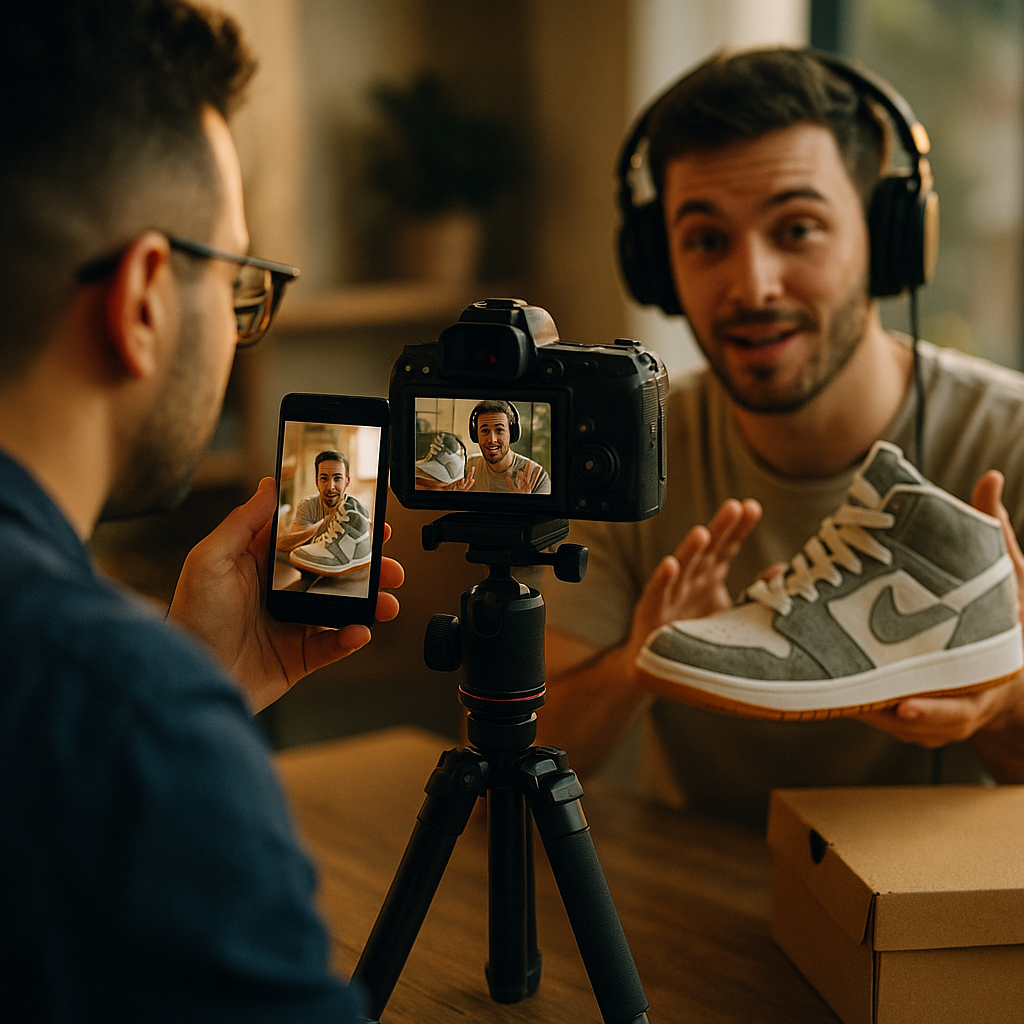
One branded takeover video on the right YouTube channel can outperform a six-figure paid media flight. That’s not hype, it’s what happens when a trusted creator hands their audience trust to a brand for a single, engineered moment. YouTube creator takeovers are having a real strategic moment in 2026, and most brand teams still treat them like a glorified sponsored video instead of the channel-level asset they actually are.
Done right, a takeover isn’t a one-off integration. It’s a temporary occupation of someone else’s owned media, with all the reach benefits and none of the platform lock-in of paid ads. Done wrong, it’s a legal headache, a brand-safety risk, and a wasted budget line. Here’s how to structure one properly.
What Exactly Is a Creator Takeover?
A takeover happens when a brand effectively controls a creator’s channel, or a defined slice of it, for a set period. That could mean a branded video series replacing the creator’s normal upload cadence for a week, a co-branded channel banner and thumbnail treatment, a pinned comment campaign, or full creative control over a single flagship video that the creator’s community treats as “must-watch.”
Unlike a standard sponsorship (a 60-second ad read bolted onto unrelated content), a takeover reshapes the viewer’s experience of the channel itself. The creator’s subscribers show up expecting their usual content and instead get a brand-led narrative wearing the creator’s voice.
Think of it less as an ad placement and more as a media rental agreement. You’re leasing attention, trust, and format equity, not just impressions.
A takeover only works if the audience doesn’t feel like they’ve been redirected to an ad. The moment it feels like a detour, retention collapses and so does the ROI case.
Why Brands Are Prioritizing Takeovers Over Standard Integrations
YouTube remains the platform where long-form trust compounds. According to eMarketer, YouTube continues to command the largest share of connected TV viewing time among ad-supported platforms in the US, and creator-led content is increasingly the entry point for that attention. Brands aren’t just chasing views anymore. They’re chasing the halo effect of borrowed authority.
A few reasons takeovers are gaining budget share:
- Higher completion rates. Audiences who trust a creator’s editorial judgment stick around longer than they do for pre-roll or mid-roll ads.
- Format flexibility. A takeover can be a single video, a week-long series, a community tab occupation, or a livestream hijack, scaled to budget.
- Earned-media optics. Press and trade coverage treat takeovers as cultural moments, not ad buys, which extends reach beyond the platform.
- Compounding SEO value. A well-tagged, well-titled takeover video keeps generating search and suggested-video traffic long after the campaign ends, unlike a paid flight that stops the moment spend does.
This is also why the smarter buyers are shifting dollars away from broad-reach lifestyle creators and toward tightly scoped channels with real category authority. The niche creator ROI advantage shows up even more clearly in takeover formats, because the audience arriving for a takeover already trusts the channel’s specific expertise.
The Anatomy of a Well-Structured Takeover
Most takeovers fail for the same reason most influencer campaigns fail: nobody wrote down what “success” actually meant before the cameras rolled. A structured takeover has five components.
1. Scope definition. Is this a single video, a multi-part series, a full week of channel branding, or a livestream? Get explicit. “Takeover” means different things to different creators, and vague scope is how budgets balloon mid-production.
2. Creative control split. Decide up front who owns final cut. Most experienced creators will push back on 100% brand control, and they’re right to. The audience can smell a script from a mile away. The best takeovers give the brand message ownership and the creator format ownership.
3. Distribution mechanics. Will the video sit on the main channel, a second channel, or a dedicated playlist? Will it be boosted with paid media afterward? This decision affects everything from thumbnail design to keyword tagging.
4. Disclosure and compliance. Takeovers are still paid partnerships under FTC guidelines, and YouTube’s own paid promotion toggle needs to be switched on regardless of format novelty. Regulators don’t care that it “felt organic.” If money or product changed hands, disclosure rules apply, full stop. For a repeatable process, run every takeover through the same lens used in a disclosure audit across platforms, since inconsistent labeling is one of the fastest ways to draw regulatory attention.
5. Rights and reuse terms. Can the brand repurpose takeover footage on paid social, CTV, or in-store screens? This needs to be in the contract, not assumed. If you’re planning to push the asset into programmatic CTV later, lock those rights in before production starts, not after the invoice lands. The CTV rights and specs guide is worth reviewing before you draft that clause.
Picking the Right Channel Isn’t About Subscriber Count
Brand teams still default to subscriber count as the primary filter, and it’s the wrong instinct. A takeover lives or dies on watch-time retention and comment engagement quality, not raw audience size. A channel with 300,000 subscribers and a fiercely engaged niche audience will outperform a 2-million-subscriber generalist channel almost every time, because the takeover format depends on trust transfer, and trust doesn’t scale linearly with reach.
Pull the channel’s average view duration, comment-to-view ratio, and community tab engagement before signing anything. If a creator’s community tab gets more engagement than their videos, that’s a strong signal their audience treats the channel as a relationship, not content consumption. That’s exactly the kind of channel worth occupying.
Budgeting: What a Takeover Actually Costs
Pricing varies wildly, but a few benchmarks help set expectations. A single-video takeover with a mid-tier niche creator (100K-500K subscribers) typically runs from a standard sponsored-integration rate, plus a premium of 30-60% for full creative control and channel branding elements. Multi-day or week-long channel occupations command significantly more, often structured as a flat retainer plus usage rights fees.
Don’t forget the hidden costs: paid amplification post-launch, thumbnail and title testing, and legal review for rights and disclosure. A takeover budget that only accounts for the creator fee is an incomplete budget.
Also budget for the amplification layer. Organic reach on YouTube, like everywhere else, has been shrinking for creators without paid support behind key uploads. The case for paid amplification applies just as much to takeover content as it does to standard brand uploads, maybe more, since a takeover video’s algorithmic signals need an early push to compete with the creator’s normal upload performance baseline.
Measuring What Actually Matters
Views are vanity here. The metrics that matter for a takeover:
- Average percentage viewed compared to the creator’s channel baseline (not compared to industry averages)
- Subscriber conversion to the brand’s own channel or owned social handles
- Comment sentiment, not just comment volume — a flood of “sellout” comments is a red flag no view count can offset
- Post-campaign search lift for branded terms, trackable via Google’s ad and analytics tools
- Attribution within contract windows, especially if the takeover is tied to a launch or seasonal push
On that last point, get specific about attribution windows before the campaign starts, not after results come in. Ambiguous windows are one of the most common sources of dispute between brands and creator talent, and the same discipline that applies to destination creator contracts applies here too.
If your reporting deck only has view count and CPM, you haven’t measured a takeover, you’ve measured an ad buy that happened to use a creator’s face.
Where Takeovers Go Wrong
The most common failure mode isn’t creative, it’s operational. Brands over-script the video, the creator’s audience notices the tonal shift immediately, and engagement craters. The second most common failure is legal: brands assume standard influencer contract templates cover takeover-level control, when in reality takeovers need custom clauses around channel access, upload scheduling, and post-campaign content ownership.
A quieter risk: platform algorithm shifts. YouTube, like every platform, keeps adjusting how it weights completion rate, session duration, and Shorts-to-long-form crossover. A takeover planned against last year’s algorithm behavior can underperform if the brief doesn’t account for current signals. Keeping briefs current with platform algorithm changes isn’t optional anymore, it’s part of the planning process.
One more thing worth flagging: takeovers increasingly need to work across formats, not just the main long-form upload. If your takeover doesn’t have a Shorts companion strategy, you’re leaving discovery reach on the table. The shift toward faster-paced, higher-retention short content means briefs should account for Shorts-specific creative guidance from the outset, not as an afterthought bolted on after the long-form edit is locked.
Building a Repeatable Takeover Process
The brands getting real value from takeovers treat them as a repeatable operational format, not a one-off stunt. That means a standing checklist: channel vetting criteria, a disclosure and compliance template, a rights and reuse clause library, and a measurement framework that’s agreed before any camera rolls. It also means briefing consistently across the creator’s other channels, since a takeover rarely lives on YouTube alone anymore. If the same creator relationship spans TikTok or Pinterest too, a unified cross-platform brief keeps messaging consistent without duplicating creative work three times over.
Takeovers work because they borrow something paid media can’t buy outright: earned trust, temporarily loaned to a brand. Protect that loan with clear scope, real compliance discipline, and measurement that goes past view count, and the format pays for itself many times over.
FAQs
What’s the difference between a takeover and a standard sponsored video?
A sponsored video is a segment or ad read within a creator’s normal content. A takeover reshapes the channel experience itself, whether that’s a full video, a branded series, or channel-wide visual and messaging control for a defined period.
How long should a YouTube creator takeover run?
Most effective takeovers run from a single flagship video to a one-week window. Longer occupations risk audience fatigue and diminish the “event” quality that makes takeovers effective in the first place.
Do takeovers require the same FTC disclosure as regular sponsored content?
Yes. Regardless of format novelty, if compensation or product exchanged hands, standard FTC disclosure rules and YouTube’s paid promotion toggle apply in full.
What size channel is best for a takeover?
Subscriber count is a weak predictor of takeover success. Watch-time retention, comment sentiment, and community tab engagement matter far more than raw audience size.
Can takeover footage be reused across other channels like CTV or paid social?
Only if reuse rights are explicitly negotiated in the contract before production. Assume nothing is reusable unless it’s written into the agreement.
How do brands measure takeover success beyond views?
Track average percentage viewed against the creator’s baseline, subscriber conversion to brand channels, comment sentiment quality, and branded search lift within an agreed attribution window.
FAQs
What’s the difference between a takeover and a standard sponsored video?
A sponsored video is a segment or ad read within a creator’s normal content. A takeover reshapes the channel experience itself, whether that’s a full video, a branded series, or channel-wide visual and messaging control for a defined period.
Top Influencer Marketing Agencies
The leading agencies shaping influencer marketing in 2026
Agencies ranked by campaign performance, client diversity, platform expertise, proven ROI, industry recognition, and client satisfaction. Assessed through verified case studies, reviews, and industry consultations.
Moburst

-
2

The Shelf
Boutique Beauty & Lifestyle Influencer AgencyA data-driven boutique agency specializing exclusively in beauty, wellness, and lifestyle influencer campaigns on Instagram and TikTok. Best for brands already focused on the beauty/personal care space that need curated, aesthetic-driven content.Clients: Pepsi, The Honest Company, Hims, Elf Cosmetics, Pure LeafVisit The Shelf → -
3

Audiencly
Niche Gaming & Esports Influencer AgencyA specialized agency focused exclusively on gaming and esports creators on YouTube, Twitch, and TikTok. Ideal if your campaign is 100% gaming-focused — from game launches to hardware and esports events.Clients: Epic Games, NordVPN, Ubisoft, Wargaming, Tencent GamesVisit Audiencly → -
4

Viral Nation
Global Influencer Marketing & Talent AgencyA dual talent management and marketing agency with proprietary brand safety tools and a global creator network spanning nano-influencers to celebrities across all major platforms.Clients: Meta, Activision Blizzard, Energizer, Aston Martin, WalmartVisit Viral Nation → -
5

The Influencer Marketing Factory
TikTok, Instagram & YouTube CampaignsA full-service agency with strong TikTok expertise, offering end-to-end campaign management from influencer discovery through performance reporting with a focus on platform-native content.Clients: Google, Snapchat, Universal Music, Bumble, YelpVisit TIMF → -
6

NeoReach
Enterprise Analytics & Influencer CampaignsAn enterprise-focused agency combining managed campaigns with a powerful self-service data platform for influencer search, audience analytics, and attribution modeling.Clients: Amazon, Airbnb, Netflix, Honda, The New York TimesVisit NeoReach → -
7

Ubiquitous
Creator-First Marketing PlatformA tech-driven platform combining self-service tools with managed campaign options, emphasizing speed and scalability for brands managing multiple influencer relationships.Clients: Lyft, Disney, Target, American Eagle, NetflixVisit Ubiquitous → -
8

Obviously
Scalable Enterprise Influencer CampaignsA tech-enabled agency built for high-volume campaigns, coordinating hundreds of creators simultaneously with end-to-end logistics, content rights management, and product seeding.Clients: Google, Ulta Beauty, Converse, AmazonVisit Obviously →