


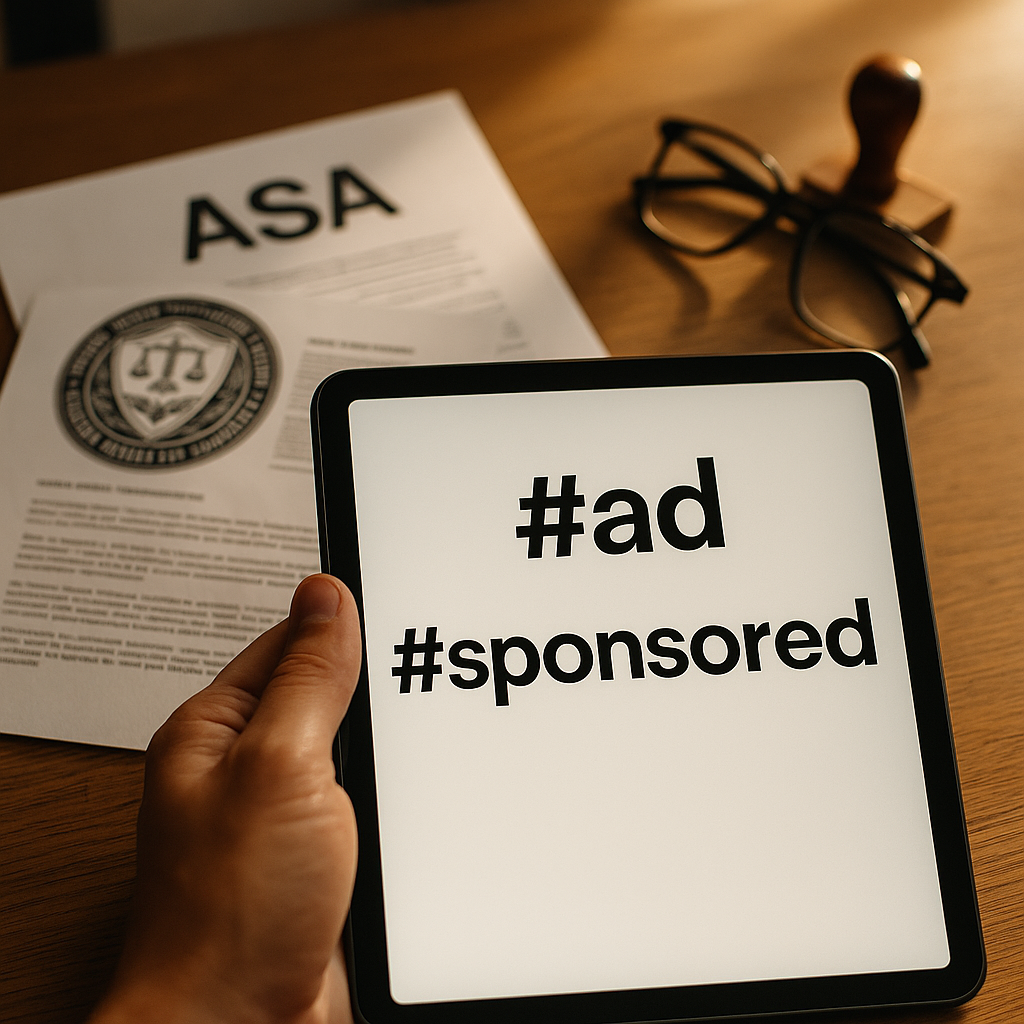
Two regulators. Two sets of wording. One creator post that airs in London and New York simultaneously. If your transatlantic disclosure template still treats UK ASA guidance and US FTC standards as separate compliance tracks, you’re duplicating legal review, confusing creators, and probably still getting it wrong on one side of the Atlantic. There’s a simpler way, and it starts with the strictest common denominator.
Why Brands Keep Running Two Playbooks
Most global creator programs were built regionally, then stitched together later. The US team learned FTC Section 5 requirements. The UK team learned the ASA’s CAP Code and the Committee of Advertising Practice rules. Nobody sat the two rulebooks side by side and asked: what does a single disclosure look like that satisfies both?
That gap shows up in campaign briefs constantly. A creator based in Manchester posts sponsored content that a US-headquartered brand boosts as paid media to American audiences. Which rules apply? Arguably both. The ASA governs UK-facing ads and any content targeting UK consumers, regardless of where the brand sits. The FTC governs endorsements reaching US consumers, regardless of where the creator is based. Geography doesn’t limit either regulator’s reach anymore, and that’s exactly the trap.
If your campaign touches consumers in both markets, you’re not choosing between ASA and FTC rules — you’re subject to both, simultaneously, on the same piece of content.
This isn’t hypothetical. Cross-border influencer spend has grown fast enough that eMarketer now tracks influencer marketing as a distinct global ad category, and agencies routinely cast UK and US creators for the same product launch. The compliance infrastructure hasn’t caught up with the media buying.
What the ASA Actually Requires
The ASA, working from the CAP and BCAP codes, expects disclosure to be obvious, upfront, and unambiguous. Its core test: would an average consumer immediately recognize the content as advertising, without needing to click “more” or scroll past three lines of hashtags? The ASA has ruled against brands and creators for burying “#ad” in a hashtag pile, for using vague terms like “#sp” or “#collab,” and for disclosures placed after the fold on Instagram or buried in a YouTube description.
Key ASA expectations:
- Disclosure must appear at the start of a post, not the end.
- Platform-native labels (Instagram’s “Paid partnership,” TikTok’s “Sponsored” tag) are encouraged but don’t replace a plain-language disclosure.
- Gifting arrangements above a nominal value require disclosure, even without direct payment.
- Verbal disclosure in video content must be clear and not rushed or mumbled.
The ASA has also been increasingly active on AI-generated endorsements, an area covered in depth in our piece on auditing cross-border AI endorsement deals. If a creator’s likeness or voice is synthetically generated, the ASA expects that to be disclosed as clearly as the commercial relationship itself.
What the FTC Actually Requires
The FTC’s Endorsement Guides operate on a similar principle — “clear and conspicuous” — but the enforcement texture differs. The FTC cares less about exact wording and more about whether a reasonable consumer would understand the material connection between creator and brand. That said, the FTC has published specific guidance recommending terms like “#ad” or “#sponsored” placed early in a post, and has taken action against vaguer terms.
Where the FTC diverges most from the ASA is brand liability. Under Section 5 of the FTC Act, the brand itself can be held liable for a creator’s non-disclosure if the brand directed, reviewed, or had reason to know about the sponsored content. This “brand-directed liability” standard is the subject of our FTC brand liability playbook, and it changes how much oversight brands need to build into contracts, not just guidelines.
The FTC has also been explicit about AI-generated content and synthetic endorsers, an area that intersects with state-level disclosure laws. Our breakdown of reconciling state AI disclosure laws with Section 5 is worth reading alongside this piece if your campaigns use any AI-assisted creator content.
The Overlap Is Bigger Than the Gap
Here’s the good news nobody advertises: ASA and FTC standards agree on roughly 80% of what matters. Both want disclosure upfront, not buried. Both reject vague hashtags. Both extend to gifted products, not just paid placements. Both apply regardless of platform. If you build for the stricter requirement on each specific point, you satisfy both regulators without running parallel systems.
The remaining 20% is where brands get tripped up, and it’s worth mapping precisely:
- Wording specificity: The ASA is comfortable with “Ad” as a standalone disclosure in some contexts. The FTC generally wants “#ad” or “Sponsored” spelled out more explicitly, particularly for gifted-product content.
- Liability chain: The FTC’s brand-directed liability standard is broader than typical ASA enforcement against advertisers, which more often targets the ad itself rather than assigning proactive monitoring duty to the brand.
- Platform label reliance: The ASA has signaled that native platform labels alone can be insufficient; the FTC has been somewhat more accepting of platform labels as a complement to text disclosure, though not a replacement.
- Enforcement mechanism: ASA rulings are published and reputational; FTC actions can carry civil penalties. That difference alone should push brands toward the stricter standard by default.
For a full side-by-side, our cross-border disclosure matrix mapping FTC, ASA, and DSA rules is the reference document most compliance teams end up printing out and pinning to the wall.
Building the Single Template
So what does a transatlantic disclosure template actually look like in practice? Not a legal memo. A one-page creator brief addendum that works for both regulators without requiring creators to memorize two rulebooks.
The template should specify:
- Placement: Disclosure appears in the first three lines of caption text, and verbally within the first five seconds of any video content. No exceptions for “aesthetic” reasons.
- Language: Use “Ad” or “Sponsored” as standalone or leading terms, never buried in a hashtag string, never abbreviated to “#sp” or “#collab.”
- Platform labels as supplement, not substitute: Require both the native paid-partnership tag AND the plain-language disclosure, satisfying the ASA’s skepticism of labels-only and the FTC’s preference for redundancy.
- Gifting threshold: Disclose any gifted product regardless of value, removing the ambiguity around “nominal value” thresholds that differ by jurisdiction.
- AI content flag: Any synthetic voice, likeness, or AI-generated visual triggers a separate, explicit disclosure, addressed in our legal review checklist for AI-generated UGC.
- Approval workflow: Brand reviews and time-stamps final creative before publish, creating the documentation trail that protects against FTC brand-directed liability claims.
Build to the stricter rule on every single point, and you never have to ask which regulator applies — because you’ve already satisfied both.
Operational Reality: Where This Breaks Down
Templates fail in execution, not in drafting. The most common breakage points:
Multi-platform stripping. A creator discloses properly on the original TikTok post, but a brand’s paid boost or a repost on Instagram drops the disclosure text. This is functionally identical to the AI-stripping problem covered in our disclosure audit protocol for catching stripped sponsor tags — the fix is the same: audit every repost and paid amplification, not just the original post.
Agency hand-off gaps. When a UK agency casts UK creators and a separate US agency casts US creators for the same global campaign, disclosure standards drift. One template, one legal sign-off, distributed to both agencies before brief-out, closes this gap.
Escalation ambiguity. When a disclosure is missing or wrong, who catches it, and what happens next? Most brands don’t have an answer, which is why an internal escalation protocol for undisclosed sponsorships matters as much as the template itself.
Tie It to Your Broader Compliance Calendar
A disclosure template isn’t a one-time document. Regulatory guidance shifts, platform label formats change, and new AI disclosure obligations keep landing at the state and national level. Treat this as a living document reviewed on a fixed schedule, ideally folded into a annual compliance calendar for creator programs rather than revisited only after an ASA ruling or FTC letter lands in your inbox.
Tools like Sprout Social and native platform reporting can help flag missing disclosures at scale, but no software replaces a documented review cadence signed off by legal and marketing leadership together. Check current guidance directly at ftc.gov and the ASA’s CAP code resources before every major campaign cycle, particularly if AI-generated content is involved.
The brands winning on this aren’t the ones with the most sophisticated legal teams. They’re the ones who stopped treating UK and US disclosure as two problems and started treating it as one template, built to the stricter standard, audited on a schedule, and enforced through contract rather than good intentions.
Frequently Asked Questions
Do I need separate disclosure templates for UK and US creator campaigns?
No. A single template built to the stricter requirement on each point — placement, wording, gifting thresholds, and platform labels — satisfies both the ASA and FTC without running parallel compliance systems.
Can platform-native labels like “Paid Partnership” replace written disclosure?
Neither regulator treats native labels as sufficient on their own. Use them alongside plain-language disclosure such as “Ad” or “Sponsored” placed early in the caption or spoken within the first seconds of video.
Who is liable if a creator forgets to disclose a sponsorship?
Under FTC Section 5, the brand can be held liable if it directed, reviewed, or had reason to know about the content. ASA enforcement more often targets the advertisement itself, but reputational and regulatory risk still lands on the brand either way.
Does gifting a product require disclosure even without payment?
Yes, under both frameworks. The safest transatlantic standard is to disclose any gifted product regardless of value, avoiding the ambiguity around “nominal value” thresholds that differ between jurisdictions.
How does AI-generated content change disclosure requirements?
Both the ASA and FTC expect separate, explicit disclosure when a creator’s likeness, voice, or visuals are synthetically generated, in addition to standard sponsorship disclosure.
Start by pulling your last five transatlantic campaigns and checking disclosure placement against the stricter-standard checklist above. If even one post fails, your template isn’t done — it’s a draft.
Top Influencer Marketing Agencies
The leading agencies shaping influencer marketing in 2026
Agencies ranked by campaign performance, client diversity, platform expertise, proven ROI, industry recognition, and client satisfaction. Assessed through verified case studies, reviews, and industry consultations.
Moburst

-
2

The Shelf
Boutique Beauty & Lifestyle Influencer AgencyA data-driven boutique agency specializing exclusively in beauty, wellness, and lifestyle influencer campaigns on Instagram and TikTok. Best for brands already focused on the beauty/personal care space that need curated, aesthetic-driven content.Clients: Pepsi, The Honest Company, Hims, Elf Cosmetics, Pure LeafVisit The Shelf → -
3

Audiencly
Niche Gaming & Esports Influencer AgencyA specialized agency focused exclusively on gaming and esports creators on YouTube, Twitch, and TikTok. Ideal if your campaign is 100% gaming-focused — from game launches to hardware and esports events.Clients: Epic Games, NordVPN, Ubisoft, Wargaming, Tencent GamesVisit Audiencly → -
4

Viral Nation
Global Influencer Marketing & Talent AgencyA dual talent management and marketing agency with proprietary brand safety tools and a global creator network spanning nano-influencers to celebrities across all major platforms.Clients: Meta, Activision Blizzard, Energizer, Aston Martin, WalmartVisit Viral Nation → -
5

The Influencer Marketing Factory
TikTok, Instagram & YouTube CampaignsA full-service agency with strong TikTok expertise, offering end-to-end campaign management from influencer discovery through performance reporting with a focus on platform-native content.Clients: Google, Snapchat, Universal Music, Bumble, YelpVisit TIMF → -
6

NeoReach
Enterprise Analytics & Influencer CampaignsAn enterprise-focused agency combining managed campaigns with a powerful self-service data platform for influencer search, audience analytics, and attribution modeling.Clients: Amazon, Airbnb, Netflix, Honda, The New York TimesVisit NeoReach → -
7

Ubiquitous
Creator-First Marketing PlatformA tech-driven platform combining self-service tools with managed campaign options, emphasizing speed and scalability for brands managing multiple influencer relationships.Clients: Lyft, Disney, Target, American Eagle, NetflixVisit Ubiquitous → -
8

Obviously
Scalable Enterprise Influencer CampaignsA tech-enabled agency built for high-volume campaigns, coordinating hundreds of creators simultaneously with end-to-end logistics, content rights management, and product seeding.Clients: Google, Ulta Beauty, Converse, AmazonVisit Obviously →