


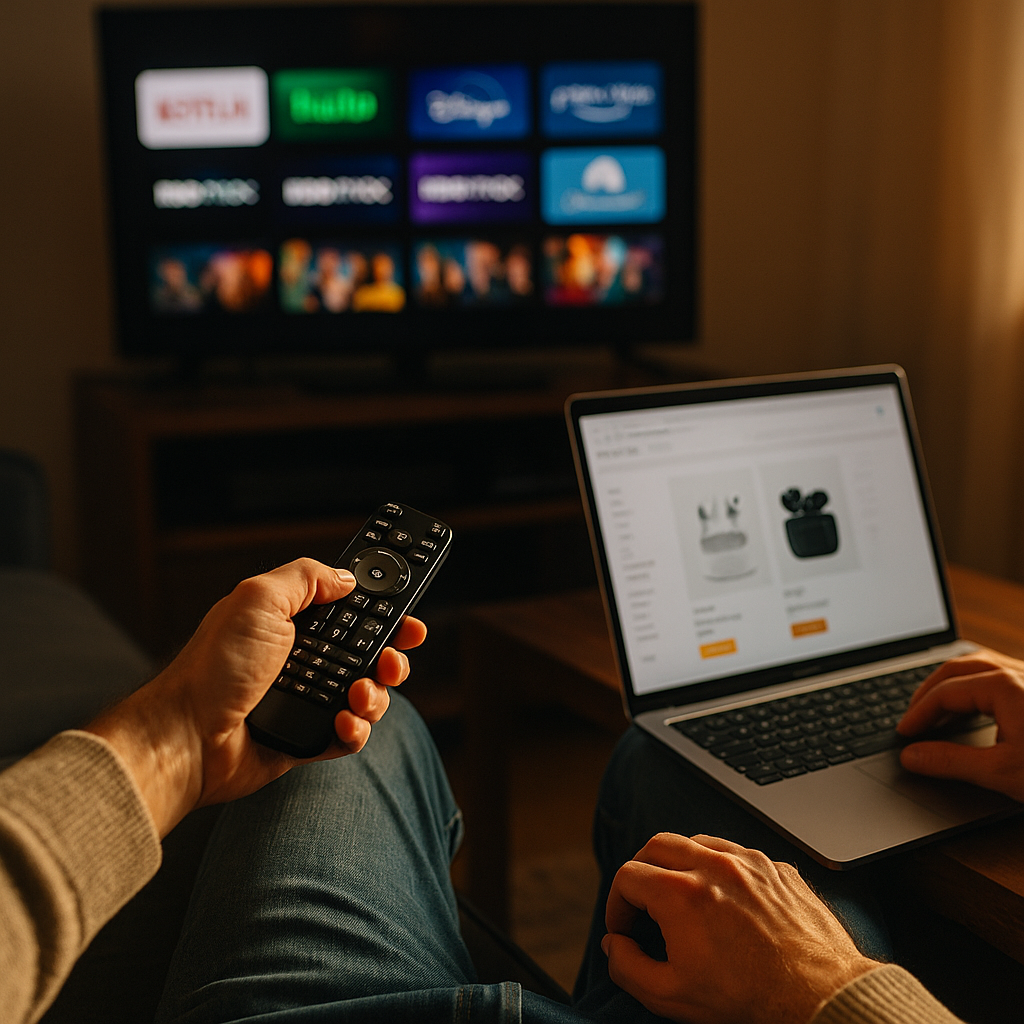
Sixty-one percent of consumers say they’ve canceled a subscription bundle in the past year specifically because it felt like it “snuck” a commerce fee into a media price. That’s not a rounding error. Subscription fatigue has jumped the fence from streaming apps into the retail-media hybrids brands bet big on, and the backlash is now showing up in churn dashboards, not just survey data.
If your 2026 media plan leans on Amazon Prime-style bundles, Walmart+ tie-ins, or a streamer’s shoppable ad tier, this is the moment to check your assumptions.
The Bundle Boom Is Colliding With Bundle Exhaustion
For three years, the pitch was simple: bundle streaming with commerce perks, and you reduce churn while opening a second revenue stream. Prime Video ads plus free shipping. Peacock plus a retail loyalty tier. It worked, for a while. Every major platform piled in because the unit economics looked better than ad-supported tiers alone.
Then the math started working against them. Consumers who once tolerated three or four subscriptions are now capping out around two, according to multiple recent surveys from eMarketer. Add a commerce layer to a media subscription, and you’re not offering value, you’re adding a second thing to justify. That’s the fatigue mechanism nobody priced in.
The core issue isn’t price. It’s cognitive load: consumers can no longer track what they’re paying for, what it unlocks, and whether they’re actually using it.
What the Numbers Actually Say
A few data points worth sitting with, pulled from recent industry trackers and platform disclosures:
- Average U.S. household subscription count has plateaued after years of growth, with churn on bundled tiers running noticeably higher than on single-purpose subscriptions.
- Complaints referencing “hidden fees” or “unexpected charges” in bundled streaming-commerce products have risen year over year, per consumer sentiment trackers cited by Statista.
- Brand recall for ads embedded in shoppable streaming tiers is down compared to standard CTV placements, suggesting attention is split, not doubled, when commerce and content compete on the same screen.
None of this means bundles are dead. It means the “more value equals more loyalty” assumption doesn’t hold once the bundle starts feeling like a subscription trap rather than a convenience.
Why Brands Should Care Beyond the Platform Layer
This isn’t just a Netflix-or-Amazon problem. It’s a media-buying problem. Brands pouring budget into shoppable CTV inventory or influencer-driven commerce bundles are riding the same wave of consumer goodwill that’s now receding.
Three ways this hits your plan directly:
- Reach erosion. As consumers trim bundles, the addressable audience inside those ecosystems shrinks. This compounds a trend already flagged in ad-free tier growth, where paid, ad-free experiences are quietly cutting into reach across premium inventory.
- Trust spillover. Consumers annoyed by a platform’s billing practices don’t compartmentalize that anger. It bleeds into how they perceive ads and sponsored content on that platform, echoing the trust erosion tracked in feed trust research.
- Attribution noise. Shoppable bundles were supposed to make closed-loop attribution cleaner. Instead, churn volatility is making it harder to isolate whether a sales lift came from the ad or from a promo cycle designed to stop cancellations.
The Creator Economy Angle Nobody’s Talking About
Influencer-led commerce bundles, think creator storefronts tied to a subscription perk, are catching the same backlash, just quieter. When a creator’s shop is bundled into a platform subscription (a “subscribe to unlock this creator’s discount” model), fatigue shows up as unsubscribes right after a single purchase. Brands running affiliate or storefront programs through these bundles are seeing conversion cliffs that look a lot like the vanity-metric traps described in decision intelligence research: high initial engagement, poor retention, and almost no signal about long-term value.
This matters for brands allocating budget across regions too. As creator budgets shift toward APAC and LATAM, bundle fatigue patterns differ by market. Southeast Asian consumers, for instance, show higher tolerance for bundled super-app style commerce, while U.S. and UK audiences are trending toward “unbundling” behavior at a faster clip.
Is This Actually New, or Just Streaming’s Old Problem Wearing a Commerce Costume?
Fair question. Subscription fatigue isn’t new; we’ve covered it in the context of ad-free tiers and pricing pressure before. What’s new is the compounding effect. A consumer frustrated by streaming price hikes is now also being asked to trust that same platform with payment data, shipping preferences, and purchase history. That’s a bigger ask, and it’s landing at the exact moment trust in ad-driven personalization is already shaky, as detailed in personalization fatigue coverage.
Put simply: bundles asked consumers to give more, right as their appetite to give was shrinking. Bad timing, worse execution in some cases.
Every bundle you add to a media plan is a new place a customer can decide they’ve had enough. Design for exit, not just entry.
What Brands Should Actually Do About It
This isn’t a call to abandon streaming-commerce partnerships. It’s a call to buy smarter.
- Audit bundle-dependent inventory now. If a meaningful share of your media plan sits inside a shoppable bundle tier, model what happens to reach if churn rises another 10-15%. Don’t wait for the platform’s quarterly earnings call to find out.
- Push for transparent pricing disclosures from partners. Regulatory pressure is already building. The FTC has signaled ongoing scrutiny of negative-option billing and subscription cancellation friction, and the UK’s ICO has flagged similar concerns around data use in bundled commerce products. Brands associated with opaque billing practices absorb reputational risk they didn’t sign up for.
- Separate attention metrics from transaction metrics. A shoppable bundle impression is not the same unit as a standard CTV impression. Treat it that way in reporting, or you’ll keep overpaying for underperforming inventory.
- Watch vendor consolidation. Bundle fatigue is accelerating M&A among martech and adtech platforms trying to shore up retention through acquisition. That has direct implications for contract risk, worth reviewing against the guidance in vendor risk auditing.
- Reallocate incrementally, not dramatically. This isn’t a moment to torch your streaming-commerce line items. It’s a moment to shift 10-15% of that budget toward channels with more stable reach, mirroring the broader reallocation logic covered in budget reallocation analysis.
A Quick Gut-Check for Media Planners
Ask your platform reps these three questions before renewing any bundle-tied media commitment: What’s the 90-day churn rate on the bundled tier specifically, not the platform overall? How is ad attention measured when commerce and content share screen real estate? And what happens to your media guarantee if bundle subscribers drop by a fifth mid-flight?
If they can’t answer cleanly, that’s data too.
FAQs
What is causing subscription fatigue in streaming-commerce bundles?
Consumers are overwhelmed by stacking multiple paid tiers, and bundles that combine streaming with commerce perks add billing complexity and perceived hidden fees, which accelerates cancellations compared to standalone subscriptions.
How does bundle fatigue affect brand media spend?
As churn rises inside bundled tiers, addressable reach shrinks, attention metrics get diluted by competing commerce content, and attribution becomes noisier, all of which reduce the reliability of media guarantees tied to that inventory.
Should brands stop investing in streaming-plus-commerce bundles?
Not entirely. The smarter move is auditing exposure, demanding churn transparency from platform partners, and shifting a modest share of budget toward more stable inventory rather than exiting bundles altogether.
Are regulators looking at subscription bundle practices?
Yes. Bodies like the FTC and the UK’s ICO have both signaled scrutiny of billing transparency and cancellation friction in subscription products, which increases reputational and compliance risk for brands closely associated with these platforms.
Does this trend vary by region?
Yes. Markets like Southeast Asia show higher tolerance for bundled super-app commerce, while U.S. and UK consumers are unbundling faster, which matters for brands shifting creator and media budgets across regions.
Next step: Pull your last 90 days of bundle-tied media performance and compare churn-adjusted reach against a standard CTV buy. If the gap has widened since last quarter, that’s your signal to start reallocating before your next renewal cycle.
FAQs
What is causing subscription fatigue in streaming-commerce bundles?
Consumers are overwhelmed by stacking multiple paid tiers, and bundles that combine streaming with commerce perks add billing complexity and perceived hidden fees, which accelerates cancellations compared to standalone subscriptions.
How does bundle fatigue affect brand media spend?
As churn rises inside bundled tiers, addressable reach shrinks, attention metrics get diluted by competing commerce content, and attribution becomes noisier, all of which reduce the reliability of media guarantees tied to that inventory.
Should brands stop investing in streaming-plus-commerce bundles?
Not entirely. The smarter move is auditing exposure, demanding churn transparency from platform partners, and shifting a modest share of budget toward more stable inventory rather than exiting bundles altogether.
Are regulators looking at subscription bundle practices?
Yes. Bodies like the FTC and the UK’s ICO have both signaled scrutiny of billing transparency and cancellation friction in subscription products, which increases reputational and compliance risk for brands closely associated with these platforms.
Does this trend vary by region?
Yes. Markets like Southeast Asia show higher tolerance for bundled super-app commerce, while U.S. and UK consumers are unbundling faster, which matters for brands shifting creator and media budgets across regions.
Top Influencer Marketing Agencies
The leading agencies shaping influencer marketing in 2026
Agencies ranked by campaign performance, client diversity, platform expertise, proven ROI, industry recognition, and client satisfaction. Assessed through verified case studies, reviews, and industry consultations.
Moburst

-
2

The Shelf
Boutique Beauty & Lifestyle Influencer AgencyA data-driven boutique agency specializing exclusively in beauty, wellness, and lifestyle influencer campaigns on Instagram and TikTok. Best for brands already focused on the beauty/personal care space that need curated, aesthetic-driven content.Clients: Pepsi, The Honest Company, Hims, Elf Cosmetics, Pure LeafVisit The Shelf → -
3

Audiencly
Niche Gaming & Esports Influencer AgencyA specialized agency focused exclusively on gaming and esports creators on YouTube, Twitch, and TikTok. Ideal if your campaign is 100% gaming-focused — from game launches to hardware and esports events.Clients: Epic Games, NordVPN, Ubisoft, Wargaming, Tencent GamesVisit Audiencly → -
4

Viral Nation
Global Influencer Marketing & Talent AgencyA dual talent management and marketing agency with proprietary brand safety tools and a global creator network spanning nano-influencers to celebrities across all major platforms.Clients: Meta, Activision Blizzard, Energizer, Aston Martin, WalmartVisit Viral Nation → -
5

The Influencer Marketing Factory
TikTok, Instagram & YouTube CampaignsA full-service agency with strong TikTok expertise, offering end-to-end campaign management from influencer discovery through performance reporting with a focus on platform-native content.Clients: Google, Snapchat, Universal Music, Bumble, YelpVisit TIMF → -
6

NeoReach
Enterprise Analytics & Influencer CampaignsAn enterprise-focused agency combining managed campaigns with a powerful self-service data platform for influencer search, audience analytics, and attribution modeling.Clients: Amazon, Airbnb, Netflix, Honda, The New York TimesVisit NeoReach → -
7

Ubiquitous
Creator-First Marketing PlatformA tech-driven platform combining self-service tools with managed campaign options, emphasizing speed and scalability for brands managing multiple influencer relationships.Clients: Lyft, Disney, Target, American Eagle, NetflixVisit Ubiquitous → -
8

Obviously
Scalable Enterprise Influencer CampaignsA tech-enabled agency built for high-volume campaigns, coordinating hundreds of creators simultaneously with end-to-end logistics, content rights management, and product seeding.Clients: Google, Ulta Beauty, Converse, AmazonVisit Obviously →