


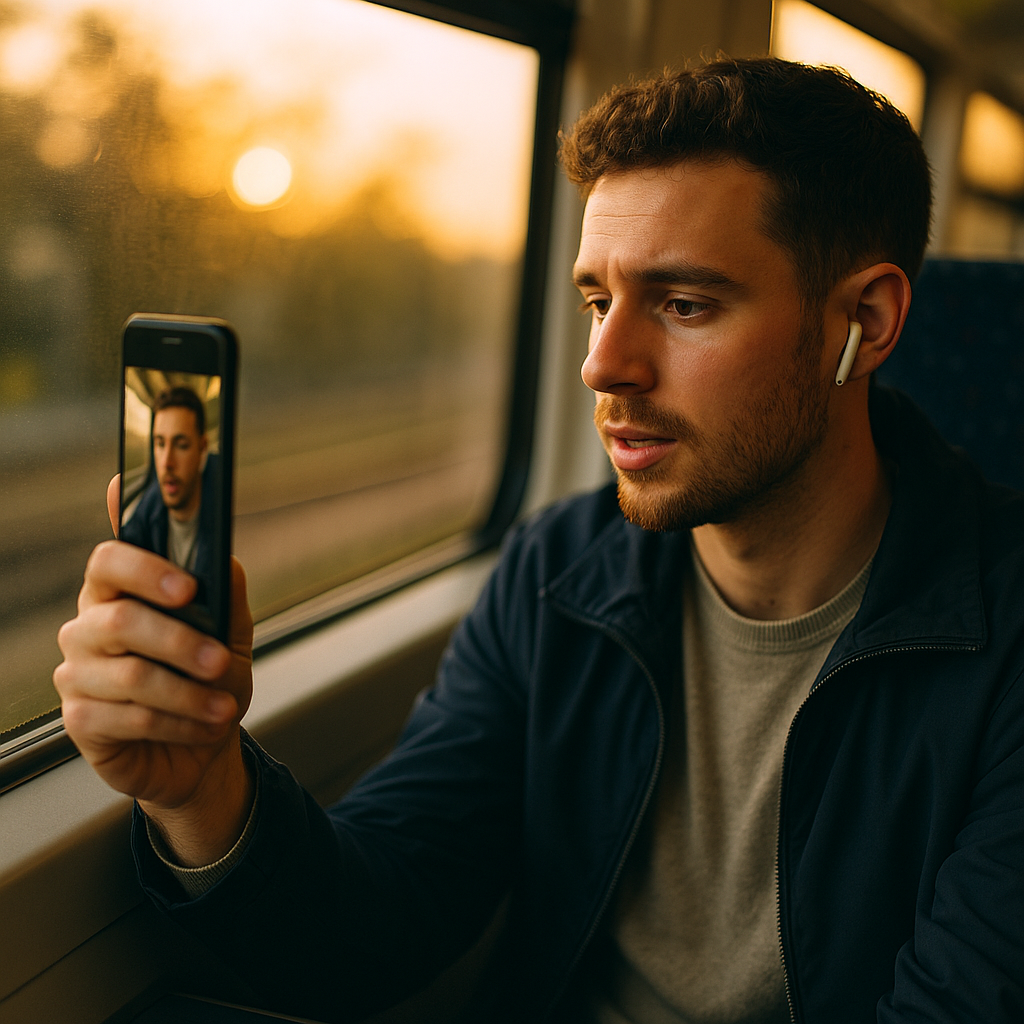
Forty-one minutes. That’s the average American commute round trip, and creators have figured out something most brands still haven’t: those dead minutes are the most trust-building inventory left on social platforms. The micro-vlog commute format — short, unpolished clips of product use woven into train rides, drives, and walks to the office — is quietly outperforming traditional influencer placements on frequency and recall. Why? Because nobody fakes a commute.
This isn’t another passing content trend. It’s a structural shift in how audiences calibrate authenticity signals, and brands that ignore it are leaving cheap, repeatable trust on the table.
Why Commute Content Reads as Real
Viewers have gotten scary good at spotting staged content. Ring light in a bedroom corner, product perfectly angled toward camera, dialogue that sounds like it was written by legal. The commute format sidesteps all of that because the setting does the credibility work for you. Nobody constructs a subway platform or a car dashboard as a set. The background noise, the awkward pauses, the phone camera bouncing slightly — these aren’t flaws, they’re proof.
Compare this to a traditional sponsored post shot in a controlled environment. Even a well-produced one carries a subconscious tax: the viewer knows it’s a performance space. A commute clip carries no such tax. The creator is just living, and the product happens to be there — coffee cup, skincare stick, a supplement bottle tossed in a bag pocket, wireless earbuds going in before the train doors close.
Authenticity signals aren’t about production value anymore. They’re about context the viewer can’t imagine being staged, and a moving vehicle or transit platform is about as close to unstageable as content gets.
The Frequency Advantage Nobody’s Pricing In
Here’s the part that should get a media planner’s attention: commutes happen daily. That means a single creator relationship can generate five, ten, twenty micro-touchpoints a month without the production overhead of a traditional shoot schedule. This is frequency marketing dressed as lifestyle content.
Traditional influencer campaigns are built around discrete deliverables — one post, one story set, maybe a follow-up. The micro-vlog commute format flips that math. You’re not paying for a single hero asset; you’re paying for a recurring behavioral cue that reinforces brand presence through sheer repetition. Marketing science has always said frequency drives recall better than one-off reach spikes, and eMarketer’s research on ad frequency consistently backs that up across formats.
For brands running always-on influencer programs, this format solves a real operational problem: content fatigue. A creator who has to reinvent a concept weekly burns out fast, and audiences feel it. A creator who simply continues an existing routine — same train, same bag, same 10-minute walk — has infinite content runway built into their actual life.
What Makes a Commute Clip Actually Work
Not every “product in my bag on the way to work” video lands. The format has a few non-negotiables that separate the ones that convert from the ones that get scrolled past.
- The product has to solve a commute-specific problem. Cold brew that survives a bumpy subway ride, earbuds that cancel train noise, a phone mount that doesn’t fall off a bike. If the product’s use case is arbitrary to the setting, the authenticity collapses.
- Timing has to feel unedited. Jump cuts that remove “dead time” too aggressively signal production. The best commute vlogs let a few boring seconds breathe.
- Dialogue should sound like self-narration, not pitch copy. “I always grab this before I leave” reads differently than “This product has changed my mornings.” One’s a habit, the other’s a script.
- Frequency beats polish. A creator posting three rough 20-second clips a week will out-signal one glossy 90-second edit posted once a month.
This connects to a broader shift Influencers Time has covered before — the move away from ad-read cadence toward format-first storytelling. The same logic that makes GRWM content outperform traditional beauty ads applies here: routine beats pitch, every time.
Briefing Creators Without Killing the Vibe
This is where most brands mess it up. Micro-vlog commute content dies the moment a brief reads like a script. If you send a creator word-for-word talking points for a subway platform video, you’ll get something that looks exactly like every other sponsored post — stiff, over-lit (metaphorically), and instantly recognizable as paid.
Instead, brief the behavior, not the language. Tell the creator what problem the product solves during transit, give them the legal disclosure requirements, and let them build the moment in their own words. This mirrors the approach outlined in day-in-the-life brief frameworks — the goal is narrative integration, not insertion.
A useful structural comparison: the commute format functions a lot like the silent vlog approach, where restraint and minimal narration actually increase perceived authenticity. Less directing, more documenting.
Practical brief components that work well for this format:
- A single required product moment (e.g., “opens the bag and grabs the item within the first 15 seconds”)
- An optional but encouraged mundane detail (spilled coffee, missed train, headphones tangled) — these humanizing beats are gold, don’t script them out
- Clear FTC disclosure placement that doesn’t require breaking the flow (a caption tag works better than a spoken disclaimer mid-clip)
- A cadence expectation — this format only earns its frequency advantage if it’s recurring, not a one-off
Compliance Isn’t Optional, Even When It’s Casual-Looking
Here’s where brand and legal teams need to stay sharp. Because this content looks unscripted, some marketers assume disclosure rules get looser. They don’t. The FTC’s endorsement guidelines apply regardless of production polish — a coffee brand mentioned in a raw subway clip still needs a clear, conspicuous disclosure per FTC guidance on endorsements. UK brands need to mind equivalent ICO transparency expectations around data and advertising disclosure as well.
The risk here isn’t just regulatory. It’s reputational. If a commute vlog reads as authentic and the audience later discovers it was undisclosed, the trust damage is disproportionate to a typical sponsored post backlash — because the whole appeal of the format was that it felt real. Brands that get caught cutting corners on disclosure in “authentic” formats tend to get punished harder than in obviously staged campaigns.
This is a similar tension to what’s covered in blind taste-test compliance strategies — casual-feeling formats still need buttoned-up paperwork behind the scenes.
The more authentic a format feels, the higher the trust cost of getting compliance wrong. Treat “unscripted” content with the same disclosure rigor as a polished ad, not less.
Measuring What Actually Matters Here
Standard influencer KPIs — reach, likes, single-video engagement rate — undersell this format because they’re built for one-off content, not recurring frequency plays. A single commute clip might get modest engagement. The value shows up in aggregate: recall lift, branded search increase, and repeat-view rates across a creator’s ongoing series.
Brands running this format well are tracking:
- Sequential view rate (does the audience follow the creator’s commute series over multiple weeks?)
- Comment sentiment shift over time (does skepticism decrease as the routine becomes familiar?)
- Branded search lift tied to campaign flight dates
- Cost per recurring impression rather than cost per single post
Tools like Sprout Social’s social listening features can help track sentiment drift across a creator’s content series, which matters more here than any single-post metric. If you’re used to evaluating creators the way you’d evaluate a rapid-fire Q&A video, you’ll need to recalibrate. This format rewards patience and longitudinal thinking, not per-post ROI snapshots.
There’s also a natural crossover with progress-based creator relationships. Brands already running progress log campaigns will find the commute format slots in easily as a secondary, lower-lift content stream from the same creator relationships — no need to build new partnerships from scratch.
Where This Format Breaks Down
It’s not universal. Products with no plausible commute connection (large appliances, home furniture, anything requiring a controlled unboxing moment) don’t fit here — those are better served by formats like the customer-handoff unboxing approach. Forcing a commute narrative onto a product that has no business being on a train just reads as try-hard, and try-hard is the one thing this format cannot survive.
There’s also a saturation risk. As more brands chase this format, audiences will get faster at spotting the pattern — “sponsored commute vlog” could become its own recognizable, eye-roll-inducing genre within a year or two if every creator’s bag suddenly contains the same three product categories. The brands that win here now, while the format still reads as organic, will bank trust that late adopters won’t get.
Frequency is the whole point, but frequency without genuine fit just accelerates fatigue.
Next Step
Start small: pick two or three creators already in your roster whose daily routines naturally intersect with your product category, brief them on behavior rather than script, and commit to a four-week recurring cadence before judging results by single-post metrics. The payoff here is cumulative trust, not a viral spike — plan your measurement window accordingly.
FAQs
What is the micro-vlog commute format in influencer marketing?
It’s a content approach where creators naturally incorporate branded products into daily transit routines — subway rides, drives, walks — producing short, unpolished clips that read as authentic because the setting itself can’t easily be staged.
Why does commute content perform better than traditional sponsored posts?
It benefits from a context the viewer trusts by default. Traditional sponsored content is shot in controlled environments audiences recognize as performance spaces, while a commute happens daily and can’t be convincingly faked, which raises perceived authenticity and recall.
How often should brands run this type of content with a creator?
Since the format’s core advantage is frequency, brands should aim for recurring, weekly or near-daily posting cadences rather than one-off deliverables. A single clip won’t demonstrate the format’s value; the compounding effect over several weeks is what drives recall.
Does FTC disclosure still apply to casual, unscripted-looking content?
Yes. Disclosure requirements under FTC guidelines apply regardless of production style. Unscripted-looking commute content still needs clear, conspicuous disclosure, typically via caption tags that don’t disrupt the natural flow of the clip.
What products work best for the micro-vlog commute format?
Products with a genuine commute-specific use case perform best: beverages, earbuds, skincare sticks, supplements, phone accessories. Products with no logical connection to transit routines tend to feel forced and undermine the format’s authenticity.
How should brands measure success for this format?
Look beyond single-post engagement. Track sequential view rates across a creator’s ongoing series, sentiment shift over time, branded search lift, and cost per recurring impression rather than cost per individual post.
FAQs
Top Influencer Marketing Agencies
The leading agencies shaping influencer marketing in 2026
Agencies ranked by campaign performance, client diversity, platform expertise, proven ROI, industry recognition, and client satisfaction. Assessed through verified case studies, reviews, and industry consultations.
Moburst

-
2

The Shelf
Boutique Beauty & Lifestyle Influencer AgencyA data-driven boutique agency specializing exclusively in beauty, wellness, and lifestyle influencer campaigns on Instagram and TikTok. Best for brands already focused on the beauty/personal care space that need curated, aesthetic-driven content.Clients: Pepsi, The Honest Company, Hims, Elf Cosmetics, Pure LeafVisit The Shelf → -
3

Audiencly
Niche Gaming & Esports Influencer AgencyA specialized agency focused exclusively on gaming and esports creators on YouTube, Twitch, and TikTok. Ideal if your campaign is 100% gaming-focused — from game launches to hardware and esports events.Clients: Epic Games, NordVPN, Ubisoft, Wargaming, Tencent GamesVisit Audiencly → -
4

Viral Nation
Global Influencer Marketing & Talent AgencyA dual talent management and marketing agency with proprietary brand safety tools and a global creator network spanning nano-influencers to celebrities across all major platforms.Clients: Meta, Activision Blizzard, Energizer, Aston Martin, WalmartVisit Viral Nation → -
5

The Influencer Marketing Factory
TikTok, Instagram & YouTube CampaignsA full-service agency with strong TikTok expertise, offering end-to-end campaign management from influencer discovery through performance reporting with a focus on platform-native content.Clients: Google, Snapchat, Universal Music, Bumble, YelpVisit TIMF → -
6

NeoReach
Enterprise Analytics & Influencer CampaignsAn enterprise-focused agency combining managed campaigns with a powerful self-service data platform for influencer search, audience analytics, and attribution modeling.Clients: Amazon, Airbnb, Netflix, Honda, The New York TimesVisit NeoReach → -
7

Ubiquitous
Creator-First Marketing PlatformA tech-driven platform combining self-service tools with managed campaign options, emphasizing speed and scalability for brands managing multiple influencer relationships.Clients: Lyft, Disney, Target, American Eagle, NetflixVisit Ubiquitous → -
8

Obviously
Scalable Enterprise Influencer CampaignsA tech-enabled agency built for high-volume campaigns, coordinating hundreds of creators simultaneously with end-to-end logistics, content rights management, and product seeding.Clients: Google, Ulta Beauty, Converse, AmazonVisit Obviously →