


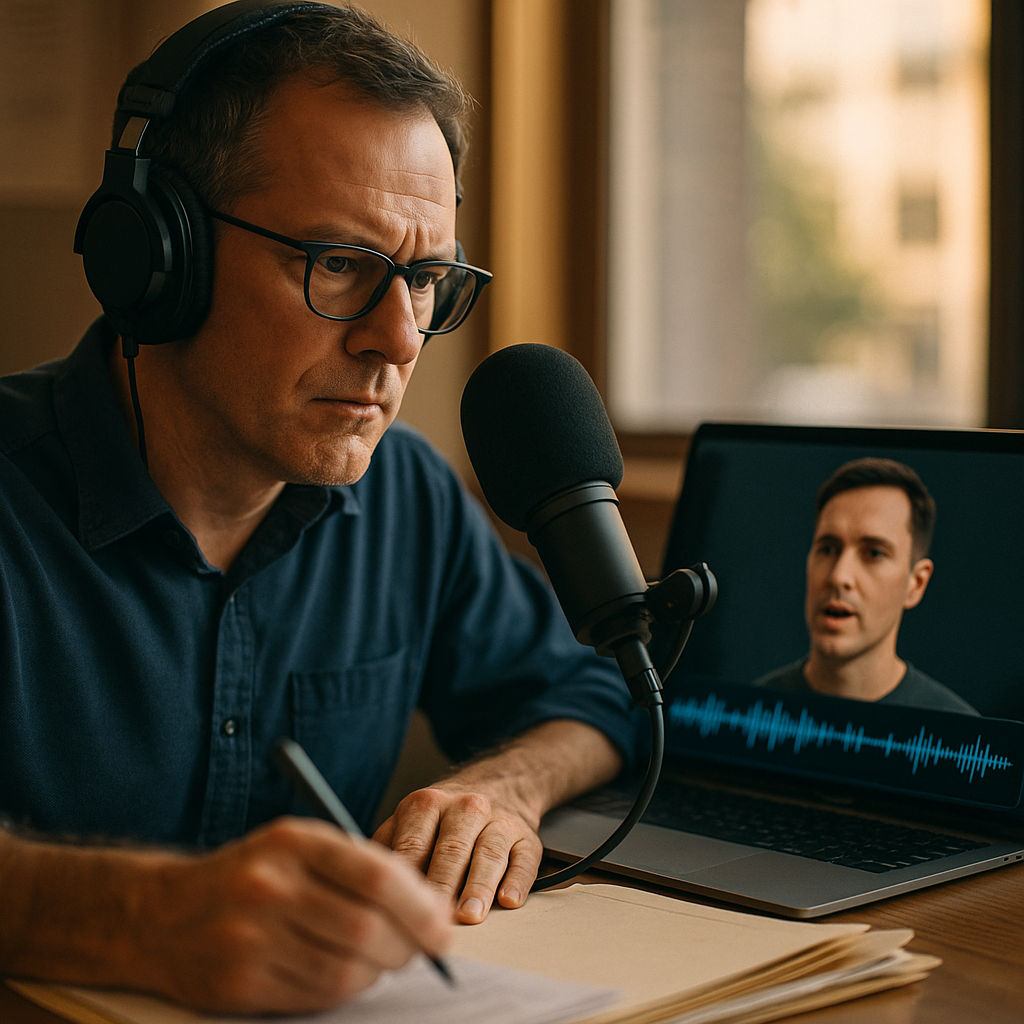
Forty-eight states now recognize some form of right of publicity. Only one of them, Tennessee, has explicitly named AI voice cloning in its statute — and yet nearly every brand running localized ad dubbing is exposed in all of them. If your media team is using synthetic voice tools to dub a US campaign into Spanish, Mandarin, or French without a legal audit trail, you’re not saving money on localization. You’re building a liability queue.
AI voice-cloning use in localized ad dubbing sits at an uncomfortable intersection: entertainment law built for dead celebrities, employment law built for actors, and a patchwork of new AI-specific statutes that don’t talk to each other. This is the playbook for auditing that exposure before a regulator, a union, or a plaintiff’s attorney does it for you.
Why This Suddenly Matters to Every Global Brand
Localized dubbing used to mean hiring voice actors in-market. Slow, expensive, but legally straightforward — you signed a contract, paid a fee, got a release. Now brands are cloning a single “hero voice” (often a celebrity spokesperson, sometimes an in-house talent) and generating dozens of language variants through tools like ElevenLabs, Resemble AI, or Respeecher. It’s fast. It’s cheap. It’s also legally distinct from what your contracts probably cover.
The consulting math is seductive: one voice actor session instead of twelve, synthetic localization in eighteen languages overnight, dubbing costs cut by 70-90% according to several agency estimates circulating in the ad-tech press. Nobody’s arguing the ROI. The problem is that most legal teams are auditing these tools for copyright and platform ToS violations, not right-of-publicity exposure — which is the claim most likely to actually get filed.
Right-of-publicity claims don’t require proof the audience was deceived. They require proof someone’s identifiable voice or likeness was used commercially without consent — a far lower bar than most brands assume.
The Statutory Patchwork You’re Actually Dealing With
Right of publicity is not federal law. It’s a state-by-state mess, and dubbing campaigns routinely cross a dozen jurisdictions in one media buy. A few things every brand legal team needs to internalize:
- Tennessee’s ELVIS Act (effective in recent state legislation) explicitly protects voice as a property right against unauthorized AI simulation, independent of likeness or image — the first statute written specifically with voice cloning in mind.
- California Civil Code 3344 protects voice, likeness, and “persona” broadly, and its case law (going back to the Bette Midler and Tom Waits soundalike cases) already established that mimicking a distinctive voice without consent is actionable — no actual cloning technology required.
- New York Civil Rights Law now includes post-mortem publicity rights and has been amended to address digital replicas in performance contexts, which has downstream implications for any dubbing that uses a deceased or licensed legacy voice.
- Illinois, Washington, and a growing list of others have publicity statutes with statutory damages provisions, meaning plaintiffs don’t need to prove actual financial harm to collect.
Notice what’s missing: a uniform definition of “use.” Some statutes require commercial use in-state. Some require the plaintiff be a resident. Some care where the ad ran; others care where the harm was felt. A dubbed ad that streams nationally on a connected TV platform can trigger exposure in all of them simultaneously, and your media buy doesn’t respect state lines the way the law expects it to.
This is structurally similar to the mess brands are already navigating with synthetic performer disclosure laws by state — different triggers, different remedies, one campaign. If your compliance team has already built a matrix for synthetic performers, voice cloning belongs on the same spreadsheet, not a separate one.
The Audit Framework: Six Questions Before You Approve a Dub
Skip the philosophy. Here’s the operational checklist legal and marketing ops should run jointly before any AI-dubbed variant goes to media.
- Whose voice is actually being cloned? Celebrity spokesperson, in-house employee, licensed voice actor, or a synthetic composite trained on a talent’s original session? Each has a different consent chain, and “composite” voices trained on identifiable talent are not as anonymized as vendors claim.
- What does the underlying talent contract actually say? Most legacy voice-actor and celebrity endorsement agreements were signed before generative dubbing existed. Silence on AI use is not permission — in most jurisdictions, silence defaults to the talent’s favor.
- Where will the dubbed asset run? Map the media plan against right-of-publicity states, not just target-language markets. A Spanish-language dub can run in California, Texas, Florida, and Puerto Rico simultaneously, each with different statutory teeth.
- Is there a disclosure obligation layered on top? Several states now require disclosure when synthetic voice or likeness is used in advertising, independent of publicity rights. That’s a separate compliance track, covered in depth in our synthetic performer disclosure audit template.
- Does the vendor contract include indemnification for voice-cloning claims specifically? Generic AI-tool indemnification language rarely covers publicity rights explicitly. Read the carve-outs; vendors love excluding exactly this.
- Is there an audit trail proving consent scope? Not just “we got a release” — a release that names AI dubbing, cloning, or “synthetic voice replication” as a permitted use, dated and jurisdiction-aware.
Run this against every campaign, not just the ones that “feel risky.” The riskiest dubs are often the ones nobody flagged, because the original voice talent was internal or mid-tier, not a recognizable celebrity.
Where Brands Get the Consent Question Wrong
The most common mistake isn’t skipping consent — it’s assuming old consent covers new use. A voice actor who signed a 2019 commercial agreement for “broadcast and digital use” did not consent to their voice being cloned and regenerated in eleven languages by a model they never interacted with. Courts and unions are increasingly treating that as a scope violation, not a technicality.
SAG-AFTRA’s stance has hardened here too. Its recent agreements with major studios and ad production houses require explicit, separately bargained consent for AI voice replication — a template brands should be pushing into their own talent contracts regardless of union status. If your production vendor isn’t already building AI-specific consent language into new talent deals, that’s your first audit finding.
A contract that’s silent on AI voice cloning isn’t neutral ground — in most right-of-publicity jurisdictions, silence favors the talent, not the brand.
There’s also a subtler trap: brands assume that because the original spokesperson is under an active endorsement deal, all derivative uses are covered. Endorsement deals typically license “likeness and voice for advertising,” but courts increasingly parse that against how the ad was produced. Voice cloning that generates content the talent never recorded or approved is a materially different act than dubbing over their original recording — legally, that’s the difference between a licensed derivative and an unauthorized simulation.
Vendor Contracts Are Your Weakest Link
Most brands are outsourcing the actual cloning to a third-party AI dubbing vendor, and that’s where liability gets diffused, not eliminated. If your vendor’s terms of service include a broad indemnification clause but exclude “publicity rights, personality rights, or state-specific biometric statutes” from coverage, you’re the one holding the bag when a claim lands. This is the same structural gap we’ve flagged in our vendor risk assessment framework for AI creator-matching platforms — the tool vendor’s incentive is to minimize its own exposure, not yours.
Ask vendors directly: does their voice model training data include licensed talent recordings, and do they warrant clean rights to the training inputs? Several dubbing AI providers still can’t answer this cleanly, particularly ones that scraped publicly available voice samples during early model development. That ambiguity becomes your ambiguity the moment the ad runs.
Build indemnification language that specifically names right-of-publicity claims, voice-cloning claims, and state biometric privacy statutes (Illinois’s BIPA increasingly gets pulled into these disputes even though it wasn’t written for voice). Generic “AI liability” boilerplate won’t cut it in front of a judge parsing a state-specific statute.
Building the Compliance Trigger System
Auditing once isn’t enough — statutes are moving quarterly. Tennessee’s ELVIS Act passed with near-unanimous support and several other states have introduced companion bills. Treat this the way you’d treat any other fast-moving regulatory area: with an escalation system, not a one-time review.
Practically, that means:
- A quarterly legal review cross-referencing active campaigns against updated state statute language, similar to the escalation logic in our NAD-to-FTC escalation trigger system.
- A standing media-plan geo-check: before any dubbed asset ships, confirm which states it will run in and flag any with recently amended publicity statutes.
- A single point of contact (legal or compliance ops) who owns AI voice-cloning sign-off — not a distributed responsibility across regional marketing teams who won’t know the statutory nuance.
- Contract templates updated to require AI-cloning-specific consent language for any new talent engagement, retroactively renegotiated for high-value legacy spokespeople.
According to eMarketer estimates, AI-generated ad localization spend is climbing fast as brands chase international reach without proportional production budgets — which means the exposure surface is growing at the same rate as the cost savings. That tradeoff needs to be visible at the CMO level, not buried in a production vendor’s SOW.
This isn’t just a US problem, either. If your dubbed assets run in markets with their own personality-rights frameworks, or feed into platforms with independent moderation policies, you’re stacking jurisdictional risk on top of publicity risk. It’s worth reviewing this alongside broader frameworks like our compliance framework for EU and US state rules, since dubbing campaigns rarely respect the borders legal teams draw for them.
For a broader look at how regulators are approaching AI-generated advertising talent generally, the FTC’s guidance on endorsements and testimonials is a useful baseline, even though it doesn’t speak to publicity rights directly. Right of publicity remains a state tort claim, not a federal one, which is exactly why a single national compliance checklist doesn’t work here.
The Bottom Line
Run the six-question audit on every AI-dubbed asset before it airs, update vendor indemnification language to name voice-cloning and right-of-publicity claims explicitly, and assign one owner to track statutory changes quarterly. The brands that get burned here won’t be the ones using AI dubbing — they’ll be the ones who never checked whether their old consent covered it.
FAQs
Is AI voice cloning for ad dubbing illegal under right-of-publicity law?
Not inherently. It becomes a legal problem when a person’s identifiable voice is cloned and used commercially without consent that specifically covers AI replication. Most legacy talent contracts don’t address this, which creates exposure even when the brand believes it has a valid release.
Which states have the strictest right-of-publicity laws for AI voice cloning?
Tennessee’s ELVIS Act is currently the most explicit, naming AI voice simulation directly. California has the strongest case-law history through Civil Code 3344 and prior soundalike litigation. New York and Illinois also carry meaningful exposure through amended publicity and biometric statutes.
Does dubbing over an actor’s original recording count as voice cloning?
No — traditional dubbing using a human voice actor’s original performance is a different legal act than generating new audio with an AI model trained on someone’s voice. Courts are increasingly treating AI-generated simulation as materially distinct from licensed derivative use.
Who is liable if an AI dubbing vendor’s tool infringes on publicity rights?
Typically the brand, unless indemnification language in the vendor contract explicitly names right-of-publicity and voice-cloning claims. Generic AI liability clauses often exclude these claims, leaving the advertiser exposed even when a third-party tool caused the issue.
How often should brands audit AI voice-cloning use in dubbed campaigns?
At minimum quarterly, given how fast state statutes are changing. Every new campaign using AI dubbing should also go through a pre-launch legal check mapping media placement against current right-of-publicity statutes in each target state.
FAQs
Is AI voice cloning for ad dubbing illegal under right-of-publicity law?
Not inherently. It becomes a legal problem when a person’s identifiable voice is cloned and used commercially without consent that specifically covers AI replication. Most legacy talent contracts don’t address this, which creates exposure even when the brand believes it has a valid release.
Which states have the strictest right-of-publicity laws for AI voice cloning?
Tennessee’s ELVIS Act is currently the most explicit, naming AI voice simulation directly. California has the strongest case-law history through Civil Code 3344 and prior soundalike litigation. New York and Illinois also carry meaningful exposure through amended publicity and biometric statutes.
Does dubbing over an actor’s original recording count as voice cloning?
No — traditional dubbing using a human voice actor’s original performance is a different legal act than generating new audio with an AI model trained on someone’s voice. Courts are increasingly treating AI-generated simulation as materially distinct from licensed derivative use.
Who is liable if an AI dubbing vendor’s tool infringes on publicity rights?
Typically the brand, unless indemnification language in the vendor contract explicitly names right-of-publicity and voice-cloning claims. Generic AI liability clauses often exclude these claims, leaving the advertiser exposed even when a third-party tool caused the issue.
How often should brands audit AI voice-cloning use in dubbed campaigns?
At minimum quarterly, given how fast state statutes are changing. Every new campaign using AI dubbing should also go through a pre-launch legal check mapping media placement against current right-of-publicity statutes in each target state.
Top Influencer Marketing Agencies
The leading agencies shaping influencer marketing in 2026
Agencies ranked by campaign performance, client diversity, platform expertise, proven ROI, industry recognition, and client satisfaction. Assessed through verified case studies, reviews, and industry consultations.
Moburst

-
2

The Shelf
Boutique Beauty & Lifestyle Influencer AgencyA data-driven boutique agency specializing exclusively in beauty, wellness, and lifestyle influencer campaigns on Instagram and TikTok. Best for brands already focused on the beauty/personal care space that need curated, aesthetic-driven content.Clients: Pepsi, The Honest Company, Hims, Elf Cosmetics, Pure LeafVisit The Shelf → -
3

Audiencly
Niche Gaming & Esports Influencer AgencyA specialized agency focused exclusively on gaming and esports creators on YouTube, Twitch, and TikTok. Ideal if your campaign is 100% gaming-focused — from game launches to hardware and esports events.Clients: Epic Games, NordVPN, Ubisoft, Wargaming, Tencent GamesVisit Audiencly → -
4

Viral Nation
Global Influencer Marketing & Talent AgencyA dual talent management and marketing agency with proprietary brand safety tools and a global creator network spanning nano-influencers to celebrities across all major platforms.Clients: Meta, Activision Blizzard, Energizer, Aston Martin, WalmartVisit Viral Nation → -
5

The Influencer Marketing Factory
TikTok, Instagram & YouTube CampaignsA full-service agency with strong TikTok expertise, offering end-to-end campaign management from influencer discovery through performance reporting with a focus on platform-native content.Clients: Google, Snapchat, Universal Music, Bumble, YelpVisit TIMF → -
6

NeoReach
Enterprise Analytics & Influencer CampaignsAn enterprise-focused agency combining managed campaigns with a powerful self-service data platform for influencer search, audience analytics, and attribution modeling.Clients: Amazon, Airbnb, Netflix, Honda, The New York TimesVisit NeoReach → -
7

Ubiquitous
Creator-First Marketing PlatformA tech-driven platform combining self-service tools with managed campaign options, emphasizing speed and scalability for brands managing multiple influencer relationships.Clients: Lyft, Disney, Target, American Eagle, NetflixVisit Ubiquitous → -
8

Obviously
Scalable Enterprise Influencer CampaignsA tech-enabled agency built for high-volume campaigns, coordinating hundreds of creators simultaneously with end-to-end logistics, content rights management, and product seeding.Clients: Google, Ulta Beauty, Converse, AmazonVisit Obviously →