


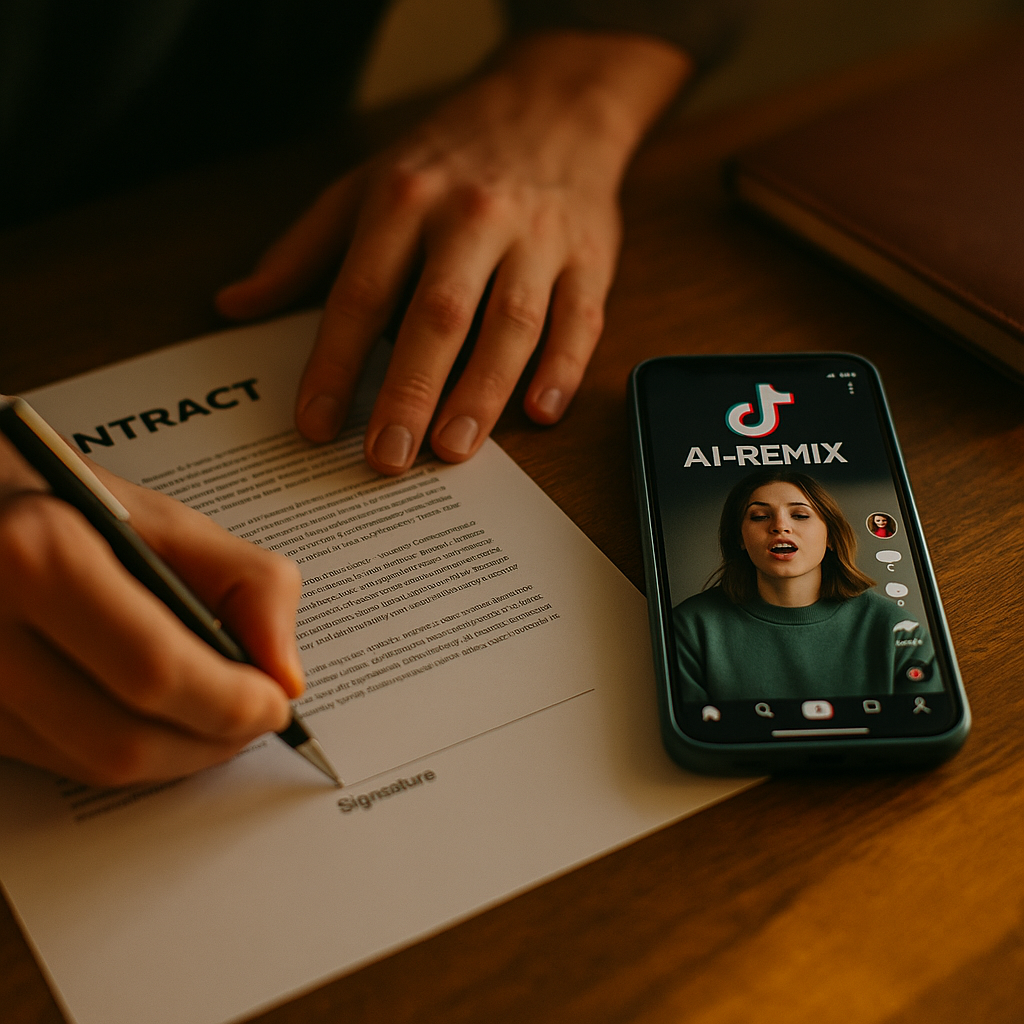
TikTok’s AI Remix feature can take a sponsored video, splice it into someone else’s edit, and republish it with your product still visible, your talent’s face still attached, and none of the original disclosure intact. That’s not a hypothetical. It’s how the tool is built to work. If your creator contract doesn’t address TikTok AI Remix transformations of sponsored content, you’re carrying legal and reputational risk you haven’t even priced in yet.
What Remix Actually Does to a Sponsored Post
TikTok’s Remix and AI-editing tools let other users pull footage from an existing video, recombine it with new audio, overlay effects, or generate derivative clips using generative AI. Originally built for organic content and trend participation, these tools don’t distinguish between a teenager’s dance video and a fully paid, FTC-disclosed brand partnership.
Once a sponsored clip enters the Remix pipeline, the platform’s algorithm can strip captions, crop out disclosure overlays, splice in unrelated audio, or generate a synthetic voiceover that changes the message entirely. The brand didn’t approve any of it. The creator didn’t approve it either. Yet the resulting content still features the product, the face, and sometimes the original claim language, just repackaged.
A sponsored post that gets algorithmically remixed after publication can lose its disclosure, its context, and its accuracy in one automated pass, while still legally implicating the brand that paid for it.
This is a distinct problem from creator misconduct or influencer fraud. Nobody acted in bad faith here. The risk originates from the platform’s own product design, and that’s exactly why contract language needs to name the feature specifically rather than rely on generic “unauthorized use” boilerplate.
Why Generic Morals Clauses Don’t Cover This
Most legacy influencer agreements were drafted before generative remix tools existed at scale. They cover creator behavior: don’t say something defamatory, don’t promote a competitor, don’t get arrested mid-campaign. They rarely cover what happens when a third party, or the platform itself, algorithmically alters the deliverable after it’s live.
Standard usage rights clauses typically grant the brand license to the content “as delivered.” They say nothing about derivative versions created by other users through platform-native tools. That’s a gap. If a remixed version circulates with your logo attached and a claim your legal team never approved, your existing contract likely offers no clear path to force takedown, no defined liability allocation, and no indemnification trigger.
This is the same structural issue covered in platform algorithm change indemnification clause guide work: platforms change behavior unilaterally, and contracts written for a static content model can’t absorb that. Remix just makes the exposure more visible because the transformation is often instant and public.
The FTC Angle Nobody’s Contract Addresses
Here’s the uncomfortable part. The FTC doesn’t care who technically created the remixed version. If a sponsored claim persists in altered content and a reasonable consumer would still perceive it as endorsement, disclosure obligations likely still apply. Regulators have been increasingly clear that transformation doesn’t erase liability, it just makes the paper trail messier.
Brands that have built structured escalation processes are already ahead here. Teams referencing FTC-compliant escalation logs as part of their compliance stack have a documented response path the moment remix-altered content surfaces. Without that, you’re improvising during a live PR situation, which is never a good place to negotiate from.
It’s also worth comparing how different platforms handle disclosure persistence. TikTok, Meta, and Google all treat AI-modified ad content differently, and the disclosure obligations shift accordingly. The comparative breakdown in Google, Meta, and TikTok AI ad disclosure rules compared is a useful reference when you’re drafting multi-platform creator agreements and need consistent language across all three environments.
Building the Actual Contract Language
So what goes in the document? Not vague “AI risk” language. You need operative clauses that name the mechanism, define the trigger, and assign responsibility before a dispute happens, not during one.
Define “Algorithmic Transformation” as a Contract Term
Start with a defined term. Something like: “Algorithmic Transformation means any alteration of the Content performed by TikTok’s Remix, AI editing, duet, stitch, or successor features, whether initiated by a third-party user or by platform-automated systems, occurring after initial publication.” Naming it precisely means you can reference it consistently across indemnification, takedown, and liability sections instead of writing the same explanation three times.
Require Monitoring and Notice Obligations
Someone has to watch for remixed derivatives. Assign that responsibility explicitly. Many brands now push this to their creator, since they have platform-level visibility into duets and remixes of their own content, paired with a brand-side monitoring tool for broader detection. The clause should specify:
- Who is responsible for monitoring (creator, agency, brand, or a named third-party tool)
- Notice timeline once a transformed version is discovered (24-48 hours is becoming standard)
- What counts as a reportable transformation (disclosure removal, claim alteration, context change, competitor juxtaposition)
Takedown Rights, Not Just Takedown Requests
Your contract should give the brand the contractual right to require the creator to request removal of algorithmically transformed derivatives that violate disclosure or brand safety terms, with a defined response window. This doesn’t guarantee the derivative gets removed. TikTok’s own moderation queue governs that. But it establishes a documented good-faith effort, which matters enormously if regulators or the platform ever ask what the brand did in response.
Indemnification That Actually Splits Fairly
This is where most negotiations get sticky, and rightfully so. Should a creator be liable for what a third-party’s AI tool did to their video? Generally, no. But the brand shouldn’t absorb unlimited liability for a platform-native feature either. The most workable structure allocates:
- Platform-caused transformation risk to the brand’s risk pool (since brands have more resources to manage regulatory response)
- Creator liability limited to failure to report a known transformation within the notice window
- Shared cost for legal response if the transformed content triggers a regulatory inquiry, capped and defined upfront
This mirrors the risk-allocation logic used in AI vendor indemnification clause for bidding agent errors frameworks, where the party with less control over the automated system carries less liability by default.
Rights to Require Re-Disclosure
If a remixed version strips your original disclosure, your contract should specify that the creator (or brand, if the brand controls the account) has the right, and in some cases the obligation, to comment-pin or caption-add a fresh disclosure the moment a transformed derivative is identified. This aligns with the reasoning in ASA guidance on reposted ads needing fresh disclosure: a new instance of the ad, even algorithmically generated, likely needs its own disclosure treatment rather than relying on the original post’s now-detached label.
A Clause Framework You Can Adapt
Rather than inventing this from scratch, most legal teams are now adapting a modular clause structure that covers four things: definition, monitoring, remedy, and liability cap. If you want a deeper walkthrough of the actual clause language and negotiation points, the dedicated breakdown in creator contract clauses for AI-remixed sponsored content covers sample language brands are already putting into master service agreements.
If you’re auditing existing contracts rather than drafting new ones, don’t skip this step just because renewal season feels far off. A structured pass using something like the framework in creator contract audit fix AI clause gaps before renewal will surface every agreement still relying on pre-remix boilerplate. In our experience, that’s most of them.
What This Means for Legal Sign-Off Workflows
Contract language is only half the fix. The other half is operational: does your team actually have a workflow that catches transformed content before it becomes a crisis? Brands that have implemented an AI-modified ad creative legal sign-off gate as part of their standard publication process are far better positioned to react quickly when a remix surfaces, because the escalation path already exists. Without it, someone in social media has to independently decide whether a viral remix is a legal problem, and that’s not a fair position to put a coordinator in.
Industry data backs up the urgency here. Platforms have leaned hard into AI-native editing tools over the past two years, and eMarketer research on creator content trends shows short-form remix and duet formats now account for a meaningful share of total platform watch time. TikTok itself promotes these tools through its TikTok for Business platform as engagement drivers, which means the feature isn’t going away. It’s getting pushed harder.
Frequently Overlooked: International Exposure
If your campaigns run across multiple regions, remix-transformed content complicates disclosure compliance in ways that mirror other cross-border issues the industry is already wrestling with. The complications documented in synthetic performer disclosure breaking across state lines apply almost identically here: a transformation that satisfies disclosure norms in one jurisdiction may fail entirely in another once the content crosses borders algorithmically, which TikTok’s global distribution does by default.
Next Step
Pull your current creator contract template and check for one thing: does it name “algorithmic transformation” or Remix specifically, or does it only say “unauthorized derivative use”? If it’s the latter, that’s your gap. Fix the definition first, then build monitoring and indemnification language around it before your next renewal cycle, not after a remixed video forces the issue.
FAQs
Does TikTok’s Remix feature apply to sponsored or branded content?
Yes. TikTok’s Remix and AI editing tools don’t currently exclude sponsored posts from being duetted, stitched, or algorithmically transformed by other users, which means paid partnership content is just as exposed as organic content.
Who is liable if a sponsored post gets remixed and loses its disclosure label?
Liability typically depends on contract terms, but regulators generally hold the brand responsible for ensuring disclosure persists wherever the endorsement continues to appear, even in a version neither the brand nor creator created directly.
Can brands force TikTok to remove a remixed version of their ad?
Brands and creators can report content through TikTok’s standard moderation and IP request tools, but removal isn’t guaranteed. Contract language should focus on documented good-faith takedown requests rather than guaranteed outcomes.
Should indemnification clauses treat creators and brands equally for remix risk?
No. Most well-drafted clauses allocate platform-originated transformation risk to the brand’s risk pool, while limiting creator liability to failure to report known transformations within a defined notice window.
How often should brands audit contracts for AI remix language?
At minimum, review templates at every renewal cycle. Given how quickly platform features evolve, an annual audit specifically targeting AI and remix clauses is becoming standard practice for brands running ongoing creator programs.
FAQs
Does TikTok’s Remix feature apply to sponsored or branded content?
Yes. TikTok’s Remix and AI editing tools don’t currently exclude sponsored posts from being duetted, stitched, or algorithmically transformed by other users, which means paid partnership content is just as exposed as organic content.
Who is liable if a sponsored post gets remixed and loses its disclosure label?
Liability typically depends on contract terms, but regulators generally hold the brand responsible for ensuring disclosure persists wherever the endorsement continues to appear, even in a version neither the brand nor creator created directly.
Can brands force TikTok to remove a remixed version of their ad?
Brands and creators can report content through TikTok’s standard moderation and IP request tools, but removal isn’t guaranteed. Contract language should focus on documented good-faith takedown requests rather than guaranteed outcomes.
Should indemnification clauses treat creators and brands equally for remix risk?
No. Most well-drafted clauses allocate platform-originated transformation risk to the brand’s risk pool, while limiting creator liability to failure to report known transformations within a defined notice window.
How often should brands audit contracts for AI remix language?
At minimum, review templates at every renewal cycle. Given how quickly platform features evolve, an annual audit specifically targeting AI and remix clauses is becoming standard practice for brands running ongoing creator programs.
Top Influencer Marketing Agencies
The leading agencies shaping influencer marketing in 2026
Agencies ranked by campaign performance, client diversity, platform expertise, proven ROI, industry recognition, and client satisfaction. Assessed through verified case studies, reviews, and industry consultations.
Moburst

-
2

The Shelf
Boutique Beauty & Lifestyle Influencer AgencyA data-driven boutique agency specializing exclusively in beauty, wellness, and lifestyle influencer campaigns on Instagram and TikTok. Best for brands already focused on the beauty/personal care space that need curated, aesthetic-driven content.Clients: Pepsi, The Honest Company, Hims, Elf Cosmetics, Pure LeafVisit The Shelf → -
3

Audiencly
Niche Gaming & Esports Influencer AgencyA specialized agency focused exclusively on gaming and esports creators on YouTube, Twitch, and TikTok. Ideal if your campaign is 100% gaming-focused — from game launches to hardware and esports events.Clients: Epic Games, NordVPN, Ubisoft, Wargaming, Tencent GamesVisit Audiencly → -
4

Viral Nation
Global Influencer Marketing & Talent AgencyA dual talent management and marketing agency with proprietary brand safety tools and a global creator network spanning nano-influencers to celebrities across all major platforms.Clients: Meta, Activision Blizzard, Energizer, Aston Martin, WalmartVisit Viral Nation → -
5

The Influencer Marketing Factory
TikTok, Instagram & YouTube CampaignsA full-service agency with strong TikTok expertise, offering end-to-end campaign management from influencer discovery through performance reporting with a focus on platform-native content.Clients: Google, Snapchat, Universal Music, Bumble, YelpVisit TIMF → -
6

NeoReach
Enterprise Analytics & Influencer CampaignsAn enterprise-focused agency combining managed campaigns with a powerful self-service data platform for influencer search, audience analytics, and attribution modeling.Clients: Amazon, Airbnb, Netflix, Honda, The New York TimesVisit NeoReach → -
7

Ubiquitous
Creator-First Marketing PlatformA tech-driven platform combining self-service tools with managed campaign options, emphasizing speed and scalability for brands managing multiple influencer relationships.Clients: Lyft, Disney, Target, American Eagle, NetflixVisit Ubiquitous → -
8

Obviously
Scalable Enterprise Influencer CampaignsA tech-enabled agency built for high-volume campaigns, coordinating hundreds of creators simultaneously with end-to-end logistics, content rights management, and product seeding.Clients: Google, Ulta Beauty, Converse, AmazonVisit Obviously →