


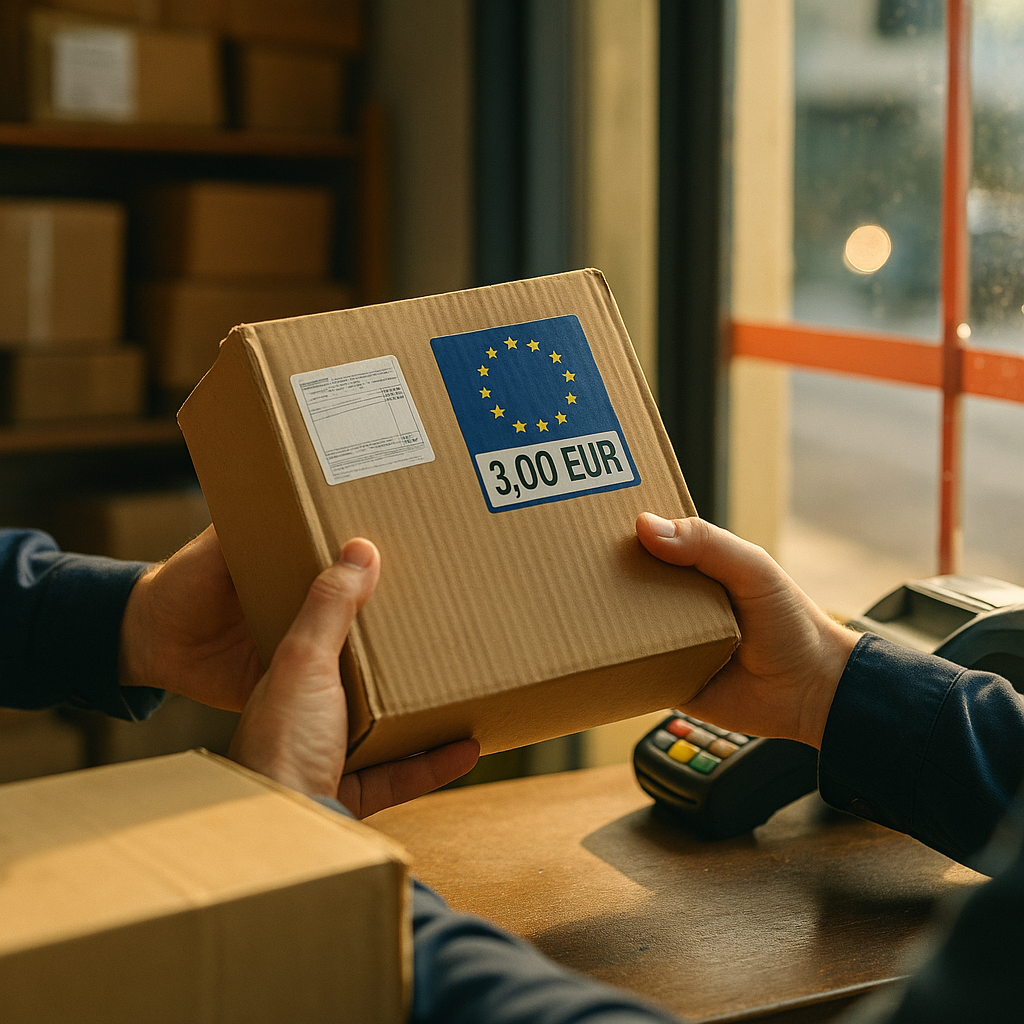
Every gifted PR box you ship to a European creator now carries a hidden line item: a flat €3 customs charge, regardless of value. That’s the reality under the EU’s new parcel duty, and it quietly guts the economics of cross-border seeding. If your influencer program ships from a US or UK warehouse to creators in France, Germany, or Poland, the math you built your budget on last year is already wrong.
This isn’t a rounding error. Brands running high-volume seeding campaigns, think beauty, fashion, or gadget launches, send hundreds or thousands of small parcels monthly. At €3 per parcel on top of existing VAT changes, a 2,000-unit seeding wave costs an extra €6,000 before you’ve paid for a single unit of product. Multiply that across quarterly drops and the number stops looking like a rounding error and starts looking like a line item finance will ask about.
What Actually Changed, and Why It Matters for Gifting
The EU eliminated its de minimis customs exemption for low-value parcels entering from outside the bloc. Previously, goods valued under €150 moved through customs with minimal friction and, in many cases, no duty at all. The new flat €3 charge applies per parcel, layered on top of existing import VAT obligations that came into force with earlier reforms. It’s a blunt instrument: a €15 lip gloss and a €140 skincare bundle pay the identical €3 fee.
For influencer marketing teams, this changes the unit economics of seeding at scale. Gifting programs were built on the assumption that small, low-value parcels moved cheaply and quickly across borders. That assumption is dead. Every parcel is now a taxable event, and every taxable event requires documentation, a correct HS code, and a customs declaration that didn’t previously need this level of scrutiny.
A flat €3 duty sounds trivial until you multiply it by the thousands of parcels a mid-size seeding program ships into Europe each quarter, at which point it becomes a real budget line, not a footnote.
The Budget Restructuring Brands Actually Need
Start by treating customs cost as a per-unit line item in your seeding budget, not an operational afterthought absorbed by logistics. Most influencer marketing teams have historically bundled shipping and fulfillment costs into a single “logistics” bucket without breaking out customs separately. That no longer works.
- Model cost-per-parcel, not cost-per-campaign. A 500-unit seeding wave into the EU now needs a per-unit landed cost calculation that includes product, shipping, VAT, and the flat duty. Agencies should be presenting this breakdown to clients before a single box ships.
- Renegotiate minimum order thresholds with fulfillment partners. Some 3PLs can batch-clear shipments through EU-based fulfillment centers, converting what would be dozens of individual parcels into fewer, larger customs entries. This can meaningfully reduce per-unit duty exposure.
- Reassess which creators actually warrant physical gifting. Digital-first seeding, codes, affiliate links, or shipped-from-EU-warehouse product, becomes more attractive relative to direct-from-origin shipping once customs friction rises.
- Build a customs buffer into quarterly influencer budgets. A flat percentage add-on, similar to how teams already budget for platform fees, prevents customs costs from becoming a surprise that erodes campaign ROI mid-flight.
Brands that shift fulfillment to EU-based warehouses avoid the flat duty entirely for intra-EU shipments, but that requires holding EU inventory, which carries its own cost and forecasting risk. There’s no free option here. Every path has a tradeoff, and the right one depends on your seeding volume and how concentrated your creator base is geographically.
Legal Exposure Nobody’s Budgeting For
The financial hit is the obvious part. The legal exposure is where most marketing teams get caught flat-footed.
Customs declarations require accurate product valuation, correct commodity codes, and a legitimate stated purpose for the shipment. “Gift for marketing purposes” isn’t always a sufficient declaration category, and misdeclaring value to reduce duty exposure is customs fraud, full stop. Brands that instruct fulfillment vendors to under-declare parcel values to dodge the €3 charge, or to avoid VAT thresholds, are exposing themselves to penalties far larger than the duty they’re trying to avoid.
This is also a moment to revisit who owns customs compliance in your creator contracts. If a creator’s management team handles their own import clearance and gets hit with an unexpected fee, who’s responsible? Ambiguity here creates friction with creators and their agents, exactly the kind of relationship damage that undermines long-term seeding partnerships. Brands should treat this the same way they’ve had to treat other cross-border creator obligations, similar to how cross-border tax withholding requires explicit contractual clarity before payment or product ever moves.
There’s a compliance parallel worth drawing here too. Just as brands have had to build data processing addendums for affiliate commission data flowing across borders, seeding programs now need explicit customs and duty-responsibility clauses baked into gifting agreements. It’s another instance of regulatory friction demanding contract language that didn’t exist a few product cycles ago.
Operational Fixes: What to Change This Quarter
You don’t need to overhaul your entire seeding strategy overnight. But a few operational moves will materially reduce both cost and risk.
Consolidate shipments by region. Instead of shipping individually to 40 creators across Germany, batch shipments to a regional distribution point and use local last-mile delivery. This reduces the number of customs entries and can lower total duty exposure significantly.
Audit your HS codes. Incorrect commodity codes trigger delays, additional inspection, and sometimes higher duty rates than necessary. A quick audit with your customs broker, most 3PLs have one on retainer, can catch misclassifications that have been quietly inflating costs for months.
Get fulfillment vendors to quote landed cost, not just shipping cost. If your current vendor can’t give you a per-parcel landed cost estimate that includes the flat duty and VAT, that’s a signal to renegotiate or switch. Transparency here should be table stakes in 2026, not a value-add.
Loop in legal before your next PR mailer goes out. This is a genuinely small ask that prevents a genuinely large headache. A five-minute review of your customs declaration language and creator agreement terms now is cheaper than a customs dispute or a public spat with a creator’s manager over an unexpected fee later.
There’s also a strategic question worth asking: does this change who you seed to? If a brand’s EU creator roster is concentrated in three or four countries, EU-based fulfillment starts to pencil out fast. If it’s scattered across 15 countries with low volume in each, the calculus shifts toward accepting the duty as a cost of doing business and pricing it into campaign budgets from the outset.
Where This Fits the Broader EU Regulatory Pattern
This isn’t happening in isolation. EU regulators have spent the past two years tightening the screws on how brands and platforms operate across the bloc, from algorithmic transparency requirements under the DSA to stricter design and disclosure rules. Marketing teams that have already had to audit algorithm dependency risk or respond to the addictive-design ruling will recognize the pattern: incremental regulatory friction that individually looks manageable but compounds into a genuinely different operating environment for cross-border marketing.
The parcel duty sits alongside earlier changes to EU VAT rules for imported goods, part of a broader push to close loopholes that let low-value ecommerce and gifted product move across borders with minimal friction. Brands that treated the EU as a single frictionless market for physical seeding are now dealing with a bloc that behaves more like the sum of its customs regimes. That’s a genuine strategic shift, not a compliance footnote.
For teams also managing reach risk tied to platform algorithm changes in the EU, this is one more reason to diversify how seeding campaigns get executed, leaning more on affiliate and code-based activation where physical shipping isn’t required. According to eMarketer, affiliate and performance-based creator partnerships have grown faster than gifted-product campaigns over the past two years, and this duty gives brands one more financial reason to accelerate that shift.
Does This Change How You Choose Creators?
Possibly. If a brand’s seeding strategy has leaned heavily on volume, gifting to dozens of micro-creators to generate organic UGC, the per-parcel duty disproportionately hurts that model. Low-value, high-volume gifting was already a thin-margin play; adding €3 per parcel plus VAT compliance overhead makes it thinner still.
Brands may find it makes more sense to consolidate gifting budgets toward fewer, higher-value creator relationships where the fixed cost of customs compliance is amortized across a bigger campaign spend. That’s not a universal rule, some categories genuinely benefit from broad micro-influencer seeding, but it’s a conversation finance and marketing need to have together rather than marketing absorbing the cost silently.
It’s also worth checking in with your platform and payment partners. According to guidance from Meta Business and TikTok for Business, both platforms have expanded affiliate and commerce tooling in the EU specifically to reduce reliance on physical product shipment for creator activation, gift cards, sample codes, and virtual try-on integrations included. These aren’t perfect substitutes for a physical unboxing moment, but they sidestep the customs problem entirely.
FAQs
Common questions marketing and legal teams are asking as this rule takes effect.
Frequently Asked Questions
What is the EU’s flat €3 parcel duty?
It’s a flat customs charge applied to low-value parcels entering the EU from outside the bloc, replacing the previous de minimis exemption that allowed goods under €150 to move with minimal customs friction. It applies per parcel regardless of the item’s value.
Does the €3 duty apply to gifted influencer product?
Yes. Gifted product shipped to creators for marketing purposes is treated the same as any other imported parcel under customs rules. There’s no automatic exemption for PR or influencer gifting shipments.
Can brands avoid the duty by shipping from an EU warehouse?
Shipping from an EU-based fulfillment center avoids the cross-border import duty for intra-EU shipments, since the parcel never crosses the external customs border. This requires holding EU inventory, which carries its own cost and logistics tradeoffs.
Who is responsible for paying the duty, the brand or the creator?
This depends entirely on shipping terms and creator contracts. Brands using delivered-duty-paid (DDP) terms absorb the cost upfront; without DDP, creators or their customs broker may be billed on delivery, which can create friction if it isn’t disclosed in advance.
How does this affect seeding budgets for high-volume campaigns?
High-volume, low-value gifting programs are hit hardest proportionally, since the flat duty applies per parcel regardless of value. Brands running large micro-influencer seeding waves should model per-unit landed cost, including the duty, before finalizing campaign budgets.
Should brands shift to digital or affiliate-based seeding instead?
Many are. Affiliate links, discount codes, and digital gifting sidestep customs entirely and are gaining share as a share of total creator activation spend, particularly for high-volume, lower-value creator tiers.
Frequently Asked Questions
What is the EU’s flat €3 parcel duty?
It’s a flat customs charge applied to low-value parcels entering the EU from outside the bloc, replacing the previous de minimis exemption that allowed goods under €150 to move with minimal customs friction. It applies per parcel regardless of the item’s value.
Does the €3 duty apply to gifted influencer product?
Yes. Gifted product shipped to creators for marketing purposes is treated the same as any other imported parcel under customs rules. There’s no automatic exemption for PR or influencer gifting shipments.
Can brands avoid the duty by shipping from an EU warehouse?
Shipping from an EU-based fulfillment center avoids the cross-border import duty for intra-EU shipments, since the parcel never crosses the external customs border. This requires holding EU inventory, which carries its own cost and logistics tradeoffs.
Who is responsible for paying the duty, the brand or the creator?
This depends entirely on shipping terms and creator contracts. Brands using delivered-duty-paid (DDP) terms absorb the cost upfront; without DDP, creators or their customs broker may be billed on delivery, which can create friction if it isn’t disclosed in advance.
How does this affect seeding budgets for high-volume campaigns?
High-volume, low-value gifting programs are hit hardest proportionally, since the flat duty applies per parcel regardless of value. Brands running large micro-influencer seeding waves should model per-unit landed cost, including the duty, before finalizing campaign budgets.
Should brands shift to digital or affiliate-based seeding instead?
Many are. Affiliate links, discount codes, and digital gifting sidestep customs entirely and are gaining share as a share of total creator activation spend, particularly for high-volume, lower-value creator tiers.
The brands that win here won’t be the ones avoiding the duty, they’ll be the ones who priced it in, documented it correctly, and used it as the excuse to finally consolidate their EU seeding strategy. Start with a landed-cost audit this quarter, before your next mailer ships.
Top Influencer Marketing Agencies
The leading agencies shaping influencer marketing in 2026
Agencies ranked by campaign performance, client diversity, platform expertise, proven ROI, industry recognition, and client satisfaction. Assessed through verified case studies, reviews, and industry consultations.
Moburst

-
2

The Shelf
Boutique Beauty & Lifestyle Influencer AgencyA data-driven boutique agency specializing exclusively in beauty, wellness, and lifestyle influencer campaigns on Instagram and TikTok. Best for brands already focused on the beauty/personal care space that need curated, aesthetic-driven content.Clients: Pepsi, The Honest Company, Hims, Elf Cosmetics, Pure LeafVisit The Shelf → -
3

Audiencly
Niche Gaming & Esports Influencer AgencyA specialized agency focused exclusively on gaming and esports creators on YouTube, Twitch, and TikTok. Ideal if your campaign is 100% gaming-focused — from game launches to hardware and esports events.Clients: Epic Games, NordVPN, Ubisoft, Wargaming, Tencent GamesVisit Audiencly → -
4

Viral Nation
Global Influencer Marketing & Talent AgencyA dual talent management and marketing agency with proprietary brand safety tools and a global creator network spanning nano-influencers to celebrities across all major platforms.Clients: Meta, Activision Blizzard, Energizer, Aston Martin, WalmartVisit Viral Nation → -
5

The Influencer Marketing Factory
TikTok, Instagram & YouTube CampaignsA full-service agency with strong TikTok expertise, offering end-to-end campaign management from influencer discovery through performance reporting with a focus on platform-native content.Clients: Google, Snapchat, Universal Music, Bumble, YelpVisit TIMF → -
6

NeoReach
Enterprise Analytics & Influencer CampaignsAn enterprise-focused agency combining managed campaigns with a powerful self-service data platform for influencer search, audience analytics, and attribution modeling.Clients: Amazon, Airbnb, Netflix, Honda, The New York TimesVisit NeoReach → -
7

Ubiquitous
Creator-First Marketing PlatformA tech-driven platform combining self-service tools with managed campaign options, emphasizing speed and scalability for brands managing multiple influencer relationships.Clients: Lyft, Disney, Target, American Eagle, NetflixVisit Ubiquitous → -
8

Obviously
Scalable Enterprise Influencer CampaignsA tech-enabled agency built for high-volume campaigns, coordinating hundreds of creators simultaneously with end-to-end logistics, content rights management, and product seeding.Clients: Google, Ulta Beauty, Converse, AmazonVisit Obviously →