


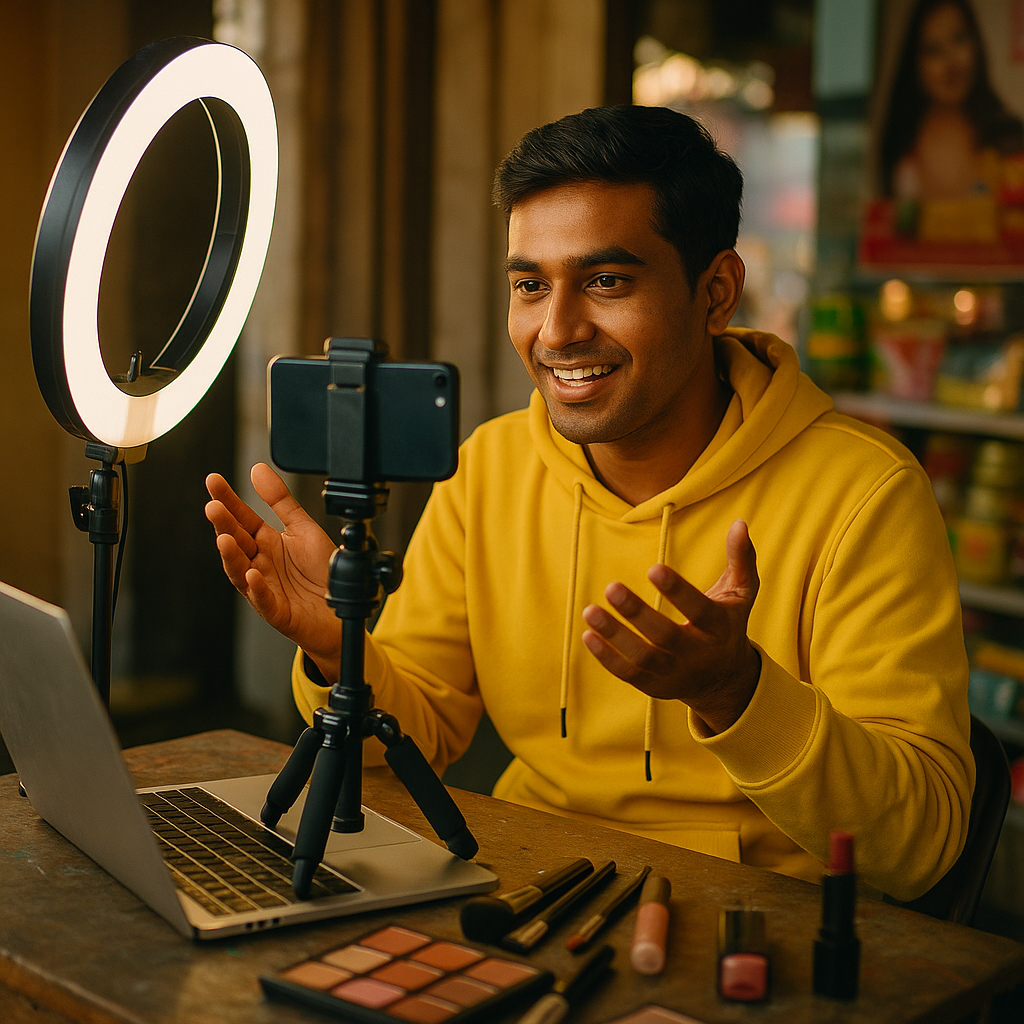
25 million. That’s how many Indians now identify as creators, influencers, or full-time content professionals, according to industry estimates circulating through late 2025 reports. Six years ago, that number barely cracked two million. If you’re a brand still treating India’s creator economy as a discount sourcing pool, you’re already behind.
This isn’t a story about volume alone. It’s a story about what happens when a market goes from “emerging” to “structurally unavoidable” in under a decade. For global brands and agencies building APAC-facing influencer programs, the math has changed, and so has the risk profile.
Why the Number Actually Matters
Scale changes behavior. When a market has a few hundred thousand creators, brands can cherry-pick, negotiate informally, and treat the relationship as project-based. At 25 million, India’s creator base now rivals the total workforce of entire industries. YouTube’s own economic impact reporting has repeatedly shown India as one of its largest and fastest-growing creator markets globally, and platforms like Instagram, Moj, and the resurgent regional-language app ecosystem have only accelerated participation.
What’s driving this isn’t just smartphone penetration (though that’s still a factor in tier-2 and tier-3 cities). It’s monetization infrastructure maturing faster than almost anywhere else. UPI-linked payments, platform creator funds, brand marketplaces like those run by agencies embedded in Indian MFA networks, and a genuinely massive domestic advertising market have made content creation a viable full-time career, not a side hustle.
India didn’t just add creators — it added an entire professional category, complete with agents, managers, tax structures, and union-style advocacy groups, in roughly the same time it took Western markets to formalize a handful of MCNs.
What “25 Million” Actually Includes
Be careful with the headline number. It’s not 25 million people making six figures posting reels. The category spans:
- Micro and nano creators — the largest segment by far, often under 20K followers, producing hyper-local or niche content in regional languages.
- Mid-tier professional creators — 50K to 1M followers, frequently multi-platform, often represented by talent management firms.
- Macro and celebrity-adjacent creators — crossover talent from Bollywood, cricket, and television building parallel digital-first audiences.
- B2B and niche professional creators — a fast-growing group in fintech, SaaS, and edtech content, an area still underpriced relative to Western equivalents.
This mirrors a pattern global brands have already seen play out closer to home. Sub-20K creators consistently outperform larger accounts on engagement and trust metrics, and India’s micro-creator density means brands have an enormous pool to test this thesis at scale, often at a fraction of Western CPMs.
The Sourcing Problem Nobody’s Solved Yet
Here’s the uncomfortable part. Scale without infrastructure creates chaos, and India’s creator economy still has real sourcing gaps that most global procurement teams aren’t prepared for.
First, discovery tools built for Western markets underperform badly in India. English-language keyword search misses the majority of high-performing creators who post primarily in Hindi, Tamil, Telugu, Bengali, or Marathi. If your influencer discovery platform doesn’t have strong regional-language NLP, you’re seeing maybe 30-40% of the addressable talent pool. This isn’t a minor technical footnote — it’s the single biggest reason global campaigns underdeliver in India versus domestic competitors.
Second, verification and fraud risk look different here. Follower fraud rates in parts of the Indian market have historically run higher than platform averages reported by eMarketer, partly because engagement-pod culture and follow-for-follow networks are more entrenched in certain regional communities. Brands sourcing without third-party audience verification are exposed, full stop.
Third, payment and contract standardization is inconsistent. Some creators operate through formal talent agencies with GST registration and standard contracts. Others are unregistered individuals negotiating rates in DMs. That’s not a knock on the talent — it’s a reflection of how fast the market grew. But it means your legal and finance teams need India-specific playbooks, not a copy-paste of your US or UK creator contract templates.
What Global Brands Are Getting Wrong
Most global brands still run India as an “extension market” — same brief, same creative direction, same KPIs as the home market, just with a lower budget line and a local agency bolted on. That approach worked when India was 5% of the global creator population. It doesn’t work when India represents one of the largest single-country creator bases on earth.
The brands getting it right are doing three things differently:
- Building India-specific briefs that account for regional-language nuance rather than translating a US brief into Hindi.
- Investing in local audience verification tools rather than relying on global platform-level fraud scoring alone.
- Treating India talent management firms as strategic partners, not just fulfillment vendors — similar to how agencies are rebuilding sourcing for the creator middle class globally.
Compliance Is Catching Up, Slowly
India’s Advertising Standards Council of India (ASCI) has tightened influencer disclosure guidelines over the past several cycles, pushing closer to FTC-style clarity requirements. But enforcement remains inconsistent, and global brands operating in India need to apply their own internal compliance bar rather than assume local regulation covers them.
This matters more now because Indian regulators have shown increasing willingness to scrutinize finance, health, and edtech influencer content specifically — sectors where misleading claims carry real consumer harm. If your brand operates in a regulated category, treat Indian disclosure compliance with the same rigor you’d apply under FTC guidance or the UK’s ICO framework. The compliance patchwork brands already navigate globally just gained another jurisdiction worth mapping carefully.
Rate Cards Are Shifting, Fast
Here’s a prediction worth sitting with: India’s creator rate cards will look structurally different within 24 months, and brands locking in long-term deals now should build in renegotiation clauses.
Why? Because the same forces reshaping creator pay globally are hitting India hard. Platforms increasingly tie payouts to conversion and sales performance rather than raw reach, a shift already visible in moves like TikTok’s pivot toward sales-linked creator pay. As Indian creators build affiliate and commerce capabilities, expect the same follower-count-to-performance-data shift that’s already reshaping Western rate negotiations.
Combine that with rupee-denominated inflation in creator services and growing competition from domestic D2C brands willing to pay premium rates for proven local talent, and you get a market where today’s CPM benchmarks won’t hold. Brands that locked multi-year flat-rate deals in earlier growth phases are already renegotiating.
AI Tools Are the Only Way This Scales
No procurement team is manually vetting a meaningful slice of 25 million creators. That’s not a workflow, it’s a fantasy. AI-driven discovery, audience verification, and content moderation tools are the only realistic path to sourcing at this scale, and this is exactly where global martech vendors are racing to build India-specific capability.
The catch: most AI vetting tools were trained primarily on English-language content and Western engagement patterns. Applying them uncritically to Hindi or Tamil content risks the same blind spots that plague keyword-based discovery. Brands should ask vendors directly about regional-language training data before assuming a platform’s fraud-detection scores are reliable in the Indian context — a due-diligence step worth applying broadly, given concentration risk across AI martech vendors more generally.
Tools like those benchmarked by Sprout Social and reporting from Statista on platform usage in South Asia are useful starting points for building an India-specific vendor shortlist, but expect to supplement with regional specialists rather than relying on a single global platform.
What This Means for Budget Allocation Next Cycle
If your APAC influencer budget hasn’t shifted meaningfully toward India in the past two planning cycles, that’s a signal worth questioning internally. Not because India should crowd out Southeast Asia or other high-growth APAC markets, but because the sheer creator density now available means CPMs on quality mid-tier talent remain genuinely competitive relative to saturated Western markets, even as rates climb.
The brands winning here are pairing India-specific sourcing infrastructure with global measurement standards, not lowering their bar because the market is “emerging.” India stopped being emerging around the time it crossed 25 million professional creators. Treat it accordingly.
FAQs
How large is India’s creator economy compared to other markets?
India’s creator economy now includes an estimated 25 million professionals, making it one of the largest single-country creator populations globally, alongside the United States and Indonesia. Growth has been driven by smartphone penetration, regional-language content demand, and platform monetization tools reaching tier-2 and tier-3 cities.
What’s the biggest risk for brands sourcing creators in India?
Fraud and audience verification gaps are the top risk, particularly in regional-language content where engagement-pod activity has historically been harder to detect. Inconsistent contract and payment standardization across independent creators versus agency-represented talent is the second major operational risk.
Do global influencer discovery tools work well in the Indian market?
Not consistently. Many platforms rely on English-language keyword search and Western-trained engagement scoring, which can miss a significant share of high-performing creators posting in Hindi, Tamil, Telugu, and other regional languages. Brands should verify a vendor’s regional-language capability before relying on it for India-specific campaigns.
How does ASCI disclosure regulation compare to FTC guidelines?
ASCI (Advertising Standards Council of India) has moved closer to FTC-style disclosure clarity requirements in recent years, but enforcement remains less consistent than in the US or UK. Brands operating in regulated categories like finance or health should apply their own internal compliance standards rather than relying solely on local enforcement.
Are creator rates in India rising?
Yes, particularly for mid-tier and niche B2B creators, as domestic D2C competition and performance-based pay models put upward pressure on rates. Brands with long-term flat-rate contracts should build in renegotiation clauses to avoid being locked into outdated pricing.
Next step: Before your next APAC sourcing cycle, audit whether your discovery and verification tools actually cover regional-language creators, then rebuild your India brief as a standalone strategy rather than a translated extension of your global campaign.
FAQs
How large is India’s creator economy compared to other markets?
India’s creator economy now includes an estimated 25 million professionals, making it one of the largest single-country creator populations globally, alongside the United States and Indonesia. Growth has been driven by smartphone penetration, regional-language content demand, and platform monetization tools reaching tier-2 and tier-3 cities.
What’s the biggest risk for brands sourcing creators in India?
Fraud and audience verification gaps are the top risk, particularly in regional-language content where engagement-pod activity has historically been harder to detect. Inconsistent contract and payment standardization across independent creators versus agency-represented talent is the second major operational risk.
Do global influencer discovery tools work well in the Indian market?
Not consistently. Many platforms rely on English-language keyword search and Western-trained engagement scoring, which can miss a significant share of high-performing creators posting in Hindi, Tamil, Telugu, and other regional languages. Brands should verify a vendor’s regional-language capability before relying on it for India-specific campaigns.
How does ASCI disclosure regulation compare to FTC guidelines?
ASCI (Advertising Standards Council of India) has moved closer to FTC-style disclosure clarity requirements in recent years, but enforcement remains less consistent than in the US or UK. Brands operating in regulated categories like finance or health should apply their own internal compliance standards rather than relying solely on local enforcement.
Are creator rates in India rising?
Yes, particularly for mid-tier and niche B2B creators, as domestic D2C competition and performance-based pay models put upward pressure on rates. Brands with long-term flat-rate contracts should build in renegotiation clauses to avoid being locked into outdated pricing.
Top Influencer Marketing Agencies
The leading agencies shaping influencer marketing in 2026
Agencies ranked by campaign performance, client diversity, platform expertise, proven ROI, industry recognition, and client satisfaction. Assessed through verified case studies, reviews, and industry consultations.
Moburst

-
2

The Shelf
Boutique Beauty & Lifestyle Influencer AgencyA data-driven boutique agency specializing exclusively in beauty, wellness, and lifestyle influencer campaigns on Instagram and TikTok. Best for brands already focused on the beauty/personal care space that need curated, aesthetic-driven content.Clients: Pepsi, The Honest Company, Hims, Elf Cosmetics, Pure LeafVisit The Shelf → -
3

Audiencly
Niche Gaming & Esports Influencer AgencyA specialized agency focused exclusively on gaming and esports creators on YouTube, Twitch, and TikTok. Ideal if your campaign is 100% gaming-focused — from game launches to hardware and esports events.Clients: Epic Games, NordVPN, Ubisoft, Wargaming, Tencent GamesVisit Audiencly → -
4

Viral Nation
Global Influencer Marketing & Talent AgencyA dual talent management and marketing agency with proprietary brand safety tools and a global creator network spanning nano-influencers to celebrities across all major platforms.Clients: Meta, Activision Blizzard, Energizer, Aston Martin, WalmartVisit Viral Nation → -
5

The Influencer Marketing Factory
TikTok, Instagram & YouTube CampaignsA full-service agency with strong TikTok expertise, offering end-to-end campaign management from influencer discovery through performance reporting with a focus on platform-native content.Clients: Google, Snapchat, Universal Music, Bumble, YelpVisit TIMF → -
6

NeoReach
Enterprise Analytics & Influencer CampaignsAn enterprise-focused agency combining managed campaigns with a powerful self-service data platform for influencer search, audience analytics, and attribution modeling.Clients: Amazon, Airbnb, Netflix, Honda, The New York TimesVisit NeoReach → -
7

Ubiquitous
Creator-First Marketing PlatformA tech-driven platform combining self-service tools with managed campaign options, emphasizing speed and scalability for brands managing multiple influencer relationships.Clients: Lyft, Disney, Target, American Eagle, NetflixVisit Ubiquitous → -
8

Obviously
Scalable Enterprise Influencer CampaignsA tech-enabled agency built for high-volume campaigns, coordinating hundreds of creators simultaneously with end-to-end logistics, content rights management, and product seeding.Clients: Google, Ulta Beauty, Converse, AmazonVisit Obviously →