


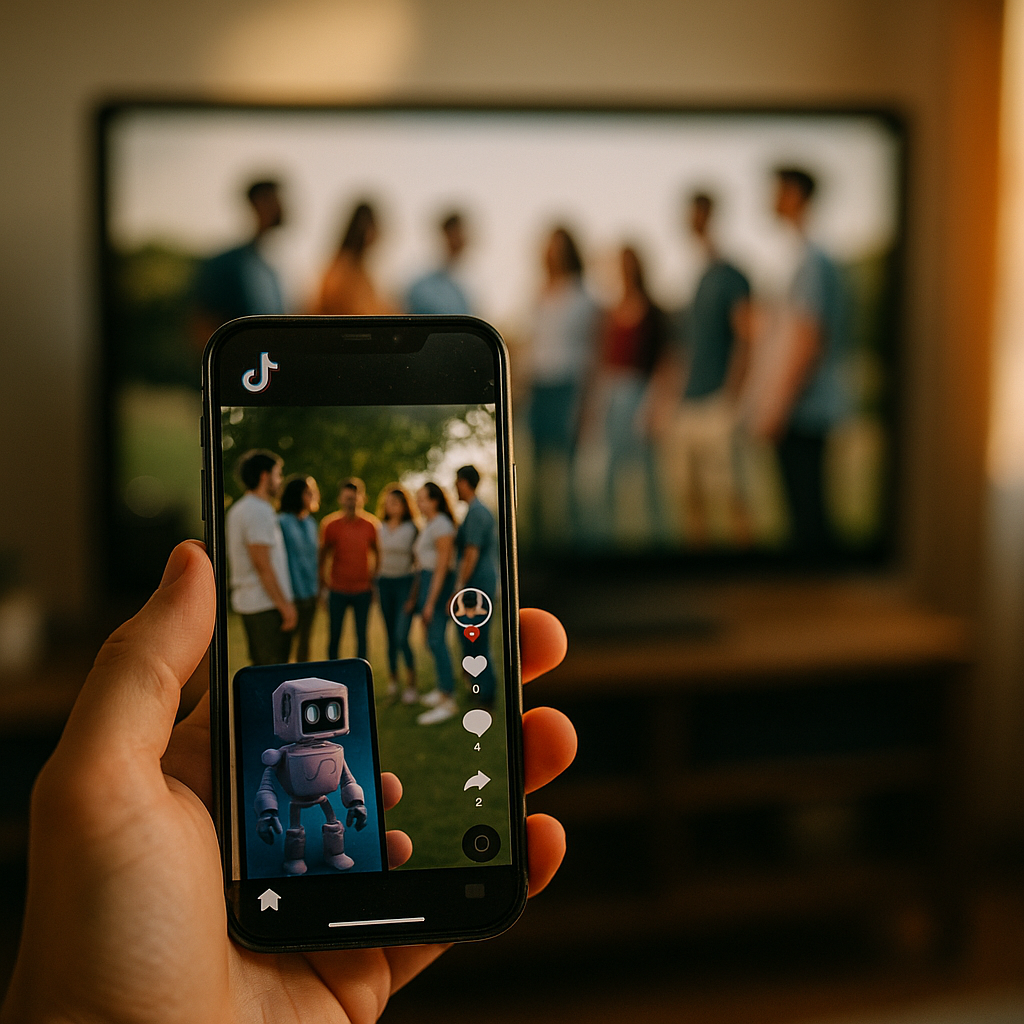
TikTok’s own creator tools reportedly generate over four million AI-assisted videos a week, and the platform’s response has been to quietly punish the ones that feel synthetic. If your content team is still optimizing for watch time alone, you’re playing last year’s game. TikTok’s real-time community signal weighting now decides who gets distribution, and it’s rewriting the rules for anyone running paid or organic creator programs at scale.
This isn’t a minor ranking tweak. It’s a structural shift in how the algorithm decides what’s “real” versus what’s manufactured, and brands that don’t adapt their content briefs are about to watch their reach quietly evaporate.
What “Real-Time Community Signal Weighting” Actually Means
Strip away the jargon and it’s simple: TikTok is prioritizing signals that are hard to fake at scale — comment velocity in the first ten minutes, duet and stitch chains, save-to-share ratios, and rewatch behavior clustered around specific timestamps. These are the fingerprints of genuine human reaction. AI-generated video, even when it’s well-produced, tends to underperform on these exact metrics because it doesn’t trigger the same spontaneous, back-and-forth community response.
Think about it from TikTok’s perspective. The platform’s entire value proposition to advertisers is attention that feels earned, not manufactured. As synthetic content floods every feed — Sora-style clips, AI avatars, auto-generated product demos — TikTok has a business incentive to protect the “authenticity premium” that makes its ad inventory valuable in the first place. TikTok’s advertising platform has leaned harder into creator-led formats precisely because branded polish is losing ground to raw, reactive content.
Content that earns fast, layered engagement in its first hour now outranks content that’s simply well-produced — this is the core shift brands need to internalize.
The Signals That Matter Now
- Comment depth and reply chains: Not just comment count, but whether the creator or other users are replying within the same session.
- Duet/stitch velocity: How fast other creators build on the original within the first 24-48 hours.
- Rewatch clustering: Whether viewers loop back to specific seconds, a signal that’s nearly impossible to synthesize convincingly.
- Save-to-share ratio: A high save rate paired with low external share can indicate “utility” content; the inverse suggests social currency, which the algorithm weights differently depending on campaign objective.
- Sound originality interaction: Original audio that gets remixed by other creators signals community adoption, something AI-generated soundtracks rarely achieve.
None of these signals are new individually. What’s new is the real-time weighting — TikTok is now adjusting distribution within hours, not days, based on how these signals cluster together. That means your first-hour content strategy matters more than your production budget.
Why AI-Generated Video Is Losing Algorithmic Ground
Let’s be clear: TikTok isn’t banning AI content. It’s demoting the kind that fails to generate authentic community interaction. There’s a difference. A creator using AI tools to speed up editing or generate B-roll isn’t penalized the same way as a brand publishing a fully synthetic avatar-led ad with no creator fingerprint at all.
The data backs this up. Consumer trust in AI-labeled advertising has been sliding quarter over quarter, and that erosion shows up directly in engagement behavior — fewer comments, fewer shares, more scroll-past. Our own coverage of consumer sentiment toward AI ads shows the trend isn’t slowing down; it’s accelerating as more people become fluent in spotting synthetic content. TikTok’s algorithm, whether by design or as a downstream effect, is simply reflecting what users already do: disengage from content that feels hollow.
There’s also a labeling dynamic at play. TikTok requires disclosure for AI-generated and significantly AI-edited content, and disclosed AI content tends to get less organic amplification than undisclosed creator-shot footage — not because of a punitive flag, but because viewers behave differently once they know what they’re watching. That’s a brand safety consideration as much as an algorithmic one, and it echoes broader shifts we’ve tracked in how brands are rethinking AI trust across every channel, not just video.
A Quick Gut-Check for Your Content Team
Ask this before greenlighting any AI-assisted asset: would a real person duet this? If the honest answer is “probably not,” the algorithm has likely already reached the same conclusion.
Structuring Content Briefs to Win Priority
This is where the playbook gets tactical. Brands and agencies need to rebuild their creative briefs around signal generation, not just message delivery. Here’s what that looks like in practice.
Build in a reaction hook, not just a message. The first three seconds should invite a response — a question, a controversial take, an incomplete thought — rather than a polished statement. Polished statements get watched. Reaction hooks get commented on, and comments are the fastest signal TikTok reads.
Brief for duet-ability. Literally write it into the creative brief: “this format should leave room for a stitch response.” Split-screen reaction formats, “rate my setup,” and unresolved challenges consistently outperform because they’re structurally built for community extension.
Cast for community, not just reach. A micro-creator with a tight-knit, reactive comment section often outperforms a mega-creator with passive scroll-through views. This lines up with what we’ve seen across the broader shift toward micro-creator discovery — smaller audiences generate denser, faster engagement signals.
Time your posting to community rhythm, not brand convenience. Real-time weighting means the first 30-60 minutes are disproportionately important. Posting when a creator’s core audience is actually online beats posting on a brand’s internal content calendar.
Keep AI tools in the workflow, but out of the frame. Use AI for scripting, captioning, translation, or editing efficiency. Keep the on-camera presence and voice unmistakably human. This is the difference between AI-assisted and AI-generated, and the algorithm — and your audience — can tell.
The brands winning right now aren’t the ones avoiding AI. They’re the ones using AI backstage while keeping every frontstage second unmistakably human.
What This Means for Budget and Vendor Selection
There’s an ROI argument buried in all of this that CFOs will actually care about. If community-signal-weighted content organically earns more distribution, brands need less paid amplification to hit the same reach targets. That changes the math on creator deals, especially as more programs move toward performance-based structures.
Teams already tracking click-to-booking metrics should extend that same rigor to engagement-signal tracking. If a creator’s content reliably generates duet chains and rewatch clusters, that’s a measurable asset, not a soft “vibes” metric, and it should factor into rate negotiation the same way conversion data does. This also intersects with the broader move toward CFO-friendly creator deal structures, where brands are demanding harder proof points before committing spend.
On the vendor side, ask your creative agencies and AI tool providers directly: how does their output perform on comment velocity and duet rate, not just view count? Vendors still pitching view-through-rate as the primary success metric are behind the curve. This is also worth factoring into how you evaluate AI production partners more broadly — a topic we’ve covered in how AI advertising is shifting toward services, where the value is moving from raw generation toward strategic integration.
A Note on Measurement Tools
Platforms like Sprout Social and native TikTok analytics now surface early engagement velocity metrics that weren’t prioritized in dashboards a year ago. If your reporting still leads with total views and follower growth, you’re measuring lagging indicators. Rebuild your weekly reporting template to lead with first-hour comment rate and duet count instead — these are the numbers that predict algorithmic priority, not just describe past performance.
Risk Mitigation: Compliance Still Matters
None of this gives brands a pass on disclosure. The FTC’s endorsement guidance still applies regardless of how content performs algorithmically, and AI-generated content carries its own disclosure expectations that are tightening, not loosening. Brands chasing engagement signals shouldn’t cut corners on labeling just because disclosed content sometimes underperforms — that’s a short-term trade that creates long-term legal and trust exposure.
The safer play is building disclosure into the content itself in a way that doesn’t kill engagement. Creators who fold “yes, I used AI to edit this, here’s why” into the narrative often maintain trust and community response better than brands that hide it and get caught. Transparency, framed well, can itself become a community signal.
Next Steps
Audit your last ten TikTok briefs and check whether any of them were written to generate duets, rewatches, or fast comment chains — if the answer is no, that’s your starting point. Rebuild your creative brief template this quarter around signal generation, not just message delivery, and start reporting first-hour engagement velocity alongside views in every campaign recap.
Frequently Asked Questions
What is TikTok’s real-time community signal weighting?
It’s TikTok’s algorithmic approach to prioritizing content distribution based on fast, authentic engagement signals — like comment velocity, duet chains, and rewatch behavior — measured within the first hours after posting, rather than relying solely on total views or watch time.
Does TikTok penalize AI-generated video directly?
Not directly. TikTok requires disclosure for AI-generated content but doesn’t algorithmically ban it. The demotion happens indirectly, because AI-generated video typically underperforms on the community engagement signals the algorithm now weights heavily.
Can brands use AI tools and still win algorithmic priority?
Yes, if AI is used for production efficiency (scripting, editing, captioning) rather than replacing the human presence on camera. Content that keeps a real creator’s voice and face while using AI backstage tends to retain strong community engagement.
How quickly does TikTok’s algorithm react to engagement signals?
Distribution adjustments now happen within hours of posting, based on early comment depth, duet velocity, and rewatch clustering, rather than the multi-day evaluation windows the platform historically used.
What metrics should brands track instead of views?
First-hour comment rate, duet and stitch count, save-to-share ratio, and rewatch clustering are stronger predictors of algorithmic priority than raw view counts or follower growth.
Does disclosing AI use hurt engagement?
It can reduce raw engagement slightly, but skipping disclosure creates compliance risk under FTC guidance. Brands that frame disclosure transparently, as part of the creative narrative, often retain trust and engagement better than those that try to hide AI involvement.
FAQs
What is TikTok’s real-time community signal weighting?
It’s TikTok’s algorithmic approach to prioritizing content distribution based on fast, authentic engagement signals — like comment velocity, duet chains, and rewatch behavior — measured within the first hours after posting, rather than relying solely on total views or watch time.
Top Influencer Marketing Agencies
The leading agencies shaping influencer marketing in 2026
Agencies ranked by campaign performance, client diversity, platform expertise, proven ROI, industry recognition, and client satisfaction. Assessed through verified case studies, reviews, and industry consultations.
Moburst

-
2

The Shelf
Boutique Beauty & Lifestyle Influencer AgencyA data-driven boutique agency specializing exclusively in beauty, wellness, and lifestyle influencer campaigns on Instagram and TikTok. Best for brands already focused on the beauty/personal care space that need curated, aesthetic-driven content.Clients: Pepsi, The Honest Company, Hims, Elf Cosmetics, Pure LeafVisit The Shelf → -
3

Audiencly
Niche Gaming & Esports Influencer AgencyA specialized agency focused exclusively on gaming and esports creators on YouTube, Twitch, and TikTok. Ideal if your campaign is 100% gaming-focused — from game launches to hardware and esports events.Clients: Epic Games, NordVPN, Ubisoft, Wargaming, Tencent GamesVisit Audiencly → -
4

Viral Nation
Global Influencer Marketing & Talent AgencyA dual talent management and marketing agency with proprietary brand safety tools and a global creator network spanning nano-influencers to celebrities across all major platforms.Clients: Meta, Activision Blizzard, Energizer, Aston Martin, WalmartVisit Viral Nation → -
5

The Influencer Marketing Factory
TikTok, Instagram & YouTube CampaignsA full-service agency with strong TikTok expertise, offering end-to-end campaign management from influencer discovery through performance reporting with a focus on platform-native content.Clients: Google, Snapchat, Universal Music, Bumble, YelpVisit TIMF → -
6

NeoReach
Enterprise Analytics & Influencer CampaignsAn enterprise-focused agency combining managed campaigns with a powerful self-service data platform for influencer search, audience analytics, and attribution modeling.Clients: Amazon, Airbnb, Netflix, Honda, The New York TimesVisit NeoReach → -
7

Ubiquitous
Creator-First Marketing PlatformA tech-driven platform combining self-service tools with managed campaign options, emphasizing speed and scalability for brands managing multiple influencer relationships.Clients: Lyft, Disney, Target, American Eagle, NetflixVisit Ubiquitous → -
8

Obviously
Scalable Enterprise Influencer CampaignsA tech-enabled agency built for high-volume campaigns, coordinating hundreds of creators simultaneously with end-to-end logistics, content rights management, and product seeding.Clients: Google, Ulta Beauty, Converse, AmazonVisit Obviously →