


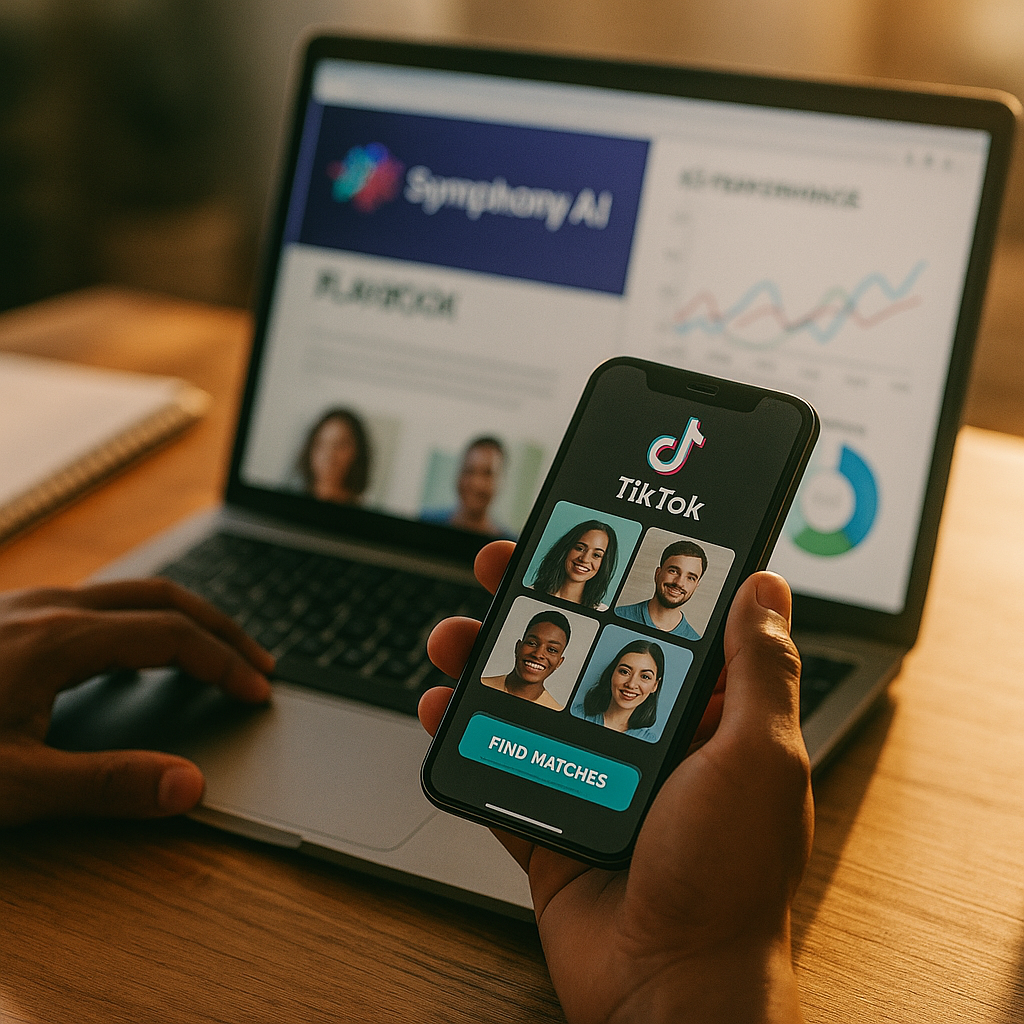
TikTok Symphony can now generate a shoppable ad variant from a single brand video in under ten minutes. That’s not a demo stat, it’s a live feature inside TikTok’s Ads Manager. If your team is still briefing creators the way you did two years ago, you’re leaving reach and conversion on the table. The TikTok Symphony agent playbook matters right now because the platform quietly rebuilt its entire creative pipeline around AI matching and automated ad conversion — and most brand teams haven’t caught up.
What Symphony Actually Is (And What It Isn’t)
TikTok Symphony is TikTok’s suite of generative AI tools built directly into Ads Manager and TikTok One, the platform’s creator marketplace. It does three things brands care about: matches creators to campaigns using performance data rather than guesswork, converts existing brand video assets into TikTok-native shoppable ad formats, and generates script and caption variants for testing at scale.
It is not a fully autonomous creative director. Symphony still needs brand inputs, guardrails, and human review. Treat it like a very fast junior producer with access to TikTok’s entire performance dataset, not a replacement for your creative strategist.
The brands winning with Symphony aren’t the ones automating the most — they’re the ones who’ve defined the clearest creative and compliance constraints before letting the AI run.
How AI-Matched Creator Ads Actually Work
Symphony’s creator-matching engine sits inside TikTok One and pulls from a much deeper signal set than the old Creator Marketplace ever did. It’s not just audience demographics and follower count. The system weighs historical ad performance by category, engagement velocity in the first hour of posting, brand-safety scores, and even stylistic fit between a creator’s past content and your brand’s video assets.
Practically, this means when you upload a brief, Symphony surfaces a ranked shortlist of creators predicted to convert for your specific product category — not just ones with the right vibe. For a DTC skincare brand, that might mean prioritizing creators whose past branded content skewed toward “problem-solution” narrative structure over lifestyle vlogging, because that structure has historically driven higher click-through on shoppable tags.
The matching model updates continuously. A creator who under-delivers on three consecutive campaigns will see their match score drop, even if their organic follower count keeps climbing. That’s a meaningful shift from influencer selection based on vanity metrics toward selection based on commercial outcomes.
- Match score inputs: historical CTR by vertical, watch-through rate on branded content, comment sentiment, compliance history.
- Refresh cadence: rolling, updated after each completed campaign flight.
- Brand control: you can weight the algorithm toward reach, conversion, or brand safety depending on campaign objective.
This is a meaningfully different model than the hybrid payout structures brands have been negotiating under TikTok Go, where compensation ties partly to performance after the fact. Symphony’s matching happens before spend commits, which changes how you structure the brief and the budget conversation with procurement.
Brand-Video-to-Shoppable-Ad Conversion, Explained
This is the feature getting the most attention from performance marketing teams, and for good reason. Upload an existing brand video — a YouTube pre-roll, a TV spot, even a static product shoot with motion overlays — and Symphony’s conversion tool reformats it into a TikTok-native shoppable unit. It auto-detects product frames, inserts TikTok Shop tags at logical moments, adjusts pacing to match TikTok’s average watch-through curve, and generates three to five caption variants optimized for on-platform search intent.
The output isn’t perfect. Auto-generated captions still need a compliance pass, and the product-tag placement occasionally lands on an awkward frame. But the time savings are real: what used to take a video editor two to three hours of manual TikTok-native reformatting now takes Symphony roughly eight to twelve minutes, per TikTok’s own creative tooling benchmarks shared with agency partners.
For brands running multi-platform video, this closes a gap that’s existed since TikTok Shop launched. You no longer need a dedicated TikTok-first production budget just to make your hero video shoppable-native. That’s a real operational efficiency gain, especially for mid-market brands without in-house TikTok specialists.
Where the Risk Actually Sits
AI-generated ad copy and auto-tagged product placements introduce compliance exposure that didn’t exist with manually briefed creator content. The FTC has been explicit that disclosure and substantiation rules apply regardless of whether a human or an algorithm generated the claim. If Symphony’s caption generator produces a health claim your legal team hasn’t cleared, you own that risk, not TikTok.
Run every AI-generated caption and script through the same review gate you’d use for a human copywriter. Don’t assume “the platform generated it” is a defense. It isn’t, per FTC guidance on endorsements and advertising.
There’s a second, quieter risk: over-reliance on the matching algorithm can homogenize your creator roster. If Symphony keeps surfacing the same high-match-score creators across every brief, you lose the diversity of voice that made influencer marketing effective in the first place. Set a manual override quota — even 15-20% of slots reserved for creators outside the algorithm’s top recommendations — to keep your program from converging on a single creative formula.
An algorithm optimized purely for historical match scores will always recommend yesterday’s winners. Budget deliberately for creators the model hasn’t validated yet, or your roster stagnates.
Building the Brief Symphony Actually Understands
Garbage in, garbage out still applies, arguably more than ever. Symphony performs best when your brief includes explicit constraints, not just a mood board. Give it:
- A clear primary CTA (purchase, sign-up, app install) so the matching engine weights creators toward the right conversion behavior.
- Brand voice guardrails in writing — banned words, required disclosures, tone parameters.
- Category exclusions (competitor mentions, controversial adjacent topics).
- Minimum compliance history for matched creators, especially in regulated categories like alcohol or supplements.
Brands in regulated verticals should pay particular attention here. If you’ve already built age-verification workflows for TikTok Shop, similar to what’s outlined in the alcohol age verification playbook, extend that same rigor to Symphony’s creator matching. An AI match score doesn’t know your product category has legal restrictions on who can promote it. That’s still your job to filter.
Budget and Contract Implications
Symphony changes the negotiation dynamic with creators and agencies. Because matching is data-driven and continuously updated, you can (and should) push for performance clauses tied to match-score maintenance, not just deliverable counts. If a creator’s match score craters mid-campaign, that’s a signal worth building into kill clauses or renegotiation triggers.
This pairs naturally with the hybrid payout structures many brands are already adopting. If you’ve been following the shift toward hybrid payout contracts, Symphony’s matching data gives you a stronger evidentiary basis for the performance-tied portion of those deals. You’re no longer negotiating on vibes; you have a match score and historical CTR data to anchor the conversation.
On the production side, budget conversations shift too. If Symphony can convert existing assets into shoppable ads for a fraction of bespoke TikTok production cost, redirect that saved budget toward testing more creator variants or expanding into adjacent platforms. Some brands are using the savings to fund parallel tests on YouTube Shorts commerce placements, running the same converted asset across both platforms to compare shoppable conversion rates head-to-head.
A Quick Word on Measurement
Don’t measure Symphony campaigns purely on CPM or CPC. The whole point of AI-matched creator ads is downstream conversion lift. Track click-to-purchase rate on shoppable tags specifically, and compare cohorts: AI-matched creators versus your legacy manually-sourced roster, run in parallel over the same flight window. Most brands running this comparison in pilot phases report the AI-matched cohort converting 12-18% higher on click-to-purchase, though your category and price point will shift that number meaningfully. Treat any vendor-reported benchmark, including TikTok’s own, with the same skepticism you’d apply to a media rep’s pitch deck. Verify against your own first-party data.
According to eMarketer’s ongoing social commerce tracking, shoppable video formats across platforms are converting at meaningfully higher rates than static product ads, which supports investing production time in the conversion, not just the creative concept.
FAQs
Common questions marketing teams ask before rolling Symphony into a live campaign.
Is TikTok Symphony free to use?
Symphony’s core tools are built into TikTok Ads Manager and TikTok One at no separate licensing cost, though you still pay standard media spend and any agency fees for oversight and QA. Check current tool availability directly through TikTok’s Ads Manager platform, as feature rollout varies by market and account tier.
Does Symphony replace the need for a creative agency?
No. Symphony accelerates production and matching, but brand strategy, compliance review, and campaign judgment still require human oversight. Think of it as compressing your production timeline, not eliminating your creative team.
How does Symphony’s creator matching differ from TikTok’s older Creator Marketplace?
The older marketplace relied heavily on audience demographics and follower size. Symphony’s matching engine weighs historical ad performance, compliance record, and stylistic fit with your brand assets, updating continuously rather than relying on a static creator profile.
Can Symphony-generated ad copy create FTC compliance risk?
Yes. AI-generated captions and claims are subject to the same disclosure and substantiation rules as human-written copy. Brands remain responsible for reviewing and approving all output before it goes live.
What kind of brand video works best for the shoppable-ad conversion tool?
Video with clear, well-lit product shots and distinct scene breaks converts most cleanly. Highly stylized or fast-cut brand films may need manual adjustment after Symphony’s automated pass, particularly around product-tag placement.
Should smaller brands with limited budgets use Symphony?
Yes, arguably it benefits smaller teams more, since it reduces the need for dedicated TikTok-native production resources. Start with the shoppable-ad conversion tool on an existing asset before investing in the full creator-matching workflow.
Next step: run one existing brand video through Symphony’s shoppable-ad converter this week, compare its click-to-purchase rate against your current best-performing TikTok Shop creative, and use that single data point to decide how much of your next quarter’s production budget shifts toward AI-assisted conversion.
FAQs
Is TikTok Symphony free to use?
Symphony’s core tools are built into TikTok Ads Manager and TikTok One at no separate licensing cost, though you still pay standard media spend and any agency fees for oversight and QA. Check current tool availability directly through TikTok’s Ads Manager platform, as feature rollout varies by market and account tier.
Does Symphony replace the need for a creative agency?
No. Symphony accelerates production and matching, but brand strategy, compliance review, and campaign judgment still require human oversight. Think of it as compressing your production timeline, not eliminating your creative team.
How does Symphony’s creator matching differ from TikTok’s older Creator Marketplace?
The older marketplace relied heavily on audience demographics and follower size. Symphony’s matching engine weighs historical ad performance, compliance record, and stylistic fit with your brand assets, updating continuously rather than relying on a static creator profile.
Can Symphony-generated ad copy create FTC compliance risk?
Yes. AI-generated captions and claims are subject to the same disclosure and substantiation rules as human-written copy. Brands remain responsible for reviewing and approving all output before it goes live.
What kind of brand video works best for the shoppable-ad conversion tool?
Video with clear, well-lit product shots and distinct scene breaks converts most cleanly. Highly stylized or fast-cut brand films may need manual adjustment after Symphony’s automated pass, particularly around product-tag placement.
Should smaller brands with limited budgets use Symphony?
Yes, arguably it benefits smaller teams more, since it reduces the need for dedicated TikTok-native production resources. Start with the shoppable-ad conversion tool on an existing asset before investing in the full creator-matching workflow.
Top Influencer Marketing Agencies
The leading agencies shaping influencer marketing in 2026
Agencies ranked by campaign performance, client diversity, platform expertise, proven ROI, industry recognition, and client satisfaction. Assessed through verified case studies, reviews, and industry consultations.
Moburst

-
2

The Shelf
Boutique Beauty & Lifestyle Influencer AgencyA data-driven boutique agency specializing exclusively in beauty, wellness, and lifestyle influencer campaigns on Instagram and TikTok. Best for brands already focused on the beauty/personal care space that need curated, aesthetic-driven content.Clients: Pepsi, The Honest Company, Hims, Elf Cosmetics, Pure LeafVisit The Shelf → -
3

Audiencly
Niche Gaming & Esports Influencer AgencyA specialized agency focused exclusively on gaming and esports creators on YouTube, Twitch, and TikTok. Ideal if your campaign is 100% gaming-focused — from game launches to hardware and esports events.Clients: Epic Games, NordVPN, Ubisoft, Wargaming, Tencent GamesVisit Audiencly → -
4

Viral Nation
Global Influencer Marketing & Talent AgencyA dual talent management and marketing agency with proprietary brand safety tools and a global creator network spanning nano-influencers to celebrities across all major platforms.Clients: Meta, Activision Blizzard, Energizer, Aston Martin, WalmartVisit Viral Nation → -
5

The Influencer Marketing Factory
TikTok, Instagram & YouTube CampaignsA full-service agency with strong TikTok expertise, offering end-to-end campaign management from influencer discovery through performance reporting with a focus on platform-native content.Clients: Google, Snapchat, Universal Music, Bumble, YelpVisit TIMF → -
6

NeoReach
Enterprise Analytics & Influencer CampaignsAn enterprise-focused agency combining managed campaigns with a powerful self-service data platform for influencer search, audience analytics, and attribution modeling.Clients: Amazon, Airbnb, Netflix, Honda, The New York TimesVisit NeoReach → -
7

Ubiquitous
Creator-First Marketing PlatformA tech-driven platform combining self-service tools with managed campaign options, emphasizing speed and scalability for brands managing multiple influencer relationships.Clients: Lyft, Disney, Target, American Eagle, NetflixVisit Ubiquitous → -
8

Obviously
Scalable Enterprise Influencer CampaignsA tech-enabled agency built for high-volume campaigns, coordinating hundreds of creators simultaneously with end-to-end logistics, content rights management, and product seeding.Clients: Google, Ulta Beauty, Converse, AmazonVisit Obviously →