


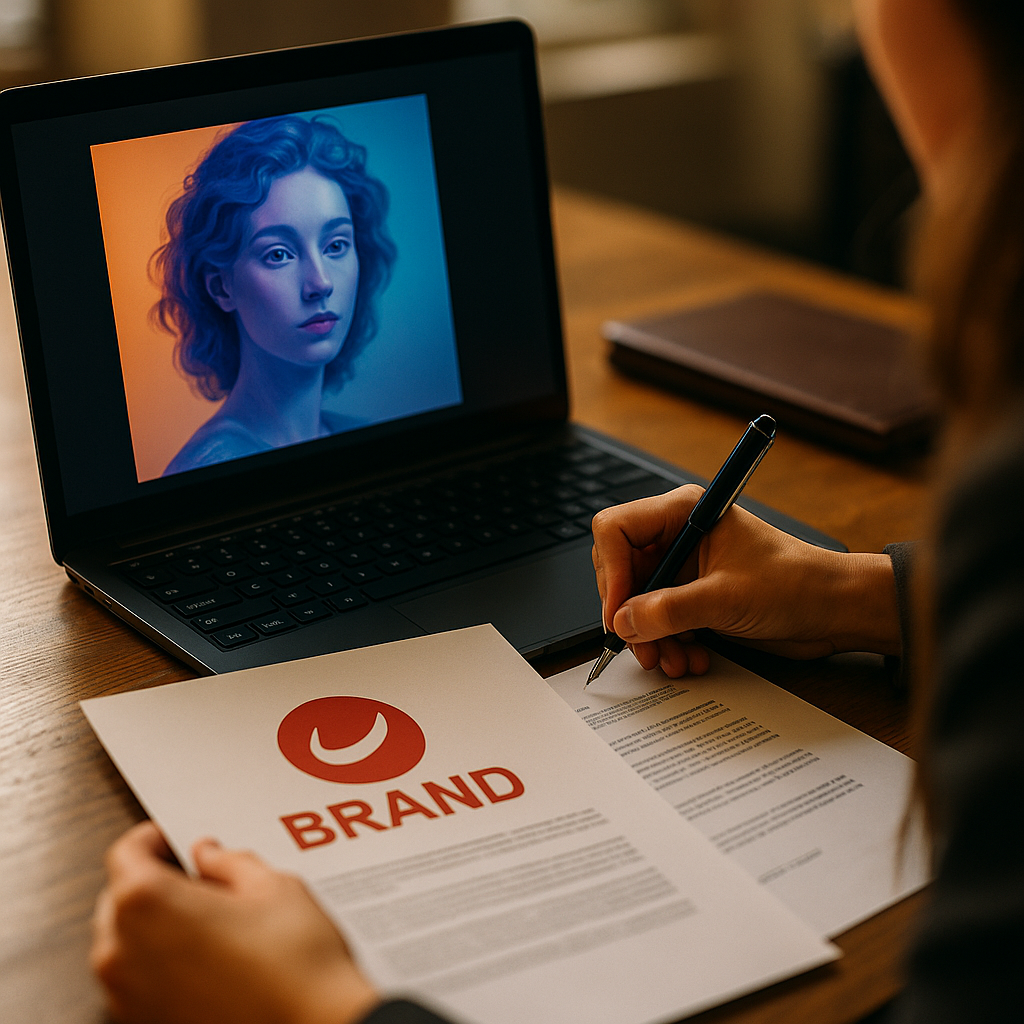
TikTok’s Symphony and Meta’s Advantage+ Creative already generate remixed versions of sponsored posts without a human ever clicking approve. If your creator agreements don’t have an AI remix consent clause, you’ve effectively pre-authorized platforms to alter your brand’s sponsored content however their algorithms see fit. That’s not a hypothetical risk. It’s happening right now, in production, across accounts you’re already paying for.
Most influencer contracts were written for a world where a creator posts one video, you approve it, and that’s the asset. That world is gone.
The Remix Problem Nobody Scoped For
Platform AI tools now routinely take a single piece of sponsored content and generate derivative versions: different captions, alternate hooks, AI-voiced dubs, reformatted cuts for other placements, even face-swapped or de-aged variants for testing. TikTok Symphony Assistant can auto-generate video variations from existing creator content. Meta’s Advantage+ suite does similar creative remixing for ad delivery optimization. YouTube’s tools increasingly auto-dub and auto-caption creator videos across languages using synthetic voice.
None of that is inherently malicious. It’s optimization. Platforms want higher engagement, and remixing performs better than static assets. But when a sponsored post gets algorithmically remixed, three things happen that your legal and compliance teams should care about deeply: the brand loses control over final messaging, the creator’s likeness or voice gets altered without their explicit sign-off, and nobody has a clean audit trail proving what version actually ran where.
If your creator contract is silent on AI remixing, the platform’s terms of service — not your brand’s compliance standards — become the default governing document for how your sponsored content gets altered.
That’s the quiet risk. You negotiated FTC-compliant disclosure language, brand-safe messaging, and usage rights with the creator. Then the platform’s AI generates a dubbed, re-captioned, or re-edited version that never passed through that approval chain. Who’s liable if that remix drops the disclosure? Who’s liable if the AI-generated dub misquotes a product claim?
Why This Isn’t Just a Legal Nice-to-Have
Marketing leaders tend to treat contract clauses as downstream paperwork — something legal handles after the media plan is locked. AI remix consent doesn’t work that way anymore. It’s an operational risk issue that touches brand safety, FTC compliance, and creator relationships simultaneously.
Consider the compliance angle first. The FTC has been explicit that endorsement disclosures must be clear and conspicuous in every version of sponsored content, not just the original. If a platform’s AI strips a caption during remixing, or moves a disclosure below the fold in a reformatted cut, your brand is still on the hook. This connects directly to the disclosure standards covered in our FTC disclosure standard breakdown — the agency doesn’t care whether a human or an algorithm produced the non-compliant version.
Then there’s brand safety. An AI remix might place your product next to messaging you never approved, alter tone in ways that clash with your brand voice, or generate a dub that mistranslates a claim into something legally risky in another market. That’s a direct extension of the issues we flagged in our AI before-and-after claims audit framework — once AI touches the creative, claims verification has to happen again.
And finally, there’s the creator relationship. Creators are increasingly wary of platforms using their likeness or voice for AI-generated variants they never approved. If your contract doesn’t address this, you’re exposed to creator disputes, public callouts, or worse — a creator refusing future collaborations because a past remix damaged their trust in your brand.
What an AI Remix Consent Clause Actually Needs to Cover
A serviceable clause isn’t a single sentence bolted onto your usage rights section. It needs to function almost like a mini data-processing addendum, specific to algorithmic content transformation. Here’s the core architecture we’d recommend building into any creator agreement, starting now.
- Define “AI remix” broadly and specifically. Cover auto-dubbing, auto-captioning, re-editing, format resizing via AI, synthetic voice insertion, face/likeness alteration, and algorithmic caption or hook generation. Vague language like “platform modifications” won’t hold up under scrutiny.
- Require pre-approval for any remix used in paid media. Organic algorithmic remixing (a platform auto-generating a caption variant for feed testing) is lower stakes than a brand paying to boost an AI-remixed version. Draw that line explicitly.
- Mandate disclosure persistence. Any remix, regardless of who initiates it, must retain the original disclosure language and placement, or the brand must be notified before the remix goes live.
- Address likeness and voice separately from usage rights. Standard usage rights language covers reposting and paid amplification. It typically does not cover synthetic alteration of a creator’s actual voice or face. That needs its own consent mechanism, ideally cross-referenced with voice cloning consent standards.
- Build in a notification and takedown window. Require the creator or platform-managing party to notify the brand within a defined window (24-48 hours is typical) when an AI remix goes live, with a right to request removal.
- Assign liability clearly. If a platform’s AI generates a non-compliant remix, specify who bears responsibility for correction — the brand, the creator, or the platform via its own terms of service.
Short version: silence is the enemy here. Every ambiguous gap in the clause becomes a gap in your compliance posture.
Sample Clause Language (Starting Point, Not Legal Advice)
Something like this can anchor the negotiation, though every legal team should adapt it to jurisdiction and platform specifics:
“Creator acknowledges that platforms may use automated or AI-driven tools to generate derivative versions of Sponsored Content, including but not limited to auto-dubbing, auto-captioning, reformatting, or synthetic voice/likeness alteration (‘AI Remixes’). Creator and Brand agree that: (a) any AI Remix intended for paid amplification requires Brand’s prior written approval; (b) all AI Remixes must retain conspicuous sponsorship disclosure consistent with FTC guidance; (c) Creator or its representative will notify Brand within [48] hours of becoming aware of any AI Remix of the Sponsored Content; and (d) Brand reserves the right to request removal or correction of any non-compliant AI Remix within [X] business days of notification.”
Notice what this does. It doesn’t try to ban platform AI outright — that’s a losing battle against tools built into TikTok, Meta, and YouTube’s core infrastructure. Instead, it creates a governance layer: approval gates for paid use, disclosure persistence, and a notification-and-remedy loop.
Where This Intersects With Broader AI Contract Hygiene
An AI remix clause doesn’t live in isolation. It should sit alongside other AI-specific contract provisions that mid-to-senior marketing teams are already (or should be) negotiating. If you’ve already built out AI model deprecation language for your martech stack, the remix clause is the creator-facing counterpart to that same risk category: platform-side AI changing outputs without your sign-off.
It also connects to broader governance questions. Brands running structured AI oversight programs, the kind outlined in our AI governance charter framework, should treat remix consent as one specific override threshold: a defined point where automated platform behavior requires human sign-off before it touches paid spend or public-facing brand messaging.
And don’t overlook the data angle. If a platform’s AI is training on creator content to generate remixes, that’s a separate consent question from usage rights, one we’ve covered in detail around closing AI training data consent gaps. A comprehensive creator agreement in this environment increasingly needs three distinct AI provisions: training data consent, remix/derivative consent, and voice/likeness synthesis consent. Bundling them into one vague “AI clause” is how gaps get missed.
Negotiating This With Creators and Agencies
Creators, especially established ones with agency representation, are increasingly receptive to this conversation. Nobody wants their voice auto-dubbed into a language they don’t speak without knowing about it. Nobody wants their face used in a synthetic variant they never saw. Framing the clause as protective of the creator (not just the brand) tends to smooth negotiation significantly.
Agencies representing larger creator rosters are starting to push standardized AI remix language proactively, according to conversations across the influencer marketing industry tracked by outlets like eMarketer. That’s a signal worth watching: if agencies are already drafting this into their standard templates, brands that lag behind will find themselves negotiating from a weaker position, accepting whatever boilerplate the agency offers instead of setting terms.
Platforms themselves aren’t going to slow this down. Meta’s own Meta for Business resources actively promote Advantage+ creative automation as a selling point, not a risk. TikTok for Business markets Symphony similarly. These tools are being built to be used, at scale, by default. Your contracts are the only lever you have to insert brand approval back into that loop.
There’s also a practical operations upside here worth mentioning. Brands that formalize AI remix consent tend to build cleaner audit trails for every other compliance requirement too — disclosure verification, claims substantiation, whitelisting permissions. Getting this clause right reinforces disciplines already covered in our creator whitelisting agreement audit, since remix rights and whitelisting rights frequently overlap in scope.
The Next Step
Pull your current creator agreement template today and search it for the words “AI,” “automated,” or “derivative.” If none of those terms appear, you have a gap that platform algorithms are already exploiting, whether you’ve noticed it yet or not. Draft the clause, get it into your next renewal cycle, and stop letting platform AI make brand approval decisions your legal team never signed off on.
FAQs
What is an AI remix consent clause?
It’s a contract provision in creator agreements that governs how platform AI tools can alter, reformat, dub, or generate derivative versions of sponsored content, requiring brand approval and disclosure persistence for any remix used in paid media.
Do platforms need brand permission to remix sponsored content with AI?
Under most current platform terms of service, no. Platforms retain broad rights to algorithmically alter content for optimization purposes. That’s exactly why brands need contractual language with creators to reassert approval control, since platform terms alone won’t provide it.
Does FTC disclosure guidance apply to AI-remixed versions of sponsored posts?
Yes. The FTC requires clear and conspicuous disclosure in every version of sponsored content that reaches consumers, regardless of whether a human or an algorithm produced that version. A stripped disclosure in an AI remix creates the same compliance exposure as one in the original post.
How is remix consent different from standard usage rights language?
Usage rights typically cover reposting, boosting, and paid amplification of the original asset as delivered. They generally don’t address algorithmic alteration of voice, likeness, captions, or format. Remix consent is a distinct, more specific provision.
Should this clause apply to organic remixes too, or only paid amplification?
Most legal teams draw a tiered line: lighter oversight for organic algorithmic variants (like auto-captioning), and mandatory pre-approval for any AI remix used in paid media or official brand channels.
What happens if a creator’s contract has no AI remix language at all?
The platform’s terms of service become the default governing framework, meaning the brand has little contractual recourse if an AI-generated remix misrepresents the product, drops disclosure, or alters the creator’s likeness without consent.
FAQs
Frequently Asked Questions
What is an AI remix consent clause?
It’s a contract provision in creator agreements that governs how platform AI tools can alter, reformat, dub, or generate derivative versions of sponsored content, requiring brand approval and disclosure persistence for any remix used in paid media.
Do platforms need brand permission to remix sponsored content with AI?
Under most current platform terms of service, no. Platforms retain broad rights to algorithmically alter content for optimization purposes. That’s exactly why brands need contractual language with creators to reassert approval control, since platform terms alone won’t provide it.
Does FTC disclosure guidance apply to AI-remixed versions of sponsored posts?
Yes. The FTC requires clear and conspicuous disclosure in every version of sponsored content that reaches consumers, regardless of whether a human or an algorithm produced that version. A stripped disclosure in an AI remix creates the same compliance exposure as one in the original post.
How is remix consent different from standard usage rights language?
Usage rights typically cover reposting, boosting, and paid amplification of the original asset as delivered. They generally don’t address algorithmic alteration of voice, likeness, captions, or format. Remix consent is a distinct, more specific provision.
Should this clause apply to organic remixes too, or only paid amplification?
Most legal teams draw a tiered line: lighter oversight for organic algorithmic variants (like auto-captioning), and mandatory pre-approval for any AI remix used in paid media or official brand channels.
What happens if a creator’s contract has no AI remix language at all?
The platform’s terms of service become the default governing framework, meaning the brand has little contractual recourse if an AI-generated remix misrepresents the product, drops disclosure, or alters the creator’s likeness without consent.
Top Influencer Marketing Agencies
The leading agencies shaping influencer marketing in 2026
Agencies ranked by campaign performance, client diversity, platform expertise, proven ROI, industry recognition, and client satisfaction. Assessed through verified case studies, reviews, and industry consultations.
Moburst

-
2

The Shelf
Boutique Beauty & Lifestyle Influencer AgencyA data-driven boutique agency specializing exclusively in beauty, wellness, and lifestyle influencer campaigns on Instagram and TikTok. Best for brands already focused on the beauty/personal care space that need curated, aesthetic-driven content.Clients: Pepsi, The Honest Company, Hims, Elf Cosmetics, Pure LeafVisit The Shelf → -
3

Audiencly
Niche Gaming & Esports Influencer AgencyA specialized agency focused exclusively on gaming and esports creators on YouTube, Twitch, and TikTok. Ideal if your campaign is 100% gaming-focused — from game launches to hardware and esports events.Clients: Epic Games, NordVPN, Ubisoft, Wargaming, Tencent GamesVisit Audiencly → -
4

Viral Nation
Global Influencer Marketing & Talent AgencyA dual talent management and marketing agency with proprietary brand safety tools and a global creator network spanning nano-influencers to celebrities across all major platforms.Clients: Meta, Activision Blizzard, Energizer, Aston Martin, WalmartVisit Viral Nation → -
5

The Influencer Marketing Factory
TikTok, Instagram & YouTube CampaignsA full-service agency with strong TikTok expertise, offering end-to-end campaign management from influencer discovery through performance reporting with a focus on platform-native content.Clients: Google, Snapchat, Universal Music, Bumble, YelpVisit TIMF → -
6

NeoReach
Enterprise Analytics & Influencer CampaignsAn enterprise-focused agency combining managed campaigns with a powerful self-service data platform for influencer search, audience analytics, and attribution modeling.Clients: Amazon, Airbnb, Netflix, Honda, The New York TimesVisit NeoReach → -
7

Ubiquitous
Creator-First Marketing PlatformA tech-driven platform combining self-service tools with managed campaign options, emphasizing speed and scalability for brands managing multiple influencer relationships.Clients: Lyft, Disney, Target, American Eagle, NetflixVisit Ubiquitous → -
8

Obviously
Scalable Enterprise Influencer CampaignsA tech-enabled agency built for high-volume campaigns, coordinating hundreds of creators simultaneously with end-to-end logistics, content rights management, and product seeding.Clients: Google, Ulta Beauty, Converse, AmazonVisit Obviously →