


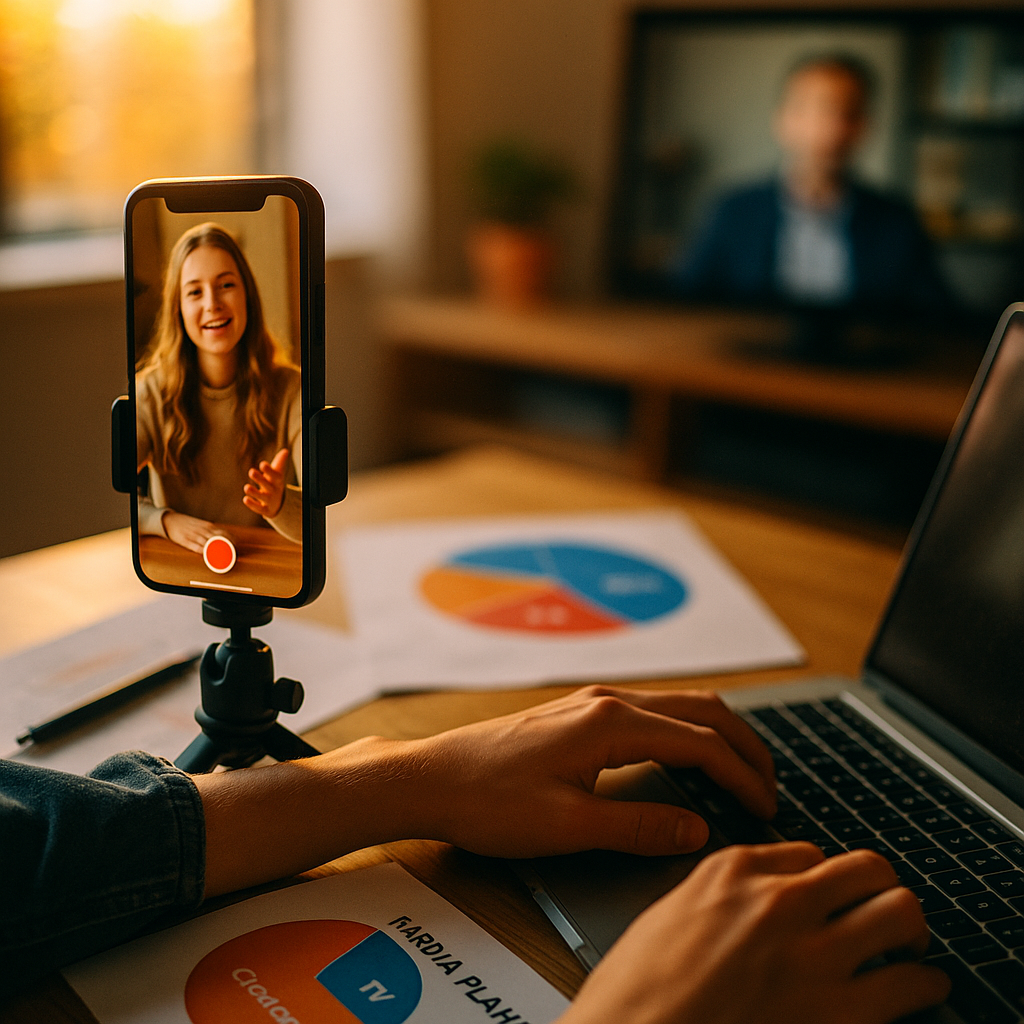
Nearly half of brand and agency buyers now say creators matter more than TV, display, email, and retail media combined. That’s not a soft opinion pulled from a trade show survey. It’s the headline number from the IAB’s July spend forecast, and it should reorder every media plan sitting on your desk right now. When 48% of buyers rank creators behind only paid search and social, the old argument about whether influencer marketing deserves a “real” line item is over. The new argument is about how much of that line item you’re prepared to defend.
The Number That Should Reset Your Media Plan
Let’s sit with the stat for a second. Paid search and paid social have decades of measurement infrastructure behind them. Attribution models, conversion APIs, decades of institutional trust from finance teams. Creators, by comparison, are still fighting the perception of being a “nice to have” experiment bolted onto the real media plan.
Not anymore. The IAB’s forecast puts creator spend ahead of connected TV, ahead of display, ahead of email and organic social. For a channel that many CMOs were still calling “earned media” five years ago, that’s a startling reordering of the hierarchy.
When buyers rank a channel third overall, ahead of TV and display, they’re not describing a trend anymore. They’re describing where the budget already lives.
This tracks with broader momentum we’ve covered before. The creator economy has already crossed the 480 billion mark in aggregate value, and that scale is exactly why buyers are starting to treat it with the same rigor they apply to search and social.
Why Search and Social Still Win — And What That Gap Tells You
Paid search and paid social aren’t beating creators because they’re inherently better channels. They’re winning because they’re easier to justify. A performance marketer can pull a Google Ads dashboard and show cost-per-acquisition in real time. Try doing that with a creator campaign that’s built around trust, discovery, and multi-touch influence over weeks, not minutes.
That gap between creator effectiveness and creator measurability is the real story buried inside the IAB numbers. Buyers aren’t saying creators are worse. They’re saying creators are harder to prove, and the channel’s rise to third place happened despite that friction, not because it was solved.
If your team hasn’t yet built a measurement framework that satisfies finance the way search dashboards do, you’re leaving budget on the table. Full stop.
What’s Actually Driving the Reallocation
Three forces are pushing creators up the ranking, and none of them are hype cycles.
- Affiliate and commission models are maturing fast. Flat-fee deals are losing share to performance-based structures, which gives buyers cleaner ROI stories. We’ve tracked this shift in detail, including why flat fees are losing ground to affiliate arrangements that tie payout directly to sales.
- Micro-creators are eating budget share from mega-influencers. Buyers increasingly trust smaller, niche audiences over celebrity reach. Data shows micro-creators now claim half of influencer ad spend, and that shift toward smaller, more targeted partnerships makes budgets feel less risky and more like a controlled experiment than a bet.
- AI-powered discovery tools are removing the guesswork. Platforms that match brands to creators based on audience fit rather than follower count have accelerated adoption, something we detailed in our coverage of how AI discovery tools fuel the micro-creator spend surge.
Put together, these three forces explain why creators climbed past channels with far more mature measurement stacks. Buyers found a way to make the risk feel smaller even before the attribution problem got fully solved.
The Discovery Problem Is Getting Worse, Not Better
Here’s the uncomfortable part nobody wants printed in a forecast headline: as creator budgets grow, so does creator supply. We’re now dealing with an estimated 100 million people creating content for pay or exposure, a glut that makes finding the right partner harder even as the category gets more strategic. Our earlier analysis on what the supply glut means for brands is worth revisiting if you haven’t priced in the sourcing cost of this shift.
More creators doesn’t mean more good creators. It means more noise, more vetting overhead, and more pressure on whoever owns creator sourcing at your organization to move fast without sacrificing brand fit. This is precisely why brand-fit scoring has emerged as a serious alternative to follower-count shortcuts — a shift we broke down in our piece on brand-fit scoring replacing follower count in discovery workflows.
Risk and Compliance: The Part of the Forecast Nobody Quotes
Every dollar that shifts from a controlled channel like paid search into creator partnerships brings new compliance exposure. Disclosure rules, FTC guidance on sponsored content, and platform-specific ad labeling requirements don’t go away because a creator’s content “feels” organic.
If you’re scaling creator spend to match this new ranking, your legal and compliance review needs to scale with it. The FTC’s endorsement guidelines are not optional reading for brand safety teams, and UK-facing campaigns carry their own disclosure obligations worth reviewing via the ICO’s guidance on data and marketing practices.
Buyers who treat creator spend like a paid social line item, without the same compliance rigor, are setting themselves up for the kind of brand safety incident that erases a quarter’s worth of ROI gains in a single news cycle.
How Agencies Are Repositioning Around This Shift
Smaller, AI-native agencies are capitalizing on this reordering faster than the holding companies. When creators sit at the third spot on a buyer’s priority list, speed of execution becomes the differentiator, and nimble shops are winning pitches specifically because they can move quicker. Our reporting on why small agencies beat holding companies on creator pitches lines up directly with what the IAB data suggests: buyers want speed and proof, not decks full of promises.
This is also showing up in headcount. New job titles focused specifically on creator program coordination and AI-assisted vetting are appearing across agency org charts, a trend we covered in our piece on new creator economy job titles signaling structural change, not just a hiring fad.
What Buyers Should Actually Do With This Data
Ranking third behind search and social is an opportunity, not a finish line. Here’s where to focus if you’re revising Q3 and Q4 budgets based on this forecast:
Build measurement parity before you build budget parity. Don’t ask for creator spend to match paid social dollar-for-dollar until you can report on it with similar confidence. Push your team, or your agency partner, to adopt commission and affiliate structures where they make sense, since they naturally generate the performance data finance wants to see.
Audit your creator vetting process against the supply glut. If you’re still sourcing primarily through follower count or manual outreach, you’re paying an efficiency tax that AI-assisted discovery tools have already solved for competitors.
Treat compliance as a budget line, not an afterthought. Legal review costs money and time, but it’s cheaper than a disclosure violation that lands your brand in a regulatory filing.
Industry benchmarks from eMarketer and social platform data from Sprout Social both point the same direction: creator spend isn’t a rounding error anymore, and buyers who treat it like one are going to lose ground to competitors who don’t.
The Takeaway
The IAB’s ranking isn’t a prediction. It’s a snapshot of decisions buyers have already made. If your creator budget still lives in a “test and learn” bucket while it’s functionally outranking TV and display, you’re not being cautious, you’re being slow. Move the line item, build the measurement to match, and get ahead of the compliance review before your competitors force you to catch up.
FAQs
Why are creators now ranked ahead of channels like TV and display?
Buyers cite trust, targeting precision, and the maturity of affiliate and commission-based deal structures that make ROI easier to demonstrate than traditional broadcast or display buys.
Does this mean paid search and social are losing budget share?
Not necessarily. The IAB forecast shows creators closing the gap with the top two channels, not replacing them. Search and social remain ahead due to superior measurement infrastructure, not superior performance.
How should brands measure creator ROI to match paid search standards?
Shift toward affiliate links, promo codes, and commission-based deals that generate trackable conversion data, rather than relying solely on flat-fee sponsorships with limited attribution.
What compliance risks come with increased creator spend?
Disclosure requirements under FTC guidelines, platform-specific ad labeling rules, and data handling obligations under regulators like the UK’s ICO all apply to creator partnerships just as they do to traditional paid media.
Are micro-creators or mega-influencers driving this shift?
Micro-creators are playing an outsized role, now accounting for roughly half of influencer ad spend, as buyers favor niche trust and targeted reach over broad celebrity audiences.
Top Influencer Marketing Agencies
The leading agencies shaping influencer marketing in 2026
Agencies ranked by campaign performance, client diversity, platform expertise, proven ROI, industry recognition, and client satisfaction. Assessed through verified case studies, reviews, and industry consultations.
Moburst

-
2

The Shelf
Boutique Beauty & Lifestyle Influencer AgencyA data-driven boutique agency specializing exclusively in beauty, wellness, and lifestyle influencer campaigns on Instagram and TikTok. Best for brands already focused on the beauty/personal care space that need curated, aesthetic-driven content.Clients: Pepsi, The Honest Company, Hims, Elf Cosmetics, Pure LeafVisit The Shelf → -
3

Audiencly
Niche Gaming & Esports Influencer AgencyA specialized agency focused exclusively on gaming and esports creators on YouTube, Twitch, and TikTok. Ideal if your campaign is 100% gaming-focused — from game launches to hardware and esports events.Clients: Epic Games, NordVPN, Ubisoft, Wargaming, Tencent GamesVisit Audiencly → -
4

Viral Nation
Global Influencer Marketing & Talent AgencyA dual talent management and marketing agency with proprietary brand safety tools and a global creator network spanning nano-influencers to celebrities across all major platforms.Clients: Meta, Activision Blizzard, Energizer, Aston Martin, WalmartVisit Viral Nation → -
5

The Influencer Marketing Factory
TikTok, Instagram & YouTube CampaignsA full-service agency with strong TikTok expertise, offering end-to-end campaign management from influencer discovery through performance reporting with a focus on platform-native content.Clients: Google, Snapchat, Universal Music, Bumble, YelpVisit TIMF → -
6

NeoReach
Enterprise Analytics & Influencer CampaignsAn enterprise-focused agency combining managed campaigns with a powerful self-service data platform for influencer search, audience analytics, and attribution modeling.Clients: Amazon, Airbnb, Netflix, Honda, The New York TimesVisit NeoReach → -
7

Ubiquitous
Creator-First Marketing PlatformA tech-driven platform combining self-service tools with managed campaign options, emphasizing speed and scalability for brands managing multiple influencer relationships.Clients: Lyft, Disney, Target, American Eagle, NetflixVisit Ubiquitous → -
8

Obviously
Scalable Enterprise Influencer CampaignsA tech-enabled agency built for high-volume campaigns, coordinating hundreds of creators simultaneously with end-to-end logistics, content rights management, and product seeding.Clients: Google, Ulta Beauty, Converse, AmazonVisit Obviously →