


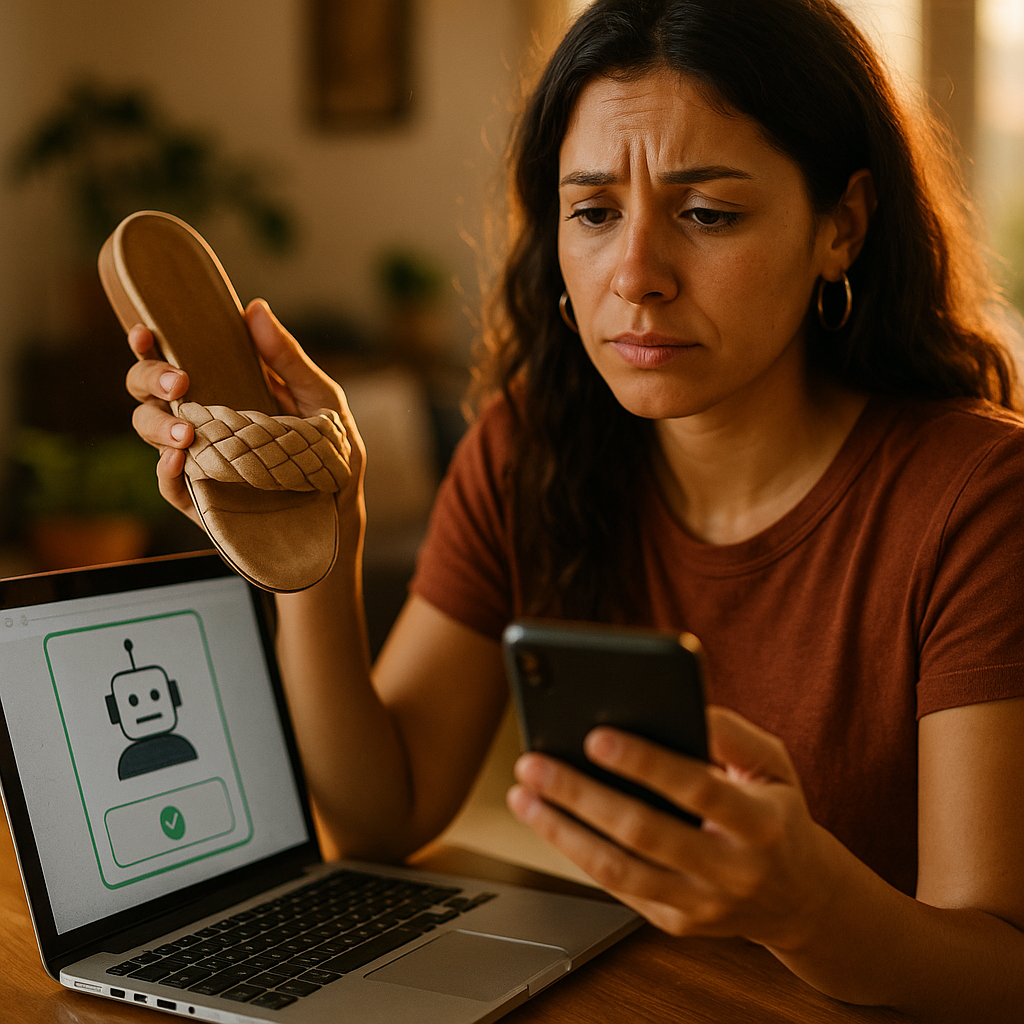
Here’s an uncomfortable question for anyone running a creator program: if a shopper asks ChatGPT or Perplexity to find the best running shoes, watches a TikTok review to confirm the pick, then lets an AI shopping agent complete the purchase on Amazon, who gets credit for that sale? Right now, the honest answer is nobody knows for sure, and that gap is quietly rewriting the rules of influencer attribution.
The Attribution Chain Just Got a New Link
For a decade, influencer marketing built its ROI case on a fairly linear path: creator posts, follower clicks, follower buys, brand tracks the link or code. Messy, sure, but traceable. Agentic commerce breaks that chain by inserting a decision-making layer between discovery and purchase.
Tools like OpenAI’s shopping features inside ChatGPT, Google’s Gemini-powered shopping assistant, and Amazon’s Rufus don’t just surface products. They compare, filter, and in growing numbers of cases, complete the transaction. The creator’s video might have sparked the intent. The AI agent executed the sale. Standard last-click tracking hands the credit to whoever owns the checkout, which increasingly means the agent, not the creator.
When an AI agent completes checkout on a shopper’s behalf, the creator who drove the original intent often disappears entirely from the attribution report, even though their content was the reason the purchase happened at all.
Why This Isn’t Just a Tracking Problem
It’s tempting to file this under “attribution is broken again, add it to the pile.” But this shift touches something bigger than reporting hygiene. It touches budget allocation, creator compensation, and platform negotiating power.
If finance teams can’t see influencer fingerprints on agent-completed sales, influencer line items get cut first when budgets tighten. That’s already happening in adjacent categories. Our coverage of how marketing mix modeling claims ad budget share shows finance leaders gravitating toward whatever methodology gives them a defensible number, even an imperfect one. Influencer teams that can’t produce a defensible number lose the argument by default.
There’s also a compensation problem brewing. Many creator deals still run on affiliate links or promo codes tied to direct clicks. If an AI agent intercepts the path and completes checkout without ever touching that tracked link, the creator earns nothing for a sale they arguably caused. That’s a direct threat to the revenue share contracts that have become standard in performance-driven creator deals.
How Shopping Agents Actually Source Recommendations
To understand where credit is getting lost, it helps to know how these agents pull their answers. Most large language model shopping tools scrape a blend of retailer feeds, review aggregators, Reddit threads, and increasingly, indexed video and social content. If a creator’s product review ranks well and gets cited frequently, it can shape what the agent recommends, even without a single tracked click.
This is eerily similar to what’s already happening in search. Our piece on zero click search hitting 68 percent of queries laid out how Google’s AI Overviews satisfy user intent without a site visit. Shopping agents are doing the same thing one layer deeper: they’re not just answering the question, they’re closing the loop and buying the product too.
Brands that assume their creator content simply isn’t being seen by these agents are usually wrong. It’s being seen. It’s just not being credited.
What Smart Brands Are Doing Differently
A handful of forward-leaning brand teams have started treating agentic commerce as a distinct attribution layer rather than folding it into existing dashboards and hoping for the best. A few patterns are emerging:
- Structured content for machine readability. Creators are being briefed to include clear product names, use cases, and comparison language, not just vibes, because that’s what agents parse and cite.
- Server-side and UTM-independent tracking. Some teams are layering in post-purchase surveys and brand lift studies specifically to catch sales that agentic paths would otherwise erase.
- Contract language updates. Legal and partnerships teams are rewriting affiliate agreements to account for “assisted” conversions where a link click isn’t the final step.
- Margin-based reporting instead of reach. This mirrors the broader shift our team documented in brands ditching reach for margin based creator KPIs, where the metric that survives budget scrutiny is the one tied to actual profit, not vanity numbers.
None of this fully solves the problem. But it beats pretending the agent layer doesn’t exist.
The Platform Power Play Nobody’s Talking About
Here’s the part that should worry brand strategists more than the tracking gap itself: whoever controls the shopping agent controls the attribution narrative. Amazon has every incentive to credit Rufus and its own retail media network for a sale, not the TikTok creator who inspired it. OpenAI and Google have their own commercial arrangements with retailers that shape what gets recommended and how credit flows back.
This is the same dynamic playing out in commerce media attribution pulling budget from walled gardens, except now it’s happening at the conversational layer instead of the ad auction. Brands that outsource their entire attribution model to whichever platform completes the transaction are handing over negotiating leverage they’ll struggle to get back.
Whoever owns the shopping agent effectively owns the attribution story, which means brands relying solely on platform-reported data are negotiating creator budgets with someone else’s version of the truth.
There’s a compliance angle too. If an AI agent recommends a product based on a sponsored creator post but doesn’t disclose that relationship in its own output, that’s a murky area regulators are almost certainly going to look at. The FTC has already signaled interest in disclosure requirements that extend beyond the original post itself. Brands that can’t trace how their sponsored content is being surfaced and repackaged by AI agents are sitting on undiscovered compliance risk, not unlike the gaps flagged in our coverage of brand safety fallout forcing formal vetting pipelines.
Where Measurement Vendors Are Racing To Catch Up
Reporting and analytics vendors have noticed the gap and are moving fast. Spend on reporting infrastructure is already climbing, as we covered in reporting dashboards claiming 19 percent of martech spend, and a growing slice of that investment is going toward agent-aware tracking: tools that attempt to detect when a conversational AI touchpoint sat somewhere in the customer journey, even if it never generated a clickable link.
Third-party measurement firms are also experimenting with panel-based approaches, essentially asking consumers directly whether an AI assistant influenced a purchase decision, since platform data alone won’t tell that story reliably. It’s imperfect, survey-based data always is, but it’s better than a total blind spot. Industry researchers at eMarketer and Statista have both flagged agentic commerce as one of the fastest-growing categories to watch precisely because standardized measurement doesn’t exist yet.
Marketing operations teams that are already restructuring around AI oversight, a trend we detailed in B2B agencies restaffing for AI oversight, are the ones best positioned to adapt quickly here. They already have the internal muscle for auditing AI-driven decisions. That muscle now needs to extend into attribution modeling, not just content review.
What This Means for Creator Deals Going Forward
Expect contract negotiations to get more specific over the next few quarters. Brands will start asking creators to prove influence through channels other than click-through links, things like search lift, branded query volume, and share of voice inside AI-generated answers. Creators and their agents, in turn, will push for compensation models that don’t hinge entirely on a trackable click, since that click increasingly belongs to the agent, not the human who made the recommendation.
This tension will likely accelerate the shift toward hybrid pay structures already gaining traction, similar to what’s driving performance-based creator deals in cost-pressured categories like beauty. When the attribution path gets murkier, both sides tend to gravitate toward blended models: a base fee for content creation, plus a bonus tied to broader brand lift metrics that don’t require a clean last-click.
The brands that get ahead of this won’t wait for a perfect measurement standard to emerge. There isn’t going to be one, at least not soon. Platforms like Meta and TikTok are building their own commerce and AI recommendation layers too, each with incentives to keep attribution data close to the vest. Brands that build internal measurement muscle now, even a rough version, will be negotiating from strength when the next platform update quietly reshuffles who gets credit again.
Start by auditing which of your top creator partnerships influence purchases through search and AI chat before a single tracked click occurs, then bring that evidence into your next budget conversation before the finance team decides the credit belongs elsewhere.
FAQs
What is an AI shopping agent?
An AI shopping agent is a conversational or automated tool, such as ChatGPT’s shopping features, Google’s Gemini shopping assistant, or Amazon’s Rufus, that helps users research, compare, and often complete product purchases without requiring a traditional search-and-click path.
Why do AI shopping agents make influencer attribution harder?
These agents can complete a purchase after a user’s intent was shaped by creator content, but standard tracking tools like affiliate links and UTM codes often don’t capture that influence because the agent, not the creator’s link, executes the final transaction.
How can brands track influencer impact on agent-driven sales?
Brands are combining post-purchase surveys, brand lift studies, branded search volume tracking, and margin-based reporting to approximate influence that doesn’t show up in last-click attribution models.
Should creator contracts change because of AI shopping agents?
Many brands and agencies are already updating contracts to include compensation for assisted conversions and broader brand lift metrics, rather than relying solely on trackable click-based commissions.
Are AI shopping platforms required to disclose sponsored content influence?
Disclosure requirements for AI-generated recommendations are still evolving, and regulators including the FTC have signaled growing interest in how sponsored influence is surfaced through AI tools, though clear rules specific to agentic commerce are not yet finalized.
Top Influencer Marketing Agencies
The leading agencies shaping influencer marketing in 2026
Agencies ranked by campaign performance, client diversity, platform expertise, proven ROI, industry recognition, and client satisfaction. Assessed through verified case studies, reviews, and industry consultations.
Moburst

-
2

The Shelf
Boutique Beauty & Lifestyle Influencer AgencyA data-driven boutique agency specializing exclusively in beauty, wellness, and lifestyle influencer campaigns on Instagram and TikTok. Best for brands already focused on the beauty/personal care space that need curated, aesthetic-driven content.Clients: Pepsi, The Honest Company, Hims, Elf Cosmetics, Pure LeafVisit The Shelf → -
3

Audiencly
Niche Gaming & Esports Influencer AgencyA specialized agency focused exclusively on gaming and esports creators on YouTube, Twitch, and TikTok. Ideal if your campaign is 100% gaming-focused — from game launches to hardware and esports events.Clients: Epic Games, NordVPN, Ubisoft, Wargaming, Tencent GamesVisit Audiencly → -
4

Viral Nation
Global Influencer Marketing & Talent AgencyA dual talent management and marketing agency with proprietary brand safety tools and a global creator network spanning nano-influencers to celebrities across all major platforms.Clients: Meta, Activision Blizzard, Energizer, Aston Martin, WalmartVisit Viral Nation → -
5

The Influencer Marketing Factory
TikTok, Instagram & YouTube CampaignsA full-service agency with strong TikTok expertise, offering end-to-end campaign management from influencer discovery through performance reporting with a focus on platform-native content.Clients: Google, Snapchat, Universal Music, Bumble, YelpVisit TIMF → -
6

NeoReach
Enterprise Analytics & Influencer CampaignsAn enterprise-focused agency combining managed campaigns with a powerful self-service data platform for influencer search, audience analytics, and attribution modeling.Clients: Amazon, Airbnb, Netflix, Honda, The New York TimesVisit NeoReach → -
7

Ubiquitous
Creator-First Marketing PlatformA tech-driven platform combining self-service tools with managed campaign options, emphasizing speed and scalability for brands managing multiple influencer relationships.Clients: Lyft, Disney, Target, American Eagle, NetflixVisit Ubiquitous → -
8

Obviously
Scalable Enterprise Influencer CampaignsA tech-enabled agency built for high-volume campaigns, coordinating hundreds of creators simultaneously with end-to-end logistics, content rights management, and product seeding.Clients: Google, Ulta Beauty, Converse, AmazonVisit Obviously →