


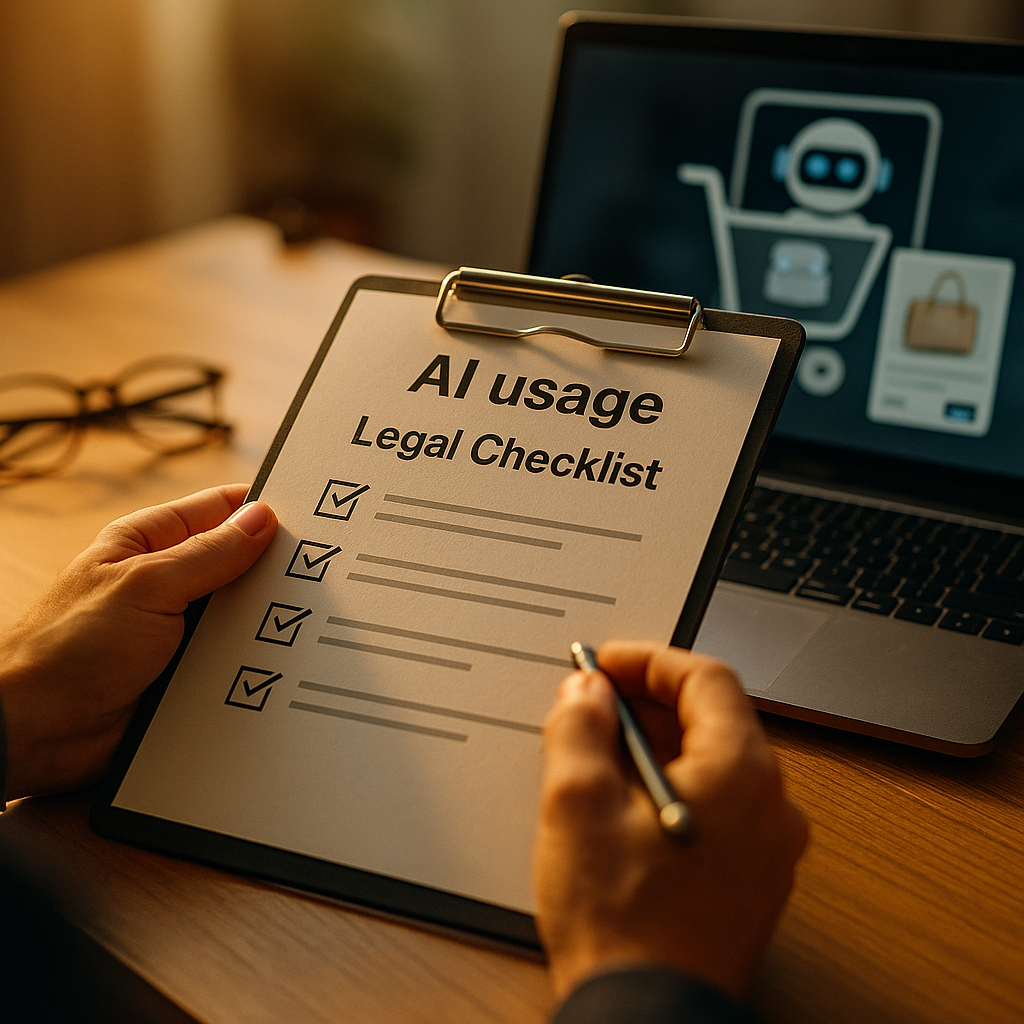
By some estimates, autonomous shopping agents will influence or execute over $30 billion in transactions before the decade’s out. Now ask yourself: does your brand have a legal checklist for what happens when an AI shopping agent buys your product without a human ever clicking “add to cart”? If the answer is no, you’re not alone. Most brands are still writing influencer contracts for humans while machines quietly start closing deals on their behalf.
This isn’t a hypothetical compliance exercise anymore. Agentic commerce is live, and the FTC has already signaled it’s watching. Waiting for a violation to force your hand is the most expensive way to build a legal framework.
Why Autonomous Buyers Break the Old Disclosure Playbook
Traditional influencer disclosure rules assume a human is doing the recommending, and a human is doing the buying. Agentic commerce shatters both assumptions. When ChatGPT, Perplexity, or a retailer’s own AI agent selects a product and completes a transaction, there’s no “sponsored post” moment where a disclosure naturally fits. The purchase happens inside a conversational flow, often without the consumer reviewing product alternatives the way they would on a search results page.
The FTC’s Endorsement Guides were written for people, not algorithms making purchasing decisions on commission. But the underlying principle, material connection must be disclosed, doesn’t disappear just because a bot executes the click. If your brand pays for placement, priority ranking, or preferred recommendation status inside an AI shopping agent’s decision logic, that’s arguably a material connection requiring disclosure. Our earlier breakdown of the FTC disclosure standard for AI shopping agents covers the regulatory baseline in more depth, but the checklist below is about operationalizing it before launch, not after a complaint lands.
If your brand pays to influence what an AI agent recommends, you likely have a disclosure obligation, whether or not a human ever sees the ad.
The Pre-Launch Legal Checklist
Treat this like a pre-flight check. Skipping a line item doesn’t guarantee a crash, but it dramatically raises the odds of one. Here’s what belongs on the list before any AI shopping agent integration goes live.
1. Map every point of material connection
Start by documenting how money moves. Are you paying a platform for preferred placement in agent recommendations? Paying a retailer for “buy box” priority that an AI agent might surface first? Compensating a creator whose content trains or informs an agent’s recommendation engine? Each of these is a potential material connection under FTC standards, and each needs its own disclosure mechanism, not a blanket statement buried in a terms-of-service page.
This mapping exercise should mirror the rigor brands already apply to human-creator relationships. If you’ve done a material connection audit for whitelisted creator content, you already have the muscle memory. Apply the same logic to agent-mediated commerce.
2. Define what “clear and conspicuous” means in a conversational UI
This is where things get genuinely hard. The FTC wants disclosures that are unavoidable and understandable at the moment a consumer needs them. But AI shopping agents often summarize, paraphrase, or truncate information to keep responses concise. A disclosure that gets compressed out of the agent’s response isn’t compliant just because it existed somewhere in the underlying data feed.
Your legal team needs a documented position on how disclosures survive agent summarization. Some brands are experimenting with structured metadata tags that agents are instructed to surface verbatim. Others are pushing for standardized disclosure APIs at the platform level. Neither is a mature standard yet, which is exactly why documenting your rationale now protects you later if regulators ask why you made the choices you did.
3. Assign liability before the agent acts, not after
Who’s on the hook if an AI shopping agent misrepresents a product, omits a required disclosure, or completes a purchase based on stale pricing data? Your contracts with retail media platforms, agent developers, and any AI vendor need explicit liability language addressing this scenario. Silence in the contract doesn’t mean no liability, it usually means unresolved liability, which gets litigated after something goes wrong.
This is directly analogous to the debate already playing out in indemnification clauses for AI-driven media buying. If you’ve already negotiated indemnification language for programmatic AI buying, extend that framework to cover agentic shopping transactions specifically. Don’t assume your existing media-buying indemnification automatically extends to autonomous purchase completion; it often doesn’t, because the risk profile is different.
4. Build an override protocol into every agent contract
What happens when an AI shopping agent is about to complete a transaction that violates your pricing policy, misrepresents a promotion, or triggers a compliance flag? You need a technical and contractual override mechanism, not just a policy document nobody checks in real time.
This is the same problem brands have already had to solve for autonomous bidding in media buying. The override protocol framework for autonomous bidding is a useful template: define thresholds, define who has kill-switch authority, and put both in writing before the agent goes live. The same governance thinking applies directly to shopping agents completing purchases on your behalf. If you haven’t set overspend or misrepresentation thresholds internally, look at how brands are approaching this in the broader AI governance charter conversation.
Pricing Disclosures Get More Complicated, Not Less
Deceptive pricing enforcement was already ramping up before agentic commerce existed. The FTC’s rulemaking on junk fees and its scrutiny of retailers like Instacart signaled a broader appetite for pricing transparency enforcement. Now layer in an AI agent that dynamically compares prices, applies promo codes, or bundles offers in real time, and you’ve got a pricing disclosure problem that moves faster than your legal review cycle.
If your brand runs creator promo codes, the same discipline that applies to a deceptive-pricing disclosure standard for promo codes needs to extend to how AI agents present those codes. Does the agent clearly state the discount terms, expiration, and exclusions? Or does it summarize “10% off” without the fine print that made the offer conditional? That gap is where enforcement actions get born. The Instacart pricing scrutiny is a useful case study in how quickly “the algorithm did it” stops being a defense regulators accept.
An AI agent summarizing “10% off” without exclusions isn’t a UX shortcut, it’s a potential deceptive pricing violation with your brand’s name on it.
Don’t Forget the Data Layer
AI shopping agents don’t operate in a vacuum. They pull from product feeds, creator content, review data, and often third-party data brokers to build purchase recommendations. Every one of those data sources carries its own compliance exposure, particularly around consumer targeting and privacy law.
If your agent integration touches any consumer targeting logic, run it through the same lens as a standard data broker compliance matrix. State-level privacy laws, like Vermont’s, increasingly require specific consent mechanisms before consumer data feeds into automated decisioning. The Vermont privacy law consent playbook is worth reviewing even if you’re not currently operating there, since several other states are drafting similar language, and your agent’s data pipeline likely doesn’t respect state borders the way your legal team needs it to.
What Belongs in the Contract, Not Just the Checklist
- Disclosure persistence clause: Requires the agent platform to preserve material connection disclosures even when summarizing or truncating content.
- Pricing accuracy warranty: Vendor guarantees pricing and promo data fed to the agent reflects current, unexpired terms.
- Override and kill-switch rights: Your brand retains the contractual and technical ability to halt a transaction category in real time.
- Indemnification for misrepresentation: Clear allocation of liability if the agent’s output creates a deceptive claim or omits a required disclosure.
- Audit and logging rights: You can request transaction logs showing what the agent told the consumer at the point of purchase.
- Model deprecation notice: Vendor must notify you before swapping underlying models, since behavior and disclosure handling can change silently. This mirrors the concerns raised in AI model deprecation clauses already showing up in marketing contracts.
None of these clauses are exotic. They’re extensions of contract language brands already negotiate for creator whitelisting, script approval, and programmatic media buying. The novelty isn’t the legal concept, it’s applying it to a purchase flow where no human reviews the final transaction before it completes.
Where Enforcement Is Likely to Start
Regulators tend to escalate from advertising self-regulatory bodies before jumping straight to formal action. The pattern we’ve seen with the NAD-to-FTC referral escalation in creator marketing will likely repeat itself in agentic commerce: industry watchdogs flag a pattern, brands get a chance to self-correct, and only persistent noncompliance triggers formal FTC action. That’s actually good news, if you treat it as a warning shot to build your checklist now rather than a signal that you have time to wait.
Data from eMarketer shows retail media and AI-assisted commerce spend accelerating faster than most brands’ compliance functions can track. Statista‘s consumer trust surveys consistently show that undisclosed sponsorship erodes purchase intent once discovered, and agentic commerce, being novel, will draw more scrutiny from consumers and journalists alike, not less. The FTC’s own enforcement guidance makes clear that new technology doesn’t create new exemptions from existing disclosure law.
A Practical First Step
Don’t try to solve every scenario in one sweeping policy document. Start with your highest-volume agent integration, whether that’s a retail media partner, a chatbot commerce plugin, or a creator-trained recommendation engine, and run it through the checklist above line by line. Fix what’s broken there first, then template the fix across every other integration before your next product launch cycle begins.
FAQs
Frequently Asked Questions
Do FTC disclosure rules apply when an AI agent completes the purchase, not a human?
Yes. The FTC’s material connection standard is based on payment or benefit influencing a recommendation, not on who technically clicks “buy.” If your brand pays for placement, ranking, or promotion inside an AI shopping agent’s logic, disclosure obligations apply regardless of whether a human or a machine executes the transaction.
What counts as a “material connection” in agentic commerce?
Any payment, free product, commission, or preferential data access you provide in exchange for the agent favoring your product. This includes paying a retail media platform for priority placement, compensating a creator whose content trains the agent’s recommendations, or striking a data-sharing deal that boosts your visibility in agent responses.
Can a disclosure be compliant if the AI agent summarizes it out of its response?
Generally, no. If the agent’s summarization strips out a required disclosure before it reaches the consumer, the disclosure likely fails the “clear and conspicuous” standard. Brands should push vendors for disclosure-persistence guarantees in contracts and test actual agent outputs, not just the underlying data feed.
Who is liable if an AI shopping agent misstates pricing or promo terms?
Liability depends entirely on contract language. Without explicit allocation, brands, retail platforms, and AI vendors can all end up disputing responsibility after the fact. The safer approach is negotiating pricing accuracy warranties and indemnification clauses before the agent integration launches.
How is this different from existing influencer disclosure compliance work?
The legal principle is the same, material connections must be disclosed, but the mechanism is different. Influencer disclosures rely on a human creator placing a hashtag or verbal statement. Agentic commerce requires structured data, contractual persistence guarantees, and technical overrides, since no human reviews the final output before a purchase completes.
Top Influencer Marketing Agencies
The leading agencies shaping influencer marketing in 2026
Agencies ranked by campaign performance, client diversity, platform expertise, proven ROI, industry recognition, and client satisfaction. Assessed through verified case studies, reviews, and industry consultations.
Moburst

-
2

The Shelf
Boutique Beauty & Lifestyle Influencer AgencyA data-driven boutique agency specializing exclusively in beauty, wellness, and lifestyle influencer campaigns on Instagram and TikTok. Best for brands already focused on the beauty/personal care space that need curated, aesthetic-driven content.Clients: Pepsi, The Honest Company, Hims, Elf Cosmetics, Pure LeafVisit The Shelf → -
3

Audiencly
Niche Gaming & Esports Influencer AgencyA specialized agency focused exclusively on gaming and esports creators on YouTube, Twitch, and TikTok. Ideal if your campaign is 100% gaming-focused — from game launches to hardware and esports events.Clients: Epic Games, NordVPN, Ubisoft, Wargaming, Tencent GamesVisit Audiencly → -
4

Viral Nation
Global Influencer Marketing & Talent AgencyA dual talent management and marketing agency with proprietary brand safety tools and a global creator network spanning nano-influencers to celebrities across all major platforms.Clients: Meta, Activision Blizzard, Energizer, Aston Martin, WalmartVisit Viral Nation → -
5

The Influencer Marketing Factory
TikTok, Instagram & YouTube CampaignsA full-service agency with strong TikTok expertise, offering end-to-end campaign management from influencer discovery through performance reporting with a focus on platform-native content.Clients: Google, Snapchat, Universal Music, Bumble, YelpVisit TIMF → -
6

NeoReach
Enterprise Analytics & Influencer CampaignsAn enterprise-focused agency combining managed campaigns with a powerful self-service data platform for influencer search, audience analytics, and attribution modeling.Clients: Amazon, Airbnb, Netflix, Honda, The New York TimesVisit NeoReach → -
7

Ubiquitous
Creator-First Marketing PlatformA tech-driven platform combining self-service tools with managed campaign options, emphasizing speed and scalability for brands managing multiple influencer relationships.Clients: Lyft, Disney, Target, American Eagle, NetflixVisit Ubiquitous → -
8

Obviously
Scalable Enterprise Influencer CampaignsA tech-enabled agency built for high-volume campaigns, coordinating hundreds of creators simultaneously with end-to-end logistics, content rights management, and product seeding.Clients: Google, Ulta Beauty, Converse, AmazonVisit Obviously →