


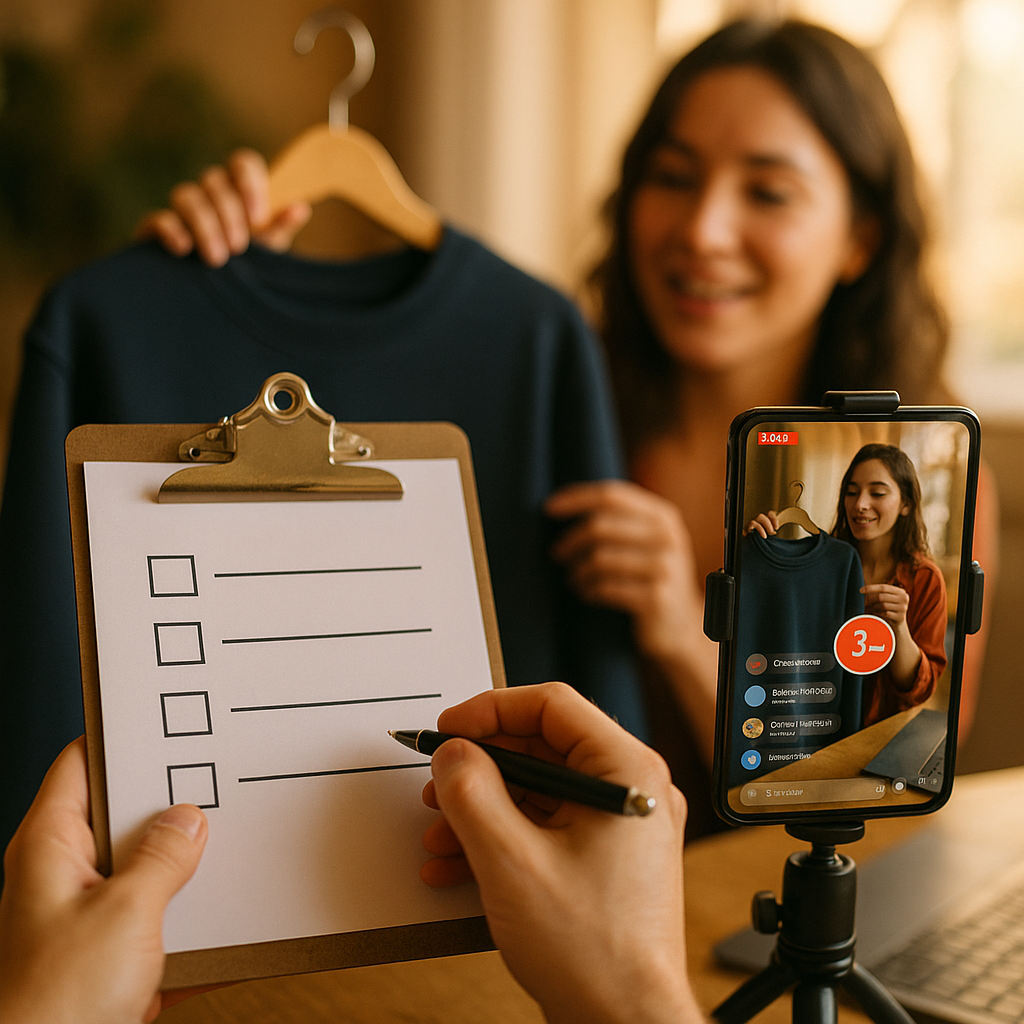
A “72% sold out” banner that resets every time a new viewer joins the stream isn’t urgency marketing. It’s a fabricated scarcity claim, and it’s exactly the kind of thing the FTC has been quietly building enforcement cases around. As livestream shopping compliance checklist requests pile up in legal departments, brands are discovering that countdown timers and “only 3 left” graphics carry more regulatory weight than anyone budgeted for.
Livestream shopping isn’t a niche format anymore. Coresight Research and eMarketer have both tracked steady growth in U.S. live commerce spend, and platforms like TikTok Shop, Amazon Live, and Whatnot have made countdown-timer checkout flows a default UX pattern, not an exception. The problem: most brands built their influencer compliance playbooks for static posts and pre-recorded video. Live, timed, urgency-driven selling is a different animal entirely.
Why Scarcity Claims in Live Commerce Are a Legal Minefield
Scarcity and urgency tactics aren’t new. Retailers have used “limited time only” for decades. What’s changed is the speed and permanence of the record. A livestream is recorded, timestamped, and often re-cut into clips that outlive the original “urgency.” When a host says “this deal ends in ten minutes” and the same discount code works next week, that’s not a marketing quirk — it’s a deceptive pricing claim with a video trail.
The FTC’s updated guidance has made this explicit. The agency’s livestream price claims update specifically calls out countdown timers and “limited stock” messaging as material representations that must be substantiated in real time, not just in spirit.
If your countdown timer resets, restarts, or runs on a loop independent of actual inventory or actual time-limited pricing, you’re not creating urgency — you’re creating evidence.
Add creators into the mix and the risk compounds. A host reading a script that says “only a handful left” when the brand’s own inventory system shows 4,000 units in stock isn’t just an FTC issue. It’s a material connection and accuracy problem that touches endorsement guidelines, state deceptive-trade-practices statutes, and platform-specific commerce rules simultaneously.
What Belongs on Your Livestream Shopping Compliance Checklist
Building a real checklist means thinking in layers: pre-production, live execution, and post-event archiving. Skip any one layer and you’ve left a gap wide enough for a regulator or a plaintiff’s attorney to drive through.
Pre-Production: Set the Rules Before Anyone Goes Live
- Verify inventory feeds are real-time and API-linked. If your countdown timer or “units remaining” counter isn’t pulling live data from your actual order management system, don’t use it. Static or manually updated counters are a liability, not a design choice.
- Script every scarcity claim word-for-word. “Almost gone” is vague enough to be defensible in casual conversation but not in a paid promotion. Specify exact language: “Limited to the first 200 orders” is verifiable. “Selling out fast” is not.
- Require creator sign-off on a claims sheet. Before the stream starts, hosts should confirm in writing they understand which numbers are real, which discounts expire when, and what happens if inventory sells through mid-stream.
- Build a script approval clause into every creator contract. This is where liability actually gets assigned. Brands that skip formal script review processes often find themselves holding more FTC exposure than they expected — a pattern covered in depth in this liability shift analysis and reinforced in the FTC liability fix framework.
- Disclose material connections before the stream, not just during it. On-screen disclosure text that appears once at minute one and never again doesn’t meet the “clear and conspicuous” standard for a 90-minute broadcast.
During the Broadcast: Real-Time Monitoring Isn’t Optional
This is the part most brands underestimate. A pre-approved script means nothing if the host improvises on air — and hosts always improvise on air. Live commerce thrives on spontaneity; that’s precisely why it converts so well. But spontaneity and compliance are natural enemies.
Practical safeguards:
- Assign a compliance monitor (not just a producer) watching the live feed with a checklist in hand, empowered to send real-time correction prompts to the host via earpiece or chat.
- Set hard rules for numeric claims: no host may state a specific quantity, discount percentage, or “spots remaining” figure that isn’t pulled directly from the live dashboard visible to them on screen.
- Log every scarcity statement made on air, timestamped, for the compliance record. This becomes your defense file if a claim is later challenged.
- Have a pre-written “correction protocol” — if a host misstates a price or quantity, there should be a scripted, immediate on-air correction, not a hope that nobody noticed.
Sounds like overkill for a 45-minute shopping stream? Consider that FTC enforcement actions increasingly hinge on exactly this kind of granular evidence. Regulators don’t need to prove intent to deceive — inconsistency between claim and reality is often enough.
Post-Event: The Archive Is Your Liability Window
Once the stream ends, your risk doesn’t. Clipped highlights get repurposed into paid social ads. VOD replays stay live on TikTok Shop or Amazon for weeks. If the original countdown timer showed “2 hours left” and the VOD is still generating sales three weeks later, you have a live deceptive-pricing claim baked into evergreen content.
Best practice: either strip time-sensitive graphics from any repurposed clip, or add a disclosure overlay noting the original air date and that the offer may no longer apply. Brands that skip this step are essentially manufacturing their own evidence of ongoing deception, one algorithm push at a time.
Where This Overlaps With Existing FTC and Endorsement Frameworks
A livestream shopping compliance checklist doesn’t exist in isolation. It has to plug into your broader influencer governance structure. Material connection disclosure rules still apply — arguably more urgently, since live audiences can’t easily scroll back to check for a disclosure they missed. Brands that already run a material connection audit process should extend that same rigor to live formats, not assume static-post rules cover it.
Escalation matters too. When a host goes off-script mid-stream with an inflated scarcity claim, who owns the fix? Legal? The brand’s social team? The creator’s agency? Brands without a clear compliance escalation matrix tend to freeze during exactly the moments that require fast, decisive correction.
Live commerce compresses your reaction time to seconds. If your escalation path takes longer than the stream itself to activate, it doesn’t exist in practice.
There’s also a pricing-specific angle worth flagging. Discount codes distributed during livestreams frequently outlive their stated expiration, which creates a separate but related exposure. The deceptive pricing disclosure standard for promo codes is directly relevant here: if your “livestream exclusive” code still works during next month’s campaign, that’s not a happy accident, it’s a claims-consistency failure.
AI Hosts and Synthetic Urgency: A Growing Wrinkle
Some brands are now experimenting with AI-generated hosts or AI-assisted scripting for livestream shopping formats, particularly for lower-cost, high-frequency streams. This introduces a second compliance layer entirely. If an AI system is generating dynamic scarcity language on the fly (“Wow, we’re almost out!”) based on loosely connected data, brands need airtight review protocols before that content ever airs. The frameworks used for AI scriptwriting and material connection compliance apply directly, and brands using synthetic hosts should also review disclosure obligations under state-by-state AI performer disclosure rules, which increasingly diverge from federal guidance.
Building the Checklist Into a Repeatable Operational Process
A one-time checklist review before a big launch stream isn’t enough. Live commerce, if it’s working, becomes a recurring format — weekly drops, monthly flash sales, seasonal events. That means your compliance checklist needs to be embedded into standard operating procedure, not treated as a special project.
Practical structure for scaling this:
- Maintain a living document (not a PDF buried in a shared drive) that’s updated every time FTC guidance shifts or a platform changes its commerce terms.
- Require every creator and internal host to complete a short scarcity-claims training before their first live event, refreshed annually.
- Run a post-mortem after every stream: what claims were made, were they accurate, did the correction protocol get used, what needs fixing before next time.
- Loop legal into quarterly reviews of your live commerce claims log, not just annual audits.
According to eMarketer, live commerce is expected to keep growing as a share of total social commerce spend, which means the volume of streams — and the volume of potential claims exposure — only scales up from here. Waiting for an enforcement action to build your checklist is the expensive way to learn this lesson.
For teams building out broader creator compliance documentation, it’s worth cross-referencing resources like the FTC’s official guidance portal directly, since agency language on “clear and conspicuous” disclosure continues to evolve alongside format innovation. Platforms themselves also publish operational guidance — TikTok Shop’s seller policies and Amazon Live’s community guidelines both address inventory and claims accuracy, so pairing regulatory guidance with platform-specific commerce policies closes most of the remaining gap.
The Bottom Line for Brand and Agency Teams
Build the checklist before your next stream, not after your first complaint letter. Assign a live compliance monitor, script your scarcity claims down to the word, and archive every countdown timer with a timestamped record of what was actually true when it aired.
FAQs
What makes a countdown timer in livestream shopping legally risky?
A countdown timer becomes risky when it doesn’t reflect real, verifiable conditions — such as actual inventory levels or a genuinely expiring discount. If the timer resets, loops, or continues after the stated deadline, it can constitute a deceptive pricing or urgency claim under FTC guidance.
Do FTC endorsement rules apply differently to live content versus recorded posts?
The core disclosure principles are the same, but live formats raise the bar on frequency and clarity. Because viewers can join mid-stream, disclosures need to repeat periodically rather than appearing only once at the start.
Who is liable if a creator makes an inaccurate scarcity claim during a live event?
Liability typically falls on the brand if the claim originated from a brand-provided script or approved talking points, but creators can share exposure if they improvised the claim independently. Clear contractual script approval clauses help define this before a stream ever airs.
Should VOD replays of livestream shopping events be edited after the event ends?
Yes. Time-sensitive graphics, countdown timers, and expired discount mentions should be removed or overlaid with disclosure text noting the original air date, since an outdated urgency claim in an evergreen replay can itself become a deceptive practice.
How often should a livestream shopping compliance checklist be updated?
At minimum quarterly, and immediately after any FTC guidance update or platform policy change. Brands running frequent live commerce events should treat the checklist as a living document reviewed by legal on a recurring schedule.
Top Influencer Marketing Agencies
The leading agencies shaping influencer marketing in 2026
Agencies ranked by campaign performance, client diversity, platform expertise, proven ROI, industry recognition, and client satisfaction. Assessed through verified case studies, reviews, and industry consultations.
Moburst

-
2

The Shelf
Boutique Beauty & Lifestyle Influencer AgencyA data-driven boutique agency specializing exclusively in beauty, wellness, and lifestyle influencer campaigns on Instagram and TikTok. Best for brands already focused on the beauty/personal care space that need curated, aesthetic-driven content.Clients: Pepsi, The Honest Company, Hims, Elf Cosmetics, Pure LeafVisit The Shelf → -
3

Audiencly
Niche Gaming & Esports Influencer AgencyA specialized agency focused exclusively on gaming and esports creators on YouTube, Twitch, and TikTok. Ideal if your campaign is 100% gaming-focused — from game launches to hardware and esports events.Clients: Epic Games, NordVPN, Ubisoft, Wargaming, Tencent GamesVisit Audiencly → -
4

Viral Nation
Global Influencer Marketing & Talent AgencyA dual talent management and marketing agency with proprietary brand safety tools and a global creator network spanning nano-influencers to celebrities across all major platforms.Clients: Meta, Activision Blizzard, Energizer, Aston Martin, WalmartVisit Viral Nation → -
5

The Influencer Marketing Factory
TikTok, Instagram & YouTube CampaignsA full-service agency with strong TikTok expertise, offering end-to-end campaign management from influencer discovery through performance reporting with a focus on platform-native content.Clients: Google, Snapchat, Universal Music, Bumble, YelpVisit TIMF → -
6

NeoReach
Enterprise Analytics & Influencer CampaignsAn enterprise-focused agency combining managed campaigns with a powerful self-service data platform for influencer search, audience analytics, and attribution modeling.Clients: Amazon, Airbnb, Netflix, Honda, The New York TimesVisit NeoReach → -
7

Ubiquitous
Creator-First Marketing PlatformA tech-driven platform combining self-service tools with managed campaign options, emphasizing speed and scalability for brands managing multiple influencer relationships.Clients: Lyft, Disney, Target, American Eagle, NetflixVisit Ubiquitous → -
8

Obviously
Scalable Enterprise Influencer CampaignsA tech-enabled agency built for high-volume campaigns, coordinating hundreds of creators simultaneously with end-to-end logistics, content rights management, and product seeding.Clients: Google, Ulta Beauty, Converse, AmazonVisit Obviously →