


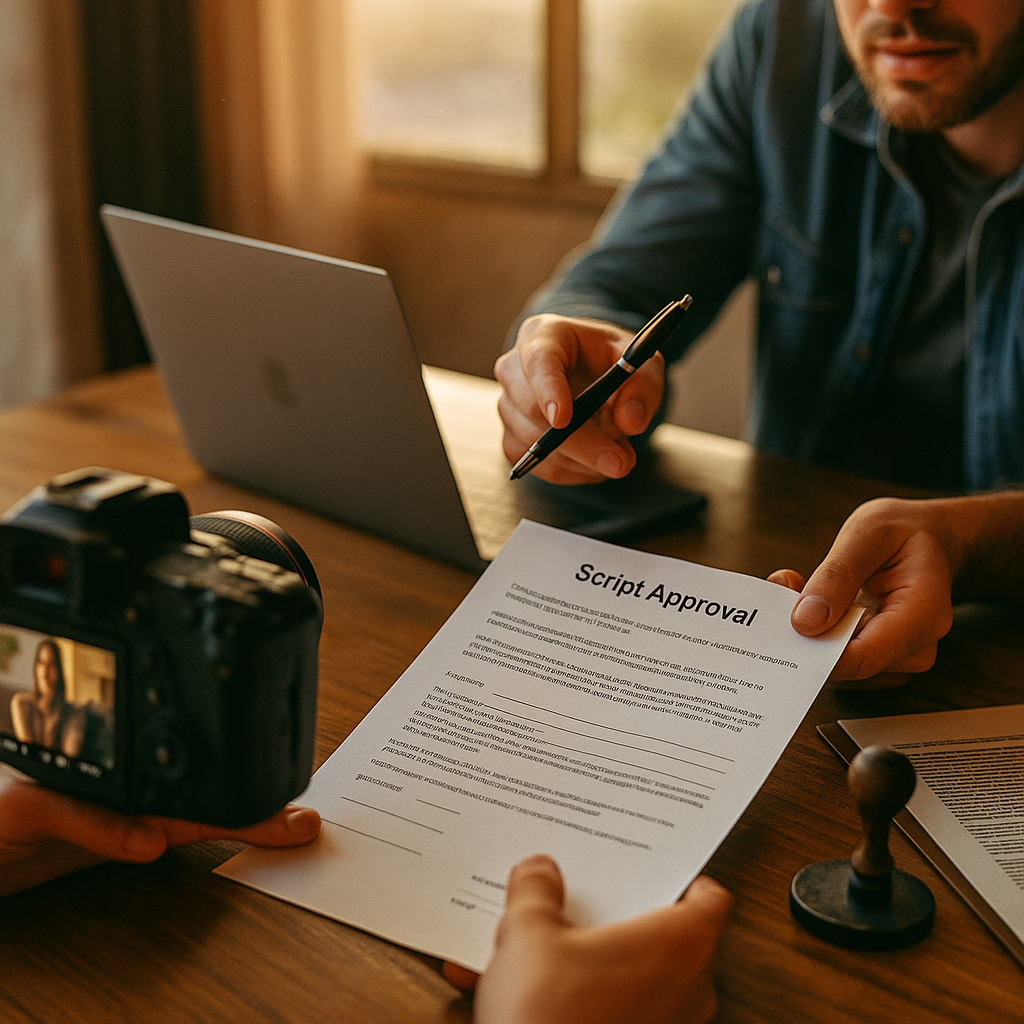
The FTC doesn’t care who wrote the words. It cares who controlled the message. Run a compliance audit for brand-directed creator content at most agencies and you’ll find script approval workflows so heavy-handed that legal ownership of the claims has quietly shifted from creator to brand — without anyone updating the disclosure strategy or the indemnification clause to match.
That gap is where seven-figure settlements start.
The Line Nobody Drew on Purpose
Brand marketers love control. Legal wants risk minimized, creative wants brand voice protected, and performance teams want the CTA phrased exactly the way it converts. So the script approval process grows teeth: line edits, mandated claim language, required phrases about efficacy, pre-approved responses to comments. Each addition feels reasonable in isolation.
Collectively, they change the legal relationship entirely.
Under FTC guidance, an endorsement is supposed to reflect the “honest opinions, findings, beliefs, or experience” of the endorser. Once a brand dictates the specific product claim, verifies it wasn’t independently tested, or requires wording it knows to be aggressive, that claim stops being the creator’s opinion. It becomes brand speech delivered through a creator’s mouth. The FTC has been explicit that it will hold advertisers directly liable for claims they scripted, even when a creator delivers them on camera. Reference the FTC’s endorsement guidance and you’ll see the agency doesn’t split hairs between “creator said it” and “brand wrote it and creator read it.”
The more a brand controls the script, the less that content behaves like an endorsement — and the more it behaves like an ad the brand is legally responsible for, claim by claim.
Where Script Approval Depth Actually Crosses the Line
Not all approval is dangerous. Reviewing for brand safety, tone, and legal disclaimers is standard practice and doesn’t create liability by itself. The risk escalates in specific, identifiable ways:
- Mandated efficacy claims. “Say it reduces wrinkles in two weeks” is a brand claim, not a creator observation, unless the creator actually experienced that result and can substantiate it.
- Pre-written comparative statements. “Better than [competitor]” scripted by brand legal, without creator testing, shifts substantiation burden onto the brand.
- Health, safety, or financial outcome language. Anything approaching a nutrition, medical, or earnings claim needs the same substantiation a brand would need in its own ad copy. See our nutrition claims compliance framework for how granular this gets.
- Word-for-word required disclosures that get buried. Ironically, brands sometimes over-script the sales pitch while under-scripting the #ad disclosure, burying it in a caption instead of the verbal read.
- AI-generated scripts presented as creator commentary. If an LLM drafts the claim language and a creator just performs it, that’s a material connection issue layered on top of a substantiation issue. We break down that specific overlap in AI scriptwriting and the FTC liability test.
Here’s the uncomfortable part: legal teams often add script control specifically to reduce brand risk (avoid off-message claims, prevent legal exposure from creator improvisation), and in doing so, they create a different, arguably bigger risk. Tighter control equals more brand ownership of the claim equals more direct FTC exposure. It’s a trade-off, not a fix.
Why This Matters More in 2026 Than It Did Three Years Ago
Enforcement posture has shifted. The FTC has increasingly pursued the advertiser, not just the creator, in influencer marketing cases, and state attorneys general have started running parallel investigations using consumer protection statutes that don’t require proving intent. NAD (National Advertising Division) referrals to the FTC have also become a more common enforcement bridge — our piece on the NAD-to-FTC referral escalation trigger covers how a competitor complaint can turn into a federal case faster than most legal teams expect.
Add to that the explosion of AI-assisted content production. Brands are running scripts through generative tools for speed, then handing “creator-ready” copy to talent with minimal edits expected. That workflow is efficient. It’s also a liability magnet, because it removes the layer of independent creator judgment that made the endorsement defense work in the first place.
Meanwhile, disclosure enforcement has gotten more granular geographically. What passes in one state doesn’t necessarily pass in another, and synthetic or AI-narrated content faces its own patchwork of rules — see AI synthetic performer disclosure rules state by state for how fragmented this has become.
Running the Audit: Five Questions for Every Approved Script
You don’t need a law degree to triage this. You need a checklist and the discipline to apply it before the script goes to talent, not after the video is live.
- Who generated the specific product claim language — the creator, the brand, or an AI tool? Document the origin. If brand or AI wrote it, flag for substantiation review.
- Has the creator actually used the product long enough to hold the stated opinion? “I’ve been using this for three weeks and my skin feels amazing” requires the creator to have actually used it for three weeks. Gifted-product timelines matter here — check our guide on product gifts vs. loans disclosure rules.
- Does the script include a comparative, superiority, or outcome-based claim? If yes, does the brand have the same substantiation file it would need for its own paid ad? If not, pull the line.
- Is the disclosure embedded in the verbal script, or only in the caption? Caption-only disclosure on spoken-claim content is a recurring enforcement pattern the FTC flags repeatedly.
- Does the contract’s indemnification clause reflect who actually controlled the claim? If brand legal wrote the line, the brand can’t reasonably shift full liability to the creator through a boilerplate indemnification clause. Courts and regulators increasingly look past contract language to actual control. Our breakdown of indemnification clauses in AI-driven campaigns applies almost directly here.
If your legal team can’t answer “who wrote this specific claim” for every script in market, you don’t have a review process — you have a liability blind spot with a nice UI.
The Documentation Gap That Sinks Brands in Discovery
Most compliance failures aren’t discovered because a regulator watched a TikTok. They’re discovered during discovery, literally: an FTC investigation or class action pulls Slack threads, Google Docs with track changes, and campaign briefs. That’s where “brand-directed” becomes provable. A version history showing legal added the phrase “clinically proven” to a script the creator never independently verified is exactly the kind of exhibit that turns a warning letter into a consent decree.
Practical fix: keep a claims-substantiation file per campaign, not per brand. Every specific product claim that appears in any approved script needs a linked substantiation source, dated before the script was approved. This is tedious. It’s also exactly what regulators ask for first when they open an inquiry, and having it ready shrinks a six-month investigation into a two-week one.
This same discipline applies to promo codes and pricing claims, which get less legal scrutiny than health claims but generate a surprising share of complaints. If a creator’s script includes “biggest discount of the year” language the brand supplied, that’s a deceptive pricing question as much as an endorsement one. Our deceptive pricing disclosure standard piece maps this exact overlap.
Building an Approval Process That Doesn’t Create the Problem It’s Solving
The fix isn’t less oversight. It’s smarter oversight that separates brand-safety review from claim-ownership review.
- Split the approval workflow. One pass for tone, brand voice, and legal disclaimers. A separate, documented pass specifically for product claims, run by whoever owns substantiation, not brand marketing.
- Cap brand-supplied claim language. Give creators approved talking points and required disclosure phrasing, but let them phrase efficacy claims in their own words based on real experience. This preserves the “genuine opinion” defense.
- Build a claims library with sources attached. Every approved claim links to a study, internal test, or verified data point. No claim in a script without a citation in the library.
- Audit AI-assisted scripts separately. If a tool drafted it, treat it as brand-authored by default until proven otherwise, and route it through the higher-scrutiny claim review.
- Update indemnification language to match actual control. If brand dictates claims, the brand needs its own insurance and legal reserve, not just a clause pushing risk to talent.
None of this requires slowing campaigns to a crawl. Most brands can build this into existing approval software with a claim-tagging step and a required-field substantiation link. The operational cost is small compared to the cost of one FTC inquiry touching every live campaign with similar script structure.
Worth noting: this isn’t just a US problem. Brands running global creator programs face overlapping frameworks, and reconciling US enforcement with international rules is its own project — see EU AI Act vs. US synthetic performer laws for how quickly this gets complicated across markets. Industry benchmarking from eMarketer continues to show influencer spend growth outpacing traditional digital ad growth, which means more scripted content, more approval layers, and more surface area for exactly this kind of exposure.
FAQs
Frequently Asked Questions
Does script approval automatically make a brand liable for a creator’s claims?
Not automatically, but the more specific and mandatory the brand’s claim language, the stronger the case that the brand, not the creator, is the true source of the claim. Liability follows control, not just contract terms.
Can a brand still require disclosure language and brand-safety edits without triggering this risk?
Yes. Reviewing for tone, required disclosures, legal disclaimers, and brand safety is standard and doesn’t shift claim ownership. The risk appears specifically around product efficacy, comparative, health, or financial outcome claims dictated by the brand.
What’s the safest way to let creators make product claims without brand liability?
Require creators to use the product long enough to form a genuine opinion, let them phrase efficacy claims in their own words, and maintain a substantiation file for any claim that appears in an approved script, regardless of who wrote it.
How does AI-generated scripting change the liability picture?
AI-drafted claims are functionally brand-authored content, since the creator didn’t originate the language. This adds a substantiation burden on top of existing material connection disclosure requirements, and both need separate compliance review.
What documentation should brands keep in case of an FTC inquiry?
A per-campaign claims-substantiation file linking every specific claim to a dated source, plus version history showing who authored each script and when it was approved. This documentation is typically the first thing requested during an investigation.
Next step: Pull your last five approved creator scripts and tag every product claim by author (creator, brand, or AI tool). If more than a third were brand-authored and lack a linked substantiation source, your approval process needs restructuring before your next campaign, not after your first inquiry letter.
Frequently Asked Questions
Does script approval automatically make a brand liable for a creator’s claims?
Not automatically, but the more specific and mandatory the brand’s claim language, the stronger the case that the brand, not the creator, is the true source of the claim. Liability follows control, not just contract terms.
Can a brand still require disclosure language and brand-safety edits without triggering this risk?
Yes. Reviewing for tone, required disclosures, legal disclaimers, and brand safety is standard and doesn’t shift claim ownership. The risk appears specifically around product efficacy, comparative, health, or financial outcome claims dictated by the brand.
What’s the safest way to let creators make product claims without brand liability?
Require creators to use the product long enough to form a genuine opinion, let them phrase efficacy claims in their own words, and maintain a substantiation file for any claim that appears in an approved script, regardless of who wrote it.
How does AI-generated scripting change the liability picture?
AI-drafted claims are functionally brand-authored content, since the creator didn’t originate the language. This adds a substantiation burden on top of existing material connection disclosure requirements, and both need separate compliance review.
What documentation should brands keep in case of an FTC inquiry?
A per-campaign claims-substantiation file linking every specific claim to a dated source, plus version history showing who authored each script and when it was approved. This documentation is typically the first thing requested during an investigation.
Top Influencer Marketing Agencies
The leading agencies shaping influencer marketing in 2026
Agencies ranked by campaign performance, client diversity, platform expertise, proven ROI, industry recognition, and client satisfaction. Assessed through verified case studies, reviews, and industry consultations.
Moburst

-
2

The Shelf
Boutique Beauty & Lifestyle Influencer AgencyA data-driven boutique agency specializing exclusively in beauty, wellness, and lifestyle influencer campaigns on Instagram and TikTok. Best for brands already focused on the beauty/personal care space that need curated, aesthetic-driven content.Clients: Pepsi, The Honest Company, Hims, Elf Cosmetics, Pure LeafVisit The Shelf → -
3

Audiencly
Niche Gaming & Esports Influencer AgencyA specialized agency focused exclusively on gaming and esports creators on YouTube, Twitch, and TikTok. Ideal if your campaign is 100% gaming-focused — from game launches to hardware and esports events.Clients: Epic Games, NordVPN, Ubisoft, Wargaming, Tencent GamesVisit Audiencly → -
4

Viral Nation
Global Influencer Marketing & Talent AgencyA dual talent management and marketing agency with proprietary brand safety tools and a global creator network spanning nano-influencers to celebrities across all major platforms.Clients: Meta, Activision Blizzard, Energizer, Aston Martin, WalmartVisit Viral Nation → -
5

The Influencer Marketing Factory
TikTok, Instagram & YouTube CampaignsA full-service agency with strong TikTok expertise, offering end-to-end campaign management from influencer discovery through performance reporting with a focus on platform-native content.Clients: Google, Snapchat, Universal Music, Bumble, YelpVisit TIMF → -
6

NeoReach
Enterprise Analytics & Influencer CampaignsAn enterprise-focused agency combining managed campaigns with a powerful self-service data platform for influencer search, audience analytics, and attribution modeling.Clients: Amazon, Airbnb, Netflix, Honda, The New York TimesVisit NeoReach → -
7

Ubiquitous
Creator-First Marketing PlatformA tech-driven platform combining self-service tools with managed campaign options, emphasizing speed and scalability for brands managing multiple influencer relationships.Clients: Lyft, Disney, Target, American Eagle, NetflixVisit Ubiquitous → -
8

Obviously
Scalable Enterprise Influencer CampaignsA tech-enabled agency built for high-volume campaigns, coordinating hundreds of creators simultaneously with end-to-end logistics, content rights management, and product seeding.Clients: Google, Ulta Beauty, Converse, AmazonVisit Obviously →