


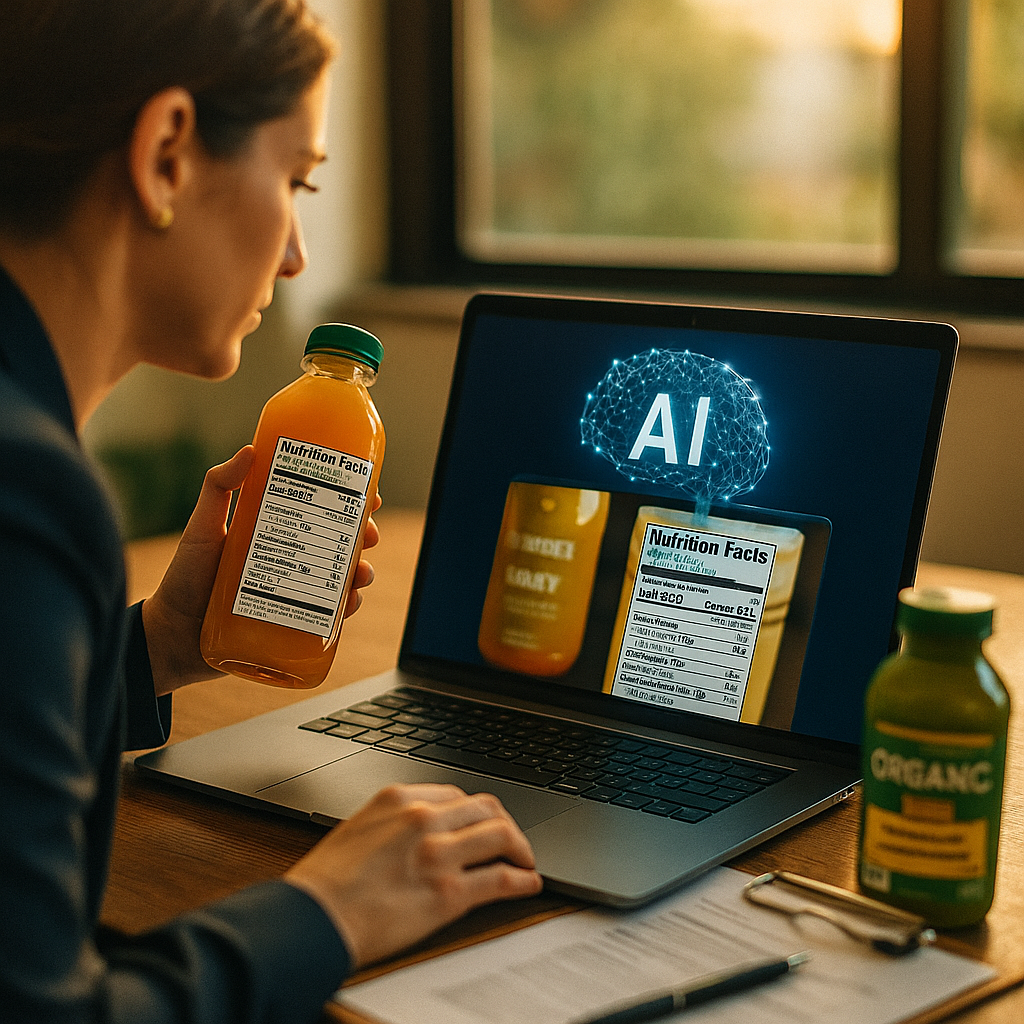
73% of packaged food brands now use generative AI somewhere in their creator content pipeline, according to recent industry surveys — yet almost none have a formal review process for the nutrition and ingredient claims that AI helps generate. That gap is where FTC enforcement actions live. A robust compliance framework for AI-generated nutrition and ingredient claims isn’t a nice-to-have anymore. It’s the difference between a scalable creator program and a seven-figure settlement.
Why This Problem Snuck Up on Brands
Nobody planned for this. Food and beverage brands adopted generative AI for the boring stuff first: caption variations, hashtag research, thumbnail testing. Then creators started using ChatGPT and similar tools to draft product descriptions, and brand teams started using AI to generate “creator-style” briefs at scale. Somewhere in that shuffle, AI began writing sentences like “packed with antioxidants that fight inflammation” or “clinically shown to boost metabolism” — claims nobody on the brand side actually verified.
The problem is structural, not just careless. Large language models are trained to sound confident and specific. Ask an AI tool to describe a protein bar’s benefits and it will happily generate health claims that sound plausible, cite mechanisms that sound scientific, and imply FDA-level substantiation that doesn’t exist. Creators paste that copy into captions. Brands approve it because it reads well. Nobody flags it because nobody’s job is to flag it.
The FTC doesn’t care whether a false health claim came from a human copywriter or a language model. Liability attaches to the brand that benefited from the promotion, regardless of who — or what — wrote the words.
What Regulators Actually Look For
The FTC has been explicit for years: endorsements must reflect the honest opinions of the endorser, and any claims made must be substantiated before publication, not after a complaint arrives. Nutrition and ingredient claims sit in a particularly sensitive zone because they overlap with FDA jurisdiction. A creator saying “this reduced my bloating” is a testimonial. A creator saying “this ingredient reduces inflammation markers by 40%” is a scientific claim requiring competent and reliable evidence.
When AI generates that second type of statement — and it does, constantly, because it’s optimizing for engaging, specific-sounding language — brands inherit the risk the moment they approve, pay for, or amplify the content.
Three categories of exposure show up repeatedly in enforcement patterns and FTC guidance:
- Unsubstantiated health claims: “boosts immunity,” “detoxifies,” “reverses aging” — words AI models generate reflexively because they’re common in training data, not because they’re accurate for your specific product.
- Implied drug claims: language suggesting a food or supplement treats, cures, or prevents a disease, which can trigger FDA action independent of FTC concerns.
- Comparative superiority claims: “more protein than any bar on the market” — statements requiring competitive substantiation that AI tools have no way of verifying and will fabricate confidently anyway.
Building the Framework: Five Layers That Actually Work
A compliance framework isn’t a single policy document. It’s a workflow with checkpoints. Here’s the structure that’s actually holding up for brands running high-volume creator programs.
1. Claim Classification at the Brief Stage
Before any content gets made, classify every product attribute you want mentioned into three buckets: subjective experience (“tastes great,” “easy to make”), general nutrition fact (verifiable on the label), and substantiated health claim (requires a study citation). Bake this classification directly into the creator brief. If your briefs are AI-assisted, this is also the moment to document what tools generated the brief language — a practice covered in more depth in AI tool usage in creator briefs. That documentation becomes your paper trail if a claim is later questioned.
2. A Locked Claims Library
Give creators and your AI drafting tools a pre-approved, legal-reviewed list of claims they’re allowed to use verbatim or close to verbatim. This sounds restrictive. It’s actually liberating — creators get faster approvals because they’re working within guardrails instead of guessing. Any claim outside the library routes to legal review automatically. Think of it as a claims style guide, not a script.
3. AI Output Screening Before Human Review
If creators or agencies use generative AI to draft captions, scripts, or product copy, that output needs a screening pass specifically for nutrition and health language before it ever reaches a human approver who might rubber-stamp it. Several brands are now running AI-generated drafts through a secondary AI classifier trained specifically to flag FDA/FTC-risk language, then routing flagged content to a human compliance reviewer. It’s not perfect, but it catches the obvious stuff — the metabolic-boost claims, the disease-adjacent language — before it burns approval-cycle time.
4. Substantiation Files, Attached at the Content Level
Every approved health or nutrition claim needs a substantiation file attached to the specific piece of content, not just sitting in a general compliance folder. If regulators come asking about a specific TikTok post eighteen months from now, you need to produce the study, the internal testing data, or the label documentation that supported that exact claim in that exact post. This is the same discipline brands have had to build around other AI-adjacent claims — see the parallel approach in AI before-and-after photo documentation, where visual claims require the same evidentiary rigor as written ones.
5. Escalation Triggers for Creator Deviation
Creators go off-script. It happens in live streams, in comment replies, in unscripted moments during unboxing videos. Your framework needs a defined trigger point: at what threshold does an off-brief health claim get escalated, and to whom? Brands that have built escalation protocols for undisclosed sponsorships can adapt similar logic here — the escalation trigger policy model works just as well for claim deviation as it does for disclosure gaps.
Where AI Actually Helps, Not Just Hurts
It’s tempting to treat AI purely as the risk vector here. That’s incomplete. Used properly, AI is also your best tool for catching problems at scale. Natural language classifiers can scan thousands of pieces of creator content weekly, flagging phrases correlated with FDA-regulated language faster than any human compliance team could manually review. Some brands are running these scans against publicly posted content post-publication as a safety net, not just pre-publication.
The efficiency case is real: manual claim review doesn’t scale past a handful of creators per week. AI-assisted screening lets a two-person compliance team monitor a hundred-creator program without becoming the bottleneck.
Platforms matching brands with creators are also building claim-risk scoring into their matching algorithms, another reason the indemnification terms on AI creator-matching platforms matter more than most brands initially assume during contract negotiation. If the platform’s matching tool is also drafting suggested captions, ask who’s liable when that draft contains an unsubstantiated claim.
The International Wrinkle
Nutrition claim rules aren’t uniform globally, and neither are the AI disclosure rules layered on top of them. A brand running the same AI-drafted campaign across the US, UK, and EU is stacking two separate compliance problems on top of each other: substantiation standards that differ by jurisdiction, and AI-content disclosure rules that also differ. The EU’s approach to synthetic content disclosure is considerably more prescriptive than the US baseline, a divergence covered well in EU AI Act vs US synthetic performer laws. If your nutrition brand has any EU creator activity, that reconciliation isn’t optional reading.
Youth-adjacent food and beverage content adds another layer entirely. Energy drinks, snack brands, and sports nutrition products frequently sit in the crosshairs of youth marketing restrictions, and the UK and Australia have both tightened rules around health-adjacent claims aimed at younger audiences. The youth-adjacent campaign audit framework is worth running alongside your nutrition claims review if your audience skews under 25.
What This Costs You If You Skip It
Run the math on a mid-size creator program: fifty creators, four posts a month each, twelve months. That’s 2,400 pieces of content. If even 2% contain an unreviewed AI-generated health claim that crosses into FDA territory, you’re looking at roughly 48 potentially actionable pieces of content live simultaneously. One complaint, one competitor tip-off, one journalist doing a deep dive, and you’ve got a pattern-of-conduct problem, not an isolated incident.
Enforcement actions increasingly cite volume and pattern as aggravating factors. A single mistake is a correction. Fifty similar mistakes across a creator roster looks like a business practice.
Compliance frameworks aren’t about slowing down creator content. They’re about making sure the content that does go fast doesn’t become the reason your program gets shut down.
The brands getting this right treat claim compliance the way they treat disclosure compliance: as an operational workflow with owners, tools, and audit trails, not a legal memo that gets read once and forgotten. Compliance teams that have already built disclosure audit muscle — see the approach in FTC disclosure audits for UGC clipping networks — are finding it relatively straightforward to extend that same audit cadence to nutrition claims. The infrastructure transfers. The specific risk category just gets added to the checklist.
Next Step
Pull your last ninety days of creator content, run it through an AI claim-screening pass, and count how many pieces contain unsubstantiated nutrition or health language. That number is your real risk exposure — and it’s the starting point for building the framework, not the finish line.
FAQs
Who is liable when an AI tool generates a false nutrition claim that a creator posts?
The brand typically bears primary liability under FTC endorsement guidance, regardless of whether the claim originated from a human copywriter, the creator, or a generative AI tool. Liability follows the party that benefits from the promotion and had the opportunity to review it before publication.
Do AI-generated captions need the same substantiation as brand-written marketing copy?
Yes. The FTC applies the same substantiation standard regardless of drafting method. A health claim needs competent and reliable evidence whether a human, an AI tool, or a creator wrote the final sentence.
Can a locked claims library slow down creator content production?
It typically speeds things up. Creators working within a pre-approved list of claims skip lengthy legal review cycles, since only novel or off-list claims need to be escalated for additional approval.
How often should brands audit creator content for nutrition claim compliance?
Monthly audits are a reasonable baseline for active programs, with AI-assisted screening run continuously or weekly for high-volume creator rosters. Post-publication spot checks catch drift that pre-publication review might miss.
Does this compliance framework apply to supplement and functional beverage brands differently than traditional food brands?
Supplement and functional beverage brands face additional FDA scrutiny because structure-function claims and disease-related claims are more common in that category, making a locked claims library and substantiation files even more critical.
FAQs
Who is liable when an AI tool generates a false nutrition claim that a creator posts?
The brand typically bears primary liability under FTC endorsement guidance, regardless of whether the claim originated from a human copywriter, the creator, or a generative AI tool. Liability follows the party that benefits from the promotion and had the opportunity to review it before publication.
Do AI-generated captions need the same substantiation as brand-written marketing copy?
Yes. The FTC applies the same substantiation standard regardless of drafting method. A health claim needs competent and reliable evidence whether a human, an AI tool, or a creator wrote the final sentence.
Can a locked claims library slow down creator content production?
It typically speeds things up. Creators working within a pre-approved list of claims skip lengthy legal review cycles, since only novel or off-list claims need to be escalated for additional approval.
How often should brands audit creator content for nutrition claim compliance?
Monthly audits are a reasonable baseline for active programs, with AI-assisted screening run continuously or weekly for high-volume creator rosters. Post-publication spot checks catch drift that pre-publication review might miss.
Does this compliance framework apply to supplement and functional beverage brands differently than traditional food brands?
Supplement and functional beverage brands face additional FDA scrutiny because structure-function claims and disease-related claims are more common in that category, making a locked claims library and substantiation files even more critical.
Top Influencer Marketing Agencies
The leading agencies shaping influencer marketing in 2026
Agencies ranked by campaign performance, client diversity, platform expertise, proven ROI, industry recognition, and client satisfaction. Assessed through verified case studies, reviews, and industry consultations.
Moburst

-
2

The Shelf
Boutique Beauty & Lifestyle Influencer AgencyA data-driven boutique agency specializing exclusively in beauty, wellness, and lifestyle influencer campaigns on Instagram and TikTok. Best for brands already focused on the beauty/personal care space that need curated, aesthetic-driven content.Clients: Pepsi, The Honest Company, Hims, Elf Cosmetics, Pure LeafVisit The Shelf → -
3

Audiencly
Niche Gaming & Esports Influencer AgencyA specialized agency focused exclusively on gaming and esports creators on YouTube, Twitch, and TikTok. Ideal if your campaign is 100% gaming-focused — from game launches to hardware and esports events.Clients: Epic Games, NordVPN, Ubisoft, Wargaming, Tencent GamesVisit Audiencly → -
4

Viral Nation
Global Influencer Marketing & Talent AgencyA dual talent management and marketing agency with proprietary brand safety tools and a global creator network spanning nano-influencers to celebrities across all major platforms.Clients: Meta, Activision Blizzard, Energizer, Aston Martin, WalmartVisit Viral Nation → -
5

The Influencer Marketing Factory
TikTok, Instagram & YouTube CampaignsA full-service agency with strong TikTok expertise, offering end-to-end campaign management from influencer discovery through performance reporting with a focus on platform-native content.Clients: Google, Snapchat, Universal Music, Bumble, YelpVisit TIMF → -
6

NeoReach
Enterprise Analytics & Influencer CampaignsAn enterprise-focused agency combining managed campaigns with a powerful self-service data platform for influencer search, audience analytics, and attribution modeling.Clients: Amazon, Airbnb, Netflix, Honda, The New York TimesVisit NeoReach → -
7

Ubiquitous
Creator-First Marketing PlatformA tech-driven platform combining self-service tools with managed campaign options, emphasizing speed and scalability for brands managing multiple influencer relationships.Clients: Lyft, Disney, Target, American Eagle, NetflixVisit Ubiquitous → -
8

Obviously
Scalable Enterprise Influencer CampaignsA tech-enabled agency built for high-volume campaigns, coordinating hundreds of creators simultaneously with end-to-end logistics, content rights management, and product seeding.Clients: Google, Ulta Beauty, Converse, AmazonVisit Obviously →