


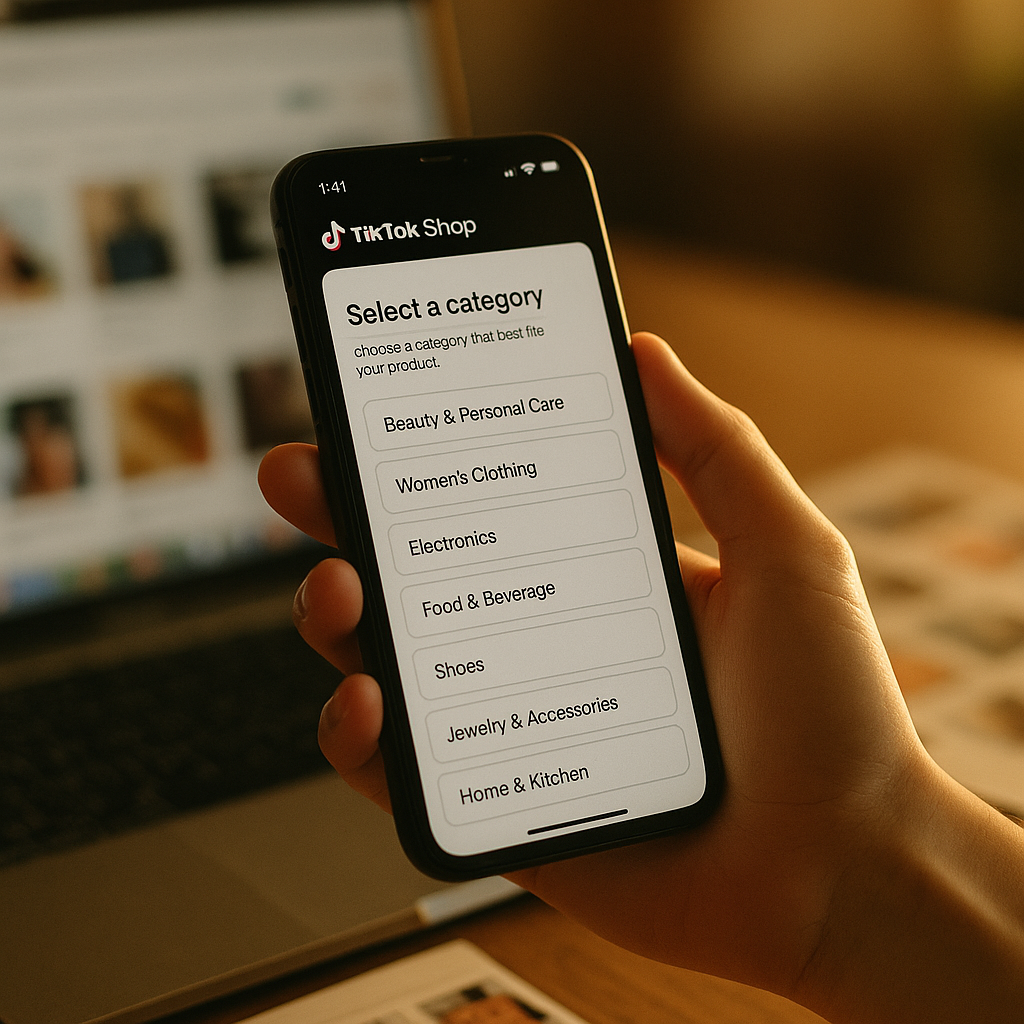
Brands running TikTok Shop at scale lose an average of several hours per creator just untangling messy product catalogs before a single video gets made. Multiply that by 200 creators in a single campaign wave, and you’ve buried your team in spreadsheet triage instead of content strategy. A TikTok Shop category template fixes this at the root, not the symptom.
The problem isn’t creator quality. It’s that most brands hand creators a product feed that reads like it was exported by three different interns using three different naming conventions. Onboarding delays aren’t a creator problem. They’re a catalog architecture problem, and it’s entirely solvable before you send a single collab invite.
Why Bulk Listings Break Creator Onboarding
Here’s the pattern almost every mid-size TikTok Shop seller falls into: someone in ops uploads 400 SKUs in a rush ahead of a launch, using whatever category tags TikTok’s bulk upload tool defaults to. Titles are inconsistent. Some products have full attribute sets — size, color, material — and others have none. Then marketing hands that same feed to 50 creators and expects clean, fast video turnaround.
It never works that way. Creators spend their first session hunting for the right SKU, guessing which variant matches the sample they received, and messaging your team to ask basic questions your catalog should have answered. That back-and-forth is the real cost. Onboarding time isn’t dominated by creative disagreements. It’s dominated by catalog confusion.
Every extra click a creator needs to find the right product variant is a click closer to them abandoning your collab request for a brand with a cleaner Shop setup.
TikTok itself has pushed sellers toward structured data for a reason: its algorithm rewards listings with complete attributes, and its Shop Partner tools increasingly auto-suggest creators based on category-level performance, not individual SKU guesswork. If your categories aren’t clean, you’re invisible to TikTok’s own matching logic before a creator even sees your product. For more on how that matching system works, see our breakdown of the TikTok Symphony AI matching system.
What a Category Template Actually Is
A category template isn’t a fancier spreadsheet. It’s a standardized schema — one per product category — that dictates exactly which fields get filled, in what format, before a SKU is eligible for creator assignment. Think of it as a pre-flight checklist for every product family: skincare, apparel, home goods, supplements, whatever your catalog spans.
Each template should lock down:
- Title structure — brand + product name + key variant, in that fixed order, every time.
- Mandatory attributes — size, color, material, shade, scent, whatever applies to that category specifically.
- Creator-facing notes field — a short blurb answering the three questions creators always ask (how it’s used, who it’s for, what makes it different).
- Compliance flags — age restrictions, FTC disclosure requirements, or category-specific rules baked in at the SKU level.
- Sample availability status — synced in real time, not manually updated after a creator asks.
Once you build this once per category, every new SKU that enters that category inherits the structure. No more reinventing the listing format every time someone in procurement adds a new variant at 11pm before a launch.
The Time Math: What Onboarding Actually Costs You
Run the numbers on a typical mid-tier campaign. Say you’re onboarding 100 creators across a 30-SKU catalog. If each creator spends even 20 minutes untangling product details, cross-referencing samples, and messaging support, that’s over 33 hours of collective friction before content production even starts. At agency rates, that’s not a rounding error. That’s a line item.
Now compare that to a templated catalog where product pages are self-explanatory. Creators self-serve. Support tickets drop. Your community manager isn’t fielding “which one is the travel size” messages fifty times a day. Sprout Social’s research on creator collaboration friction consistently points to unclear briefs and product ambiguity as top drivers of creator drop-off before content delivery — and a messy catalog is just a brief problem wearing a different hat.
Faster onboarding compounds too. Creators who have a smooth first experience with your Shop are more likely to re-engage for future drops without needing a full onboarding cycle again. You’re not just saving time this campaign — you’re building a reusable creator pool that doesn’t need re-briefing every quarter.
Building the Template: A Practical Walkthrough
Start with your highest-volume category, not your newest one. If apparel makes up 60% of your catalog, that’s where template chaos costs you the most, so fix it first. Audit twenty existing listings in that category and note every inconsistency: missing sizes, inconsistent title casing, absent care instructions, whatever surfaces.
From there, draft a single master template with locked fields and drop-down constraints wherever TikTok’s bulk upload tool allows it. TikTok Shop’s TikTok Ads and Shop resources outline current bulk upload specs and category-specific attribute requirements — these change periodically, so treat that documentation as your baseline, not a one-time reference.
Once the template’s locked, migrate existing SKUs in batches rather than all at once. A full-catalog overhaul overnight invites errors. Twenty SKUs a day, checked against the template, is slower but far less likely to break your live listings mid-campaign.
This exact workflow — building category-specific schemas before creator assignment — is the core mechanic we walked through in our companion piece on structuring TikTok Shop categories for faster listing. If you haven’t standardized your bulk upload process yet, that’s the natural starting point before layering creator-specific fields on top.
Where Compliance Fits Into the Template
Don’t treat compliance as a separate checklist that happens after listings go live. Bake it into the template itself. If you sell age-restricted products, your category template should flag that at the SKU level automatically, not rely on a creator remembering a verbal instruction from a Slack message three weeks ago.
We’ve covered how granular this needs to get in categories with hard restrictions — see our alcohol age verification playbook for a model of how compliance fields can live directly inside a product template rather than as a bolted-on afterthought. The same logic applies to supplements, CBD-adjacent products, or anything touching FTC disclosure rules. The FTC’s endorsement guidance makes clear that disclosure obligations sit with both brand and creator — building the reminder into your template protects both parties, and it protects you from the liability of a creator simply not knowing.
A template that bakes in compliance flags isn’t bureaucracy. It’s the cheapest insurance policy your legal team will ever thank you for.
Rolling Templates Into Creator Briefs
Once your catalog is templated, your creator briefs get dramatically shorter. Instead of writing paragraphs explaining product details creators should’ve found in the listing itself, your brief can focus entirely on creative direction: tone, hook structure, what the video needs to accomplish. That’s a better use of everyone’s time.
This mirrors what we’ve seen work across other rebrief exercises on TikTok, where the platform’s own ranking shifts have forced brands to rewrite briefs anyway. Our piece on the completion rate shift and creator briefs makes a similar point: when the foundational content structure is clean, creative briefs get sharper and faster to produce, because you’re not spending brief real estate on logistics that should’ve lived in the catalog.
It’s worth benchmarking your bulk listing hygiene against broader ecommerce catalog standards too. eMarketer’s social commerce research has repeatedly flagged catalog completeness as a top predictor of conversion rate on social shopping platforms, independent of creator content quality. Clean data isn’t a nice-to-have. It’s a conversion lever in its own right.
Common Mistakes That Undo the Template
Templates fail when they’re treated as a one-time project instead of a living standard. A few patterns worth watching for:
- New hires bypassing the template because they weren’t trained on it during onboarding. Fix this by making the template a mandatory field in your bulk upload SOP, not a suggestion.
- Seasonal SKUs added in a rush without going through the same schema. Holiday drops are exactly when discipline slips, and exactly when creator volume spikes.
- No owner assigned to catalog hygiene. If it’s everyone’s job, it’s no one’s job. Assign a single person or small team to audit template compliance monthly.
The brands that get the most out of TikTok Shop aren’t necessarily the ones with the biggest catalogs. They’re the ones whose catalogs are boring, predictable, and clean enough that creators can move fast without asking permission for every detail.
The Takeaway
Fix your category templates before your next creator wave, not during it. Audit your highest-volume category this week, lock a schema, and measure onboarding time on your next 20 creator assignments against your last 20 — the delta will tell you everything you need to know about where your real bottleneck has been hiding.
FAQs
What is a TikTok Shop category template?
A category template is a standardized data schema applied to every product within a given category — locking title structure, mandatory attributes, compliance flags, and creator-facing notes so every SKU is consistent and creator-ready without manual cleanup.
How much time can category templates actually save during creator onboarding?
Based on typical friction patterns across mid-size campaigns, brands can cut per-creator onboarding time by 15-25 minutes on average by removing back-and-forth over product details, variant confusion, and missing attributes.
Do category templates need to be different for every product type?
Yes. Apparel, beauty, supplements, and home goods each need distinct mandatory fields (size versus shade versus dosage, for example), so a single universal template rarely works across a diverse catalog.
Where should compliance information live in a category template?
Compliance flags — age restrictions, disclosure requirements, category-specific warnings — should be built directly into the SKU-level template fields, not communicated separately to creators via brief or message.
How often should a brand audit its category templates?
Monthly, at minimum, and always before high-volume periods like seasonal launches when new SKUs are added quickly and template discipline is most likely to slip.
FAQs
What is a TikTok Shop category template?
A category template is a standardized data schema applied to every product within a given category — locking title structure, mandatory attributes, compliance flags, and creator-facing notes so every SKU is consistent and creator-ready without manual cleanup.
How much time can category templates actually save during creator onboarding?
Based on typical friction patterns across mid-size campaigns, brands can cut per-creator onboarding time by 15-25 minutes on average by removing back-and-forth over product details, variant confusion, and missing attributes.
Do category templates need to be different for every product type?
Yes. Apparel, beauty, supplements, and home goods each need distinct mandatory fields (size versus shade versus dosage, for example), so a single universal template rarely works across a diverse catalog.
Where should compliance information live in a category template?
Compliance flags — age restrictions, disclosure requirements, category-specific warnings — should be built directly into the SKU-level template fields, not communicated separately to creators via brief or message.
How often should a brand audit its category templates?
Monthly, at minimum, and always before high-volume periods like seasonal launches when new SKUs are added quickly and template discipline is most likely to slip.
Top Influencer Marketing Agencies
The leading agencies shaping influencer marketing in 2026
Agencies ranked by campaign performance, client diversity, platform expertise, proven ROI, industry recognition, and client satisfaction. Assessed through verified case studies, reviews, and industry consultations.
Moburst

-
2

The Shelf
Boutique Beauty & Lifestyle Influencer AgencyA data-driven boutique agency specializing exclusively in beauty, wellness, and lifestyle influencer campaigns on Instagram and TikTok. Best for brands already focused on the beauty/personal care space that need curated, aesthetic-driven content.Clients: Pepsi, The Honest Company, Hims, Elf Cosmetics, Pure LeafVisit The Shelf → -
3

Audiencly
Niche Gaming & Esports Influencer AgencyA specialized agency focused exclusively on gaming and esports creators on YouTube, Twitch, and TikTok. Ideal if your campaign is 100% gaming-focused — from game launches to hardware and esports events.Clients: Epic Games, NordVPN, Ubisoft, Wargaming, Tencent GamesVisit Audiencly → -
4

Viral Nation
Global Influencer Marketing & Talent AgencyA dual talent management and marketing agency with proprietary brand safety tools and a global creator network spanning nano-influencers to celebrities across all major platforms.Clients: Meta, Activision Blizzard, Energizer, Aston Martin, WalmartVisit Viral Nation → -
5

The Influencer Marketing Factory
TikTok, Instagram & YouTube CampaignsA full-service agency with strong TikTok expertise, offering end-to-end campaign management from influencer discovery through performance reporting with a focus on platform-native content.Clients: Google, Snapchat, Universal Music, Bumble, YelpVisit TIMF → -
6

NeoReach
Enterprise Analytics & Influencer CampaignsAn enterprise-focused agency combining managed campaigns with a powerful self-service data platform for influencer search, audience analytics, and attribution modeling.Clients: Amazon, Airbnb, Netflix, Honda, The New York TimesVisit NeoReach → -
7

Ubiquitous
Creator-First Marketing PlatformA tech-driven platform combining self-service tools with managed campaign options, emphasizing speed and scalability for brands managing multiple influencer relationships.Clients: Lyft, Disney, Target, American Eagle, NetflixVisit Ubiquitous → -
8

Obviously
Scalable Enterprise Influencer CampaignsA tech-enabled agency built for high-volume campaigns, coordinating hundreds of creators simultaneously with end-to-end logistics, content rights management, and product seeding.Clients: Google, Ulta Beauty, Converse, AmazonVisit Obviously →