


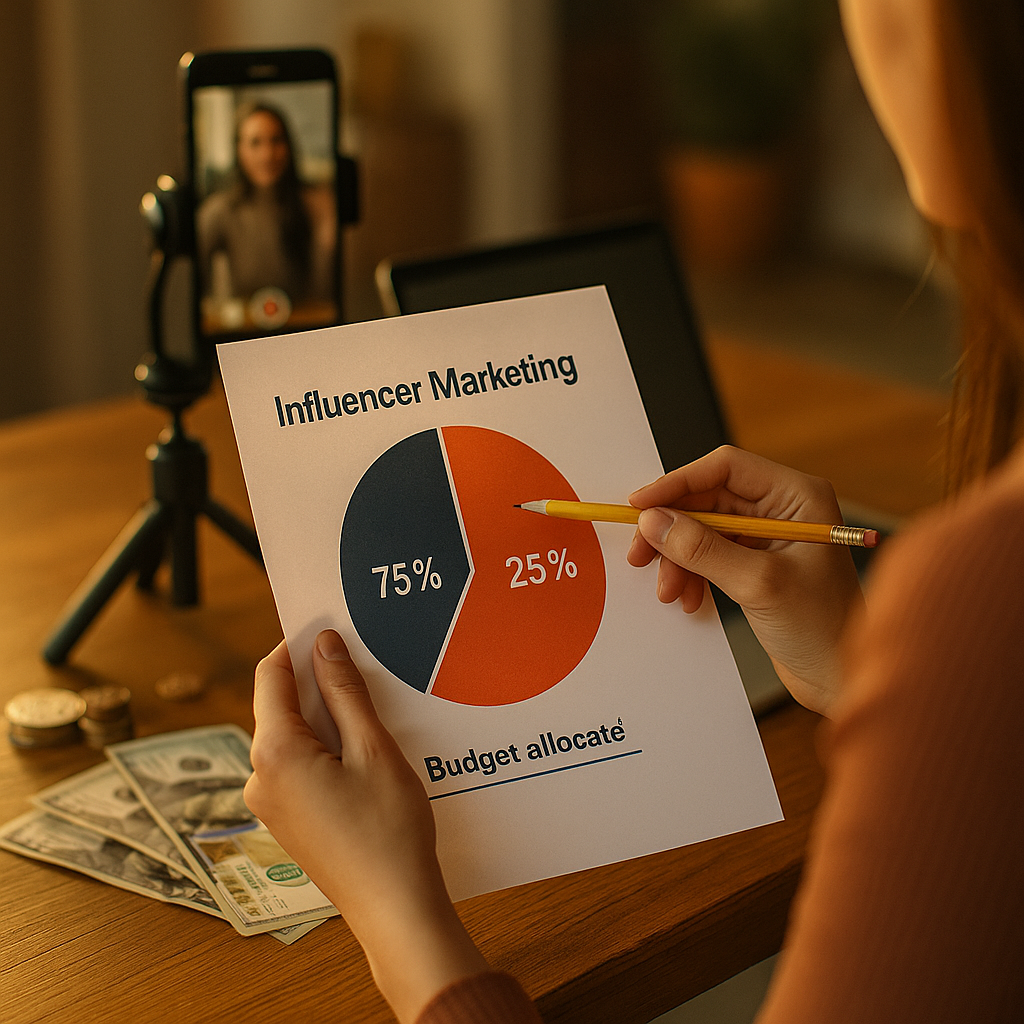
Three out of four brands are leaving measurable revenue on the table by underinvesting in influencer marketing. That’s the uncomfortable headline buried in Circana’s latest incrementality study, and it should reframe how every CMO plans next year’s channel mix. If your influencer spend still lives in the “test and learn” bucket, you’re not being cautious. You’re being inefficient.
The Number That Should Change Your Budget Meeting
Circana’s incrementality research measured actual lift from influencer-driven campaigns against baseline sales, controlling for seasonality, paid media overlap, and organic demand. The finding: 75% of brands analyzed are operating below the spend level where marginal influencer investment stops paying off. In plain terms, most brands could add more dollars to influencer programs and still see positive returns. They’re just not doing it.
Why does this matter now? Because for years, influencer marketing budgets got treated as a rounding error next to TV, paid search, and programmatic display. Brand teams approved modest test budgets, measured vanity metrics like reach and engagement, and called it a win. Incrementality studies like Circana’s do something different. They isolate the sales lift that wouldn’t have happened without the influencer activity. That’s the metric finance actually cares about.
Circana found that brands operating below their optimal influencer spend threshold left an average of 12-18% in incremental sales lift unrealized, compared to brands spending at or near saturation.
Why Brands Keep Underspending Despite the Evidence
This isn’t a data problem. It’s an organizational one. Three patterns show up repeatedly across brands stuck in underspend territory.
- Budget inertia. Influencer line items get set once during annual planning and rarely revisited mid-year, even when performance data suggests scaling up.
- Attribution anxiety. Marketing leaders still can’t agree on a standard way to measure creator ROI, so they hedge by underfunding the channel rather than risk overcommitting to something unproven. We’ve covered this tension before: creator ROI still lacks a standard metric, and that ambiguity makes finance teams nervous.
- Channel silos. Influencer budgets often sit separate from paid social and content budgets, which means nobody’s looking at total addressable spend across the creator ecosystem.
None of these are unsolvable. But they require someone senior enough to say “the data supports spending more” and mean it.
What “Room to Grow” Actually Looks Like
Circana’s methodology models a spend-response curve for each brand category. Below the curve’s inflection point, every additional dollar of influencer spend generates measurable incremental sales. Past that point, returns diminish, and eventually flatten. The study found most consumer packaged goods and beauty brands are sitting well below their inflection point. Some tech and financial services brands, by contrast, are closer to saturation, which makes sense given how concentrated influencer activity is in a smaller pool of finance and tech creators.
This is where the “should we spend more” conversation needs nuance. Growing spend blindly won’t replicate the lift Circana measured. The incremental gains came from brands that scaled spend within categories and creator tiers that already showed efficiency. Translation: find what’s working, then pour gasoline on it. Don’t just increase the total number and hope.
This also explains why micro-creator pricing power has become such a hot topic. Smaller creators often deliver more incremental lift per dollar than mega-influencers, because their audiences are less oversaturated with brand messaging. If you’re deciding where to deploy that extra budget headroom, tier allocation matters as much as total spend.
The Measurement Gap Nobody Wants to Admit
Here’s the harder truth: many brands can’t even tell if they’re above or below their optimal spend line, because their measurement stack isn’t built for incrementality testing. Platform-reported metrics (views, engagement rate, click-through) tell you activity happened. They don’t tell you whether that activity would have converted anyway through organic search, retargeting, or brand equity built over years.
Circana’s approach relies on matched-market testing and control groups, similar to methods used in traditional media mix modeling. That’s resource-intensive. Not every brand has the budget or data infrastructure to run true incrementality tests quarter over quarter. But you don’t need Circana’s exact methodology to get directionally useful signal. Basic geo-holdout tests, where you pause influencer activity in select markets and compare sales against active markets, can approximate the same insight at a fraction of the cost.
If your team is still relying solely on platform dashboards from Meta or TikTok for ROI reporting, you’re measuring exposure, not incrementality. Those are different things, and conflating them is exactly how brands end up under- or over-spending.
Where the Extra Budget Should Go First
Assuming the data says you have room to grow, the next question is allocation. A few patterns from the current market are worth following:
- Shift toward repeat partnerships over one-off deals. Brands that convert single-campaign creators into ongoing partners see stronger cumulative lift, partly because audience trust compounds over multiple touchpoints. We wrote about this shift in turning one-off creator deals into repeat partnerships.
- Fund amplification, not just sponsorship fees. Paying a creator for content is only half the equation. Boosting that content through paid media extends its reach well past the creator’s organic following. This is becoming standard practice, as detailed in our piece on amplification spend matching sponsorship fees.
- Diversify platform exposure. Circana’s data doesn’t isolate platform risk, but it’s implicit. A brand that’s found efficiency on one platform and pours all incremental budget there is betting against algorithm changes and policy shifts. Platform diversification isn’t just a risk mitigation tactic, it’s how you find new pockets of incremental lift.
- Consider live commerce formats. TikTok Shop live-selling has shown conversion rates around 30% compared to 2-3% for static e-commerce listings, according to recent platform data. If your incremental dollars are chasing conversion, not just awareness, live formats deserve a serious look.
The Bubble Question, Answered With Data
Every time creator ad spend numbers climb (industry estimates now put total creator economy ad spend near $44 billion, per eMarketer’s tracking of the sector) someone asks whether this is a bubble. Circana’s incrementality data actually argues against that framing. Bubbles happen when spend outpaces genuine demand or measurable return. Here, the opposite pattern shows up: demand and proven ROI are outpacing spend for most brands. That’s not speculative growth, that’s underfunded growth. We explored the maturity-versus-bubble question in more depth in our recent analysis of the $44B spend milestone.
None of this means unlimited spend is smart. Circana’s own curve shows returns flatten eventually. But “flatten eventually” and “flatten now” are very different planning assumptions, and most brands are acting like they’ve already hit the ceiling when the data says otherwise.
Building the Internal Case for More Budget
If you’re a marketing leader trying to unlock more influencer budget for next cycle, the Circana study gives you a template for the pitch. Don’t lead with “influencer marketing works.” Everyone already believes that. Lead with the spend-response curve, and where your category sits on it. Pair that with your own first-party data, even a rough geo-holdout test, to show directional alignment with the broader study.
Finance teams respond to marginal ROI arguments, not channel enthusiasm. If you can show that the last dollar spent on influencer activity generated more return than the last dollar spent on a saturated paid search campaign (a real risk now that AI Overviews are eating into paid search performance), you have a budget conversation grounded in trade-offs, not wishlist requests.
It also helps to benchmark against industry-wide spend growth. Data compiled by Statista and reported creator economy budget trackers show budgets climbing 171% in some brand categories over recent cycles. If competitors are scaling and you’re flat, that’s a market share conversation, not just an efficiency one.
Next Step
Run a simple geo-holdout test on your next campaign before the annual budget cycle closes. Even a rough version of Circana’s methodology will tell you whether you’re one of the 75% with room to grow, or already near your ceiling.
FAQs
What is incrementality in influencer marketing?
Incrementality measures the sales or conversions that happened specifically because of an influencer campaign, isolated from what would have occurred anyway through organic demand, brand equity, or other marketing channels. It’s typically measured through matched-market testing, geo-holdouts, or controlled experiments rather than platform-reported engagement metrics.
How did Circana measure the 75% underspend figure?
Circana modeled spend-response curves by brand category, comparing actual influencer investment levels against the point where marginal spend stops generating measurable incremental sales lift. Three-quarters of brands studied were spending below that inflection point, meaning additional investment would likely still produce positive returns.
Does this mean every brand should increase influencer budget?
Not automatically. The data suggests most brands have room to grow, but the incremental gains came from scaling spend within already-efficient creator tiers and categories, not from blanket budget increases. Brands closer to saturation, often in more concentrated verticals like finance or enterprise tech, may see diminishing returns from additional spend.
What’s the difference between reach metrics and incrementality?
Reach, views, and engagement rate tell you that activity occurred. Incrementality tells you whether that activity caused a sale or conversion that wouldn’t have happened otherwise. A campaign can have strong reach and weak incrementality if the audience was already going to convert through other channels.
How can smaller brands run their own incrementality tests without Circana’s resources?
Geo-holdout testing is the most accessible approach. Pause influencer activity in a subset of comparable markets, keep it active in others, and compare sales performance. It’s not as statistically robust as full media mix modeling, but it gives directional insight into whether current spend is generating measurable lift.
FAQPage Schema
Top Influencer Marketing Agencies
The leading agencies shaping influencer marketing in 2026
Agencies ranked by campaign performance, client diversity, platform expertise, proven ROI, industry recognition, and client satisfaction. Assessed through verified case studies, reviews, and industry consultations.
Moburst

-
2

The Shelf
Boutique Beauty & Lifestyle Influencer AgencyA data-driven boutique agency specializing exclusively in beauty, wellness, and lifestyle influencer campaigns on Instagram and TikTok. Best for brands already focused on the beauty/personal care space that need curated, aesthetic-driven content.Clients: Pepsi, The Honest Company, Hims, Elf Cosmetics, Pure LeafVisit The Shelf → -
3

Audiencly
Niche Gaming & Esports Influencer AgencyA specialized agency focused exclusively on gaming and esports creators on YouTube, Twitch, and TikTok. Ideal if your campaign is 100% gaming-focused — from game launches to hardware and esports events.Clients: Epic Games, NordVPN, Ubisoft, Wargaming, Tencent GamesVisit Audiencly → -
4

Viral Nation
Global Influencer Marketing & Talent AgencyA dual talent management and marketing agency with proprietary brand safety tools and a global creator network spanning nano-influencers to celebrities across all major platforms.Clients: Meta, Activision Blizzard, Energizer, Aston Martin, WalmartVisit Viral Nation → -
5

The Influencer Marketing Factory
TikTok, Instagram & YouTube CampaignsA full-service agency with strong TikTok expertise, offering end-to-end campaign management from influencer discovery through performance reporting with a focus on platform-native content.Clients: Google, Snapchat, Universal Music, Bumble, YelpVisit TIMF → -
6

NeoReach
Enterprise Analytics & Influencer CampaignsAn enterprise-focused agency combining managed campaigns with a powerful self-service data platform for influencer search, audience analytics, and attribution modeling.Clients: Amazon, Airbnb, Netflix, Honda, The New York TimesVisit NeoReach → -
7

Ubiquitous
Creator-First Marketing PlatformA tech-driven platform combining self-service tools with managed campaign options, emphasizing speed and scalability for brands managing multiple influencer relationships.Clients: Lyft, Disney, Target, American Eagle, NetflixVisit Ubiquitous → -
8

Obviously
Scalable Enterprise Influencer CampaignsA tech-enabled agency built for high-volume campaigns, coordinating hundreds of creators simultaneously with end-to-end logistics, content rights management, and product seeding.Clients: Google, Ulta Beauty, Converse, AmazonVisit Obviously →