


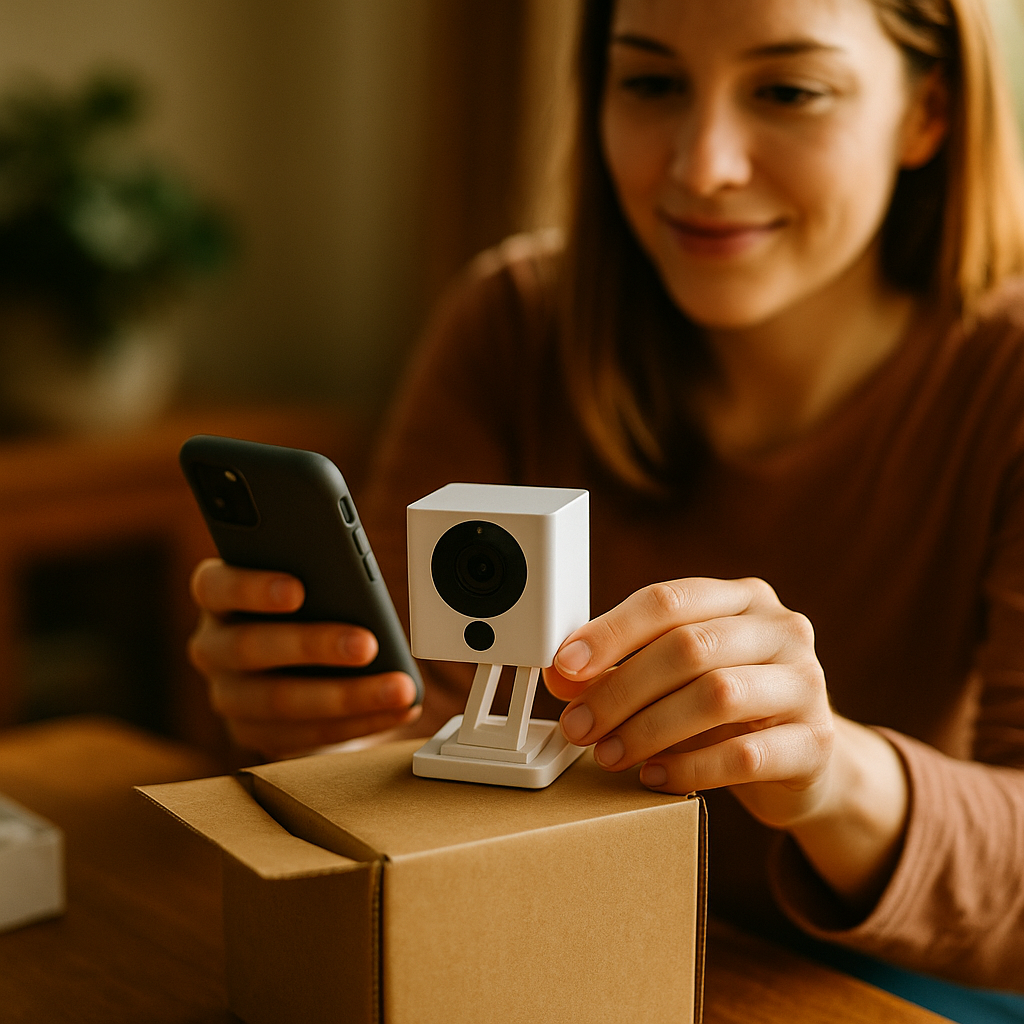
A $20 camera outsold Ring bundles costing five times as much, and it didn’t happen through Super Bowl ads. It happened through hundreds of nano-creators filming grainy porch footage of package thieves and raccoon break-ins. This Wyze case study breaks down how a budget hardware brand became a TikTok obsession by trading production polish for proof.
The Problem Wyze Actually Had to Solve
Wyze wasn’t fighting for awareness. Anyone who’s shopped for a security camera has seen the name. The real problem was trust. A $20-$40 camera sits in a category dominated by Ring and Nest, brands backed by Amazon and Google, priced at $100-$250. Consumers assumed cheap meant unreliable, or worse, that it meant your footage was insecure. Wyze even had a real data exposure incident years back that it had to publicly work through. So the brand didn’t need more impressions. It needed believable evidence that a budget camera actually catches the moment that matters.
That’s a job traditional advertising is bad at. A polished commercial showing a perfect porch-pirate capture reads as staged, even when it’s real footage. Viewers have been trained by a decade of ad skepticism to discount anything that looks produced. What they don’t discount: a shaky clip from someone’s actual Ring-replacement camera, posted because something wild actually happened on their property.
Why Nano-Creators, Not Tech Reviewers
Wyze’s instinct ran counter to how most electronics brands spend. The obvious playbook is sending units to big tech YouTubers with unboxing series and spec comparisons. Wyze did some of that, but the growth engine was different: homeowners, renters, and parents with under 20,000 followers, posting real doorbell and backyard footage captured on their own Wyze Cam.
This matters because home security is a proof category, not a features category. Nobody buys a camera because of megapixel count. They buy it because they saw someone else’s camera catch a real event and thought, I need that for my house. Nano-creators supply exactly that kind of evidence, at volume, without looking like an ad.
A security camera brand doesn’t sell hardware specs, it sells peace of mind, and peace of mind is proven through other people’s real footage, not lab tests.
Compare this to how REI used nano-creator trail reviews to drive trust in outdoor gear, or how Warby Parker’s try-on videos beat paid search on cost per acquisition. The pattern repeats across categories: when a purchase decision hinges on “will this actually work for me,” nano-creators outperform polished brand content because they look like proof, not persuasion.
What the Content Actually Looked Like
Strip away the strategy language and look at the raw content type. Most viral Wyze clips follow a near-identical structure:
- A hook frame showing the moment of “catch,” often a thumbnail of a porch thief, a bear, or a mischievous pet
- A short caption explaining what happened, written in first person, zero brand voice
- App-notification screenshots or in-app alert sounds baked into the video, showing the real-time detection feature in action
- A closing line mentioning the camera by name, sometimes with a discount code, sometimes with nothing at all
No ring lights. No scripts. No brand-supplied hooks. The authenticity wasn’t a style choice, it was the entire value proposition. A creator with 4,000 followers posting their actual delivery-theft footage carries more evidential weight than a paid spot with 4 million views, because the audience trusts the context: this is a real person’s real camera, catching a real event.
The Seeding Math: Volume Over Reach
Wyze’s model leaned on product seeding at scale rather than large flat-fee contracts. Send free or discounted cameras to a wide net of everyday homeowners and renters, ask for nothing more than honest posting, and let the algorithm surface the clips that hit. Most posts get modest views. A handful go extremely viral, sometimes tens of millions of views, and those carry the whole campaign’s ROI.
This is the same math behind Chomps building a meat stick category through creator seeding and Liquid Death beating paid search CAC with nano-creator seeding. The economics work because the cost per seeded unit is low (a $20-$40 camera, not a $200 gadget), the failure cost of a flop post is negligible, and the upside of one viral hit can generate months of organic reach for free.
For a marketing team running the numbers: if you seed 500 units at an average landed cost of $25, that’s a $12,500 spend. One video hitting 10 million views with a 2% click-through and a 3% conversion rate on a $30 camera can generate revenue that dwarfs the seeding cost many times over. Compare that to a $150,000 paid media buy targeting the same audience segment on Meta or TikTok Ads, where CPMs in the home and consumer electronics vertical have climbed steadily according to eMarketer benchmarks.
Did It Actually Move Sales, or Just Views?
This is the question every CMO should ask before greenlighting a similar program. Views are vanity if they don’t convert. What made Wyze’s approach different is that the content itself functioned as a demo, not just entertainment. A viral clip of a Wyze Cam catching a porch pirate isn’t just engaging, it’s a live product demonstration of the exact feature (motion detection, night vision, cloud alert speed) that a prospective buyer needs validated before purchase.
That’s the mechanical difference between this and generic lifestyle influencer content. A skincare unboxing video sells a vibe. A security camera catching a real break-in attempt sells a function. The content and the value proposition are the same object. Wyze reportedly built much of its social growth and Amazon Best Seller ranking momentum through exactly this loop: organic clip goes viral, viewers search the brand, product page conversion spikes, Amazon’s algorithm rewards the sales velocity with more visibility.
When the creator content and the product demo are the same clip, you’ve eliminated the gap between awareness and consideration that most influencer campaigns never close.
TikTok’s own commerce data continues to show that unscripted, real-use content converts better than polished ads across categories, a trend platforms like TikTok for Business have leaned into with shoppable formats and creator-led product tagging.
Where Brands Get This Wrong
Plenty of brands have tried to copy the “viral security cam catch” playbook and failed. The common mistakes:
- Scripting the reveal. If a creator’s caption sounds like brand copy, the trust collapses instantly. Audiences can tell the difference between “this actually happened to me” and “post this by Friday.”
- Seeding only macro-influencers. A camera brand paying a 500K-follower lifestyle creator to stage a break-in demo looks exactly like what it is: an ad. Nano and micro-creators posting their unscripted real footage is what makes the format credible.
- Ignoring compliance. Any creator posting footage that includes a delivery person’s face, a neighbor, or identifiable third parties raises privacy questions brands need to get ahead of. The FTC’s endorsement guidelines also require clear disclosure when product was gifted or discounted, even in low-key nano-creator posts.
- Underinvesting in the seeding pipeline. This model only works at volume. Ten units sent to ten creators won’t surface a viral hit. Hundreds or thousands of seeded units create the statistical odds needed for breakout content.
Brands like Olipop and Poppi hit similar walls early and course-corrected by tightening creator selection criteria rather than just increasing volume blindly. Volume matters, but so does seeding the right households, ones with actual porches, driveways, and daily foot traffic worth capturing.
What This Means for Your Brand’s Playbook
You don’t need to sell security cameras to borrow this logic. Any product where the core value proposition can be demonstrated in a real-use moment, rather than described in copy, is a candidate for nano-creator demo seeding. Think home appliances, fitness gear, pet products, parenting tools. The question to ask internally: can our product’s benefit be captured in an unscripted 15-second clip that proves itself without narration?
If yes, the operational playbook looks like this:
- Identify the “proof moment,” the single scenario that best demonstrates the product’s core value
- Seed broadly to nano and micro-creators in relevant everyday-life contexts, not just niche enthusiasts
- Set minimal creative direction, just clear disclosure requirements and brand mention guidelines
- Track earned media value and conversion lift, not just view counts, using platform analytics and affiliate or promo-code attribution
- Reinvest in the creators whose content overperforms, building a lightweight ambassador tier rather than a one-off gifting list
This mirrors the tiered approach detailed in Vuori’s nano-to-macro creator ladder and L’Oréal’s tiered roster strategy, both of which prove the same operational truth: nano-creators generate the trust foundation, and brands scale from there rather than starting at the top.
FAQs
Frequently Asked Questions
Why did Wyze choose nano-creators over larger tech influencers?
Home security is a trust-driven, proof-based purchase category. Nano-creators posting unscripted real footage of their own cameras catching real events carry more credibility than paid placements with larger tech reviewers, whose content reads as sponsored rather than authentic.
How much does a nano-creator seeding program typically cost compared to paid ads?
Seeding costs are largely the product cost itself, often $20-$50 per unit, plus light program management. This is significantly cheaper than sustained paid media campaigns, where CPMs in consumer electronics have risen steadily, making seeding a lower-risk, higher-upside channel for brands with a demonstrable product.
What products work best for this kind of demo-driven creator strategy?
Products where the value proposition can be captured in an unscripted, real-use moment work best: security cameras, home appliances, fitness trackers, pet tech, and parenting gadgets. If the benefit needs a voiceover to explain, this model works less well.
What compliance risks should brands watch for with security camera creator content?
Brands should ensure creators clearly disclose gifted or discounted products per FTC endorsement guidelines, and should be mindful of privacy issues when footage captures identifiable third parties like delivery drivers or neighbors.
Can this strategy work for brands without a viral “catch” moment built into the product?
Yes, but the brand needs to identify an equivalent proof moment, some real, unscripted scenario that demonstrates the core value without narration. The mechanism is the same even if the visual hook differs.
The takeaway for any brand watching from the sidelines: stop asking creators to sell your product and start finding the real-life moment where your product sells itself. Seed wide, seed cheap, and let the algorithm find your viral catch.
Top Influencer Marketing Agencies
The leading agencies shaping influencer marketing in 2026
Agencies ranked by campaign performance, client diversity, platform expertise, proven ROI, industry recognition, and client satisfaction. Assessed through verified case studies, reviews, and industry consultations.
Moburst

-
2

The Shelf
Boutique Beauty & Lifestyle Influencer AgencyA data-driven boutique agency specializing exclusively in beauty, wellness, and lifestyle influencer campaigns on Instagram and TikTok. Best for brands already focused on the beauty/personal care space that need curated, aesthetic-driven content.Clients: Pepsi, The Honest Company, Hims, Elf Cosmetics, Pure LeafVisit The Shelf → -
3

Audiencly
Niche Gaming & Esports Influencer AgencyA specialized agency focused exclusively on gaming and esports creators on YouTube, Twitch, and TikTok. Ideal if your campaign is 100% gaming-focused — from game launches to hardware and esports events.Clients: Epic Games, NordVPN, Ubisoft, Wargaming, Tencent GamesVisit Audiencly → -
4

Viral Nation
Global Influencer Marketing & Talent AgencyA dual talent management and marketing agency with proprietary brand safety tools and a global creator network spanning nano-influencers to celebrities across all major platforms.Clients: Meta, Activision Blizzard, Energizer, Aston Martin, WalmartVisit Viral Nation → -
5

The Influencer Marketing Factory
TikTok, Instagram & YouTube CampaignsA full-service agency with strong TikTok expertise, offering end-to-end campaign management from influencer discovery through performance reporting with a focus on platform-native content.Clients: Google, Snapchat, Universal Music, Bumble, YelpVisit TIMF → -
6

NeoReach
Enterprise Analytics & Influencer CampaignsAn enterprise-focused agency combining managed campaigns with a powerful self-service data platform for influencer search, audience analytics, and attribution modeling.Clients: Amazon, Airbnb, Netflix, Honda, The New York TimesVisit NeoReach → -
7

Ubiquitous
Creator-First Marketing PlatformA tech-driven platform combining self-service tools with managed campaign options, emphasizing speed and scalability for brands managing multiple influencer relationships.Clients: Lyft, Disney, Target, American Eagle, NetflixVisit Ubiquitous → -
8

Obviously
Scalable Enterprise Influencer CampaignsA tech-enabled agency built for high-volume campaigns, coordinating hundreds of creators simultaneously with end-to-end logistics, content rights management, and product seeding.Clients: Google, Ulta Beauty, Converse, AmazonVisit Obviously →