


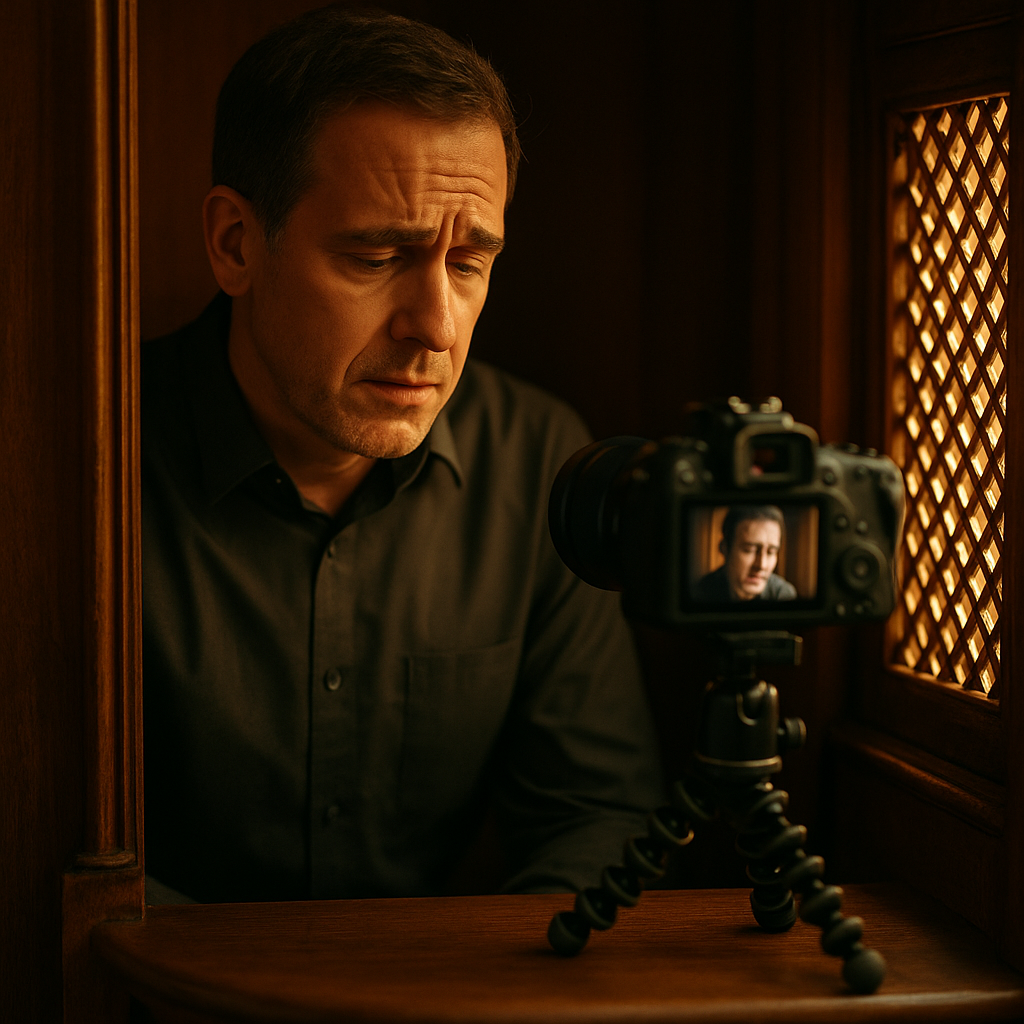
73% of consumers say they trust unpolished, confessional-style content more than glossy branded ads — which is exactly why the confession-booth video format has become a staple in creator briefs. But there’s a catch nobody puts on the moodboard: the messier and more “real” a testimonial feels, the easier it becomes to bury or blur the disclosure. Confession-booth video format compliance isn’t a nice-to-have. It’s the difference between a campaign that builds trust and one that draws an FTC inquiry.
This format works because it looks unproduced. A single chair, a plain backdrop, a creator staring into the lens like they’re talking to a friend, not a camera crew. The problem is that “unscripted” and “undisclosed” start to look identical if brands aren’t deliberate about where disclosure lives in the shot.
Why Brands Keep Reaching for the Confession Booth
The format borrows its DNA from reality TV. Think of the classic talking-head cutaway: someone processing a moment, venting, admitting something. Audiences are trained to read that visual grammar as honest. Marketers noticed the same lift that made honest complaint content perform well — people trust flaws more than polish — and applied it to testimonials.
Performance data backs the instinct. Sprout Social and other social analytics firms have repeatedly found that lower-production, creator-led content outperforms studio ads on engagement rate, particularly on TikTok and Instagram Reels. Confession-booth content converts because it mimics the emotional register of a voice memo to a friend, not a 30-second spot.
The paradox of confession-booth content: the more authentic it looks, the more scrutiny its disclosure practices deserve — not less.
Where Compliance Breaks Down
Here’s the pattern compliance teams see over and over. A creator gets a loose brief: “just talk about the product like you’re venting to a friend.” No disclosure language specified. No placement guidance. The creator, trying to stay in character, either mumbles “ad” at the end, buries it in a caption wall, or skips it entirely because it “breaks the mood.”
The FTC doesn’t grade on mood. Its endorsement guidelines require disclosures to be clear, conspicuous, and unavoidable — regardless of format. A confession booth doesn’t get a stylistic exemption. If anything, regulators have signaled more attention toward formats designed to obscure commercial intent behind emotional authenticity.
Three failure points show up again and again in creator audits:
- Verbal-only disclosure that gets edited out. Creators say “this is sponsored” during the raw take, then trim it in editing because it “kills the vibe.”
- On-screen text that disappears too fast. A one-second disclosure card doesn’t meet the “clear and conspicuous” bar the FTC expects.
- Caption-only disclosure buried under hashtags. If #ad is the 14th hashtag after a wall of unrelated tags, it doesn’t count as prominent.
The Brief Is the Control Point, Not the Edit
Compliance in unscripted formats can’t be fixed in post-production. By the time footage reaches an editor, the disclosure moment has either been captured cleanly or it hasn’t. That means the entire risk-mitigation strategy has to live in the brief, before a single frame rolls.
Brands that get this right treat disclosure the same way they treat a mandatory product shot: non-negotiable, but flexible in execution. The creator can improvise the confession. They cannot improvise whether a disclosure appears, where, or for how long.
This mirrors the approach used in the confession-booth format’s original creative brief, which established that emotional authenticity and legal clarity aren’t opposing goals — they’re both deliverables. Compliance language belongs in the brief’s “non-negotiables” section, separate from tone and performance direction, so creators don’t confuse creative freedom with disclosure flexibility.
Building the Brief: What Actually Goes In It
A workable confession-booth brief separates two layers clearly: the emotional direction (loose, permissive) and the compliance direction (rigid, specific). Mixing them is where most briefs go wrong.
Emotional direction should give creators room to riff. Prompts like “tell us about the moment you almost returned it” or “what would you tell your past self before buying this” work well because they invite a genuine reaction rather than a script read verbatim.
Compliance direction needs to specify:
- The exact disclosure language to use verbally (e.g., “this video is sponsored by [Brand]”) stated at the start of the confession, not buried mid-ramble or tacked on after the emotional beat.
- A persistent on-screen text disclosure that runs for the video’s full duration, not a flash card.
- Caption requirements: #ad or #sponsored placed in the first three words of the caption, not after a string of unrelated tags.
- Platform-specific paid partnership tools (TikTok’s Branded Content Toggle, Instagram’s Paid Partnership label) turned on as a redundant layer, not a replacement for verbal/text disclosure.
Brands running this format alongside other raw-style testimonials, like text-message-thread content or sound-off story formats, should standardize this compliance layer across all of them. Consistency across formats reduces the odds that one creator’s variation becomes the outlier that draws attention.
Scripting the Unscriptable
Can you direct spontaneity? Kind of. The trick is giving creators a disclosure “anchor point” they hit before the improvisation starts, so the legally required part isn’t dependent on whether the emotional moment lands.
Structure the shoot like this: creator states the sponsorship disclosure clearly and directly to camera, in character, as the opening beat. Then the confession unfolds unscripted from there. This way, even if the edit trims the emotional ramble down to fifteen seconds, the disclosure is baked into the usable footage rather than existing only in a longer raw take that never makes the final cut.
Some brands go further and require a second verbal disclosure near the midpoint, especially for longer-form confession content over 60 seconds. It’s a small ask that protects against clips being trimmed for shorter placements later, on paid social or a highlight reel.
If your disclosure only exists in the raw footage and not the final edit, it doesn’t exist at all in the eyes of the FTC.
Working With Creators Without Killing the Format
Creators push back on rigid disclosure asks because they’ve seen it done badly, disclosures that feel like a legal disclaimer bolted onto an otherwise emotional piece of content. The fix isn’t loosening the requirement. It’s making the disclosure feel native to the confession-booth aesthetic instead of foreign to it.
Frame the disclosure as part of the ritual. Confession-booth content already has an established visual language: sitting down, addressing the camera directly, a beat of silence before speaking. Use that same rhythm for the disclosure. “Before I get into this — yes, this is sponsored by [Brand], but here’s what actually happened.” That line does double duty. It satisfies the clear-and-conspicuous standard and sets up the confession naturally.
This approach echoes what’s worked in other trust-forward formats. The ghost ad confession format and blind ranking reviews both succeed by making disclosure part of the narrative hook rather than a compliance tax paid at the end.
Auditing Before It Goes Live
Every confession-booth deliverable should pass a three-second test before publishing: can a viewer, glancing at the video for three seconds at any random point, understand it’s sponsored content? If the answer depends on catching a specific line of dialogue or reading a caption in full, it fails.
Build this into the approval workflow, not as a final legal sign-off but as a checklist creators see before they even shoot:
- Verbal disclosure present in the first 5 seconds?
- On-screen text disclosure visible for the full video duration?
- Caption discloses within the first line, not buried?
- Platform paid-partnership tool activated?
- Disclosure survives the shortest anticipated edit or cutdown?
Brands managing high creator volume increasingly automate parts of this check using social listening and compliance software, but the checklist itself should be simple enough that a creator can self-audit before submitting a rough cut. According to eMarketer, creator-led content spend continues to outpace traditional influencer posts in growth, which means more volume moving through review pipelines and less room for manual, case-by-case compliance checks.
What This Means for Multi-Format Shoots
Confession-booth setups rarely happen in isolation anymore. Brands batch-shoot multiple formats in a single session to control cost, often pairing a confession-style testimonial with a product demo or a would-you-rather comparison segment. When that happens, disclosure requirements need to be format-specific, not blanket-applied.
A disclosure that works for a fast-paced comparison video (on-screen text, quick verbal mention) might feel jarring in a slow, intimate confession piece. Reference briefs like the package-deal creative brief or one-shoot, three-formats brief when planning multi-deliverable sessions, and give creators separate compliance notes per format rather than one generic disclosure instruction for the whole shoot day.
For agencies managing this at scale, tools referenced in HubSpot’s content marketing resources on workflow automation can help standardize compliance checklists across dozens of simultaneous creator briefs, reducing the manual review burden without loosening the standard.
The takeaway is simple: build the disclosure into the confession itself, not around it, and audit against the three-second test before anything ships. Do that consistently, and the format keeps its emotional power without becoming a compliance liability.
FAQs
What makes confession-booth video format compliance different from standard influencer disclosure?
The format’s entire appeal rests on looking unscripted and emotionally raw, which creates pressure to trim or soften disclosures that feel “too legal” for the mood. Standard disclosure rules still apply, but they need to be built into the performance itself rather than added afterward.
Where should the disclosure appear in a confession-booth video?
Ideally at the very start, spoken directly to camera as part of the opening beat, paired with persistent on-screen text for the video’s full duration. This protects the disclosure even if the clip gets trimmed for shorter cutdowns later.
Can creators improvise the confession itself while following a compliance script?
Yes. The emotional content and reaction should stay unscripted, but the disclosure line and its placement should be fixed and rehearsed so it survives editing regardless of how the rest of the take unfolds.
Is a caption disclosure enough if the creator forgets to say it on camera?
No. Captions alone are considered weaker disclosure, especially if buried under hashtags. The FTC expects disclosures to be unavoidable regardless of whether a viewer reads the caption, watches with sound on, or scrolls past quickly.
How do platform tools like TikTok’s Branded Content Toggle factor into this?
They’re a useful redundant layer but shouldn’t replace verbal and on-screen disclosure. Platform labels can be missed depending on how content is reshared or embedded elsewhere, so brands should treat them as backup, not the primary compliance mechanism.
What’s the fastest way to audit a confession-booth video before publishing?
Run the three-second test: glance at any random moment in the video and check whether it’s immediately clear the content is sponsored. If it requires catching a specific line or reading a full caption, revise before publishing.
Top Influencer Marketing Agencies
The leading agencies shaping influencer marketing in 2026
Agencies ranked by campaign performance, client diversity, platform expertise, proven ROI, industry recognition, and client satisfaction. Assessed through verified case studies, reviews, and industry consultations.
Moburst

-
2

The Shelf
Boutique Beauty & Lifestyle Influencer AgencyA data-driven boutique agency specializing exclusively in beauty, wellness, and lifestyle influencer campaigns on Instagram and TikTok. Best for brands already focused on the beauty/personal care space that need curated, aesthetic-driven content.Clients: Pepsi, The Honest Company, Hims, Elf Cosmetics, Pure LeafVisit The Shelf → -
3

Audiencly
Niche Gaming & Esports Influencer AgencyA specialized agency focused exclusively on gaming and esports creators on YouTube, Twitch, and TikTok. Ideal if your campaign is 100% gaming-focused — from game launches to hardware and esports events.Clients: Epic Games, NordVPN, Ubisoft, Wargaming, Tencent GamesVisit Audiencly → -
4

Viral Nation
Global Influencer Marketing & Talent AgencyA dual talent management and marketing agency with proprietary brand safety tools and a global creator network spanning nano-influencers to celebrities across all major platforms.Clients: Meta, Activision Blizzard, Energizer, Aston Martin, WalmartVisit Viral Nation → -
5

The Influencer Marketing Factory
TikTok, Instagram & YouTube CampaignsA full-service agency with strong TikTok expertise, offering end-to-end campaign management from influencer discovery through performance reporting with a focus on platform-native content.Clients: Google, Snapchat, Universal Music, Bumble, YelpVisit TIMF → -
6

NeoReach
Enterprise Analytics & Influencer CampaignsAn enterprise-focused agency combining managed campaigns with a powerful self-service data platform for influencer search, audience analytics, and attribution modeling.Clients: Amazon, Airbnb, Netflix, Honda, The New York TimesVisit NeoReach → -
7

Ubiquitous
Creator-First Marketing PlatformA tech-driven platform combining self-service tools with managed campaign options, emphasizing speed and scalability for brands managing multiple influencer relationships.Clients: Lyft, Disney, Target, American Eagle, NetflixVisit Ubiquitous → -
8

Obviously
Scalable Enterprise Influencer CampaignsA tech-enabled agency built for high-volume campaigns, coordinating hundreds of creators simultaneously with end-to-end logistics, content rights management, and product seeding.Clients: Google, Ulta Beauty, Converse, AmazonVisit Obviously →