


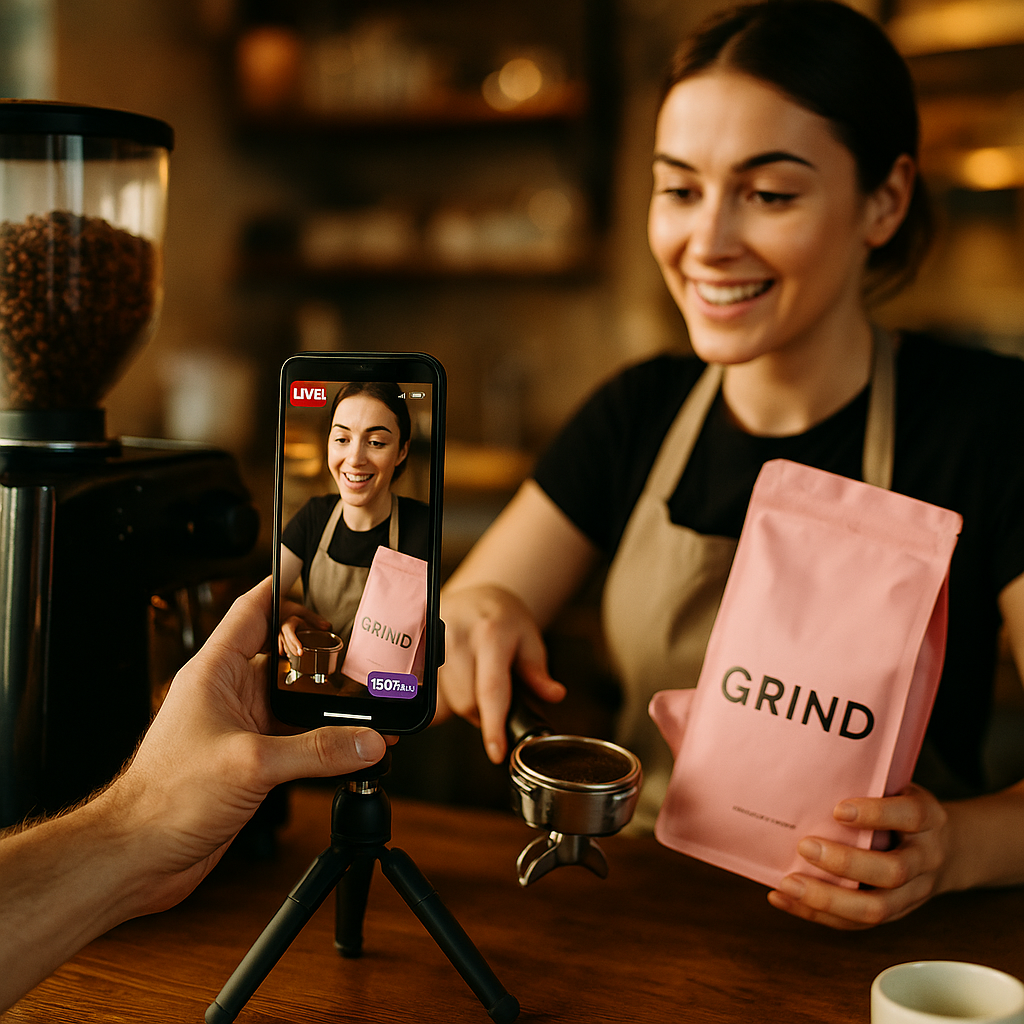
A 30% conversion rate on a livestream sounds fake until you see the receipts. Most brands celebrate a 2-3% conversion rate on TikTok Shop. Grind Coffee, the UK coffee brand, has posted live selling sessions converting at 10x that benchmark. This is the story of how they did it, and what it means for any brand weighing TikTok Shop live selling as a real channel rather than a gimmick.
Why Grind’s Numbers Should Make Every Brand Marketer Pay Attention
Grind isn’t a venture-backed unicorn burning cash on discounts. It’s a London-founded coffee brand that started as a bar in Shoreditch back in 2011 and has spent over a decade building a genuinely loyal customer base around sustainability, bold branding, and compostable pods. That matters here. Grind’s TikTok Shop performance isn’t a story about deep discounting buying temporary attention. It’s a story about an established brand finding a new distribution and conversion mechanic that actually works.
Live shopping has struggled to land in Western markets the way it exploded in China, where livestream commerce is now worth hundreds of billions annually. UK and US brands tried and mostly shrugged. eMarketer research has repeatedly shown live commerce adoption lagging in Western markets compared to Asia. Grind is one of the clearer UK counterexamples: proof that with the right product, host, and pricing structure, TikTok Shop Live can convert at rates that make paid social look expensive by comparison.
Grind’s live selling sessions have converted at rates reported around 30%, compared to an industry average closer to 2-3% for TikTok Shop livestreams, according to platform benchmarking shared by sellers and agencies operating in the space.
What Actually Happened in the Livestreams
Strip away the hype and the mechanics are simple. Grind ran regular, scheduled livestreams on TikTok Shop featuring hosts who understood coffee, understood Grind’s product range, and weren’t reading from a script written by someone in a boardroom. They demonstrated products in real time: brewing methods, taste notes, subscription bundles, gift sets around seasonal moments.
The offer stack mattered as much as the presentation. Grind used live-exclusive bundle pricing, limited-time discounts visible only during the stream, and free shipping thresholds tied to cart size. None of this is revolutionary. What made it work was the combination: a product with genuine repeat-purchase logic (coffee), a host who could answer real questions in the comments, and pricing that rewarded viewers for buying during the window rather than bookmarking for later.
Compare this to brands that treat TikTok Shop Live as an afterthought, a static product page with a camera pointed at it. Grind treated the stream like a retail floor. Someone is always “on shift,” engaging comments, restating the offer, creating urgency without sounding desperate. That’s the difference between a channel that converts and one that just generates impressions.
The Host Is the Conversion Engine, Not the Product
Here’s the uncomfortable truth for brands that want to automate this: the host matters more than the product page ever will. TikTok Shop Live succeeds or fails on whether the person on camera builds trust fast. Grind reportedly worked with hosts who had genuine coffee knowledge rather than generic livestream talent, which meant they could handle skeptical questions about brew ratios or sustainability claims without stalling.
This mirrors what’s worked for other categories on TikTok Shop. Graza’s olive oil strategy leaned on the same principle: category expertise beats polish. Viewers can smell a paid actor reading bullet points. They can’t fake genuine enthusiasm for a product category, and audiences reward that authenticity with their wallets.
For brands building their own host bench, this has real hiring implications. You’re not casting for camera presence alone. You need people who can improvise, handle objections in real time, and represent brand values under the pressure of a live, unedited feed. That’s a different skill set than briefing a creator for a pre-recorded unboxing video.
The Pricing Architecture Behind the Conversion Rate
Conversion rate is a function of intent plus friction removal. Grind reduced friction in a few specific ways worth breaking down for any brand planning a similar play:
- Live-exclusive bundles that weren’t available on the standard product listing, giving viewers a reason to buy now rather than browse later.
- Tiered discounting that increased as cart value increased, nudging average order value up without feeling like a hard upsell.
- Scarcity framing tied to real limits, such as seasonal blends or limited stock, rather than manufactured countdown timers that erode trust over time.
- In-app checkout using TikTok Shop’s native purchase flow, removing the drop-off that happens when viewers get redirected to an external site.
That last point deserves its own paragraph. Native checkout is arguably the single biggest structural advantage TikTok Shop has over Instagram or YouTube live selling. There’s no app switch, no re-entering payment details, no moment for a viewer’s intent to cool off. TikTok’s own advertising resources point to this frictionless checkout as a core differentiator of the Shop ecosystem, and Grind’s numbers back that claim up.
How This Compares to Other Category Playbooks
Grind isn’t operating in isolation. TikTok Shop has become a proving ground across categories, and the patterns rhyme even when the products don’t. Chipotle’s TikTok Go data showed that commission-based creator payouts consistently outperform flat fees when the goal is trackable sales rather than pure reach. Grind’s live selling model runs on a similar logic: pay for performance moments (the live event itself, tied directly to conversion), not for generic brand awareness content that’s hard to attribute.
Similarly, the Chamberlain Coffee nano-creator strategy demonstrates that coffee as a category has particular advantages on social commerce: it’s a habitual purchase, it has a passionate enthusiast community, and it lends itself to visual demonstration (pouring, frothing, brewing) that keeps viewers watching. Grind capitalized on the same category tailwinds, just through live formats rather than seeded UGC.
What both examples share is a rejection of the old awareness-first funnel. These brands are building direct paths from content to cart, measuring what actually converts, and reallocating budget away from vanity metrics. If you’re still reporting on reach and impressions as your primary KPI for creator spend, you’re already behind brands running this playbook.
The Risk and Compliance Side Nobody Talks About
Live selling isn’t risk-free, and brand safety teams should be paying attention before they greenlight a program. Unscripted, real-time commentary means unscripted, real-time claims. If a host overstates a health benefit, misrepresents sourcing, or makes an unsubstantiated comparison to a competitor, that’s on the brand, not just the individual on camera.
The FTC’s endorsement guidelines apply just as much to live commerce as to static sponsored posts, and UK brands need to keep the ICO’s guidance on data handling in mind too, particularly around how customer data captured through in-stream purchases and comments gets stored and used. Grind’s approach reportedly relies on tightly briefed hosts with genuine product knowledge specifically because it reduces the odds of an off-script claim creating a compliance headache. Brief hosts thoroughly. Record every session. Have a clear escalation path if a claim needs correcting mid-stream or in a pinned comment afterward.
Operationally, live selling also demands more from customer service and fulfilment than standard e-commerce. A 30% conversion rate on a well-attended stream can generate a spike in orders within a 60-90 minute window. Inventory systems, fulfilment partners, and customer service queues need to be ready for that burst, not just the steady daily baseline. Brands that haven’t stress-tested their operations for a live-selling spike risk turning a marketing win into a fulfilment failure.
What Brands Should Actually Steal From This
You don’t need Grind’s decade of brand equity to test this model, but you do need a few prerequisites in place before scheduling your first stream:
- A product with visual demonstration value, something that benefits from being shown, poured, brewed, or worn on camera.
- A host bench with real category knowledge, not just camera confidence.
- Live-exclusive pricing or bundles that create genuine urgency without gimmicky countdown tricks.
- Native checkout enabled and tested well before the stream goes live.
- A compliance brief covering claims, disclosures, and escalation paths for real-time corrections.
- Fulfilment capacity stress-tested for a conversion spike, not just average daily volume.
Run a small pilot before committing serious budget. Two or three streams with a modest audience will tell you more about your product-host-pricing fit than any deck full of projections. Track conversion rate, average order value, and repeat purchase rate from stream buyers specifically. That last metric is the one that tells you whether live selling is building customers or just moving one-time inventory.
For a broader look at how commission-based and performance-tied creator models are reshaping TikTok Shop economics, the TikTok Go hybrid payout model breakdown is a useful companion read alongside this case study.
FAQs
Frequently Asked Questions
What conversion rate is considered good for TikTok Shop Live?
Most TikTok Shop livestreams convert somewhere between 2% and 5%, depending on category and audience quality. Grind Coffee’s reported rates around 30% are considerably above typical benchmarks and reflect a strong fit between product, host, and pricing rather than a repeatable industry norm.
Do brands need a celebrity host to run a successful TikTok Shop livestream?
No. Category expertise and comfort handling live, unscripted questions tend to matter more than fame. Hosts who genuinely understand the product category, such as coffee brewing or skincare formulation, generally build trust faster than a well-known face reading from a script.
How does TikTok Shop Live differ from posting pre-recorded product videos?
Live selling allows real-time interaction, live-exclusive pricing, and immediate objection handling in the comments. Pre-recorded content can drive awareness and discovery, but it lacks the urgency and native, in-the-moment checkout flow that live formats use to convert intent quickly.
What compliance risks should brands consider before running live shopping events?
Unscripted claims made during a livestream are still subject to advertising and endorsement regulations. Brands should brief hosts thoroughly, record all sessions, and have a clear process for correcting any inaccurate claims made in real time, both in the FTC and ICO regulatory contexts.
Can smaller brands replicate a live selling model without a big budget?
Yes. A small pilot of two or three streams with a modest audience and a well-briefed host can reveal whether the product and format fit before committing significant budget. The key inputs are product demonstration value, host credibility, and native checkout, none of which require a large media spend.
Next step: pick one product with genuine on-camera demonstration value, brief a host who actually knows the category, and run a small live pilot before scaling budget into TikTok Shop Live selling.
Top Influencer Marketing Agencies
The leading agencies shaping influencer marketing in 2026
Agencies ranked by campaign performance, client diversity, platform expertise, proven ROI, industry recognition, and client satisfaction. Assessed through verified case studies, reviews, and industry consultations.
Moburst

-
2

The Shelf
Boutique Beauty & Lifestyle Influencer AgencyA data-driven boutique agency specializing exclusively in beauty, wellness, and lifestyle influencer campaigns on Instagram and TikTok. Best for brands already focused on the beauty/personal care space that need curated, aesthetic-driven content.Clients: Pepsi, The Honest Company, Hims, Elf Cosmetics, Pure LeafVisit The Shelf → -
3

Audiencly
Niche Gaming & Esports Influencer AgencyA specialized agency focused exclusively on gaming and esports creators on YouTube, Twitch, and TikTok. Ideal if your campaign is 100% gaming-focused — from game launches to hardware and esports events.Clients: Epic Games, NordVPN, Ubisoft, Wargaming, Tencent GamesVisit Audiencly → -
4

Viral Nation
Global Influencer Marketing & Talent AgencyA dual talent management and marketing agency with proprietary brand safety tools and a global creator network spanning nano-influencers to celebrities across all major platforms.Clients: Meta, Activision Blizzard, Energizer, Aston Martin, WalmartVisit Viral Nation → -
5

The Influencer Marketing Factory
TikTok, Instagram & YouTube CampaignsA full-service agency with strong TikTok expertise, offering end-to-end campaign management from influencer discovery through performance reporting with a focus on platform-native content.Clients: Google, Snapchat, Universal Music, Bumble, YelpVisit TIMF → -
6

NeoReach
Enterprise Analytics & Influencer CampaignsAn enterprise-focused agency combining managed campaigns with a powerful self-service data platform for influencer search, audience analytics, and attribution modeling.Clients: Amazon, Airbnb, Netflix, Honda, The New York TimesVisit NeoReach → -
7

Ubiquitous
Creator-First Marketing PlatformA tech-driven platform combining self-service tools with managed campaign options, emphasizing speed and scalability for brands managing multiple influencer relationships.Clients: Lyft, Disney, Target, American Eagle, NetflixVisit Ubiquitous → -
8

Obviously
Scalable Enterprise Influencer CampaignsA tech-enabled agency built for high-volume campaigns, coordinating hundreds of creators simultaneously with end-to-end logistics, content rights management, and product seeding.Clients: Google, Ulta Beauty, Converse, AmazonVisit Obviously →