


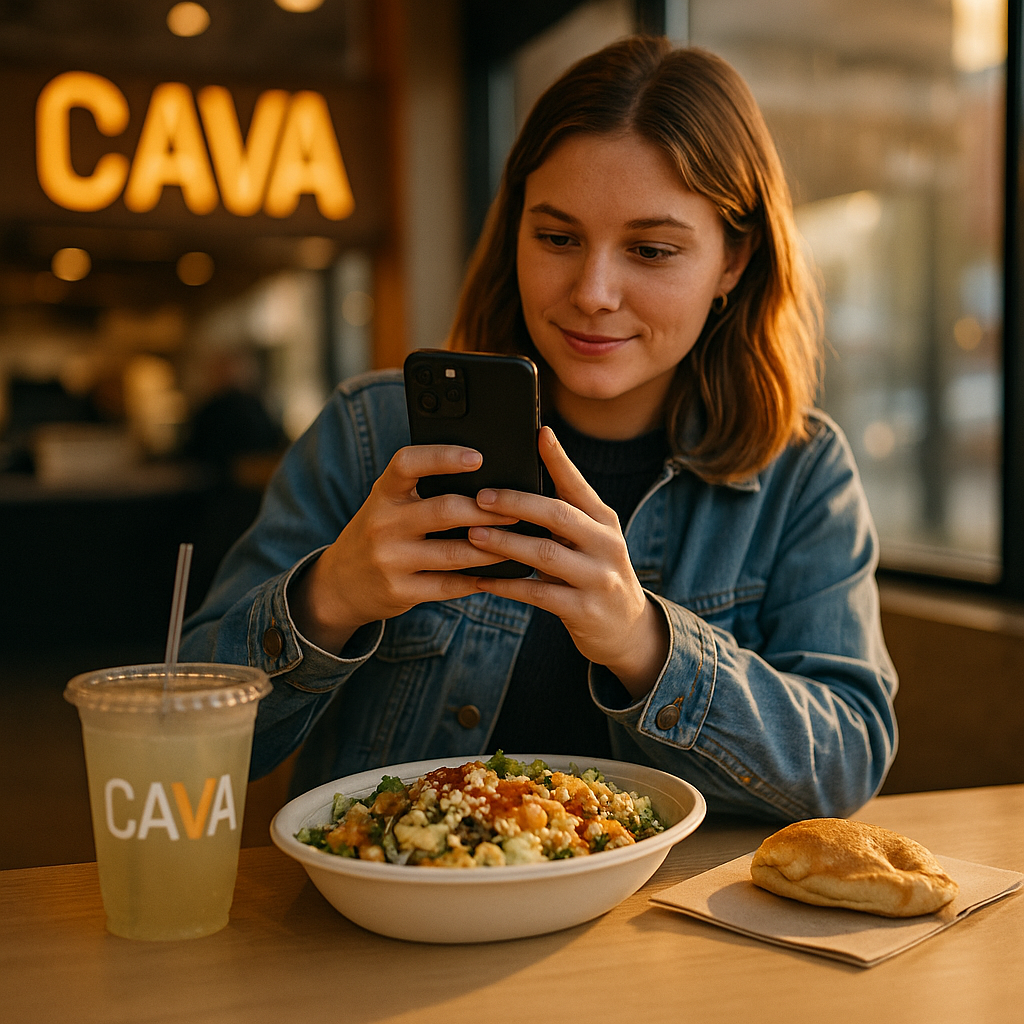
Zero celebrity spend. Forty-plus regional test markets. One national menu rollout that outperformed forecast. That’s the unglamorous math behind Cava’s expansion playbook, and it’s forcing chains twice its size to rethink why they’re still writing checks to actors with 2 million followers and zero connection to the brand. The Cava nano-creator regional rollout strategy didn’t just save money. It generated the market intelligence that made the national launch safer.
Most fast-casual chains treat menu expansion like a coin flip dressed up in research decks. Cava treated it like a controlled experiment, and nano-creators were the instrument.
The Problem With Celebrity-Led Menu Launches
Here’s the uncomfortable truth restaurant CMOs don’t say out loud: celebrity endorsement deals for menu items are almost impossible to attribute cleanly. You pay a flat fee, sometimes seven figures, and you get reach. But reach isn’t the same as regional signal. A celebrity post doesn’t tell you whether a new grain bowl will sell in Cleveland versus Charlotte. It doesn’t tell you if the spice level is too aggressive for a Midwest market or under-seasoned for the Southwest.
Cava’s leadership, coming out of a public offering that put same-store sales growth under a microscope, couldn’t afford that kind of blind spend. Every menu decision needed a data trail. So instead of a single splashy campaign fronted by a recognizable face, Cava built a distributed network of local nano-creators, typically defined as accounts with 1,000 to 20,000 followers, embedded in the specific test markets where new items were rolling out.
The core insight: a celebrity tells you what a national audience will tolerate in theory. A nano-creator tells you what a real neighborhood will actually order.
How the Regional Test Actually Worked
Cava’s approach wasn’t random gifting. It was structured like a market-research program that happened to run on Instagram and TikTok instead of a Qualtrics survey.
The brand identified a handful of regional markets, usually cities where new locations had just opened or where a new protein or sauce was being trial-launched, and seeded nano-creators in those specific zip codes. Not national food influencers. Local ones. A college student in Austin. A gym-focused meal-prepper in Tampa. A parent food account in suburban Chicago. The kind of creator whose audience overlaps almost entirely with the people who’ll actually walk into that specific Cava location this week.
The mechanics looked something like this:
- Hyper-local seeding: Creators were selected by proximity to test-market locations, not by follower count or national relevance.
- Item-specific briefs: Each creator was asked to try a specific new menu item, not “Cava” broadly, which kept feedback isolated to a single variable.
- Comment-mining as data: Regional marketing teams tracked not just views, but the actual language in comments, flagging repeated objections (too spicy, too small, too pricey) by market.
- Staggered timing: Different regions got different test windows, which let Cava compare performance across climate, demographics, and existing brand penetration.
This is functionally the same operating logic used in Chagee’s nano-creator market entry for the US tea category, where hyper-localized creator seeding let an unfamiliar brand build credibility one region at a time instead of trying to buy national awareness on day one.
Why Nano-Creators Beat Celebrity Reach for This Job
Reach was never the point. Precision was.
A celebrity campaign answers “will people notice this?” A nano-creator regional program answers “will people in this specific market actually buy this?” Those are different questions, and only one of them matters when you’re deciding whether to roll a menu item to 300+ locations.
Nano and micro-creators consistently post stronger engagement rates than macro or celebrity accounts, a pattern Sprout Social and other industry trackers have documented repeatedly. But engagement rate isn’t even the most useful metric here. It’s the qualitative signal: the actual sentences people write in comments and captions about taste, portion, price, and craveability. That’s usable product feedback. A celebrity’s sponsored post rarely generates that kind of texture, because the audience knows it’s an ad for a fee, not a genuine local recommendation.
Cost matters too, obviously. Nano-creator programs run on a fraction of celebrity budgets, often gift-plus-modest-fee structures rather than six or seven-figure contracts. That means Cava could run dozens of parallel regional tests for what a single celebrity deal would have cost. More data points, lower spend, faster iteration. It’s the same logic behind Rare Beauty’s tiered creator strategy beating celebrity halo in cosmetics: distributed, real-audience creators generate more usable signal per dollar than a single big-name endorsement.
From Regional Signal to National Confidence
This is the part most coverage of influencer marketing misses: the campaign wasn’t the goal. The campaign was the research instrument that fed a bigger operational decision.
When Cava’s menu team looked at rolling a new item nationally, they weren’t guessing based on internal taste-testing and a handful of focus groups. They had months of regional creator content and comment data showing exactly where an item over-indexed, where it flopped, and why. If a sauce performed well in creator content across Texas and the Southeast but generated repeated “too mild” comments in test markets with strong Cava loyalty already established, that’s an actionable signal before a single national ad dollar gets spent.
This lets a brand walk into a national rollout with a modified recipe, adjusted pricing, or market-specific marketing messaging, rather than a one-size-fits-all national campaign that hopes for the best.
Regional nano-creator testing turns menu expansion from a bet into a forecast. That’s the entire value proposition, and it’s why the model is spreading well beyond quick-service restaurants.
What This Means for Brands Outside Fast-Casual
The Cava model isn’t restaurant-specific. It’s a template for any brand launching a product regionally before going national, and it maps cleanly onto retail, CPG, and DTC playbooks that Influencers Time has covered extensively.
Consider the parallel with Aritzia’s tiered creator seeding for a single product launch, or how Olipop built a multi-billion-dollar category through creator whitelisting instead of celebrity partnerships. Different categories, same underlying principle: distributed, real-audience creator content generates better decision-making data than a single high-cost, high-reach endorsement.
The operational lesson for marketing leaders evaluating their own 2026 budgets:
- Test before you commit media dollars. Regional nano-creator waves are cheap enough to run as genuine A/B tests across markets.
- Treat comments as qualitative research. Sentiment and specific objections in creator comment sections are free customer feedback most brands ignore.
- Reserve big spend for confirmed winners. National campaigns, paid media, and any celebrity-tier spend should come after regional validation, not before.
- Build creator relationships by market, not just by niche. A food creator in Denver and one in Miami serve very different informational functions even if their content style looks similar.
This is also a risk-mitigation story, and that matters more than it used to. With the FTC’s endorsement guidelines tightening scrutiny on paid partnerships and disclosure, running dozens of smaller, clearly-disclosed nano-creator relationships is operationally simpler to keep compliant than a single opaque celebrity deal negotiated through multiple agencies and legal teams. Fewer contracts at scale, sure, but the ones you run are lower-risk individually and easier to audit.
The Budget Argument Nobody Wants to Make Out Loud
Finance teams love this model for a reason marketing teams sometimes resist admitting: it’s measurable in a way celebrity spend rarely is. eMarketer has tracked growing marketer skepticism toward celebrity endorsement ROI for years, and the shift toward creator-economy budgets isn’t just a content-strategy trend, it’s a finance-driven reallocation. When a CFO asks “what did we get for that fee,” a regional nano-creator program comes with a dataset. A celebrity contract comes with an impression count and a hope.
That doesn’t mean celebrity partnerships are dead. It means they’ve been demoted from “primary launch strategy” to “amplification layer you deploy after the data says you have a winner.” Cava seems to understand that sequencing intuitively. Most competitors are still buying the celebrity first and hoping the product catches up.
Visible FAQ
Frequently Asked Questions
What is a nano-creator regional rollout strategy?
It’s a marketing approach where brands seed local nano-creators (typically 1,000-20,000 followers) in specific test markets to gather real audience feedback on a new product before committing to a national launch, using engagement and comment sentiment as informal market research.
Why did Cava avoid celebrity endorsements for its menu expansion?
Celebrity campaigns generate broad awareness but poor regional signal. Cava needed market-specific data on how new menu items performed by location, which nano-creators embedded in those markets could provide at a fraction of celebrity contract costs.
How do nano-creators help with product testing versus traditional market research?
Nano-creators generate authentic, unscripted audience reactions in comments and captions, functioning as free qualitative research. This feedback is often more specific and actionable than formal focus groups, since it reflects real purchase intent and objections from the exact demographic likely to buy.
Is this strategy only relevant for restaurant brands?
No. The same regional nano-creator testing model applies to retail, CPG, and DTC brands launching products in phases, as seen in campaigns from Olipop, Aritzia, and Rare Beauty.
What’s the cost difference between nano-creator programs and celebrity endorsements?
Nano-creator programs typically run on gifting plus modest fees, allowing brands to fund dozens of parallel regional campaigns for what a single celebrity contract would cost, generating far more usable data per dollar spent.
FAQPage Schema
The takeaway for any brand planning a phased launch: run the regional nano-creator test before you write the national media plan, not alongside it. The data you get back should determine the budget, not the other way around.
Top Influencer Marketing Agencies
The leading agencies shaping influencer marketing in 2026
Agencies ranked by campaign performance, client diversity, platform expertise, proven ROI, industry recognition, and client satisfaction. Assessed through verified case studies, reviews, and industry consultations.
Moburst

-
2

The Shelf
Boutique Beauty & Lifestyle Influencer AgencyA data-driven boutique agency specializing exclusively in beauty, wellness, and lifestyle influencer campaigns on Instagram and TikTok. Best for brands already focused on the beauty/personal care space that need curated, aesthetic-driven content.Clients: Pepsi, The Honest Company, Hims, Elf Cosmetics, Pure LeafVisit The Shelf → -
3

Audiencly
Niche Gaming & Esports Influencer AgencyA specialized agency focused exclusively on gaming and esports creators on YouTube, Twitch, and TikTok. Ideal if your campaign is 100% gaming-focused — from game launches to hardware and esports events.Clients: Epic Games, NordVPN, Ubisoft, Wargaming, Tencent GamesVisit Audiencly → -
4

Viral Nation
Global Influencer Marketing & Talent AgencyA dual talent management and marketing agency with proprietary brand safety tools and a global creator network spanning nano-influencers to celebrities across all major platforms.Clients: Meta, Activision Blizzard, Energizer, Aston Martin, WalmartVisit Viral Nation → -
5

The Influencer Marketing Factory
TikTok, Instagram & YouTube CampaignsA full-service agency with strong TikTok expertise, offering end-to-end campaign management from influencer discovery through performance reporting with a focus on platform-native content.Clients: Google, Snapchat, Universal Music, Bumble, YelpVisit TIMF → -
6

NeoReach
Enterprise Analytics & Influencer CampaignsAn enterprise-focused agency combining managed campaigns with a powerful self-service data platform for influencer search, audience analytics, and attribution modeling.Clients: Amazon, Airbnb, Netflix, Honda, The New York TimesVisit NeoReach → -
7

Ubiquitous
Creator-First Marketing PlatformA tech-driven platform combining self-service tools with managed campaign options, emphasizing speed and scalability for brands managing multiple influencer relationships.Clients: Lyft, Disney, Target, American Eagle, NetflixVisit Ubiquitous → -
8

Obviously
Scalable Enterprise Influencer CampaignsA tech-enabled agency built for high-volume campaigns, coordinating hundreds of creators simultaneously with end-to-end logistics, content rights management, and product seeding.Clients: Google, Ulta Beauty, Converse, AmazonVisit Obviously →