


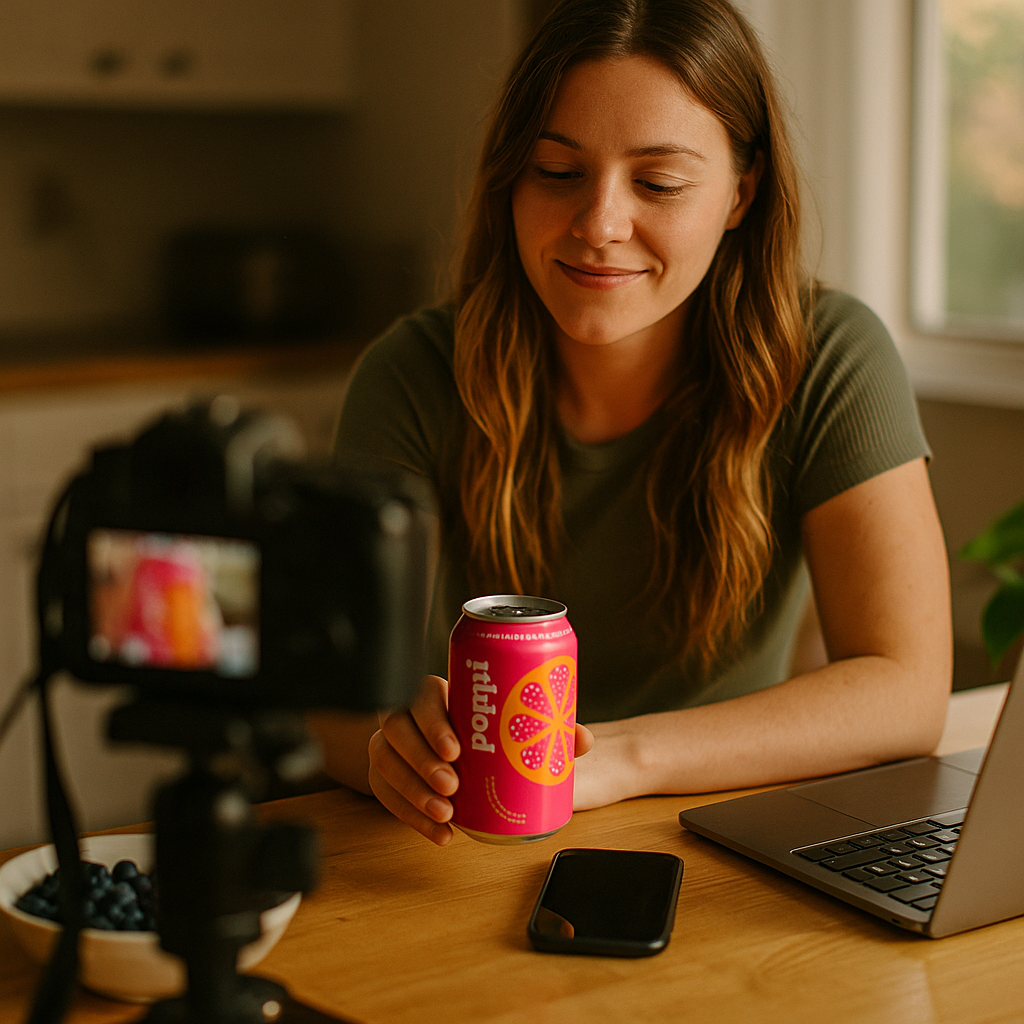
A $8.9 million class-action settlement over prebiotic health claims could have sunk a soda brand overnight. Instead, Poppi turned its lawsuit fallout into a masterclass in brand trust recovery, using founder-led kitchen-table videos to rebuild credibility one honest conversation at a time. Here’s how the strategy actually worked, and what it means for any brand facing a compliance crisis.
The Lawsuit That Threatened Everything
Poppi built its entire brand story on gut health. “Prebiotic soda” wasn’t just a product category, it was the reason millions of consumers switched from Coke and Pepsi to a $4.50 can promising better digestion. Then came the lawsuit alleging the amount of prebiotic fiber in each can was too negligible to deliver the health benefits Poppi marketed so aggressively.
The brand settled for roughly $8.9 million in early 2025, without admitting wrongdoing. But settlements don’t erase headlines. And in a category where trust is the entire value proposition, a lawsuit alleging false health claims isn’t a legal footnote. It’s an existential threat.
Compare this to what happens when a functional beverage brand loses its “functional” credibility. Olipop, Poppi’s closest competitor, had spent years building consumer trust through creator whitelisting and ingredient transparency. Poppi needed a way back into that same conversation, fast, and without sounding defensive.
When a health claims lawsuit becomes public, silence reads as guilt and corporate statements read as spin. The only credible response left is radical, humanized transparency.
Why Poppi Chose the Kitchen Table Over the Boardroom
Most brands respond to litigation with a press release, a legal disclaimer, or nothing at all. Poppi did something different: it put its co-founder, Allison Ellsworth, in front of a camera in an actual kitchen, talking through the science, the sourcing, and the mistakes in plain language.
No teleprompter energy. No polished studio lighting. Just a founder answering the questions consumers were already asking in comment sections and group chats: Does this stuff actually work? What’s really in the can? Why should I trust you again?
The format mattered as much as the message. Kitchen-table content signals authenticity in a way corporate statements never can. It borrows the visual language of home cooking influencers and everyday creators, the same aesthetic that makes TikTok and Instagram feel more trustworthy than traditional advertising to Gen Z and millennial audiences.
This wasn’t accidental. Research from eMarketer has repeatedly shown that consumers rate creator and founder-led content as more trustworthy than brand-produced advertising, particularly among audiences under 40. Poppi’s team understood that recovering trust required borrowing the credibility of the format, not just controlling the message.
The Content Series, Breaks Down Like This
- Ingredient transparency videos: Ellsworth walking through the exact prebiotic fiber content, sourcing partners, and manufacturing process, answering the lawsuit’s core allegation directly rather than dancing around it.
- Founder Q&A segments: Unscripted responses to real consumer comments pulled from social media, including the harshest critiques.
- Behind-the-scenes formulation content: Showing the actual product development process, positioning Poppi as a brand willing to show its work.
- Creator collaboration pieces: Partnering with registered dietitians and nutrition-focused creators to independently verify claims, rather than relying solely on brand messaging.
That last point deserves attention. Poppi didn’t just talk about itself. It brought in third-party nutrition voices, people with professional credibility and existing audiences, to validate the reformulated claims. That’s a textbook E-E-A-T move: expertise, authoritativeness, and trust, borrowed from credentialed creators rather than manufactured by the brand alone.
Did It Actually Rebuild Trust, or Just Buy Time?
This is the question every skeptical CMO should be asking. Kitchen-table content is cheap to produce and easy to greenlight. But does it move the needle on actual brand metrics, or is it just a PR palliative?
Early indicators suggest genuine recovery rather than a cosmetic fix. Social sentiment tracking showed comment sections shifting from accusatory to curious within weeks of the series launch. Engagement rates on the founder videos reportedly outperformed Poppi’s standard product content by a wide margin, a pattern consistent with what Sprout Social has documented broadly: transparency content tends to outperform promotional content during trust-recovery periods.
Retail velocity data matters more than sentiment, though. Poppi didn’t report a collapse in shelf performance post-settlement, which suggests the lawsuit dented perception without triggering mass defection. That’s the difference between a brand crisis and a brand death spiral: the former is recoverable with the right content strategy, the latter usually isn’t.
Trust recovery isn’t measured in press coverage. It’s measured in repeat purchase rate and whether your comment sections stop asking “is this a scam?”
What Other Brands Get Wrong About Crisis Content
Most brand trust recovery efforts fail because they optimize for legal safety instead of consumer connection. Legal teams want carefully worded statements. Consumers want a human being who sounds like they actually care.
Poppi’s approach threaded that needle by keeping legal-safe language (no admission of wrongdoing, no overpromising on reformulated claims) wrapped inside an emotionally honest format. The founder wasn’t reading from a script defending the lawsuit. She was talking through what changed and why, the same way a friend might explain a mistake over coffee.
This is a pattern worth studying alongside other brands that used founder-led or nano-creator strategies to rebuild category trust from scratch. Chomps built its meat stick category through consistent creator seeding rather than big-budget campaigns, and Fly By Jing built cult credibility the same way: slow, consistent, human-scale content that compounds trust over time rather than buying it with a single campaign.
Compliance-driven brands in supplements, skincare, and functional food should take particular note. The FTC has increased scrutiny on health and wellness marketing claims, and the FTC’s endorsement guidelines make clear that both brands and the creators promoting them share liability for unsubstantiated claims. That regulatory reality makes founder-led transparency content not just a PR tactic, but a genuine risk mitigation strategy: it’s harder to accuse a brand of deception when the founder is proactively explaining the limits of the product’s claims on camera.
The Operational Lesson for Marketing Teams
If you’re a brand strategist reading this wondering “could we pull this off,” the honest answer is: only if your leadership is willing to appear on camera without a script. Kitchen-table content works because it’s unpolished. The moment legal or PR insists on scripting every word, the format collapses into the same corporate-speak it’s meant to replace.
Practical steps for marketing teams considering a similar playbook:
- Get legal and marketing in the same room early, not sequentially. The content needs to be simultaneously honest and compliant, which requires collaboration rather than a legal veto after the fact.
- Identify a genuine spokesperson, ideally a founder or senior operator, who can speak credibly and isn’t visibly reading talking points.
- Bring in independent, credentialed voices (dietitians, scientists, industry experts) to corroborate claims rather than relying solely on brand assertion.
- Measure sentiment shift and repeat purchase behavior, not just view counts. Vanity metrics won’t tell you if trust actually recovered.
This mirrors lessons from brands like YETI’s category-building approach, where consistent, credible storytelling outperformed paid media at building durable brand equity. Trust, once damaged, gets rebuilt the same slow way it was originally built: through repeated, credible, human contact with an audience.
The Bigger Shift: Litigation Response as Content Strategy
Poppi’s case signals something larger for the influencer and creator economy. Crisis communications used to live entirely in the PR department, walled off from the marketing team’s day-to-day content calendar. That wall is coming down.
Brands facing regulatory or legal scrutiny increasingly need content strategists who understand both compliance risk and creator-economy dynamics. The kitchen-table format Poppi used borrows directly from creator content conventions, the same conventions brands use to seed products through nano-creator campaigns and grassroots seeding strategies. The line between “everyday marketing content” and “crisis response content” is disappearing, and brands that treat them as separate disciplines will move too slowly when a lawsuit actually lands.
What This Means for Your Brand’s Next Crisis
Poppi didn’t avoid the lawsuit. It couldn’t. But it controlled what came after, choosing radical transparency over legal minimalism, and a kitchen table over a corporate statement. If your brand is sitting on unresolved compliance risk right now, the lesson isn’t “hope it doesn’t happen.” It’s “build the founder-led trust infrastructure before you need it.”
Frequently Asked Questions
What was Poppi’s prebiotic health claims lawsuit about?
The lawsuit alleged Poppi’s marketing overstated the health and digestive benefits of its prebiotic soda, claiming the actual amount of prebiotic fiber per can was too small to deliver the gut-health benefits advertised. Poppi settled for approximately $8.9 million without admitting wrongdoing.
How did Poppi rebuild consumer trust after the settlement?
Poppi launched a kitchen-table content series featuring co-founder Allison Ellsworth answering consumer questions directly, walking through ingredient sourcing and formulation, and partnering with registered dietitians to independently validate reformulated claims.
Why does founder-led content work better than corporate statements during a brand crisis?
Founder-led content signals authenticity and accountability in a way scripted corporate statements can’t. Consumers consistently rate unscripted, personal content as more trustworthy than traditional brand advertising, especially during trust-recovery periods following a scandal or lawsuit.
Can content strategy alone fix a legal or compliance crisis?
No. Content strategy works alongside legal settlement and product reformulation, not as a replacement for either. Poppi’s content series succeeded because it was paired with actual changes to labeling and marketing claims, not just a messaging pivot.
What can other brands learn from Poppi’s crisis response?
Brands facing regulatory or legal scrutiny should prioritize transparent, human-led content over defensive corporate statements, involve legal and marketing teams early in the process, and bring in independent experts to validate claims rather than relying solely on brand messaging.
Top Influencer Marketing Agencies
The leading agencies shaping influencer marketing in 2026
Agencies ranked by campaign performance, client diversity, platform expertise, proven ROI, industry recognition, and client satisfaction. Assessed through verified case studies, reviews, and industry consultations.
Moburst

-
2

The Shelf
Boutique Beauty & Lifestyle Influencer AgencyA data-driven boutique agency specializing exclusively in beauty, wellness, and lifestyle influencer campaigns on Instagram and TikTok. Best for brands already focused on the beauty/personal care space that need curated, aesthetic-driven content.Clients: Pepsi, The Honest Company, Hims, Elf Cosmetics, Pure LeafVisit The Shelf → -
3

Audiencly
Niche Gaming & Esports Influencer AgencyA specialized agency focused exclusively on gaming and esports creators on YouTube, Twitch, and TikTok. Ideal if your campaign is 100% gaming-focused — from game launches to hardware and esports events.Clients: Epic Games, NordVPN, Ubisoft, Wargaming, Tencent GamesVisit Audiencly → -
4

Viral Nation
Global Influencer Marketing & Talent AgencyA dual talent management and marketing agency with proprietary brand safety tools and a global creator network spanning nano-influencers to celebrities across all major platforms.Clients: Meta, Activision Blizzard, Energizer, Aston Martin, WalmartVisit Viral Nation → -
5

The Influencer Marketing Factory
TikTok, Instagram & YouTube CampaignsA full-service agency with strong TikTok expertise, offering end-to-end campaign management from influencer discovery through performance reporting with a focus on platform-native content.Clients: Google, Snapchat, Universal Music, Bumble, YelpVisit TIMF → -
6

NeoReach
Enterprise Analytics & Influencer CampaignsAn enterprise-focused agency combining managed campaigns with a powerful self-service data platform for influencer search, audience analytics, and attribution modeling.Clients: Amazon, Airbnb, Netflix, Honda, The New York TimesVisit NeoReach → -
7

Ubiquitous
Creator-First Marketing PlatformA tech-driven platform combining self-service tools with managed campaign options, emphasizing speed and scalability for brands managing multiple influencer relationships.Clients: Lyft, Disney, Target, American Eagle, NetflixVisit Ubiquitous → -
8

Obviously
Scalable Enterprise Influencer CampaignsA tech-enabled agency built for high-volume campaigns, coordinating hundreds of creators simultaneously with end-to-end logistics, content rights management, and product seeding.Clients: Google, Ulta Beauty, Converse, AmazonVisit Obviously →