


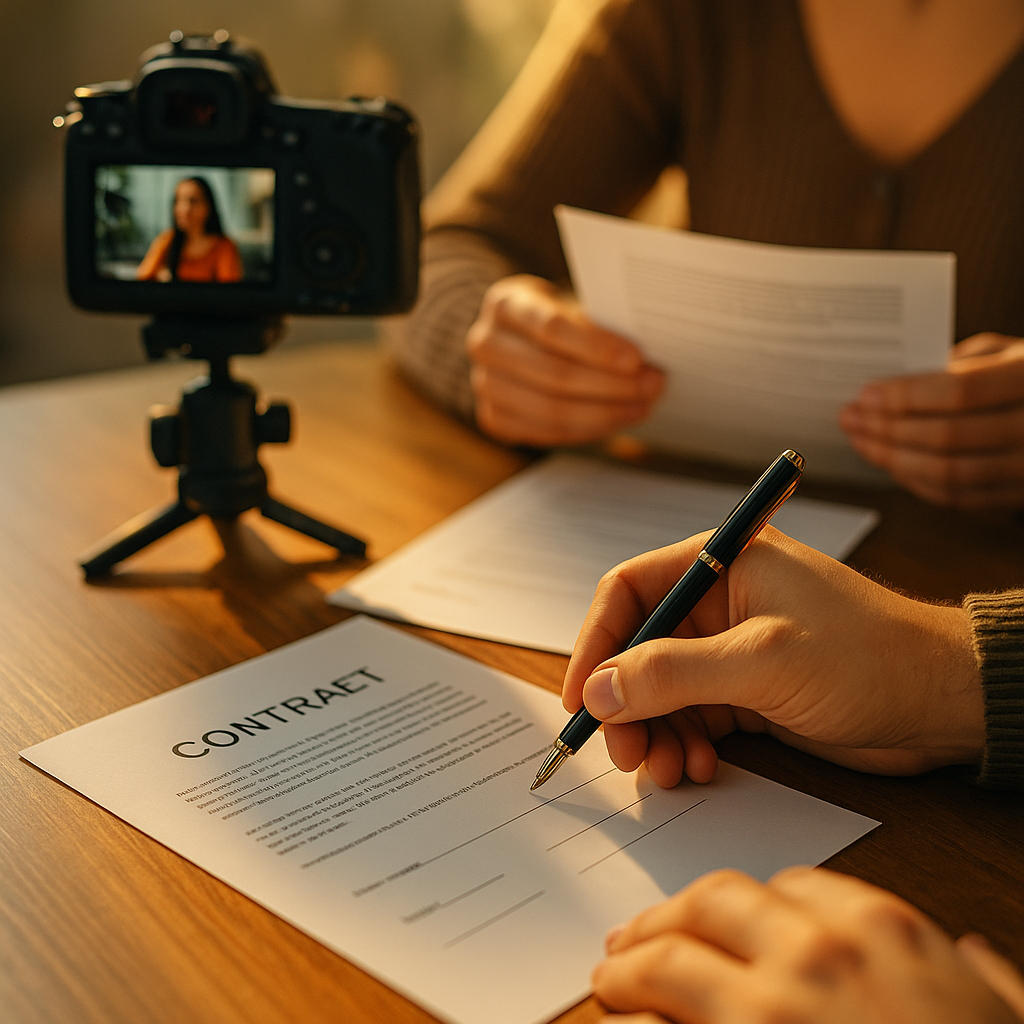
An AI agent scans 40,000 creator profiles, ranks them by engagement velocity, and signs three contracts before your legal team finishes coffee. No human reviewed the creators’ history, disclosure record, or brand safety flags. If one of them turns out to be running an undisclosed political ad or has a prior FTC consent decree, who’s holding the bag? Indemnification clauses written for human-mediated deals were never built for this. And most brands haven’t rewritten them.
This isn’t a hypothetical. Agentic procurement tools are already selecting influencers, negotiating rates, and executing contracts with minimal human sign-off. The legal exposure is real, and it’s arriving faster than most compliance teams can draft against it.
The Liability Gap Nobody’s Pricing In
Traditional creator agreements assume a human vetted the talent. Someone on the brand or agency side checked past content, ran a background scan, confirmed the creator wasn’t on a platform’s shadow-ban list. The indemnification clause then allocates risk based on that due diligence: the creator indemnifies the brand for their own misconduct, the brand indemnifies the creator for brand-supplied claims, and everyone assumes good faith vetting happened upstream.
Autonomous agent selection breaks that assumption entirely. The agent doesn’t “vet” in any legally meaningful sense. It optimizes for a proxy metric — engagement rate, follower growth, brand-fit score — and contracts follow automatically. There’s no human decision point to anchor a negligence defense, and there’s no clear party to blame when the agent’s training data or matching logic produces a bad pick.
If your indemnification clause still assumes a human approved the creator relationship, it’s already obsolete the moment an AI agent has autonomous contracting authority.
This matters because indemnification is fundamentally about risk allocation under uncertainty. When the uncertainty shifts — from “did we vet properly” to “did our AI system perform as designed” — the clause has to shift too. Courts will ask different questions. Regulators will too, particularly the FTC, which has already signaled interest in AI-driven marketing decisions under Section 5 authority (see the agency’s ongoing guidance at ftc.gov).
What Changes When the Contracting Party Is an Algorithm
Three structural shifts should drive how you draft indemnification language:
- No vetting record exists in the traditional sense. You can’t point to a compliance checklist a human filled out. Instead, you have model logs, training data provenance, and matching criteria — a different evidentiary trail entirely.
- The agent vendor becomes a third risk-bearing party. It’s no longer just brand and creator. Whoever built or licensed the agent (an internal tool, a platform like an influencer marketplace, or a third-party AI vendor) now sits in the liability chain.
- Speed eliminates the pause points where legal review used to happen. Contracts execute in minutes. There’s often no window for a human to catch a red flag before the deal is live.
This is structurally similar to problems brands are already wrestling with in AI-driven media buying. If you’ve read our piece on indemnification clauses for AI media-buying agent errors, the logic transfers directly: when a machine executes a transaction, indemnification has to cover both the transaction’s outcome and the system’s decision-making process.
Three-Party Risk, Not Two
Draft your clause assuming three indemnifying parties, not two. Brand, creator, and AI agent operator (whether that’s an internal team or an external vendor like a creator-matching platform) each need defined obligations. If your agent runs on a third-party platform, that platform’s terms of service almost certainly disclaim liability for “matching outcomes.” Read those terms before you sign anything. Most vendors will not indemnify you for a bad creator match; they’ll frame it as a tool, not a decision-maker, which conveniently leaves you holding the risk.
Drafting the Clause: What Actually Needs to Be In There
Here’s where most brand legal teams get generic. A boilerplate mutual indemnification clause pulled from a template library will not hold up when the fact pattern involves autonomous selection. Specificity is your friend here.
- Define “selection” as a contractible event. Specify exactly when and how the AI agent’s selection triggers legal obligations. Was there a human approval gate? A confidence-score threshold below which a person must review? Document it in the contract itself, not just internal policy.
- Require a pre-contract compliance snapshot. Even if a human doesn’t manually vet each creator, the agent should be required to pull and log a compliance snapshot — prior FTC actions, platform strikes, known brand safety flags — before finalizing any contract. Make this a condition precedent to indemnification coverage, not an afterthought.
- Carve out “known unknowns” the agent can’t detect. Undisclosed paid political activity, private legal disputes, or content deleted before the agent’s crawl are all things an AI system realistically cannot catch. Your clause needs language addressing what happens when harm arises from something genuinely undiscoverable at contract time, versus something the agent should have flagged.
- Tie indemnification triggers to disclosure and FTC compliance specifically. Given how much creator risk centers on endorsement disclosure failures, build indemnification language that explicitly covers FTC Endorsement Guide violations, not just generic “breach of contract” language. Our breakdown of FTC vs platform compliance gaps is a useful reference point for where these failures typically originate.
- Cap and allocate AI-vendor liability separately. If a third-party agent vendor is involved, negotiate a distinct liability cap and indemnification carve-out for vendor-side system failures (bad matching logic, corrupted training data, algorithmic bias claims). Don’t let this get folded into the general creator indemnification section — it’s a different risk category entirely.
A 2024 Deloitte survey found nearly 70% of marketing leaders expect generative AI tools to influence media and creator decisions within two years — yet fewer than a third had updated contract templates to reflect that shift.
That gap between adoption speed and legal readiness is exactly where brands get burned. It’s the same pattern we’ve tracked in AI agent media-buying liability riders — tools moving faster than the paper that’s supposed to govern them.
Where This Intersects With Data and Consent Law
Autonomous creator selection doesn’t happen in a vacuum. The agent is processing personal data — creator profiles, audience demographics, performance history — to make its picks. That triggers data protection obligations layered on top of contractual indemnification. If your AI matching tool touches EU audiences or creators, GDPR Article 22’s rules on automated decision-making are directly relevant, and you’ll want a data processing agreement that complements your indemnification clause rather than contradicting it. We’ve covered this in detail in our guide to AI creator-matching DPAs.
Don’t treat indemnification and data governance as separate workstreams. A creator harmed by a discriminatory or opaque matching algorithm may have both a contract claim and a data protection claim, and your indemnification language should anticipate that overlap rather than leaving it to be litigated separately. For broader platform-contract context, our piece on data governance clauses for AI marketing platforms lays out the adjacent obligations worth cross-referencing.
Practical Guardrails Beyond the Contract Itself
Contract language is necessary but not sufficient. Pair your indemnification clause with operational controls:
- Set a confidence threshold for human review. Anything below, say, 85% brand-fit confidence should route to a human before contracting, not after.
- Audit the agent’s decision logs quarterly. Treat this the way you’d treat a media-buying audit — check for pattern failures, not just individual incidents.
- Keep a kill switch. Your legal team should be able to pause autonomous contracting instantly if a systemic issue surfaces, without a lengthy vendor escalation process.
Industry data from eMarketer shows influencer marketing spend continuing to climb even as brand safety incidents rise in parallel — a reminder that scale without governance is exactly how these gaps get exploited. HubSpot’s research on marketing operations (hubspot.com) similarly points to automation adoption consistently outpacing risk-management maturity across marketing functions generally, not just influencer programs.
What to Do This Quarter
Pull your current creator agreement template and check one thing: does the indemnification clause mention AI, automated selection, or algorithmic matching anywhere? If not, that’s your starting point. Get legal, procurement, and whoever owns your AI tooling in one room, and rewrite the clause before your next autonomous contracting cycle runs — not after the first incident forces your hand.
Frequently Asked Questions
Do standard influencer contract templates cover AI-selected creators?
No. Most standard templates assume human vetting occurred before contracting, which creates a coverage gap the moment an AI agent selects and contracts with a creator autonomously. Brands need to explicitly rewrite indemnification language to address algorithmic selection.
Who is liable if an AI agent contracts with a creator who has a history of FTC violations?
Liability typically depends on whether the contract required a pre-selection compliance check and whether that check reasonably should have caught the violation. Well-drafted indemnification clauses assign this risk explicitly among the brand, the creator, and any third-party AI vendor involved.
Should the AI vendor be included in the indemnification clause?
Yes. If a third-party platform or tool powers the autonomous selection, its liability for matching failures should be addressed separately from creator-side indemnification, with its own caps and carve-outs.
How does GDPR Article 22 relate to AI creator selection indemnification?
Article 22 restricts fully automated decisions with legal or similarly significant effects on individuals. If your AI agent’s selection process touches EU creators or audiences, you need a data processing agreement alongside your indemnification clause to cover automated decision-making obligations.
What’s the single biggest mistake brands make with these clauses?
Treating AI-driven contracting as a minor variation of standard influencer deals rather than a distinct risk category requiring its own compliance snapshot, review thresholds, and vendor-specific liability allocation.
Frequently Asked Questions
Do standard influencer contract templates cover AI-selected creators?
No. Most standard templates assume human vetting occurred before contracting, which creates a coverage gap the moment an AI agent selects and contracts with a creator autonomously. Brands need to explicitly rewrite indemnification language to address algorithmic selection.
Who is liable if an AI agent contracts with a creator who has a history of FTC violations?
Liability typically depends on whether the contract required a pre-selection compliance check and whether that check reasonably should have caught the violation. Well-drafted indemnification clauses assign this risk explicitly among the brand, the creator, and any third-party AI vendor involved.
Should the AI vendor be included in the indemnification clause?
Yes. If a third-party platform or tool powers the autonomous selection, its liability for matching failures should be addressed separately from creator-side indemnification, with its own caps and carve-outs.
How does GDPR Article 22 relate to AI creator selection indemnification?
Article 22 restricts fully automated decisions with legal or similarly significant effects on individuals. If your AI agent’s selection process touches EU creators or audiences, you need a data processing agreement alongside your indemnification clause to cover automated decision-making obligations.
What’s the single biggest mistake brands make with these clauses?
Treating AI-driven contracting as a minor variation of standard influencer deals rather than a distinct risk category requiring its own compliance snapshot, review thresholds, and vendor-specific liability allocation.
Top Influencer Marketing Agencies
The leading agencies shaping influencer marketing in 2026
Agencies ranked by campaign performance, client diversity, platform expertise, proven ROI, industry recognition, and client satisfaction. Assessed through verified case studies, reviews, and industry consultations.
Moburst

-
2

The Shelf
Boutique Beauty & Lifestyle Influencer AgencyA data-driven boutique agency specializing exclusively in beauty, wellness, and lifestyle influencer campaigns on Instagram and TikTok. Best for brands already focused on the beauty/personal care space that need curated, aesthetic-driven content.Clients: Pepsi, The Honest Company, Hims, Elf Cosmetics, Pure LeafVisit The Shelf → -
3

Audiencly
Niche Gaming & Esports Influencer AgencyA specialized agency focused exclusively on gaming and esports creators on YouTube, Twitch, and TikTok. Ideal if your campaign is 100% gaming-focused — from game launches to hardware and esports events.Clients: Epic Games, NordVPN, Ubisoft, Wargaming, Tencent GamesVisit Audiencly → -
4

Viral Nation
Global Influencer Marketing & Talent AgencyA dual talent management and marketing agency with proprietary brand safety tools and a global creator network spanning nano-influencers to celebrities across all major platforms.Clients: Meta, Activision Blizzard, Energizer, Aston Martin, WalmartVisit Viral Nation → -
5

The Influencer Marketing Factory
TikTok, Instagram & YouTube CampaignsA full-service agency with strong TikTok expertise, offering end-to-end campaign management from influencer discovery through performance reporting with a focus on platform-native content.Clients: Google, Snapchat, Universal Music, Bumble, YelpVisit TIMF → -
6

NeoReach
Enterprise Analytics & Influencer CampaignsAn enterprise-focused agency combining managed campaigns with a powerful self-service data platform for influencer search, audience analytics, and attribution modeling.Clients: Amazon, Airbnb, Netflix, Honda, The New York TimesVisit NeoReach → -
7

Ubiquitous
Creator-First Marketing PlatformA tech-driven platform combining self-service tools with managed campaign options, emphasizing speed and scalability for brands managing multiple influencer relationships.Clients: Lyft, Disney, Target, American Eagle, NetflixVisit Ubiquitous → -
8

Obviously
Scalable Enterprise Influencer CampaignsA tech-enabled agency built for high-volume campaigns, coordinating hundreds of creators simultaneously with end-to-end logistics, content rights management, and product seeding.Clients: Google, Ulta Beauty, Converse, AmazonVisit Obviously →