


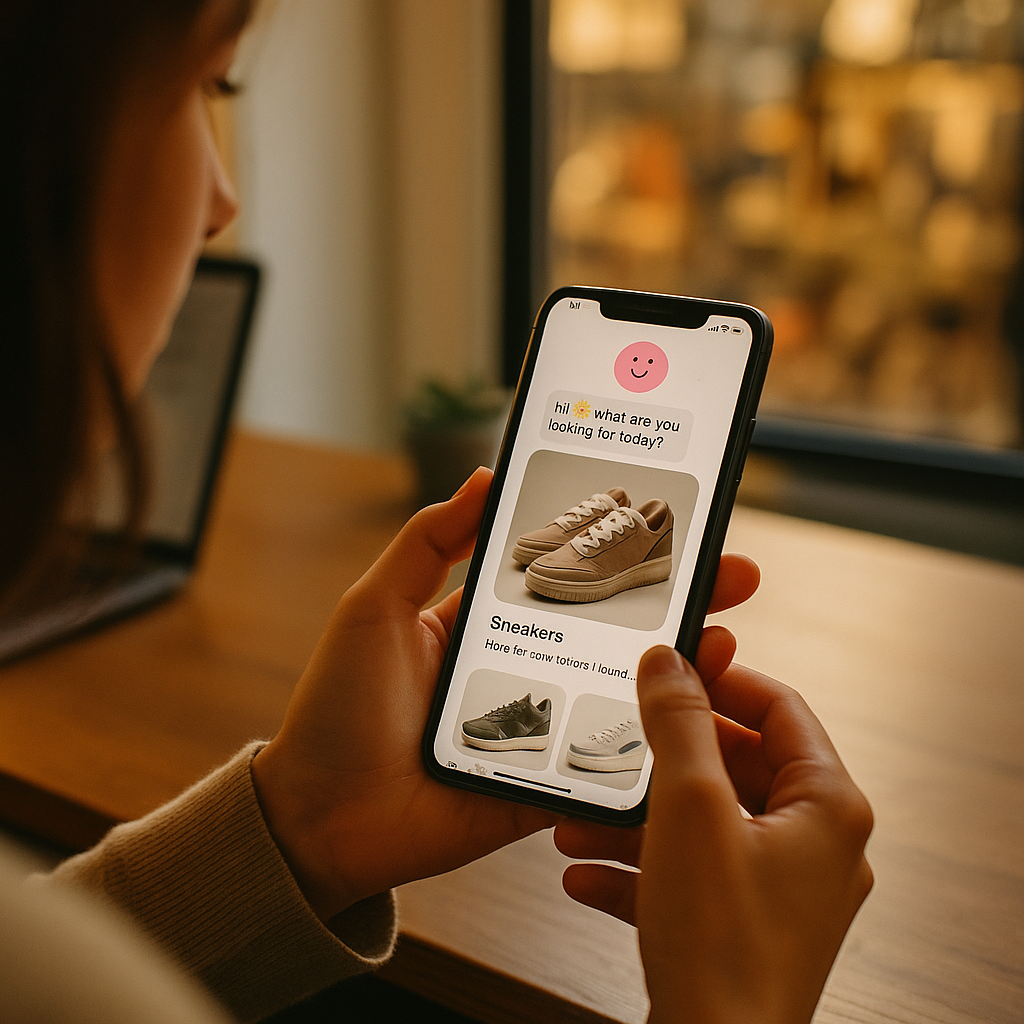
Klarna processed over 100 million shopping interactions through its AI assistant last year, and most brand marketers still treat it as a checkout widget. That’s a mistake. The Klarna AI shopping assistant is turning into something closer to a discovery engine, sitting between intent and purchase in a spot brands have never had to defend before.
So the question isn’t whether Klarna’s AI matters. It’s whether your brand has any visibility into how it’s recommending, ranking, or ignoring you.
What Klarna’s Assistant Actually Does Now
Klarna’s assistant started as a customer service layer, handling refunds and payment questions through a chatbot built on OpenAI’s models. That framing is outdated. Klarna has spent the past several product cycles pushing the assistant upstream, into pre-purchase search, price comparison, and product recommendation. Users can now ask it to find a product across retailers, compare prices, and get a synthesized answer with links to buy, no browsing required.
That’s discovery. Not the SEO kind, not the paid-social kind, but a third lane: conversational commerce where an AI agent mediates between a shopper’s vague intent (“I need a waterproof jacket under $150 for hiking in the rain”) and a specific product decision. Klarna sits at the point of payment for over 800,000 merchants globally, which gives it a distribution advantage most AI shopping tools don’t have. It’s not trying to become a search engine. It already has the transaction relationship.
Klarna isn’t competing with Google for search intent. It’s competing with the entire funnel above checkout, using a payments relationship most retailers already depend on.
Why This Is Different From Other AI Shopping Surfaces
Brands have spent the last year and a half getting their heads around Perplexity Shopping, ChatGPT, and Google’s AI Mode as emerging discovery channels. Klarna is a different animal for one structural reason: it sits inside the purchase flow, not upstream of it.
When a shopper opens Klarna to pay for something, or opens the Klarna app to browse before buying, they’re already primed to transact. Compare that to asking ChatGPT for gift ideas, where the user might be three steps and two tabs away from ever completing a purchase. Klarna’s assistant closes that gap almost immediately.
That proximity to payment changes the incentive structure for brands. It’s less about being cited in a generative answer and more about being surfaced in a recommendation that ends in a completed transaction, often in the same session. Klarna has publicly reported that assistant-driven interactions correlate with faster checkout times and, in some markets, higher average order values, though independent verification of these figures is still thin. Treat vendor-reported lift numbers with appropriate skepticism until third-party data catches up.
The Discovery-to-Checkout Compression Problem
Here’s the uncomfortable part for brand marketers: the more compressed the path from discovery to checkout, the less room there is for traditional brand-building touchpoints. No retargeting window. No cart abandonment email. No influencer content nudging a browser back to consideration. If Klarna’s assistant becomes a meaningful share of a category’s traffic, brands lose some of the multi-touch attribution and remarketing leverage they’ve built entire martech stacks around.
This isn’t hypothetical. It’s the same compression problem retailers dealt with when voice assistants first threatened to become purchase intermediaries, except Klarna already has the payment rails and merchant relationships to make it stick.
Where the Risk Actually Sits
Three things marketers should be watching closely, not just one.
- Ranking opacity. Klarna hasn’t published detailed criteria for how products get surfaced or ranked within assistant responses. Is it price? Merchant relationship tier? Historical conversion data? Nobody outside Klarna knows for sure, and that’s a governance gap brands need to flag internally before they lean on the channel.
- Data access asymmetry. Brands selling through merchants that integrate Klarna get almost no reporting on assistant-driven impressions or recommendation frequency. Compare that to the reporting maturity of platforms like Meta or TikTok Shop, and it’s a stark gap.
- Compliance exposure. Any AI system making product recommendations that influence purchase decisions sits close to the kind of algorithmic transparency scrutiny regulators have been building toward. The FTC has signaled increasing interest in AI-driven commerce disclosures, and the ICO has flagged automated decision-making as a compliance area to watch in retail contexts.
None of this means brands should avoid the channel. It means treating Klarna’s assistant the way you’d treat any new, low-transparency ad or discovery surface: test small, document everything, and don’t overcommit budget before you understand the mechanics.
Should Retail Brands Actually Prioritize This Now?
Depends entirely on category and merchant relationship. If you’re a DTC apparel or home goods brand selling through retailers who’ve deeply integrated Klarna’s checkout and assistant features, you already have exposure whether you’ve optimized for it or not. If you’re B2B or a low-consideration category where Klarna’s BNPL model doesn’t apply, this is a watch-and-wait situation, not an urgent build.
For brands in the former camp, three practical moves make sense right now:
- Audit your product feed data. Klarna’s assistant, like most AI shopping tools, pulls from structured product data. Incomplete or inconsistent feeds mean you simply won’t surface, regardless of demand.
- Talk to your retail partners about visibility. Ask directly what reporting they get from Klarna on assistant-driven traffic and recommendations. Most won’t have a clear answer yet, and that itself is useful intelligence.
- Treat it as a discovery test, not a media buy. There’s no ad unit to purchase here, at least not yet. What you can control is data hygiene, pricing competitiveness, and merchant partnerships that determine whether you even enter the assistant’s consideration set.
This mirrors a broader shift happening across AI-mediated commerce. Retail media and search teams evaluating AI shopping surfaces for Q1 planning are already running similar audits against Perplexity and Google’s AI Mode. Klarna just adds a payments-native layer to that same evaluation framework.
The Infrastructure Question Nobody’s Asking Loudly Enough
Klarna’s assistant runs on large language model infrastructure, and brands should be asking what’s underneath it. Retrieval quality, product data indexing, and how recommendations get ranked all depend on the underlying architecture. This is the same conversation happening across martech more broadly, where vendors evaluating vector databases for content retrieval, as covered in comparisons of Pinecone, Weaviate, and Qdrant, are wrestling with similar tradeoffs between speed, accuracy, and cost.
Brands don’t need to understand Klarna’s tech stack in depth. But asking retail partners “what’s powering the recommendation logic” is a fair and increasingly necessary question, especially as calls for AI model transparency from marketing vendors grow louder across the industry.
If a vendor can’t explain how its AI ranks your product against a competitor’s, that’s not a minor detail. It’s the entire ballgame for discovery-stage marketing.
What This Means for Budget Allocation
Don’t reallocate significant budget toward “Klarna optimization” yet, there’s no clear mechanism to buy visibility. What’s smarter is treating this the way sharp teams treated early TikTok Shop or Google AI Mode: small experimental budget, clear tracking of whatever data you can get, and a six-month review cycle. eMarketer data on BNPL adoption trends suggests Klarna’s user base skews toward younger, mobile-first shoppers, exactly the segment most likely to normalize AI-assisted shopping decisions over the next few product cycles.
Brands already running AI-native customer data platforms have an advantage here. If your CDP can flag segmentation shifts tied to new discovery channels, you’ll catch behavioral changes from Klarna-driven traffic faster than teams relying on static reporting.
The bigger strategic question is whether Klarna becomes a genuine discovery layer at scale, or stays a checkout-adjacent feature most shoppers use occasionally. Right now it’s somewhere in between, which is exactly why documenting your exposure matters more than optimizing for it.
Next step: pull your product feed data for any retailer using Klarna integration, confirm it’s complete and current, then ask that retail partner one direct question: what visibility do you get into Klarna’s assistant-driven recommendations? Their answer will tell you more about the risk than any vendor pitch will.
Frequently Asked Questions
What is Klarna’s AI shopping assistant?
It’s a conversational AI tool, built on large language model technology, that helps shoppers search for products, compare prices across retailers, and complete purchases, integrated directly with Klarna’s payment and merchant network.
How is Klarna’s assistant different from ChatGPT or Perplexity for shopping?
Klarna’s assistant sits inside the payment flow with existing merchant relationships across hundreds of thousands of retailers, while tools like ChatGPT and Perplexity operate further upstream in the discovery process without native checkout integration.
Can brands buy visibility in Klarna’s AI recommendations?
Not currently. There’s no advertised media buy or sponsored placement mechanism disclosed publicly. Visibility appears tied to product feed data quality, pricing, and merchant integration depth.
Does Klarna’s assistant threaten traditional retail media or search budgets?
Not yet at meaningful scale, but it compresses the discovery-to-purchase window in ways that could reduce remarketing opportunities if adoption grows, particularly in categories with high Klarna checkout penetration.
What should brands do right now about Klarna’s AI assistant?
Audit product feed data quality, ask retail partners what reporting they receive on assistant-driven traffic, and treat any investment as a small-scale test rather than a full channel commitment.
Top Influencer Marketing Agencies
The leading agencies shaping influencer marketing in 2026
Agencies ranked by campaign performance, client diversity, platform expertise, proven ROI, industry recognition, and client satisfaction. Assessed through verified case studies, reviews, and industry consultations.
Moburst

-
2

The Shelf
Boutique Beauty & Lifestyle Influencer AgencyA data-driven boutique agency specializing exclusively in beauty, wellness, and lifestyle influencer campaigns on Instagram and TikTok. Best for brands already focused on the beauty/personal care space that need curated, aesthetic-driven content.Clients: Pepsi, The Honest Company, Hims, Elf Cosmetics, Pure LeafVisit The Shelf → -
3

Audiencly
Niche Gaming & Esports Influencer AgencyA specialized agency focused exclusively on gaming and esports creators on YouTube, Twitch, and TikTok. Ideal if your campaign is 100% gaming-focused — from game launches to hardware and esports events.Clients: Epic Games, NordVPN, Ubisoft, Wargaming, Tencent GamesVisit Audiencly → -
4

Viral Nation
Global Influencer Marketing & Talent AgencyA dual talent management and marketing agency with proprietary brand safety tools and a global creator network spanning nano-influencers to celebrities across all major platforms.Clients: Meta, Activision Blizzard, Energizer, Aston Martin, WalmartVisit Viral Nation → -
5

The Influencer Marketing Factory
TikTok, Instagram & YouTube CampaignsA full-service agency with strong TikTok expertise, offering end-to-end campaign management from influencer discovery through performance reporting with a focus on platform-native content.Clients: Google, Snapchat, Universal Music, Bumble, YelpVisit TIMF → -
6

NeoReach
Enterprise Analytics & Influencer CampaignsAn enterprise-focused agency combining managed campaigns with a powerful self-service data platform for influencer search, audience analytics, and attribution modeling.Clients: Amazon, Airbnb, Netflix, Honda, The New York TimesVisit NeoReach → -
7

Ubiquitous
Creator-First Marketing PlatformA tech-driven platform combining self-service tools with managed campaign options, emphasizing speed and scalability for brands managing multiple influencer relationships.Clients: Lyft, Disney, Target, American Eagle, NetflixVisit Ubiquitous → -
8

Obviously
Scalable Enterprise Influencer CampaignsA tech-enabled agency built for high-volume campaigns, coordinating hundreds of creators simultaneously with end-to-end logistics, content rights management, and product seeding.Clients: Google, Ulta Beauty, Converse, AmazonVisit Obviously →