


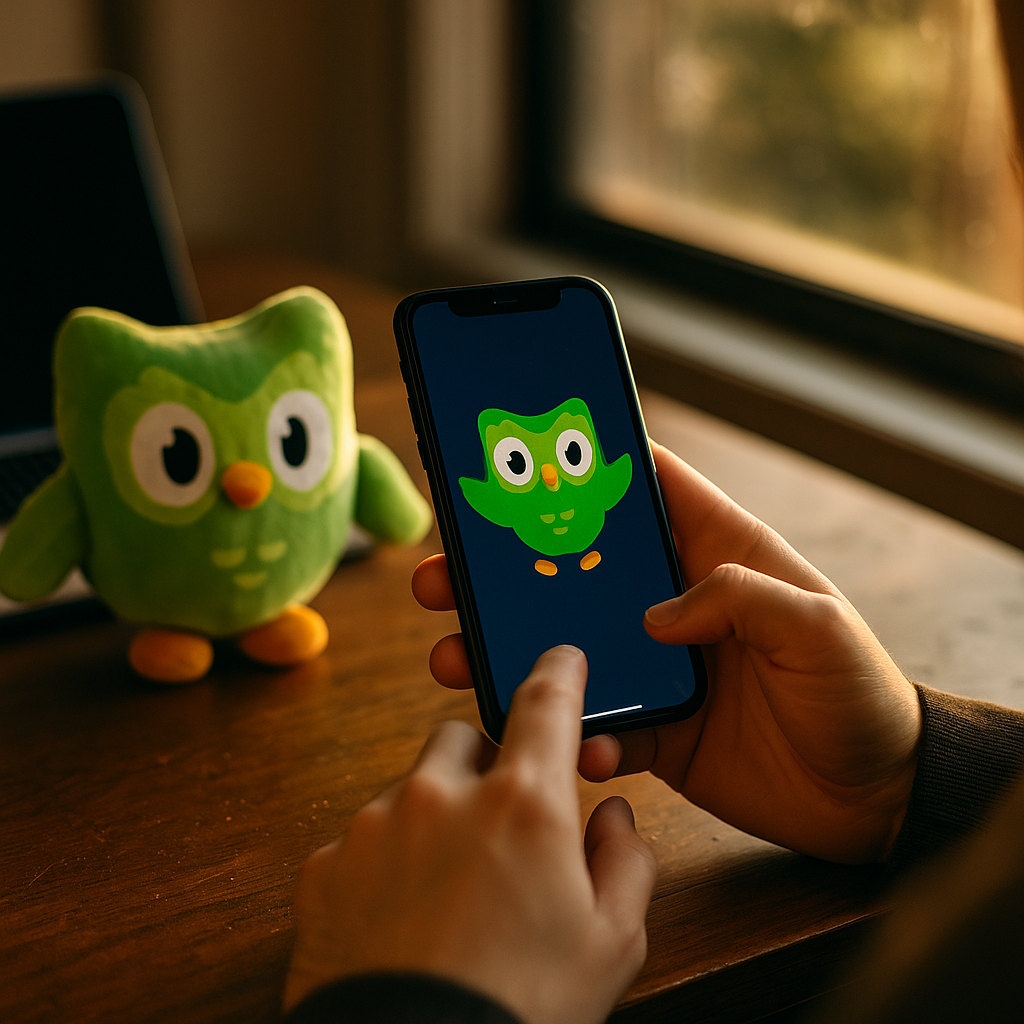
A brand account with 24 million TikTok followers spent essentially nothing on paid media to get there. That’s the Duolingo case study in one sentence, and it should make every CMO uncomfortable. The owl mascot didn’t go viral by accident. It went viral because Duolingo treated social content like a product, not a press release.
This isn’t a “be weird on TikTok” lesson. It’s a lesson in operational discipline disguised as chaos. Here’s how a language-learning app turned a mascot into a cultural fixture, and what that actually means for brands trying to replicate it without an owl of their own.
The Numbers Behind the Meme
Duolingo’s TikTok account regularly pulls tens of millions of views per post, with the brand’s owl, Duo, appearing in skits, trend hijacks, and increasingly bizarre stunts. The app has held top rankings in the education category on both app stores for years, and Duolingo has publicly credited social content as a primary driver of brand awareness that converts into downloads.
The company doesn’t run this like a side project. Duolingo built an internal team dedicated to short-form social content, separate from its performance marketing function, and gave that team unusual creative latitude. That structural choice matters more than any individual video. Most brands bottleneck social content through legal, brand, and paid media sign-off. Duolingo built a lane where the content team could post same-day, react to trends in hours, and kill ideas that flopped without a post-mortem meeting.
Duolingo’s owl strategy proves that consistent, fast, personality-driven content can outperform paid reach — but only if the brand builds the operational infrastructure to move at platform speed.
Why “Unhinged” Isn’t Actually Random
Watch enough Duo content and a pattern emerges. The owl is aggressive about streaks, mildly threatening about missed lessons, and self-aware about being a meme. That’s a character brief, not improv. Someone wrote rules for how the owl talks, what it will and won’t do, and where the line sits between “edgy” and “brand risk.”
That’s the part most brands skip. They want the chaotic energy without the guardrails that make chaos safe to publish. Duolingo’s content reads as spontaneous because the team has practiced the voice enough to move fast within it. This is the same principle behind how Dude Wipes used comedy to build an influencer strategy around a consistent, slightly absurd brand voice rather than one-off jokes.
Consistency is the unsexy secret. The owl shows up in the same tone whether it’s a trending audio remix or a stunt tied to a live event. Audiences don’t need to guess what the brand’s personality is. That predictability is what turns a funny video into a followed account.
Zero Ad Spend Doesn’t Mean Zero Cost
Here’s where the “no ad spend” headline gets misleading. Duolingo didn’t need a media budget because it invested in people, tools, and speed instead. That’s still a cost center, just a different line item. A dedicated social team, empowered to publish without heavy approval chains, is an operating expense that most marketing orgs underfund in favor of paid media.
Brands looking at this case study and hoping to skip the ad budget entirely are missing the actual trade. You’re not eliminating cost. You’re reallocating it from media spend to creative headcount and organizational trust.
That reallocation is uncomfortable for finance teams used to measuring marketing ROI through media efficiency ratios. Owned social content doesn’t have a clean CPM to report. It has views, shares, comment sentiment, and eventually, brand lift and download correlation. If your attribution model only understands paid channels, this playbook will look like it’s not working even when it is.
The Cross-Platform Extension Nobody Talks About
The owl didn’t stay on TikTok. Duolingo extended the character into Duolingo’s own app notifications, into merchandise drops, and into commerce activations that turned meme equity into actual revenue. That’s the part most case studies gloss over: virality is a top-of-funnel asset, and Duolingo built machinery to pull it down-funnel.
For a deeper look at how Duolingo converted its owl fandom into a shopping channel, this breakdown of the owl’s commerce pipeline covers the mechanics of turning UGC into transactions, which is the natural next question after “how did they get famous.”
This matters for anyone evaluating whether a mascot-led strategy is worth pursuing. Fame without a commerce or retention hook is just entertainment. Duolingo made sure the owl’s popularity fed back into app downloads, streak retention, and merch sales, not just impression counts that look good in a board deck.
What Brands Without a Mascot Can Actually Steal
Not every brand has (or needs) an owl. But the underlying mechanics transfer, and they’re the same mechanics showing up across other creator-led case studies Influencers Time has covered.
- Speed beats polish. Duolingo posts reactive content within hours of a trend forming. Compare that to brand teams that need two weeks and three rounds of legal review for a fifteen-second clip.
- One voice, applied everywhere. The owl’s personality is consistent across formats. Liquid Death does something similar with its aggressive, over-the-top tone across every channel, a strategy detailed in how Liquid Death built its billion-dollar brand without relying on traditional advertising.
- Community does the amplification. Duolingo leans on its own superfans creating owl fan art, parody accounts, and reaction content. That’s unpaid earned media, and it echoes how nano-creator ecosystems fuel brands like those in Wyze’s cult camera brand strategy.
- Small, frequent bets beat rare, expensive ones. Duolingo publishes constantly and lets the platform algorithm sort winners from misses. This mirrors the seeding logic behind Stanley’s nano-creator seeding playbook, where volume and iteration matter more than any single hero asset.
None of this requires a mascot budget. It requires a mandate to publish fast, a defined brand voice, and tolerance for the occasional flop. Most B2B and B2C marketing teams have none of the three.
The Risk Side Nobody Puts in the Case Study
An “unhinged” brand voice is one bad joke away from a PR problem. Duolingo has had posts pulled or edited after backlash, and the brand has had to walk a line between edgy and offensive more than once. That’s the real cost of this strategy: reputational risk that doesn’t show up in a performance dashboard until it’s already trending for the wrong reason.
Brand safety teams should treat mascot-led humor the same way they’d treat any creator partnership: with documented guardrails, a rapid response protocol, and clear escalation paths when a joke misses. The FTC’s guidance on endorsements and advertising is also relevant here, since mascot accounts blur the line between brand messaging and organic-feeling content in ways regulators are paying closer attention to.
There’s also a compliance angle brands underestimate: platform policy changes. TikTok’s algorithm shifts, content moderation updates, and regional restrictions can all disrupt a strategy this dependent on one platform’s reach. Diversifying the owl’s presence across Instagram, YouTube Shorts, and owned channels wasn’t just a growth play. It was risk mitigation against platform dependency, something every brand betting big on organic social should be doing per Sprout Social’s guidance on multi-platform content strategy.
Measuring What Actually Matters
If your KPI dashboard only tracks CPM and CPA, you’ll never justify this strategy to leadership. Duolingo’s marketing team has spoken publicly about tying social content to brand awareness lift and app store ranking correlation, not direct response metrics. That’s a harder story to tell in a QBR, but it’s the honest one.
Marketers replicating this should build a measurement framework before launching the content, not after. Track share-of-voice, branded search volume, and download attribution windows tied to viral spikes. Tools referenced across eMarketer’s research on organic social ROI can help frame these metrics in a way finance teams will actually accept.
If a mascot campaign only gets measured in views, it’s being managed like entertainment, not marketing. The brands that win tie fame back to a business metric within the same quarter.
Next Step
Don’t try to build an owl. Build the operating model that let the owl work: a dedicated content team, a documented voice, fast publishing cadence, and a measurement framework that connects virality to downloads or revenue before you greenlight a single unhinged skit.
FAQs
How did Duolingo grow its TikTok following without paid ads?
Duolingo built a dedicated internal social content team with the authority to publish quickly, react to trends in real time, and maintain a consistent, exaggerated brand voice through its owl mascot. The growth came from content speed and personality consistency, not media spend.
Can a B2B brand copy the Duolingo owl strategy?
The specific mascot tactic may not fit every B2B brand, but the underlying principles transfer: fast publishing, a consistent voice, and community-driven amplification. B2B brands like Duo Security have applied similar personality-driven content approaches to typically dry categories like cybersecurity.
What’s the actual cost of a “zero ad spend” social strategy?
It’s not free. Brands reallocate budget from media buying to creative headcount, faster approval workflows, and content production capacity. The investment shifts from paid reach to owned content infrastructure.
How does Duolingo turn viral content into revenue?
Duolingo extends the owl character into app notifications, retention mechanics, and merchandise, converting social fame into commerce and app engagement rather than treating virality as a standalone entertainment metric.
What are the risks of an “unhinged” brand voice on social media?
The main risks are reputational backlash from jokes that miss, dependency on a single platform’s algorithm, and regulatory scrutiny around how mascot content blurs advertising and organic content. Brands should build escalation protocols and diversify platform presence to mitigate these risks.
Top Influencer Marketing Agencies
The leading agencies shaping influencer marketing in 2026
Agencies ranked by campaign performance, client diversity, platform expertise, proven ROI, industry recognition, and client satisfaction. Assessed through verified case studies, reviews, and industry consultations.
Moburst

-
2

The Shelf
Boutique Beauty & Lifestyle Influencer AgencyA data-driven boutique agency specializing exclusively in beauty, wellness, and lifestyle influencer campaigns on Instagram and TikTok. Best for brands already focused on the beauty/personal care space that need curated, aesthetic-driven content.Clients: Pepsi, The Honest Company, Hims, Elf Cosmetics, Pure LeafVisit The Shelf → -
3

Audiencly
Niche Gaming & Esports Influencer AgencyA specialized agency focused exclusively on gaming and esports creators on YouTube, Twitch, and TikTok. Ideal if your campaign is 100% gaming-focused — from game launches to hardware and esports events.Clients: Epic Games, NordVPN, Ubisoft, Wargaming, Tencent GamesVisit Audiencly → -
4

Viral Nation
Global Influencer Marketing & Talent AgencyA dual talent management and marketing agency with proprietary brand safety tools and a global creator network spanning nano-influencers to celebrities across all major platforms.Clients: Meta, Activision Blizzard, Energizer, Aston Martin, WalmartVisit Viral Nation → -
5

The Influencer Marketing Factory
TikTok, Instagram & YouTube CampaignsA full-service agency with strong TikTok expertise, offering end-to-end campaign management from influencer discovery through performance reporting with a focus on platform-native content.Clients: Google, Snapchat, Universal Music, Bumble, YelpVisit TIMF → -
6

NeoReach
Enterprise Analytics & Influencer CampaignsAn enterprise-focused agency combining managed campaigns with a powerful self-service data platform for influencer search, audience analytics, and attribution modeling.Clients: Amazon, Airbnb, Netflix, Honda, The New York TimesVisit NeoReach → -
7

Ubiquitous
Creator-First Marketing PlatformA tech-driven platform combining self-service tools with managed campaign options, emphasizing speed and scalability for brands managing multiple influencer relationships.Clients: Lyft, Disney, Target, American Eagle, NetflixVisit Ubiquitous → -
8

Obviously
Scalable Enterprise Influencer CampaignsA tech-enabled agency built for high-volume campaigns, coordinating hundreds of creators simultaneously with end-to-end logistics, content rights management, and product seeding.Clients: Google, Ulta Beauty, Converse, AmazonVisit Obviously →