


Every dollar spent on a one-off influencer post disappears the moment the campaign ends. No asset library. No reusable footage. No compounding value. That’s the quiet math problem behind most influencer budgets, and it’s why a growing number of brands are building an owned UGC library instead of renting reach one campaign at a time.
The shift isn’t cosmetic. It’s a structural rethink of what creator spend is supposed to buy.
Renting Reach Was Never a Great Deal
For most of the last decade, influencer marketing worked like media buying with a human face. Brand pays creator, creator posts, post gets a burst of impressions, then it’s gone. You didn’t own the content. You didn’t own the audience. You owned a screenshot in a campaign report.
That model made sense when reach was the goal and platforms rewarded native, in-feed content above all else. But budgets have matured, and so has scrutiny. Marketing leaders are now asked to justify creator spend the same way they justify any other line item: what’s the residual value? What happens to this asset after the campaign wraps?
Usually, the honest answer was: nothing. The content lived on the creator’s page, subject to their whims, their deletion habits, or their next brand deal with a competitor. Licensing terms were often vague or nonexistent, leaving legal and brand teams exposed. That’s not a scalable strategy — it’s a subscription to short-term attention with no equity built.
The real cost of “renting” creator content isn’t the fee you pay per post — it’s the zero residual value left when the campaign ends.
What an Owned UGC Library Actually Is
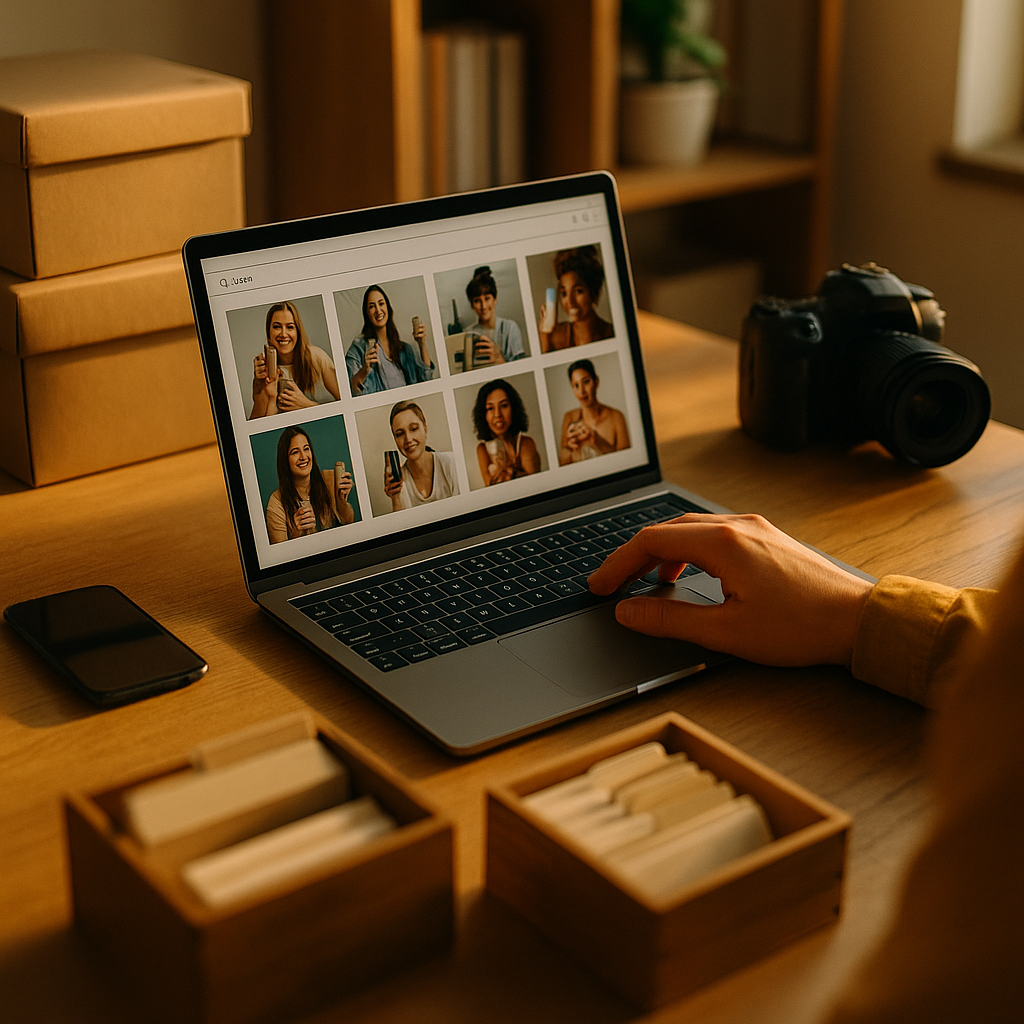
An owned UGC library is exactly what it sounds like: a centralized, licensed, searchable bank of creator-made assets that a brand can repurpose across paid social, email, product pages, retail media, and sales enablement decks — indefinitely, or for a clearly defined term.
Instead of commissioning a single Instagram Reel for a single campaign, brands are now structuring deals to capture:
- Raw, unedited footage alongside the final cut
- Multiple content variations (different hooks, CTAs, aspect ratios)
- Broad usage rights across owned and paid channels
- Metadata tagging for searchability (product, tone, format, demographic fit)
- Rights that extend beyond the original creator’s platform or region
The result looks less like a campaign archive and more like a stock footage library that happens to be built entirely from real customers and creators who actually use the product. It’s authentic content with the operational structure of a DAM (digital asset management) system.
This isn’t a niche tactic anymore. As creator spend approaches the kind of scale outlined in recent forecasts on creator channel maturity, brands are under pressure to prove that spend produces durable assets, not just a week of impressions.
Why the Economics Finally Make Sense
Three things converged to make owned libraries viable at scale.
First, UGC-style content became a legitimate paid social format in its own right. Meta and TikTok algorithms often reward native-feeling, lo-fi content over polished brand ads. That means a piece of creator content shot eighteen months ago can still outperform a fresh production if it’s got the right texture. Content doesn’t expire just because the campaign did.
Second, licensing costs stabilized as more brands standardized contracts around usage rights instead of one-off appearance fees. Agencies and creator marketplaces increasingly bundle broader usage terms into base rates rather than charging escalating fees per new placement. That makes the math on reuse dramatically better than it was even a couple of years ago.
Third — and this is the underrated one — AI-powered tagging and search tools made libraries actually usable. A library with 4,000 clips is worthless if nobody can find the one clip that fits a Tuesday paid social brief. Modern DAM platforms and creator marketplaces now auto-tag footage by product, sentiment, spoken keywords, and even estimated performance likelihood, turning a chaotic folder structure into a searchable, briefable resource.
A well-tagged UGC library turns creator content from a marketing expense into a compounding media asset — the same clip can fund a paid ad, a landing page, and a sales deck without a new negotiation each time.
The Operational Shift Nobody Talks About
Building a library sounds simple until you realize it changes who does what inside a marketing org. Brand teams that used to brief a single campaign now have to think like production studios: tagging systems, rights management, renewal calendars, and version control all become part of the job.
This mirrors a trend already playing out across UGC-heavy brands, where brand teams are increasingly functioning as production ops rather than pure marketing strategists. Someone has to own the taxonomy. Someone has to track which clips are cleared for paid use versus organic-only. Someone has to flag when a usage window is about to expire.
It also changes vendor conversations. Instead of asking “what does this creator charge per post,” procurement and marketing leads are asking “what’s the all-in cost per reusable asset, amortized over 12 months of usage.” That’s a fundamentally different negotiation, and it favors retainer-style creator relationships over one-off gigs, since ongoing partners produce a steadier, more predictable supply of licensable content.
Retainers, Not Renewals: Why the Math Lines Up
There’s a reason retainer models keep coming up in creator economics conversations. Data on creator deal renewals is not flattering to the industry: 63% of creator deals don’t renew, which means most brands are constantly re-sourcing, re-negotiating, and re-onboarding rather than compounding a relationship.
Owned UGC libraries flip that dynamic. When a brand locks in a retainer with broad usage rights upfront, every month of the relationship adds inventory to the library rather than closing out a one-time transaction. The creator gets predictable income. The brand gets a growing, reusable asset bank. Both sides have an incentive to keep the relationship going rather than restart the sourcing cycle every quarter.
Contrast that with the churn-heavy alternative: constantly onboarding new creators, negotiating new rates, and starting the rights conversation from zero every single time. It’s expensive in dollars and even more expensive in operational drag.
Where This Gets Complicated: Rights, Regions, and Reuse Limits
Nothing about “owned” is as simple as it sounds. Usage rights are jurisdiction-specific, platform-specific, and often time-boxed. A clip licensed for use in the US might not be cleared for a UK campaign without additional consent, particularly given how strict regulators like the ICO and the FTC are about disclosure and consumer protection in advertising.
Brands operating across multiple markets face an added wrinkle: localization. Reusing a UGC asset across regions often means re-subtitling, re-dubbing, or adapting the message entirely, which introduces its own cost structure — something already explored in coverage of AI-driven creator localization costs. A library asset that can’t travel across markets is only half as valuable as one that can.
There’s also the faceless-creator angle. Brands building libraries increasingly favor UGC specialist pools precisely because non-personality-driven content is easier to license broadly and reuse indefinitely without renegotiating every time a face becomes associated with a scandal or a competitor’s campaign. It’s a risk-mitigation choice as much as a creative one.
And then there’s platform risk. A library built entirely around vertical video assumes today’s dominant formats stay dominant. Given how differently platform algorithms actually behave, a smart library strategy tags content by format flexibility, not just by platform of origin, so assets can be reformatted quickly if the algorithmic winds shift.
Building One Without Starting From Zero
Brands don’t need an enterprise DAM rollout to start. A pragmatic build looks like this:
- Audit existing content. Most brands already have unlicensed or under-licensed UGC sitting in old campaign folders. Start there before commissioning anything new.
- Standardize contracts. Move from per-post fees to bundled rates that include broad, multi-channel usage rights and a defined reuse window (12-24 months is common).
- Tag at ingestion, not after. Require metadata (product, tone, region, format) as a deliverable condition, not a cleanup task for the internal team later.
- Prioritize retainer relationships with a core group of creators to build predictable, ongoing supply instead of one-off sourcing sprints.
- Set a renewal calendar. Track usage-rights expiration the same way you’d track a software license — because functionally, that’s what it is.
None of this requires exotic tooling. Platforms like Sprout Social and asset workflows built around Meta’s ad systems already support tagging and repurposing at a basic level. The bigger unlock is organizational discipline, not new software.
The Bottom Line for Budget Owners
The rent-versus-own comparison isn’t subtle once you run the numbers over a 12-month horizon. Renting audience attention through one-off posts means paying full price every time you need new content. Owning a library means each dollar spent keeps working long after the original campaign ends, across paid, owned, and sales channels alike.
That’s a better story for the CFO, a better story for the creator, and — if done with clean rights management — a better story for compliance too.
Next step: Before your next creator campaign brief goes out, add one line to the contract: broad usage rights, defined reuse window, deliverable-stage metadata tagging. That single clause is the difference between a disposable post and a growing asset.
FAQs
What is an owned UGC library?
An owned UGC library is a centralized, licensed collection of creator-generated content that a brand can legally reuse across multiple channels and campaigns, rather than content that exists only on a creator’s original post.
How is this different from a standard influencer campaign?
A standard campaign pays for a single placement with limited or no reuse rights. An owned UGC library requires negotiating broader usage rights, raw footage access, and metadata upfront so the content can be repurposed long after the original post goes live.
Do brands need special software to manage a UGC library?
Not necessarily. Many brands start with existing digital asset management tools or social platforms and layer in metadata tagging requirements at the contract stage. Purpose-built creator marketplaces increasingly offer tagging and rights-tracking features natively.
How long should usage rights last?
Terms vary, but 12 to 24 months is common for broad multi-channel usage. Perpetual rights are possible but usually cost more upfront and require clear buyout language to avoid future disputes.
Does building a UGC library reduce the need for new creator content?
It reduces redundant spend on repetitive briefs, but it doesn’t eliminate the need for fresh content. Libraries work best as a supplement to ongoing creator relationships, particularly retainer-based ones that keep adding new, licensable assets over time.
What’s the biggest legal risk with reusing creator content?
Unclear or expired usage rights are the most common issue, especially when content crosses borders or platforms not covered in the original agreement. Brands should align contracts with regulatory guidance from bodies like the FTC and ICO to avoid disclosure and consent violations.
FAQs
What is an owned UGC library?
An owned UGC library is a centralized, licensed collection of creator-generated content that a brand can legally reuse across multiple channels and campaigns, rather than content that exists only on a creator’s original post.
How is this different from a standard influencer campaign?
A standard campaign pays for a single placement with limited or no reuse rights. An owned UGC library requires negotiating broader usage rights, raw footage access, and metadata upfront so the content can be repurposed long after the original post goes live.
Do brands need special software to manage a UGC library?
Not necessarily. Many brands start with existing digital asset management tools or social platforms and layer in metadata tagging requirements at the contract stage. Purpose-built creator marketplaces increasingly offer tagging and rights-tracking features natively.
How long should usage rights last?
Terms vary, but 12 to 24 months is common for broad multi-channel usage. Perpetual rights are possible but usually cost more upfront and require clear buyout language to avoid future disputes.
Does building a UGC library reduce the need for new creator content?
It reduces redundant spend on repetitive briefs, but it doesn’t eliminate the need for fresh content. Libraries work best as a supplement to ongoing creator relationships, particularly retainer-based ones that keep adding new, licensable assets over time.
What’s the biggest legal risk with reusing creator content?
Unclear or expired usage rights are the most common issue, especially when content crosses borders or platforms not covered in the original agreement. Brands should align contracts with regulatory guidance from bodies like the FTC and ICO to avoid disclosure and consent violations.
Top Influencer Marketing Agencies
The leading agencies shaping influencer marketing in 2026
Agencies ranked by campaign performance, client diversity, platform expertise, proven ROI, industry recognition, and client satisfaction. Assessed through verified case studies, reviews, and industry consultations.
Moburst

-
2

The Shelf
Boutique Beauty & Lifestyle Influencer AgencyA data-driven boutique agency specializing exclusively in beauty, wellness, and lifestyle influencer campaigns on Instagram and TikTok. Best for brands already focused on the beauty/personal care space that need curated, aesthetic-driven content.Clients: Pepsi, The Honest Company, Hims, Elf Cosmetics, Pure LeafVisit The Shelf → -
3

Audiencly
Niche Gaming & Esports Influencer AgencyA specialized agency focused exclusively on gaming and esports creators on YouTube, Twitch, and TikTok. Ideal if your campaign is 100% gaming-focused — from game launches to hardware and esports events.Clients: Epic Games, NordVPN, Ubisoft, Wargaming, Tencent GamesVisit Audiencly → -
4

Viral Nation
Global Influencer Marketing & Talent AgencyA dual talent management and marketing agency with proprietary brand safety tools and a global creator network spanning nano-influencers to celebrities across all major platforms.Clients: Meta, Activision Blizzard, Energizer, Aston Martin, WalmartVisit Viral Nation → -
5

The Influencer Marketing Factory
TikTok, Instagram & YouTube CampaignsA full-service agency with strong TikTok expertise, offering end-to-end campaign management from influencer discovery through performance reporting with a focus on platform-native content.Clients: Google, Snapchat, Universal Music, Bumble, YelpVisit TIMF → -
6

NeoReach
Enterprise Analytics & Influencer CampaignsAn enterprise-focused agency combining managed campaigns with a powerful self-service data platform for influencer search, audience analytics, and attribution modeling.Clients: Amazon, Airbnb, Netflix, Honda, The New York TimesVisit NeoReach → -
7

Ubiquitous
Creator-First Marketing PlatformA tech-driven platform combining self-service tools with managed campaign options, emphasizing speed and scalability for brands managing multiple influencer relationships.Clients: Lyft, Disney, Target, American Eagle, NetflixVisit Ubiquitous → -
8

Obviously
Scalable Enterprise Influencer CampaignsA tech-enabled agency built for high-volume campaigns, coordinating hundreds of creators simultaneously with end-to-end logistics, content rights management, and product seeding.Clients: Google, Ulta Beauty, Converse, AmazonVisit Obviously →