


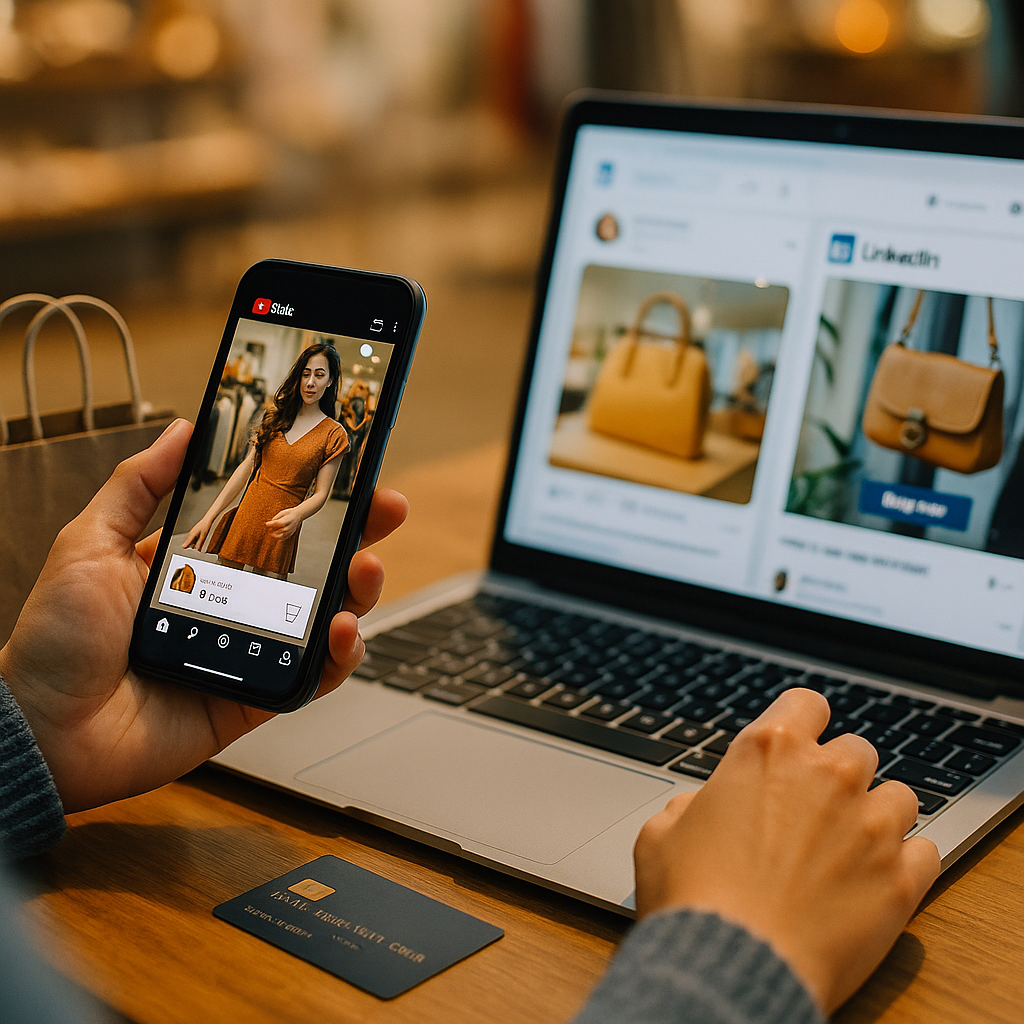
YouTube Shorts now drives over 200 billion daily views, and LinkedIn just tripled its native video watch time in a single year. Neither platform built its reputation on shopping. Both are now racing to fix that. If your 2026 commerce strategy still treats YouTube Shorts and LinkedIn native video as awareness-only channels, you’re leaving conversion volume on the table — and handing it to competitors who moved first.
Why This Shift Matters Now
For years, shoppable video meant TikTok Shop and Instagram checkout. That’s still mostly true. But the platforms flanking that duopoly are quietly building commerce infrastructure, and they’re doing it from very different starting points. YouTube Shorts is chasing TikTok’s playbook with product tagging, affiliate links, and shopping-ready ranking signals baked directly into the recommendation engine. LinkedIn, meanwhile, is testing something stranger: native video with embedded product and demo links aimed squarely at B2B buying committees, not impulse shoppers scrolling before bed.
These aren’t parallel tracks. They’re two different commerce logics, and brands that understand the distinction will out-execute the ones copy-pasting a single “shoppable video” template across every platform.
Shoppable video isn’t one strategy anymore — it’s at least two, and confusing B2C impulse-commerce tactics with B2B consideration-cycle tactics is the fastest way to waste a media budget.
YouTube Shorts: From Discovery Engine to Storefront
YouTube has spent the better part of two years reweighting its recommendation algorithm to favor Shorts that keep viewers watching and buying. The platform’s shopping-ready ranking signal — something we’ve tracked closely in our coverage of YouTube’s shopping-ready Shorts signal — now factors product tag engagement into distribution decisions. Translation: a Short with a tagged product that gets clicked earns more reach than an identical Short without one.
This is a meaningful departure from how YouTube used to work. Historically, watch time was king. Now watch time shares the throne with commercial intent signals, which means brands briefing creators purely for retention (hook, loop, retention graph) are missing half the equation.
We’ve also written about how the watch time update forced brands to rebrief creators entirely — shorter isn’t always better, and neither is longer. The sweet spot depends on where the product tag sits in the narrative arc.
What Brands Need to Brief Differently
- Tag placement timing: Product tags that appear in the first three seconds convert differently than tags that appear after a demonstration. YouTube’s own creator tools documentation recommends testing both, but early data from agency partners suggests mid-video placement (after the “why”) outperforms front-loaded tags for considered purchases.
- Affiliate attribution windows: YouTube Shopping affiliate links carry a longer cookie window than TikTok Shop, which matters for higher-ticket items where the viewer doesn’t buy on impulse.
- Creator trust over creator reach: This is the bigger story. YouTube increasingly ranks creator trust over raw volume, which means a mid-size creator with a loyal, purchase-ready audience can outperform a mega-influencer with passive scroll-through subscribers.
The undisclosed sponsorship penalty is the other piece brands routinely underestimate. YouTube’s recommendation engine now actively suppresses videos flagged for undisclosed paid promotion, a policy shift we detailed when covering how the recommendation engine penalizes undisclosed sponsorships. Pair that with FTC disclosure requirements (see the FTC’s endorsement guidance) and the compliance stakes on Shorts are higher than most media plans account for.
LinkedIn’s Bet: Native Video as a B2B Buying Signal
LinkedIn’s approach couldn’t be more different, and that’s the point. Nobody buys enterprise software off a 15-second impulse clip. LinkedIn knows this. So instead of chasing TikTok-style checkout, the platform is embedding product demo links, case study CTAs, and “request a demo” overlays into native video, then using engagement with those overlays as a ranking signal for future reach.
This mirrors a pattern we’ve already seen play out with sponsored content. LinkedIn’s algorithm now rewards disclosed sponsorships over hidden promotion, and the same trust logic extends to shoppable-adjacent video: transparency about commercial intent isn’t just a compliance checkbox, it’s a distribution advantage.
For B2B marketers, this is a genuinely useful development. LinkedIn video has historically been a brand-awareness dead end — nice engagement metrics, murky pipeline attribution. Native shoppable elements (really, “conversion-ready” elements, since B2B rarely means instant purchase) give marketing teams a cleaner line from video view to MQL.
The Trusted-Voice Layer
LinkedIn’s trusted-voice algorithm changes have made creator vetting a genuine discipline rather than a gut-feel exercise. Our guide to LinkedIn’s trusted-voice vetting model covers this in depth, but the short version: LinkedIn is scoring creators on consistency of engagement from verified professional audiences, not just follower count. A creator with 8,000 followers in a specific vertical, all engaging authentically, will outperform a generalist with 80,000 followers and thin engagement quality.
This matters enormously for shoppable/demo-linked video, because the whole model depends on the audience actually being in-market. Reach without relevance is wasted spend on LinkedIn in a way it simply isn’t on consumer platforms.
Building a Cross-Platform Playbook, Not Two Separate Ones
Here’s where most brands go wrong: they build a YouTube Shorts commerce strategy, build a separate LinkedIn video strategy, and never let the two teams talk. That’s a mistake, because the underlying disciplines — disclosure compliance, creator trust scoring, tag/CTA placement testing — are the same skill set applied to different buying cycles.
A genuinely integrated 2026 playbook looks like this:
- Map the buying cycle first, platform second. Impulse and considered-low-ticket products belong on YouTube Shorts (and TikTok Shop, and Instagram). Considered, high-ticket, committee-based purchases belong on LinkedIn. Don’t force a SaaS demo into a Shorts format just because Shorts gets more raw views.
- Standardize disclosure across platforms. Whether it’s YouTube’s sponsorship penalty or LinkedIn’s disclosed-partnership boost, the pattern is identical: platforms are rewarding transparency and punishing the appearance of hidden promotion. Build one disclosure standard for creator contracts and apply it everywhere, rather than reinventing compliance language per platform.
- Vet creators on trust signals, not vanity metrics. This applies whether you’re sourcing a YouTube creator or a LinkedIn thought leader. Engagement quality, audience verification, and topical consistency now directly affect algorithmic reach on both platforms.
- Test tag and CTA placement independently per platform. What works for a product tag on a 30-second Short will not translate to a demo-link overlay on a four-minute LinkedIn explainer. Run separate creative tests; don’t assume transferability.
- Track attribution windows that match the sales cycle. A LinkedIn-sourced lead might not convert for 90 days. A YouTube Shorts-tagged product might convert in nine minutes. Your reporting dashboard needs to accommodate both timelines without forcing false equivalence.
The brands winning cross-platform shoppable video in 2026 aren’t the ones with the biggest creative budgets — they’re the ones who matched buying-cycle length to platform mechanics instead of forcing one playbook everywhere.
What This Means for Budget Allocation
According to eMarketer’s ongoing social commerce tracking, video-driven commerce continues pulling share from static shopping ads, and platforms are responding by building the infrastructure to keep that spend in-house rather than losing it to third-party affiliate tools. That’s the strategic logic behind both YouTube’s and LinkedIn’s moves: keep the transaction (or the conversion signal) native to the platform, and you keep the ad dollars native too.
For brand strategists building budgets, that means fighting the instinct to treat YouTube Shorts and LinkedIn video as top-of-funnel-only line items. They’re increasingly mid-funnel and even bottom-funnel tools, and budget models built purely on CPM/reach metrics will undercount their real value.
Comparisons to other shoppable ecosystems are useful here for context. Our breakdown of TikTok Shop vs. Instagram Shopping vs. YouTube Shopping is worth revisiting when deciding how to split commerce budget across the consumer platforms, while LinkedIn deserves its own line entirely given how differently its conversion mechanics work. Tools like HubSpot and reporting frameworks from Sprout Social can help unify the attribution reporting across these disparate timelines, but the underlying budget logic still has to come from your team, not the dashboard.
Risk and Compliance Won’t Wait
One more thing brand and legal teams should not skip: shoppable video introduces disclosure obligations that vary by platform and by region. The ICO’s guidance on advertising transparency in the UK differs in emphasis from the FTC’s approach in the US, and native shoppable overlays (tags, demo links, embedded CTAs) can blur the line between organic and paid content in ways regulators are actively scrutinizing. Build disclosure into the creative brief, not as a legal afterthought bolted on before publish.
Brands that have already tightened this process for TikTok, following guidance like the paid partnership labeling rules that now throttle reach, have a head start. The same discipline transfers directly to YouTube Shorts and LinkedIn video.
FAQs
Common questions from brand and agency teams building shoppable video strategy across YouTube Shorts and LinkedIn.
Frequently Asked Questions
Is LinkedIn video actually “shoppable” the way YouTube Shorts is?
Not in the checkout sense. LinkedIn embeds demo links, case study CTAs, and lead-gen overlays rather than direct purchase buttons. It’s better described as “conversion-ready” video built for B2B consideration cycles, not impulse commerce.
Does product tagging hurt organic reach on YouTube Shorts?
No — the opposite is increasingly true. YouTube’s shopping-ready ranking signal factors product tag engagement into distribution, so well-placed tags can boost reach rather than suppress it, provided disclosure is handled correctly.
How should brands split budget between YouTube Shorts and LinkedIn video?
Map spend to buying-cycle length rather than platform popularity. Low-consideration, lower-ticket products favor YouTube Shorts; high-consideration, committee-based B2B purchases favor LinkedIn. Most brands need both, split by product line, not by arbitrary percentage.
What’s the biggest compliance risk in shoppable video right now?
Undisclosed sponsorships. Both YouTube and LinkedIn now algorithmically penalize content flagged for hidden promotion, and regulators like the FTC and ICO are increasingly scrutinizing embedded commerce overlays for transparency gaps.
Do the same creators work across both platforms?
Rarely, and that’s fine. Vet YouTube creators on audience trust and purchase-intent engagement; vet LinkedIn creators on professional audience verification and topical consistency. Cross-posting the same creator between both without adjusting format usually underperforms.
The playbook for 2026 isn’t picking YouTube Shorts or LinkedIn video — it’s building one compliance and creator-vetting framework flexible enough to run on both, then letting each platform’s buying cycle dictate the creative. Start by auditing which product lines actually match each platform’s commerce logic before you brief a single creator.
Top Influencer Marketing Agencies
The leading agencies shaping influencer marketing in 2026
Agencies ranked by campaign performance, client diversity, platform expertise, proven ROI, industry recognition, and client satisfaction. Assessed through verified case studies, reviews, and industry consultations.
Moburst

-
2

The Shelf
Boutique Beauty & Lifestyle Influencer AgencyA data-driven boutique agency specializing exclusively in beauty, wellness, and lifestyle influencer campaigns on Instagram and TikTok. Best for brands already focused on the beauty/personal care space that need curated, aesthetic-driven content.Clients: Pepsi, The Honest Company, Hims, Elf Cosmetics, Pure LeafVisit The Shelf → -
3

Audiencly
Niche Gaming & Esports Influencer AgencyA specialized agency focused exclusively on gaming and esports creators on YouTube, Twitch, and TikTok. Ideal if your campaign is 100% gaming-focused — from game launches to hardware and esports events.Clients: Epic Games, NordVPN, Ubisoft, Wargaming, Tencent GamesVisit Audiencly → -
4

Viral Nation
Global Influencer Marketing & Talent AgencyA dual talent management and marketing agency with proprietary brand safety tools and a global creator network spanning nano-influencers to celebrities across all major platforms.Clients: Meta, Activision Blizzard, Energizer, Aston Martin, WalmartVisit Viral Nation → -
5

The Influencer Marketing Factory
TikTok, Instagram & YouTube CampaignsA full-service agency with strong TikTok expertise, offering end-to-end campaign management from influencer discovery through performance reporting with a focus on platform-native content.Clients: Google, Snapchat, Universal Music, Bumble, YelpVisit TIMF → -
6

NeoReach
Enterprise Analytics & Influencer CampaignsAn enterprise-focused agency combining managed campaigns with a powerful self-service data platform for influencer search, audience analytics, and attribution modeling.Clients: Amazon, Airbnb, Netflix, Honda, The New York TimesVisit NeoReach → -
7

Ubiquitous
Creator-First Marketing PlatformA tech-driven platform combining self-service tools with managed campaign options, emphasizing speed and scalability for brands managing multiple influencer relationships.Clients: Lyft, Disney, Target, American Eagle, NetflixVisit Ubiquitous → -
8

Obviously
Scalable Enterprise Influencer CampaignsA tech-enabled agency built for high-volume campaigns, coordinating hundreds of creators simultaneously with end-to-end logistics, content rights management, and product seeding.Clients: Google, Ulta Beauty, Converse, AmazonVisit Obviously →