


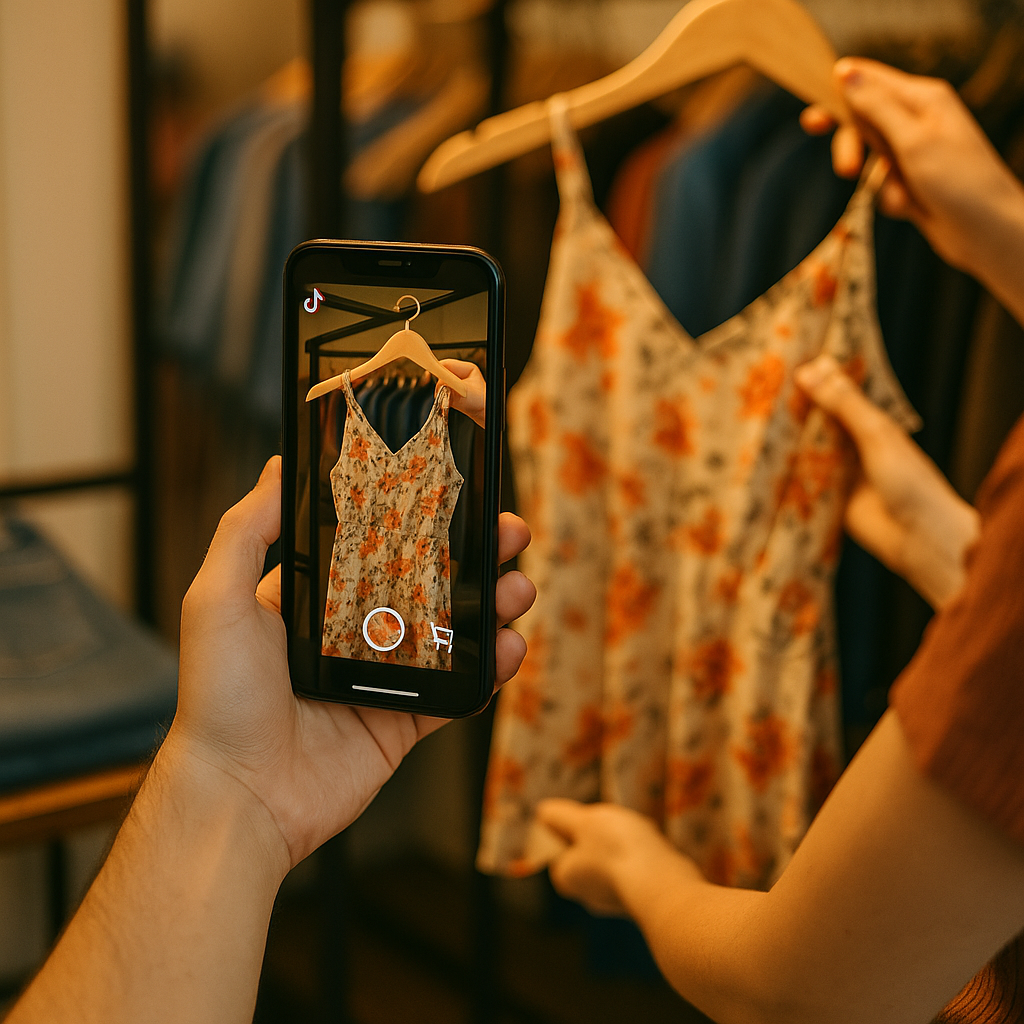
Seventy percent of TikTok users say the platform has influenced a purchase they made outside the app, according to eMarketer data. Now TikTok’s recommendation engine is optimizing for something narrower and more valuable: users who buy, not just users who watch. If your Shop-linked video strategy still treats watch time as the top signal, you’re already behind.
The TikTok recommendation engine has quietly shifted its weighting toward purchase-intent signals — dwell time on product cards, cart adds, repeat views of Shop tabs, and completed checkouts within the app. That changes what “good content” means for brands. A video that racks up views but no clicks now ranks below one that converts a smaller audience. This isn’t a minor tweak. It’s a fundamental rewiring of how discovery works for commerce content, and it demands a different playbook than the one most teams are still running.
What Actually Changed in the Feed Logic
TikTok has never published its full ranking formula, and it never will. But creators, agencies, and platform partners have observed a consistent pattern over the past several months: videos tagged with Shop links are increasingly routed to a distinct sub-audience — users the system has already classified as high-purchase-intent based on prior Shop interactions, saved items, and checkout history.
This means two nearly identical videos, one with a Shop tag and one without, can now land in completely different feeds. The tagged version gets tested against buyers. The untagged version competes purely on entertainment value against the rest of the “For You” firehose.
Purchase-intent routing means your video isn’t just competing for attention anymore — it’s competing for a spot in front of people who’ve already proven they’ll tap “buy.”
The practical effect: creative that leans hard into entertainment hooks but buries the product may actually underperform now, because it never gets tested with the buyer cohort in the first place. The algorithm filters on early signals — first three seconds, product visibility, caption keywords — before it decides which audience pool to test the video against.
Why Watch-Time Optimization Is Now a Losing Strategy
For years, the advice was simple: hook fast, hold attention, chase completion rate. That’s still true for organic reach. But Shop-linked content now runs on a parallel scoring system that cares more about downstream action than upstream attention.
Think about what that means operationally. A brand optimizing purely for average watch time might produce a video that holds viewers for 45 seconds with a slow product reveal. Great for reach. Terrible for purchase-intent routing, because the algorithm can’t tell shoppers apart from lurkers if the product doesn’t appear until the back half of the video.
- Product visibility in the first 5 seconds now correlates more strongly with Shop-tab impression share than total watch time does.
- Videos with visible pricing or promo mentions in on-screen text get tested against buyer segments faster.
- Caption keywords matching Shop catalog terms (not just trending hashtags) appear to influence which audience pool a video enters first.
We’ve covered similar shifts before, including how TikTok search behavior forces brands to rebuild product content. The purchase-intent routing update is really an extension of that same logic: TikTok is behaving less like a discovery feed and more like a search-and-shop engine that happens to autoplay video.
The New Brief: Optimize for the Buyer, Not the Browser
This requires a genuine mindset shift for brand teams and the creators they work with. Most influencer briefs are still written for reach. They ask for entertaining hooks, trending sounds, and high completion rates. None of that guarantees purchase-intent routing.
Here’s what needs to change in the brief itself:
- Front-load the product. Show it, name it, or price it within the first five seconds. Delayed reveals kill early-signal scoring.
- Match Shop catalog language in captions. If your catalog lists “hydrating serum,” the caption should say that, not “glow potion.” The system appears to cross-reference caption text against product metadata.
- Use native Shop features, not just links. Pinned comments with Shop tags, product cards mid-video, and live Shop integrations all seem to carry more weight than a single end-card CTA.
- Brief for micro-conversions, not just sales. Saves, cart adds, and Shop-tab taps are measurable proxies you can optimize creative against before a campaign ends.
This is a real departure from briefs built around vanity metrics. Teams that keep grading creators on views-per-dollar while ignoring cart-add rate will keep producing content that performs beautifully in reports and poorly at checkout.
Creator Selection Needs a Different Filter
Follower count and engagement rate used to be reasonable proxies for creator quality. They still matter, but they’re not the whole story anymore. TikTok’s purchase-intent routing rewards creators whose audiences already have a pattern of buying through Shop, regardless of that creator’s overall follower size.
That’s a meaningful departure from reach-based influencer vetting, and it echoes what we’ve seen on other platforms too, including how TikTok’s trust-based distribution model is forcing a vetting overhaul. A creator with 40,000 followers and a history of Shop-driven sales in the beauty category may outperform a 400,000-follower lifestyle creator whose audience rarely completes in-app checkout.
Ask potential creator partners for their Shop analytics directly, not just screenshots of view counts. TikTok Shop’s creator dashboard shows GMV, click-through rate to product pages, and conversion rate by video. If a creator won’t share that data, treat it as a red flag, not a negotiating tactic.
A smaller creator with a proven Shop conversion history is now a safer bet than a bigger creator with unverified purchase behavior in their audience.
Category Differences Are Getting Sharper
Purchase-intent weighting doesn’t apply evenly across every vertical. Categories with high repeat-purchase behavior, like supplements, beauty, and household goods, seem to get routed more aggressively to buyer cohorts, likely because TikTok has more historical purchase data to work with in those categories.
We’ve documented this pattern closely in the supplement space, where TikTok Shop conversion rates are already reshaping CPG strategy, and where conversion pressure is raising real compliance risk for brands making health claims under pressure to hit purchase-intent benchmarks. If your category has thinner purchase history on TikTok Shop, don’t assume the same routing logic will kick in at the same intensity. Test before you scale budget.
Checkout friction still matters too. If your Shop storefront has slow load times or a clunky path to purchase, purchase-intent routing won’t save you, because the drop-off happens after the algorithm has already done its job. We’ve written about this in how checkout speed is forcing brands to rebuild creative — it’s a companion problem to the one this article addresses, and both need to be solved together.
Measurement: What to Track Instead
Standard influencer marketing KPIs (views, likes, shares) are lagging indicators for Shop-linked content now. You need earlier signals to know if your creative is actually reaching buyers.
- Product card CTR: the percentage of viewers who tap the in-video product tag. This is your clearest early signal of purchase-intent routing success.
- Shop-tab attribution rate: how much of your Shop traffic is arriving via specific videos versus general browsing.
- Cart-add-to-checkout ratio: a widening gap here usually points to checkout friction, not creative failure.
- Repeat-viewer purchase rate: TikTok’s own data suggests users who see a product 2-3 times before buying convert at meaningfully higher rates, which argues for sequenced creative rather than one-off drops.
Pull this data weekly, not monthly. Purchase-intent routing adjusts fast, and a video that was getting buyer-pool placement two weeks ago can lose it if engagement dips. Treat your TikTok Ads Manager and Shop analytics dashboards as living documents, not end-of-campaign report material.
Compliance Still Applies, Maybe More Than Before
None of this changes disclosure obligations. If anything, purchase-intent routing raises the stakes, because content that converts well tends to get amplified further and faster, which means undisclosed partnerships or misleading claims reach more buyers before anyone catches the problem. The FTC’s endorsement guidelines still apply regardless of how the algorithm routes your video. Pair that with proper use of the TikTok commercial content setting and clear paid partnership labeling, and you protect both reach and legal standing at the same time.
It’s also worth benchmarking against how other platforms are handling similar shifts. Instagram’s move toward boosting labeled paid partnerships and YouTube’s crackdown covered in its recommendation engine penalizing undisclosed sponsorships both suggest a broader industry direction: platforms are rewarding transparency because it correlates with trust, and trust correlates with conversion. TikTok’s purchase-intent routing fits that same pattern, just with commerce data attached.
Next Step
Audit your last ten Shop-linked videos against product-visibility timing, caption-catalog matching, and cart-add rate before you write another brief. The brands that adjust creative mechanics now will get first crack at TikTok’s buyer-pool placement before competitors catch up.
Frequently Asked Questions
What is TikTok’s purchase-intent routing?
It’s an algorithmic layer within TikTok’s recommendation system that identifies users with a history of Shop engagement, such as cart adds and completed checkouts, and prioritizes showing them Shop-linked videos that match early conversion signals like product visibility and caption relevance.
Does this mean watch time no longer matters?
Watch time still matters for general organic reach, but for Shop-tagged content, purchase-intent signals like product-card taps and cart adds increasingly determine which audience pool a video gets tested against first.
How can brands tell if their content is being routed to high-intent buyers?
Track product card CTR, Shop-tab attribution rate, and cart-add-to-checkout ratio inside TikTok Shop’s creator and seller analytics. A rising CTR on product tags is usually the clearest early sign.
Should brands prioritize creator follower count or Shop conversion history?
Shop conversion history is the stronger predictor now. A smaller creator with proven Shop sales in your category is often a better bet than a larger creator with an unverified purchase-behavior audience.
Does purchase-intent routing apply equally across all product categories?
No. Categories with more historical purchase data on TikTok Shop, such as beauty, supplements, and household goods, appear to get routed more aggressively to buyer segments than newer or lower-volume categories.
What compliance risks does this update introduce?
Faster amplification of high-converting content means undisclosed partnerships or exaggerated claims can reach more buyers before issues are caught. Proper FTC-compliant disclosure and TikTok’s commercial content labeling remain essential.
Top Influencer Marketing Agencies
The leading agencies shaping influencer marketing in 2026
Agencies ranked by campaign performance, client diversity, platform expertise, proven ROI, industry recognition, and client satisfaction. Assessed through verified case studies, reviews, and industry consultations.
Moburst

-
2

The Shelf
Boutique Beauty & Lifestyle Influencer AgencyA data-driven boutique agency specializing exclusively in beauty, wellness, and lifestyle influencer campaigns on Instagram and TikTok. Best for brands already focused on the beauty/personal care space that need curated, aesthetic-driven content.Clients: Pepsi, The Honest Company, Hims, Elf Cosmetics, Pure LeafVisit The Shelf → -
3

Audiencly
Niche Gaming & Esports Influencer AgencyA specialized agency focused exclusively on gaming and esports creators on YouTube, Twitch, and TikTok. Ideal if your campaign is 100% gaming-focused — from game launches to hardware and esports events.Clients: Epic Games, NordVPN, Ubisoft, Wargaming, Tencent GamesVisit Audiencly → -
4

Viral Nation
Global Influencer Marketing & Talent AgencyA dual talent management and marketing agency with proprietary brand safety tools and a global creator network spanning nano-influencers to celebrities across all major platforms.Clients: Meta, Activision Blizzard, Energizer, Aston Martin, WalmartVisit Viral Nation → -
5

The Influencer Marketing Factory
TikTok, Instagram & YouTube CampaignsA full-service agency with strong TikTok expertise, offering end-to-end campaign management from influencer discovery through performance reporting with a focus on platform-native content.Clients: Google, Snapchat, Universal Music, Bumble, YelpVisit TIMF → -
6

NeoReach
Enterprise Analytics & Influencer CampaignsAn enterprise-focused agency combining managed campaigns with a powerful self-service data platform for influencer search, audience analytics, and attribution modeling.Clients: Amazon, Airbnb, Netflix, Honda, The New York TimesVisit NeoReach → -
7

Ubiquitous
Creator-First Marketing PlatformA tech-driven platform combining self-service tools with managed campaign options, emphasizing speed and scalability for brands managing multiple influencer relationships.Clients: Lyft, Disney, Target, American Eagle, NetflixVisit Ubiquitous → -
8

Obviously
Scalable Enterprise Influencer CampaignsA tech-enabled agency built for high-volume campaigns, coordinating hundreds of creators simultaneously with end-to-end logistics, content rights management, and product seeding.Clients: Google, Ulta Beauty, Converse, AmazonVisit Obviously →