


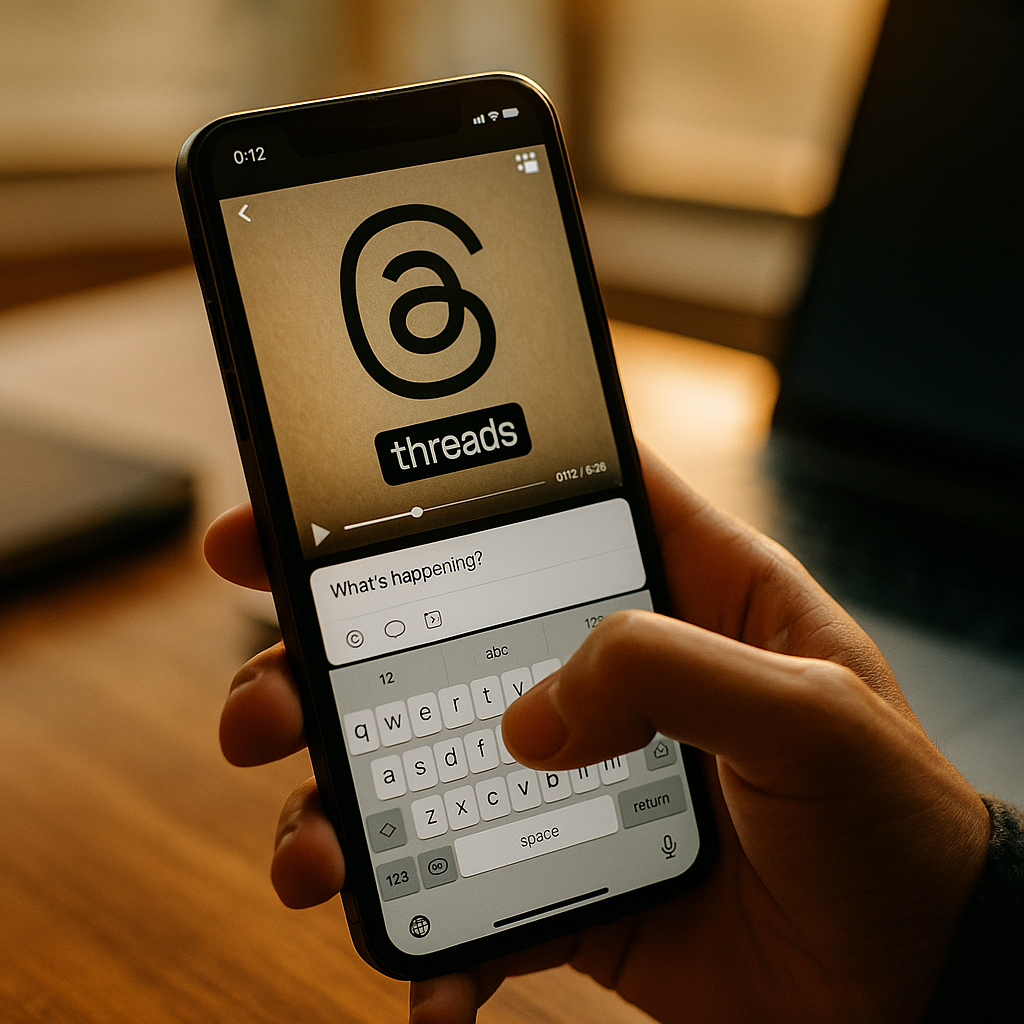
Threads now pushes video to roughly three times more accounts than static text posts, according to internal creator feedback Meta has shared with partners. That’s a problem if your brand built its entire Threads presence around witty one-liners and reply-guy banter. The Threads video playbook brands need now isn’t “become TikTok.” It’s figuring out how to keep the text-first voice that made Threads work while feeding an algorithm that increasingly wants motion.
Why Meta Is Forcing the Issue
Adam Mosseri has said publicly, more than once, that Threads’ growth strategy mirrors what worked for Instagram: lean into video because it drives session time. Meta’s Q3 earnings calls have repeatedly flagged Reels and short-form video as the primary engagement lever across the family of apps, and Threads is no exception. The app crossed 400 million monthly actives, and Meta wants those users staying longer per session, not just skimming text and bouncing.
This isn’t subtle. Brands posting video on Threads are seeing meaningfully higher impressions per post compared to text-only updates, based on patterns agencies are reporting across client accounts. Meta hasn’t published exact multipliers, but the directional signal is consistent with what happened on Instagram when Reels launched: the algorithm rewards the format it’s trying to grow, sometimes at the expense of everything else.
Threads was supposed to be the anti-video app, the place for thoughts too messy for a polished Reel. Meta’s own distribution weighting is quietly rewriting that promise.
So what do brand teams do when the platform’s cultural DNA and its algorithmic incentives are pulling in opposite directions?
The Text-First Identity Is Still the Asset
Don’t panic and start uploading talking-head videos shot for TikTok. Threads users came for conversation, hot takes, and the feeling of eavesdropping on an industry group chat. That’s still true. Sprout Social’s own research on platform behavior consistently shows audiences punish brands that import content wholesale from one platform to another without adapting tone.
The mistake most marketing teams will make in the next two quarters is treating Threads video as a repost destination for existing Reels or TikToks. It reads as lazy, and it performs like it too, similar to what happened when Instagram started throttling reposted Reels that carried visible watermarks or off-platform branding.
The winning structure blends both. Video becomes the hook or the punctuation, not the whole post. Think: a 12-second clip of a founder reacting to a customer complaint, paired with a caption that reads like a text post on its own. The video adds proof and personality. The text carries the wit and context that made Threads distinct in the first place.
What This Looks Like in Practice
- Reaction clips under 15 seconds paired with a punchy caption that could stand alone as a text post.
- Screen-record commentary — a founder or strategist reacting to a chart, a competitor’s move, or a trending topic, narrated conversationally rather than scripted.
- Behind-the-scenes fragments that feel unfinished on purpose, matching the low-production ethos Threads users still expect.
- Text-to-video callbacks, where a video replies to or riffs on a popular text thread, keeping the conversational thread visible.
Notice what’s missing: polished product demos, tutorial-style explainers, and anything that looks like it was built for a YouTube Shorts audience. Save that for the platforms actually built for it.
Structuring the Caption-Video Relationship
Here’s the operational detail most social teams get wrong: they treat the caption as an afterthought once the video is locked. On Threads, it needs to work in reverse.
Write the text post first. Make it good enough to stand alone. Then ask whether a short video clip adds proof, humor, or urgency to it. If the answer is no, don’t force one in just because the algorithm prefers it. Forced video reads as forced, and Threads audiences are unusually good at sniffing out inauthenticity, probably because the app’s whole identity was built on feeling less curated than Instagram.
A useful mental model borrowed from B2B content strategy: treat the video the way LinkedIn treats native video, as a distribution multiplier that only works when the underlying message earns attention on its own. Video without a strong text hook underperforms on both platforms.
Repurposing Without Repeating
Most brands already have a video library, whether from TikTok, Reels, or YouTube Shorts. Don’t waste it. But don’t dump it either.
The smart move is extraction, not duplication. Pull a 10-second beat from a longer TikTok, one that works as a standalone reaction or punchline, and rebuild the caption from scratch for Threads’ tone. This is the same discipline covered in the cross-platform rollout playbook for TikTok and Instagram: sequencing and reformatting matter more than raw asset volume.
A brand team running a creator partnership might get a 45-second TikTok Shop demo from an influencer. Instead of reposting it to Threads verbatim, clip the five seconds where the creator has a genuine reaction, strip the branding overlay, and write a caption that pokes fun at the product category or asks a real question. That’s a Threads-native post built from existing assets. It costs almost nothing incremental to produce.
The brands winning on Threads right now aren’t producing more video. They’re producing shorter, rougher cuts and writing better captions around them.
Compliance and Disclosure Still Apply
It’s easy to forget FTC disclosure rules when you’re moving fast on a conversational platform, but sponsored video on Threads is still subject to the same FTC endorsement guidelines that govern Instagram and TikTok. If a creator partnership includes a Threads video component, disclosure needs to be unmistakable, not buried in a caption tag at the bottom.
This matters more than it might seem. Meta’s own labeling systems increasingly reward transparency rather than punish it, a pattern already documented in how Instagram boosts labeled branded content. There’s no reason to assume Threads will behave differently as its ad and creator monetization tools mature.
Brands running influencer campaigns that span Threads and Instagram should also watch how paid partnership labels interact with organic reach, a dynamic already causing friction on TikTok’s paid partnership labeling rules. Meta hasn’t built identical enforcement into Threads yet, but the direction of travel across its platforms is consistent: label clearly, or risk suppressed distribution later.
Measurement: What to Actually Track
Impressions are the vanity metric everyone will chase first. Ignore that instinct. The better signals for Threads video right now are reply rate and repost-with-comment rate, because they measure whether the video sparked the conversational behavior the platform is built around. A video that gets views but no replies is arguably underperforming, even if the raw numbers look strong on a dashboard.
Set up a simple weekly tracking cadence:
- Reply rate per video post versus text-only post
- Quote-repost rate (a strong signal of conversational resonance)
- Follow-through rate to any linked profile or bio destination
- Completion rate on videos under 20 seconds, since Threads’ feed favors short watch loops
Tools like Sprout Social and native Meta Business Suite analytics can pull most of this, though Threads-specific reporting is still catching up to what’s available for Instagram and Facebook.
Benchmark data from eMarketer suggests short-form video consumption time keeps climbing across nearly every major platform, which is exactly why Meta is pushing this shift on Threads now rather than waiting. Brands that treat this as a temporary algorithm quirk, rather than a structural bet Meta is making on the platform’s future, will be caught flat-footed in two quarters.
Building the Actual Workflow
Operationally, this means your content calendar needs a new lane. Not a full production pipeline, just a lightweight one:
- Identify one text post idea per day worth building into a hybrid post.
- Source or shoot a sub-15-second clip, phone camera is fine.
- Write the caption independently of the video, then trim the video to match the caption’s energy, not the other way around.
- Post, then monitor replies for the first hour and jump into the thread if momentum builds.
That last step matters more on Threads than almost any other platform. The algorithm rewards early engagement velocity heavily, and a brand account that replies to its own thread within the first 30 minutes tends to see meaningfully longer distribution windows.
None of this requires a new budget line or an agency retainer. It requires a shift in how the social team thinks about video: not as a finished asset, but as a conversational prop.
FAQs
Does Threads actually favor video over text posts in its algorithm?
Yes. Meta has confirmed publicly that video content on Threads receives greater distribution than text-only posts, mirroring the strategy it used to grow Reels on Instagram. Exact multipliers aren’t published, but brand accounts are consistently reporting higher impressions on hybrid text-video posts.
Should brands repost existing TikTok or Reels content directly to Threads?
No. Direct reposts, especially with visible watermarks or off-platform branding, tend to underperform and can look lazy to Threads’ conversational audience. Extract short clips and pair them with newly written, platform-appropriate captions instead.
How long should video clips be on Threads?
Shorter is better right now. Clips under 15 seconds that function as reaction moments or punctuation to a text post tend to outperform longer, more produced videos, which read as off-tone for the platform.
Do FTC disclosure rules apply to Threads video the same way they do on Instagram or TikTok?
Yes. Sponsored or influencer-driven video content on Threads is subject to the same FTC endorsement guidelines as any other platform. Disclosure needs to be clear and visible, not buried in captions or hashtags.
What metrics matter most for measuring Threads video performance?
Reply rate, quote-repost rate, and short-video completion rate matter more than raw impressions. These signals reflect whether the content is sparking the conversational engagement Threads’ algorithm is designed to reward.
The Bottom Line
Treat Threads video as a supporting actor, not the lead. Build captions first, clip video second, and reply fast once the thread starts moving, that sequence, not production polish, is what the algorithm is actually rewarding right now.
FAQs
Does Threads actually favor video over text posts in its algorithm?
Yes. Meta has confirmed publicly that video content on Threads receives greater distribution than text-only posts, mirroring the strategy it used to grow Reels on Instagram. Exact multipliers aren’t published, but brand accounts are consistently reporting higher impressions on hybrid text-video posts.
Should brands repost existing TikTok or Reels content directly to Threads?
No. Direct reposts, especially with visible watermarks or off-platform branding, tend to underperform and can look lazy to Threads’ conversational audience. Extract short clips and pair them with newly written, platform-appropriate captions instead.
How long should video clips be on Threads?
Shorter is better right now. Clips under 15 seconds that function as reaction moments or punctuation to a text post tend to outperform longer, more produced videos, which read as off-tone for the platform.
Do FTC disclosure rules apply to Threads video the same way they do on Instagram or TikTok?
Yes. Sponsored or influencer-driven video content on Threads is subject to the same FTC endorsement guidelines as any other platform. Disclosure needs to be clear and visible, not buried in captions or hashtags.
What metrics matter most for measuring Threads video performance?
Reply rate, quote-repost rate, and short-video completion rate matter more than raw impressions. These signals reflect whether the content is sparking the conversational engagement Threads’ algorithm is designed to reward.
Top Influencer Marketing Agencies
The leading agencies shaping influencer marketing in 2026
Agencies ranked by campaign performance, client diversity, platform expertise, proven ROI, industry recognition, and client satisfaction. Assessed through verified case studies, reviews, and industry consultations.
Moburst

-
2

The Shelf
Boutique Beauty & Lifestyle Influencer AgencyA data-driven boutique agency specializing exclusively in beauty, wellness, and lifestyle influencer campaigns on Instagram and TikTok. Best for brands already focused on the beauty/personal care space that need curated, aesthetic-driven content.Clients: Pepsi, The Honest Company, Hims, Elf Cosmetics, Pure LeafVisit The Shelf → -
3

Audiencly
Niche Gaming & Esports Influencer AgencyA specialized agency focused exclusively on gaming and esports creators on YouTube, Twitch, and TikTok. Ideal if your campaign is 100% gaming-focused — from game launches to hardware and esports events.Clients: Epic Games, NordVPN, Ubisoft, Wargaming, Tencent GamesVisit Audiencly → -
4

Viral Nation
Global Influencer Marketing & Talent AgencyA dual talent management and marketing agency with proprietary brand safety tools and a global creator network spanning nano-influencers to celebrities across all major platforms.Clients: Meta, Activision Blizzard, Energizer, Aston Martin, WalmartVisit Viral Nation → -
5

The Influencer Marketing Factory
TikTok, Instagram & YouTube CampaignsA full-service agency with strong TikTok expertise, offering end-to-end campaign management from influencer discovery through performance reporting with a focus on platform-native content.Clients: Google, Snapchat, Universal Music, Bumble, YelpVisit TIMF → -
6

NeoReach
Enterprise Analytics & Influencer CampaignsAn enterprise-focused agency combining managed campaigns with a powerful self-service data platform for influencer search, audience analytics, and attribution modeling.Clients: Amazon, Airbnb, Netflix, Honda, The New York TimesVisit NeoReach → -
7

Ubiquitous
Creator-First Marketing PlatformA tech-driven platform combining self-service tools with managed campaign options, emphasizing speed and scalability for brands managing multiple influencer relationships.Clients: Lyft, Disney, Target, American Eagle, NetflixVisit Ubiquitous → -
8

Obviously
Scalable Enterprise Influencer CampaignsA tech-enabled agency built for high-volume campaigns, coordinating hundreds of creators simultaneously with end-to-end logistics, content rights management, and product seeding.Clients: Google, Ulta Beauty, Converse, AmazonVisit Obviously →