


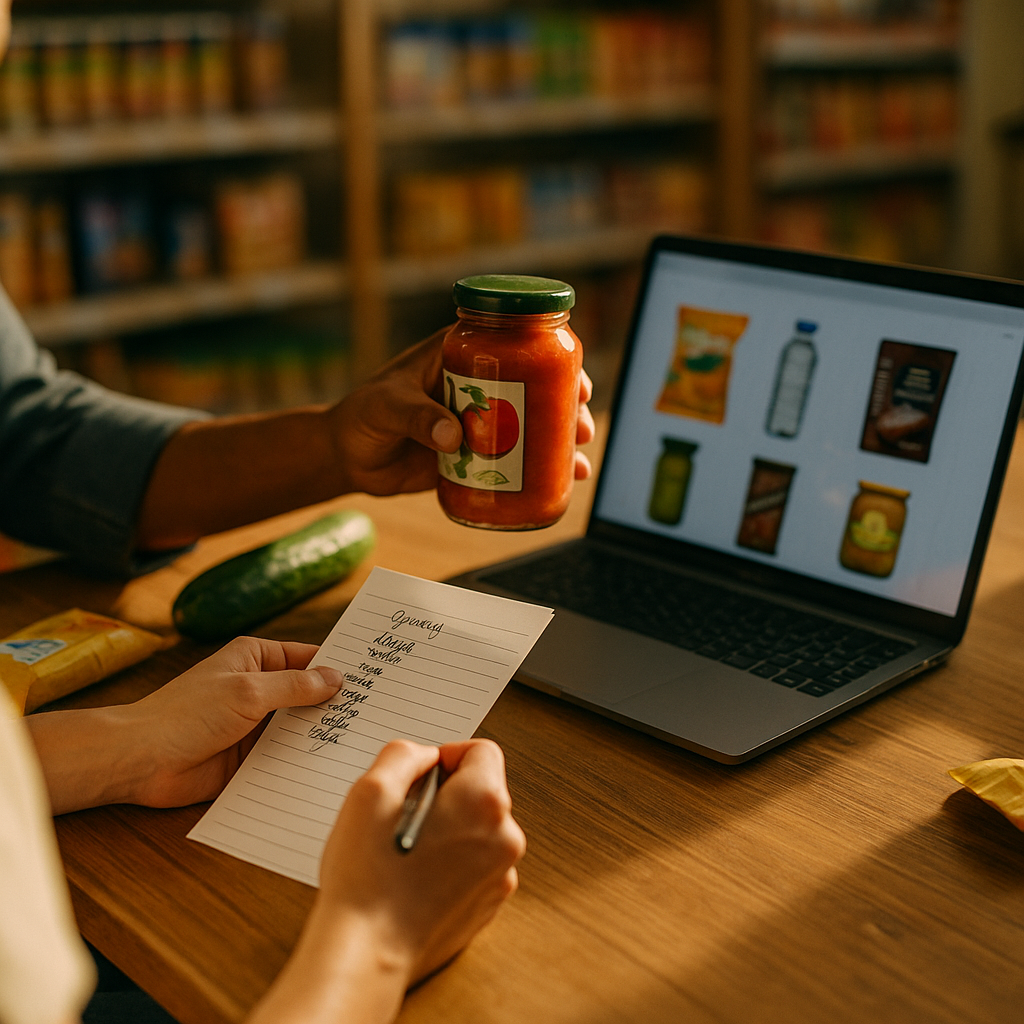
Seventy-nine percent of shoppers say they trust peer recommendations over brand advertising, according to eMarketer research on purchase influence. Yet most CPG creator content still looks like an ad wearing a hoodie. The grocery-list swap format fixes that by putting real products inside a real routine: two creators trading their actual weekly shopping lists on camera, reacting honestly to what’s on them. No script. No forced enthusiasm. Just pantry truth.
Why the Grocery-List Swap Works When Hauls Don’t
Grocery hauls are tired. Viewers have seen a thousand “come grocery shopping with me” videos, and most skip right past them. The swap format flips the script: instead of one creator narrating their own cart, two creators exchange lists before shopping, then react to what the other person eats, snacks on, or swears by. That reaction is the hook. It’s unscripted, it’s a little competitive, and it surfaces products the way friends actually recommend things to each other — mid-conversation, unprompted.
This matters more for CPG than almost any other category. Grocery purchases are habitual, low-consideration, and brand-loyalty driven. Nobody agonizes over a granola bar decision the way they do over a mattress. So the marketing job isn’t persuasion — it’s surfacing. Get the product in front of someone at the moment they’re reconsidering a habitual choice, and you’ve done most of the work.
The format’s real value isn’t the product placement — it’s the believability of the moment right before it. Viewers trust the reaction because they watched the surprise happen in real time.
The Brief: What to Actually Ask Creators to Do
Directing this format requires a lighter touch than most branded content. Over-brief it and you kill the authenticity that makes it work. Here’s the operational structure that’s held up across CPG campaigns we’ve reviewed:
- Pair creators with genuine list overlap potential. Two creators with wildly different lifestyles (a bodybuilder and a college student, say) produce more interesting contrast than two people with similar diets.
- Seed the product on one list, not both. If your item shows up on both lists, the “discovery” moment disappears. One creator should be surprised by it.
- Ask for reaction, not review. Brief creators to talk about why they’d (or wouldn’t) buy it, not to deliver a scripted pro/con list. Genuine hesitation is more persuasive than manufactured praise.
- Set a runtime ceiling. 60-90 seconds keeps the format snackable. Longer cuts work for YouTube Shorts or as a companion long-form video, but the core swap moment should live inside a minute.
- Require one unscripted follow-up question. The best moments usually come from the second question, not the first — “wait, how much is that?” or “does your kid actually eat that?”
This isn’t a format you can fully storyboard. You’re briefing a structure, not a script. That distinction is the entire point — and it’s the same principle behind no-script comparison videos that have outperformed scripted reviews in trust metrics.
Sourcing the Right Creator Pairs
Pairing is the single highest-leverage decision in this format. Get it wrong and the swap feels forced. Get it right and the chemistry does the selling.
Look for pairs with adjacent-but-different audiences: a meal-prep creator and a busy-parent creator, a budget-grocery creator and a wellness-focused one. The goal isn’t opposites — it’s enough overlap that the audience feels the pairing makes sense, with enough difference that the list swap produces genuine surprise. Brands running influencer marketplaces or working through agencies should build this into casting criteria explicitly. Most creator discovery tools filter by niche and follower count; almost none filter by “grocery list compatibility.” You’ll need to do that vetting manually, probably through a quick call or DM exchange before locking casting.
Consider running this as a recurring series rather than a one-off. Weekly or biweekly swaps with the same two creators build an audience habit, similar to how “would you rather” formats build repeat viewership through familiar structure with fresh content — see the mechanics in this would-you-rather briefing guide for a comparable recurring-format approach.
Where CPG Products Actually Land in the Frame
Here’s the part brand teams get anxious about: how do you guarantee your product gets meaningful screen time in a format you’re not fully scripting?
You don’t guarantee screen time. You guarantee inclusion and brief for emphasis. The list itself is the placement vehicle — if your product is on the list, it will get named, shown, and reacted to, because that’s the mechanic of the format. What you can brief for is the reaction beat: ask creators to hold the product up, read the label if relevant, or comment on price when it comes up naturally in conversation. That’s a directive about pacing, not content.
This is also where CPG brands should think about SKU strategy. Don’t seed your flagship product only — seed a range, and let the creator’s reaction tell you (and future creators) which SKU resonates. A snack brand running this format across ten creator pairs might find their protein variant gets genuine excitement while the original flavor gets a shrug. That’s usable data, not just content.
Grocery-list swaps generate a byproduct most branded formats don’t: organic product feedback you can mine for future creative, packaging language, or even flavor R&D.
FTC Disclosure: Don’t Skip This Because It “Feels” Organic
The organic feel of this format is exactly why compliance teams need to stay sharp. If the product was sent, gifted, or the creator was compensated to include it on their list, that’s a material connection under FTC guidelines, full stop. The “unscripted” nature of the reaction doesn’t exempt the placement from disclosure. Brief creators to disclose upfront — a text overlay or verbal mention at the top works — and don’t let the casualness of the format become an excuse to skip it. Regulators have shown zero interest in format nuance; they care about whether the audience knew money or product changed hands.
Brands that have navigated similar authenticity-versus-disclosure tension in other unscripted formats have good documentation to borrow from — the confession-booth compliance framework and the return-to-sender creative brief both cover how to keep disclosure visible without breaking the format’s authenticity.
Measuring Something That Wasn’t Designed to Convert Directly
Here’s the uncomfortable truth about surfacing formats: they’re bad at last-click attribution and good at everything upstream of it. If your CFO wants direct conversion numbers from a grocery-list swap video, you’re going to have an awkward conversation.
What this format is actually good at, based on patterns seen across FMCG creator campaigns: aided brand recall, search lift, and — critically — retail media performance in the days following a content push. If a shopper sees their favorite creator surprised by a product on a friend’s list, then encounters that same product in a sponsored retail search result three days later, the format did its job even though no link was clicked.
Track these signals instead of chasing swipe-ups:
- Branded search volume lift in the 48-72 hours post-publish
- Retail media / Amazon search share movement for the featured SKU
- Comment sentiment specifically mentioning the product (not just the creators)
- Repeat-viewer rate if running as a series — a proxy for format fatigue or momentum
Platforms like Sprout Social and native analytics suites can help track comment-level sentiment, though you’ll likely need manual tagging for product mentions since most social listening tools aren’t tuned for grocery-specific language.
This measurement gap is exactly why formats built for organic surfacing need to sit inside a broader content mix rather than carry campaign KPIs alone. Pairing it with a more direct-response format, the way brands do with rapid-turnover demo videos on TikTok Shop, gives you both the awareness engine and the conversion mechanism in the same content calendar.
Budgeting and Production: Cheaper Than It Looks
The good news for anyone managing a CPG marketing budget: this format is inexpensive to produce relative to its output. No set, no crew requirement beyond the creators’ usual setup, no elaborate scripting sessions. Most of the cost sits in creator fees and product seeding, not production.
That said, don’t mistake “cheap to produce” for “low effort to manage.” The casting and pairing work described above takes real time, and running it as a recurring series means ongoing creator relationship management. Budget for a content ops person to handle scheduling and pairing logic, even if the per-video production cost stays low. If you’re already running a diversified creator content calendar, this format slots in well as a lower-cost, higher-frequency addition — the kind of tactic covered in this budget framework for content diversification.
Next Step
Start small: pair two creators with genuinely different grocery habits, seed one product on one list, and brief for reaction over review. Measure branded search and retail media lift, not clicks, and let the first three videos tell you whether this format earns a recurring slot in your content calendar.
FAQs
What is the grocery-list swap format?
It’s a creator content format where two creators exchange their actual weekly grocery lists on camera and react to what’s on them, surfacing CPG products through unscripted conversation rather than direct promotion.
Does the grocery-list swap format require FTC disclosure?
Yes, if the featured product was gifted, sent, or the creator was paid to include it. The unscripted, organic feel of the format doesn’t exempt it from standard FTC material connection disclosure rules.
How do brands measure success for this format if it’s not designed for direct clicks?
Track branded search lift, retail media search share for the featured SKU, comment sentiment mentioning the product, and repeat-viewer rate if running the format as a series.
How should brands pair creators for a grocery-list swap?
Choose creators with adjacent but distinct lifestyles or audiences so the list contents produce genuine surprise. Too much overlap kills the reaction moment; too little makes the pairing feel random.
Is this format expensive to produce?
No. Production costs are low since there’s no set or elaborate scripting. Most budget should go toward creator fees, product seeding, and the ongoing effort of casting and pairing creators well.
Top Influencer Marketing Agencies
The leading agencies shaping influencer marketing in 2026
Agencies ranked by campaign performance, client diversity, platform expertise, proven ROI, industry recognition, and client satisfaction. Assessed through verified case studies, reviews, and industry consultations.
Moburst

-
2

The Shelf
Boutique Beauty & Lifestyle Influencer AgencyA data-driven boutique agency specializing exclusively in beauty, wellness, and lifestyle influencer campaigns on Instagram and TikTok. Best for brands already focused on the beauty/personal care space that need curated, aesthetic-driven content.Clients: Pepsi, The Honest Company, Hims, Elf Cosmetics, Pure LeafVisit The Shelf → -
3

Audiencly
Niche Gaming & Esports Influencer AgencyA specialized agency focused exclusively on gaming and esports creators on YouTube, Twitch, and TikTok. Ideal if your campaign is 100% gaming-focused — from game launches to hardware and esports events.Clients: Epic Games, NordVPN, Ubisoft, Wargaming, Tencent GamesVisit Audiencly → -
4

Viral Nation
Global Influencer Marketing & Talent AgencyA dual talent management and marketing agency with proprietary brand safety tools and a global creator network spanning nano-influencers to celebrities across all major platforms.Clients: Meta, Activision Blizzard, Energizer, Aston Martin, WalmartVisit Viral Nation → -
5

The Influencer Marketing Factory
TikTok, Instagram & YouTube CampaignsA full-service agency with strong TikTok expertise, offering end-to-end campaign management from influencer discovery through performance reporting with a focus on platform-native content.Clients: Google, Snapchat, Universal Music, Bumble, YelpVisit TIMF → -
6

NeoReach
Enterprise Analytics & Influencer CampaignsAn enterprise-focused agency combining managed campaigns with a powerful self-service data platform for influencer search, audience analytics, and attribution modeling.Clients: Amazon, Airbnb, Netflix, Honda, The New York TimesVisit NeoReach → -
7

Ubiquitous
Creator-First Marketing PlatformA tech-driven platform combining self-service tools with managed campaign options, emphasizing speed and scalability for brands managing multiple influencer relationships.Clients: Lyft, Disney, Target, American Eagle, NetflixVisit Ubiquitous → -
8

Obviously
Scalable Enterprise Influencer CampaignsA tech-enabled agency built for high-volume campaigns, coordinating hundreds of creators simultaneously with end-to-end logistics, content rights management, and product seeding.Clients: Google, Ulta Beauty, Converse, AmazonVisit Obviously →