


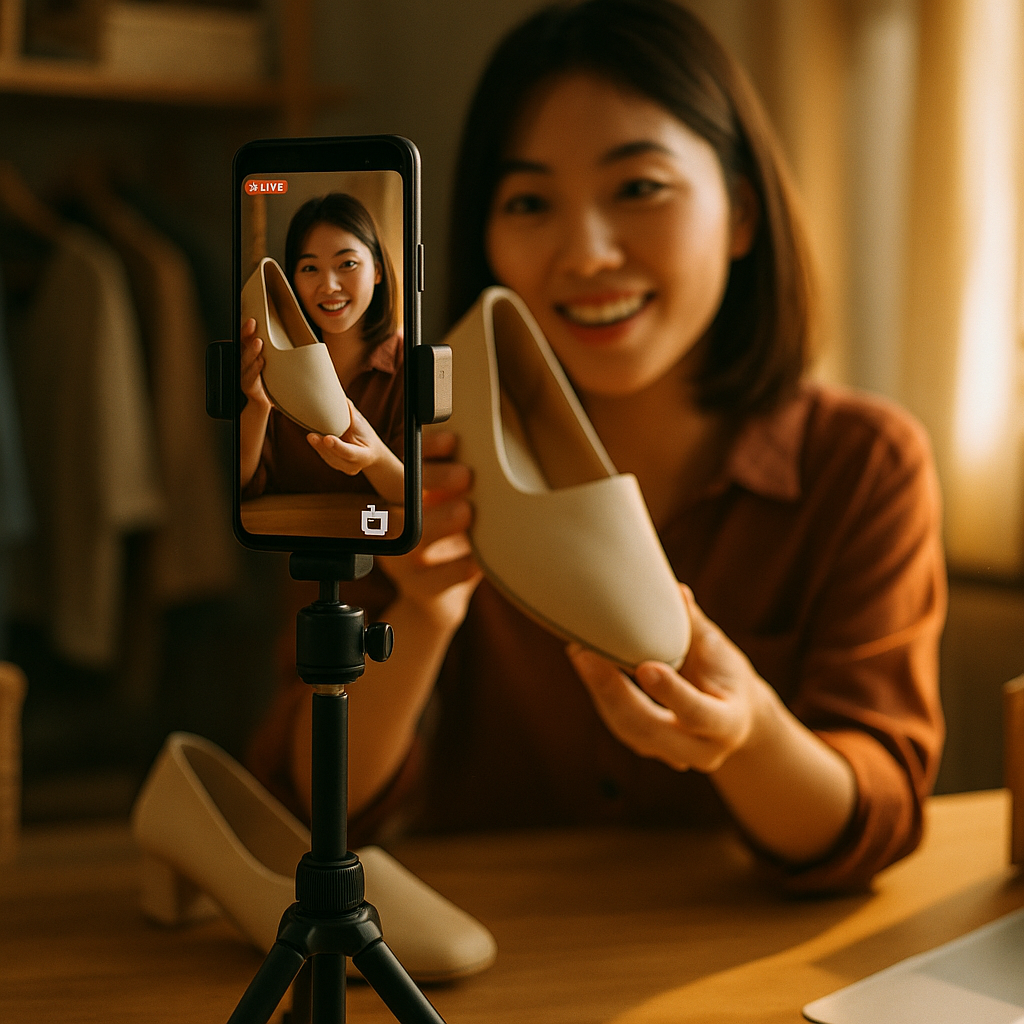
The average TikTok Shop viewer decides whether to keep watching within 1.5 seconds. Not 15. Not 5. One and a half. If your TikTok Shop product demo format brief still reads like a 30-second commercial script, you’re optimizing for a platform that no longer exists.
Rapid-turnover demos have quietly become the dominant creative language of TikTok Shop’s discovery feed. Brands that understand the mechanics are seeing outsized GMV. Brands that don’t are still paying creators to make content that gets skipped mid-hook.
Why the Format Took Over
TikTok Shop’s algorithm rewards watch-through and repeat engagement, not polish. A demo that shows the product working, solves a visible problem, and cuts to a purchase prompt within 20-30 seconds outperforms cinematic brand content by a wide margin. eMarketer has repeatedly flagged shoppable social video as one of the fastest-growing retail media categories, and TikTok Shop specifically has leaned hard into commerce-native formats over branded storytelling. Check eMarketer’s retail media data and the pattern is consistent: speed and utility beat aesthetics on this surface.
That’s not a creative opinion. It’s a feed-behavior fact baked into how TikTok Shop’s recommendation engine weighs completion rate against video length.
A 45-second demo with a 70% completion rate will almost always outperform a 15-second demo with a 40% completion rate — length matters less than the ratio.
This is the part brands get wrong constantly. They chase brevity for its own sake, when the real lever is pacing density: how much visual proof, benefit, and payoff you pack into every three-second window.
Think of it like a highlight reel, not a movie trailer.
What “Rapid-Turnover” Actually Means in a Brief
Rapid-turnover isn’t just short video. It’s a production and content philosophy built around volume, speed of iteration, and disposability. You’re not commissioning one hero asset. You’re commissioning a batch — often 8 to 15 variants — designed to be tested, killed, or scaled within days based on feed performance.
That changes everything about how you brief.
- Multiple hooks per product. Brief 4-6 opening lines or visual hooks per SKU, not one.
- Modular structure. Build the demo in swappable blocks (hook, proof, use-case, CTA) so editors can remix without reshooting.
- Fast delivery windows. Expect 48-72 hour turnaround from shoot to publish-ready cut, not the multi-week timelines typical of brand campaigns.
- Built-in disposability. Not every asset needs to be a keeper. Some exist purely to test a hook or angle.
This mirrors what we’ve seen work in other high-velocity formats. The same logic that powers restock teaser arcs — batch production, fast iteration, algorithm-responsive editing — applies almost identically here. The creative brief has to assume most assets won’t survive contact with the feed.
Building the Brief: Structure Over Script
Skip the word-for-word script. Rapid-turnover demos die when they feel scripted, because TikTok Shop’s audience has developed a sharp radar for anything that smells like an ad read. Instead, brief structure and beats, then let the creator fill in language naturally.
A solid brief template looks like this:
- Hook (0-3 seconds): A visual or verbal pattern interrupt. Show the product mid-action, state a surprising claim, or open on a relatable frustration.
- Problem framing (3-8 seconds): Quick establishment of the pain point. No monologuing.
- Demo proof (8-20 seconds): The product doing the thing. Close-ups, before/after, texture, sound — whatever proves function fastest.
- Social proof or objection handling (20-25 seconds): A quick “I was skeptical but” beat or a comparison to what the creator used before.
- CTA (25-30 seconds): Direct pointer to the orange cart or “linked below” cue, timed to TikTok Shop’s native shopping tags.
Notice this structure doesn’t specify dialogue. It specifies function. That’s deliberate — creators know their audience’s vernacular better than your brand team does, and over-scripting is one of the fastest ways to kill authenticity signals that the algorithm and viewers both pick up on.
This same “structure not script” principle shows up in silent comparison formats, where letting the product speak visually outperforms narrated pitches almost every time.
The Volume Math Nobody Talks About
Here’s the uncomfortable truth about rapid-turnover demo programs: most of what you produce won’t work. Agencies running high-volume TikTok Shop programs report that only 15-25% of demo variants become meaningful GMV drivers. The rest are learning inputs.
That means your budget model has to account for waste as a feature, not a bug.
If you’re briefing five creators for one product launch, expecting all 25 videos to convert is unrealistic and will make your CPA numbers look worse than they are. Budget for volume, measure at the batch level, and reallocate spend toward whichever hooks and creators are already winning within the first 72 hours of posting.
This is where a lot of brand teams stumble — they still evaluate influencer spend the way they’d evaluate a single hero video, expecting one asset to justify the whole budget. Rapid-turnover economics don’t work that way. Refer to a budget framework for creators if your finance team needs a model for justifying volume-based spend versus single-asset production.
Compliance Doesn’t Disappear Just Because the Video Is Short
Speed is not an excuse to skip disclosure. The FTC’s endorsement guidelines apply identically whether the video is 12 seconds or 12 minutes. Fast-cut demos actually create more risk here, not less, because editors moving quickly sometimes cut the disclosure text or verbal mention entirely in favor of pacing.
Brief this explicitly. Require:
- On-screen #ad or #sponsored text visible for the full duration of paid content, not just a flash frame.
- Verbal disclosure when the format relies on voiceover.
- TikTok’s native branded content toggle enabled for every paid post, in addition to hashtag disclosure.
Review the FTC’s endorsement guidance directly if your legal team needs the source document, and build disclosure checkpoints into your approval workflow rather than trusting creators to remember under deadline pressure. We covered similar disclosure friction in confession-booth format compliance, and the same logic transfers directly to fast-cut demos: speed pressure is exactly when compliance mistakes happen.
The fastest way to lose a TikTok Shop creator partnership isn’t a missed deadline — it’s an FTC complaint that forces a full content pull mid-campaign.
Choosing Creators for Speed, Not Just Reach
Not every creator is built for rapid-turnover work. Some produce beautifully polished content on long timelines and resist the batch-and-iterate model entirely. That’s fine for other formats, but it’s friction for this one.
Look for creators who already demonstrate:
- Native comfort with jump cuts and fast pacing (check their existing TikTok Shop content, not just their portfolio reel).
- A track record of quick turnaround without quality collapse.
- Willingness to shoot multiple hook variations in a single session.
Vet this in the first call. Ask directly how many demo videos they can realistically shoot and deliver per week. If the answer is “one, maybe two,” they’re probably a better fit for hero-content or trust-building formats like the ones described in skeptic-to-convert arcs, not high-velocity Shop demos.
Measuring What Matters
Vanity metrics mislead in this format more than most. Views mean almost nothing on their own. What matters:
- Click-to-cart rate from the video’s shopping tag, not just video views.
- Completion rate at the 3-second, 15-second, and full-video marks, to isolate exactly where drop-off happens.
- Repeat purchase rate attributable to Shop traffic, which tells you whether the format is attracting bargain-hunters or genuine customers.
Use TikTok’s own TikTok Shop analytics dashboard as your baseline, but cross-reference with your own attribution tooling. TikTok’s in-platform numbers tend to run generous on click attribution windows, and finance teams will ask questions if your reported ROAS doesn’t reconcile with actual order data. HubSpot’s marketing analytics resources are a reasonable starting point if you’re building a cross-platform attribution model from scratch.
Where This Format Breaks Down
Rapid-turnover demos aren’t universal. They struggle with high-consideration purchases — nobody buys a $400 skincare device off a 20-second clip without more context. They also wear thin fast; audiences fatigue on repetitive demo structures within a few weeks, so refresh your hook library constantly.
If your product category needs education, layering, or emotional buildup, this format alone won’t carry the funnel. Pair it with slower trust-building content, the kind outlined in rebuilding creator briefs for trust, so the fast-cut demo drives discovery while a parallel format handles conversion for higher-cost items.
Sprout Social’s ongoing research into social commerce trends backs this up: format fit matters more than format popularity. What wins for a $15 gadget won’t automatically win for a $200 skincare regimen.
Next step: Pull your last 90 days of TikTok Shop creative, sort by completion rate and click-to-cart, and rebuild your next brief around whatever hook structure is already winning — don’t start from a blank page when the algorithm has already told you what works.
FAQs
How long should a TikTok Shop rapid-turnover demo actually be?
Most high-performing demos land between 20 and 35 seconds. Length matters less than completion rate — a slightly longer video that holds attention beats a shorter one that gets skipped.
How many creators do brands typically need for this format?
Programs usually run 5-10 creators per product launch to generate enough hook variety and volume for meaningful A/B testing within the first week.
Does the FTC treat short-form Shop demos differently from longer branded content?
No. Disclosure requirements apply equally regardless of video length. On-screen and verbal disclosure must be clear and persist for the full duration of the paid content.
What’s a realistic success rate for a batch of demo videos?
Expect roughly 15-25% of variants to become genuine GMV drivers. The rest function as testing data that informs your next batch.
Can this format work for high-price or high-consideration products?
Rarely on its own. Pair rapid-turnover demos with slower trust-building or educational content for anything above typical impulse-purchase price points.
FAQs
How long should a TikTok Shop rapid-turnover demo actually be?
Most high-performing demos land between 20 and 35 seconds. Length matters less than completion rate — a slightly longer video that holds attention beats a shorter one that gets skipped.
How many creators do brands typically need for this format?
Programs usually run 5-10 creators per product launch to generate enough hook variety and volume for meaningful A/B testing within the first week.
Does the FTC treat short-form Shop demos differently from longer branded content?
No. Disclosure requirements apply equally regardless of video length. On-screen and verbal disclosure must be clear and persist for the full duration of the paid content.
What’s a realistic success rate for a batch of demo videos?
Expect roughly 15-25% of variants to become genuine GMV drivers. The rest function as testing data that informs your next batch.
Can this format work for high-price or high-consideration products?
Rarely on its own. Pair rapid-turnover demos with slower trust-building or educational content for anything above typical impulse-purchase price points.
Top Influencer Marketing Agencies
The leading agencies shaping influencer marketing in 2026
Agencies ranked by campaign performance, client diversity, platform expertise, proven ROI, industry recognition, and client satisfaction. Assessed through verified case studies, reviews, and industry consultations.
Moburst

-
2

The Shelf
Boutique Beauty & Lifestyle Influencer AgencyA data-driven boutique agency specializing exclusively in beauty, wellness, and lifestyle influencer campaigns on Instagram and TikTok. Best for brands already focused on the beauty/personal care space that need curated, aesthetic-driven content.Clients: Pepsi, The Honest Company, Hims, Elf Cosmetics, Pure LeafVisit The Shelf → -
3

Audiencly
Niche Gaming & Esports Influencer AgencyA specialized agency focused exclusively on gaming and esports creators on YouTube, Twitch, and TikTok. Ideal if your campaign is 100% gaming-focused — from game launches to hardware and esports events.Clients: Epic Games, NordVPN, Ubisoft, Wargaming, Tencent GamesVisit Audiencly → -
4

Viral Nation
Global Influencer Marketing & Talent AgencyA dual talent management and marketing agency with proprietary brand safety tools and a global creator network spanning nano-influencers to celebrities across all major platforms.Clients: Meta, Activision Blizzard, Energizer, Aston Martin, WalmartVisit Viral Nation → -
5

The Influencer Marketing Factory
TikTok, Instagram & YouTube CampaignsA full-service agency with strong TikTok expertise, offering end-to-end campaign management from influencer discovery through performance reporting with a focus on platform-native content.Clients: Google, Snapchat, Universal Music, Bumble, YelpVisit TIMF → -
6

NeoReach
Enterprise Analytics & Influencer CampaignsAn enterprise-focused agency combining managed campaigns with a powerful self-service data platform for influencer search, audience analytics, and attribution modeling.Clients: Amazon, Airbnb, Netflix, Honda, The New York TimesVisit NeoReach → -
7

Ubiquitous
Creator-First Marketing PlatformA tech-driven platform combining self-service tools with managed campaign options, emphasizing speed and scalability for brands managing multiple influencer relationships.Clients: Lyft, Disney, Target, American Eagle, NetflixVisit Ubiquitous → -
8

Obviously
Scalable Enterprise Influencer CampaignsA tech-enabled agency built for high-volume campaigns, coordinating hundreds of creators simultaneously with end-to-end logistics, content rights management, and product seeding.Clients: Google, Ulta Beauty, Converse, AmazonVisit Obviously →