


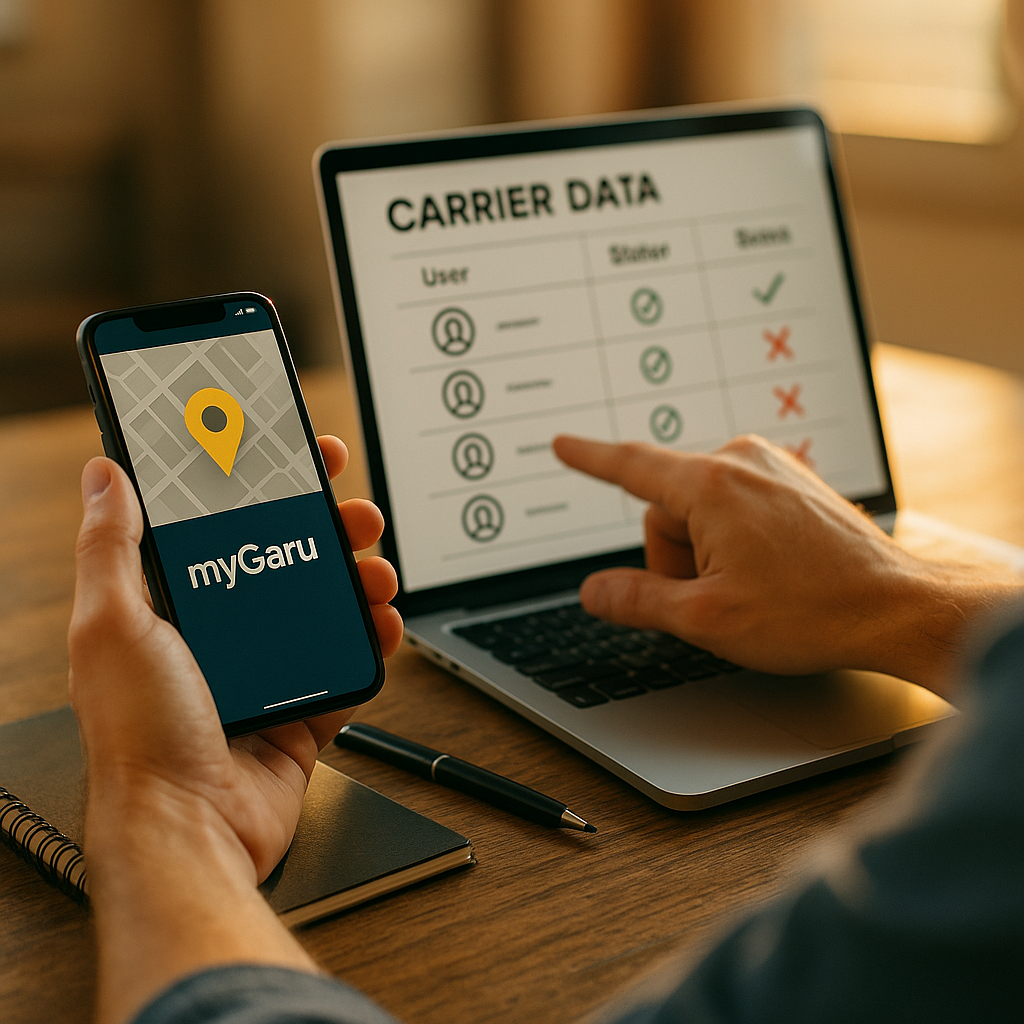
Third-party cookies are dead in every browser that matters, and the identity vendors racing to fill the void are getting weirder by the month. The latest entrant, myGaru, is betting that telecom carrier data — the stuff mobile networks already know about you — can rebuild addressability for brand marketers. It’s a compelling pitch. It’s also one that deserves more scrutiny than a press release usually gets.
The post-cookie identity problem hasn’t gone away just because everyone stopped talking about it. Chrome quietly abandoned its cookie deprecation timeline, but Safari and Firefox still block third-party cookies by default, and privacy regulation keeps tightening regardless of what browsers do. Marketers are still stuck cobbling together identity from fragments: first-party data, clean rooms, probabilistic modeling, and now, apparently, carrier-level signals.
What myGaru Is Actually Proposing
myGaru’s pitch rests on a simple structural advantage: telecom carriers sit on deterministic identity data that almost nobody else has. Phone numbers, device IDs, network-level location signals, subscriber account data — all of it tied to a real person, verified at the point of SIM registration. No cookie, no probabilistic match, no third-party pixel required.
In theory, that’s a goldmine. Carriers know who you are with a level of certainty that ad tech has been chasing for a decade. myGaru’s model reportedly works by partnering with mobile network operators to expose anonymized or hashed subscriber identifiers that brands and their DSPs can use for targeting, measurement, and cross-device stitching — without the identity ever changing hands in raw form.
Carrier data offers something cookies and mobile ad IDs never could: identity verified at the infrastructure layer, not inferred from behavior.
That distinction matters. Most identity graphs today are built on probabilistic matching — behavioral signals, device fingerprints, email hashes stitched together with varying confidence scores. Carrier data is deterministic by nature. You either are the subscriber on that account, or you’re not.
Why Brand Marketers Should Care (Cautiously)
Every brand marketer running programmatic or CTV campaigns has felt the identity squeeze. Match rates on hashed email have degraded. Mobile ad ID (IDFA, GAID) targeting took a hit after Apple’s App Tracking Transparency rollout, and Google’s own moves on Android are following a similar arc. Attribution has become a patchwork of modeled estimates rather than observed truth.
If telecom identity can plug even part of that gap, the appeal is obvious: better reach, more stable frequency capping, and cross-device measurement that doesn’t rely on fragile probabilistic graphs.
But here’s the catch marketers keep skipping past in the excitement: carrier coverage is inherently fragmented. myGaru needs individual agreements with mobile network operators in every market it wants to serve. A brand running campaigns across ten countries might get deterministic coverage in three and nothing usable in the rest. That’s not a dealbreaker, but it’s a planning constraint that needs to show up in your media plan, not get buried in a vendor deck footnote.
There’s also the question of scale versus precision. Carrier data is deterministic for the subscriber, but it doesn’t automatically solve household-level or cross-device identity the way brands actually need it. A phone number tells you who pays the bill. It doesn’t always tell you who’s holding the device, or whether that person is the same one who converted on desktop an hour later.
The Compliance Question Nobody’s Answering Clearly
Telecom data sits in a genuinely strange regulatory position. Carriers are bound by telecom-specific privacy rules in most jurisdictions, separate from the general data protection frameworks that govern ad tech. In the US, that means CPNI (Customer Proprietary Network Information) restrictions. In Europe, it’s GDPR plus ePrivacy Directive obligations that are, frankly, stricter than what most ad tech vendors are used to navigating.
The core question brand compliance teams should be asking myGaru and any telecom-identity vendor is blunt: what’s the legal basis for using this data for advertising, and did the subscriber actually consent to it?
This isn’t a hypothetical concern. Regulators on both sides of the Atlantic have been increasingly aggressive about consent mechanisms that don’t hold up to scrutiny. The FTC has signaled repeatedly that data-sharing arrangements built on thin or buried consent language are fair game for enforcement, and the ICO has taken a similarly hard line on ePrivacy compliance for identity resolution vendors operating in the UK.
If you’re a brand marketer evaluating this category, the diligence checklist should include: where does subscriber consent originate, is it opt-in or opt-out, does the carrier’s terms of service actually cover advertising use cases, and what happens if a subscriber revokes consent mid-campaign? Vendors that can’t answer these clearly in the first sales call are not ready for enterprise deployment.
Deterministic identity is only as trustworthy as the consent chain behind it — and telecom consent chains are murkier than most marketers assume.
How This Fits Into the Broader Identity Stack
myGaru isn’t operating in a vacuum. It’s entering a category that already includes clean room providers, unified ID solutions like UID2 and LiveRamp, and first-party data platforms that brands have spent years building out. The realistic scenario isn’t that carrier data replaces any of that. It’s that it becomes one more input layer, stitched in alongside everything else.
That’s consistent with how identity resolution has evolved generally — less about finding one silver-bullet ID, more about building resilient graphs that don’t collapse when any single signal degrades. Amperity’s approach to identity resolution and attribution makes a similar bet: no single data source carries the whole burden.
For brands already wrestling with fragmented attribution across paid, owned, and creator channels, another identity input isn’t automatically good news. It’s another node in an already complex data pipeline, and every new node is another point of failure, another vendor contract to audit, another place where PII can leak if governance isn’t tight. Teams evaluating cross-channel data pipelines already know how quickly “more signal” turns into “more mess” without disciplined architecture.
There’s a legitimate operational upside for creator and influencer programs specifically. Attribution has always been the weak link in influencer marketing ROI — brands can track clicks and codes, but connecting a creator’s audience to actual purchase behavior across devices has remained stubbornly imprecise. If telecom identity delivers even modest improvements in cross-device stitching, it could tighten up creator attribution models that currently rely on shaky last-click assumptions.
What This Means for Budget Allocation
Here’s the practical question CFOs will ask before any marketing lead does: is this worth paying for, or is it another line item chasing a problem that first-party data strategy already solves better?
The honest answer is it depends on your channel mix. Brands running heavy CTV and mobile programmatic spend, where cookie-based identity was already useless, stand to gain the most. Brands with strong first-party data and loyalty programs already have deterministic identity for their existing customers; carrier data mainly helps with prospecting and reach extension into net-new audiences.
According to eMarketer, US advertisers continue shifting budget toward identity-resilient channels — retail media, CTV, and first-party data activation — precisely because cookie-dependent programmatic has become less reliable. A telecom identity layer that genuinely improves match rates in those channels could justify a pilot budget. One that just adds another data broker relationship without measurable lift in match rate or conversion attribution is not worth the compliance overhead.
Run a controlled test before committing real budget: same campaign, same audience, with and without the carrier identity layer, and compare match rates and attributed conversions directly. Don’t take the vendor’s benchmark numbers at face value; every identity vendor cherry-picks its best-case comparison.
The Realistic Verdict
myGaru’s telecom bet is a genuinely interesting structural idea, not vaporware. Carriers do have identity data that’s more deterministic than almost anything else available to ad tech. But “interesting structural idea” and “ready for enterprise-scale brand deployment” are different claims, and the gap between them is filled with consent questions, coverage gaps, and integration complexity that most vendor pitches gloss over.
Brand marketers evaluating this space, or any of the identity vendors making similar claims, should treat it the way they’d treat any new martech category: pilot small, demand transparency on consent mechanics, and measure lift against your existing stack before reallocating meaningful budget. The HubSpot playbook on martech evaluation applies here as much as anywhere — proof before scale, always.
Next Step for Marketing Leaders
Before signing anything with myGaru or a comparable telecom-identity vendor, request their consent documentation and a market-by-market coverage map — not a global reach number. If either comes back vague, that’s your answer.
Frequently Asked Questions
What is telecom identity data, and how is it different from cookies?
Telecom identity data comes from mobile carriers and is tied to verified subscriber accounts — phone numbers, device IDs, and network-level signals. Unlike cookies, which are probabilistic and browser-based, carrier data is deterministic, meaning it’s tied to a real, verified person rather than inferred from behavior.
Is using carrier data for advertising legal?
It depends on jurisdiction and consent mechanics. In the US, telecom data is subject to CPNI restrictions; in the EU and UK, GDPR and the ePrivacy Directive apply additional constraints. Brands should verify the legal basis and consent chain directly with any vendor before activation.
Does myGaru’s approach solve the post-cookie identity gap completely?
No single vendor solves it completely. Telecom identity adds a deterministic layer, but coverage varies by carrier partnerships and market, and it doesn’t automatically resolve household or cross-device identity on its own.
Which brands benefit most from telecom identity solutions?
Brands with heavy CTV and mobile programmatic spend, where cookie-based targeting already broke down, tend to see the most upside. Brands with strong first-party and loyalty data see smaller incremental gains, mostly on prospecting and reach extension.
How should marketers evaluate a new identity vendor like myGaru?
Run a controlled pilot comparing match rates and attributed conversions with and without the vendor’s identity layer, demand clear consent documentation, and confirm market-by-market carrier coverage before committing budget.
Top Influencer Marketing Agencies
The leading agencies shaping influencer marketing in 2026
Agencies ranked by campaign performance, client diversity, platform expertise, proven ROI, industry recognition, and client satisfaction. Assessed through verified case studies, reviews, and industry consultations.
Moburst

-
2

The Shelf
Boutique Beauty & Lifestyle Influencer AgencyA data-driven boutique agency specializing exclusively in beauty, wellness, and lifestyle influencer campaigns on Instagram and TikTok. Best for brands already focused on the beauty/personal care space that need curated, aesthetic-driven content.Clients: Pepsi, The Honest Company, Hims, Elf Cosmetics, Pure LeafVisit The Shelf → -
3

Audiencly
Niche Gaming & Esports Influencer AgencyA specialized agency focused exclusively on gaming and esports creators on YouTube, Twitch, and TikTok. Ideal if your campaign is 100% gaming-focused — from game launches to hardware and esports events.Clients: Epic Games, NordVPN, Ubisoft, Wargaming, Tencent GamesVisit Audiencly → -
4

Viral Nation
Global Influencer Marketing & Talent AgencyA dual talent management and marketing agency with proprietary brand safety tools and a global creator network spanning nano-influencers to celebrities across all major platforms.Clients: Meta, Activision Blizzard, Energizer, Aston Martin, WalmartVisit Viral Nation → -
5

The Influencer Marketing Factory
TikTok, Instagram & YouTube CampaignsA full-service agency with strong TikTok expertise, offering end-to-end campaign management from influencer discovery through performance reporting with a focus on platform-native content.Clients: Google, Snapchat, Universal Music, Bumble, YelpVisit TIMF → -
6

NeoReach
Enterprise Analytics & Influencer CampaignsAn enterprise-focused agency combining managed campaigns with a powerful self-service data platform for influencer search, audience analytics, and attribution modeling.Clients: Amazon, Airbnb, Netflix, Honda, The New York TimesVisit NeoReach → -
7

Ubiquitous
Creator-First Marketing PlatformA tech-driven platform combining self-service tools with managed campaign options, emphasizing speed and scalability for brands managing multiple influencer relationships.Clients: Lyft, Disney, Target, American Eagle, NetflixVisit Ubiquitous → -
8

Obviously
Scalable Enterprise Influencer CampaignsA tech-enabled agency built for high-volume campaigns, coordinating hundreds of creators simultaneously with end-to-end logistics, content rights management, and product seeding.Clients: Google, Ulta Beauty, Converse, AmazonVisit Obviously →