


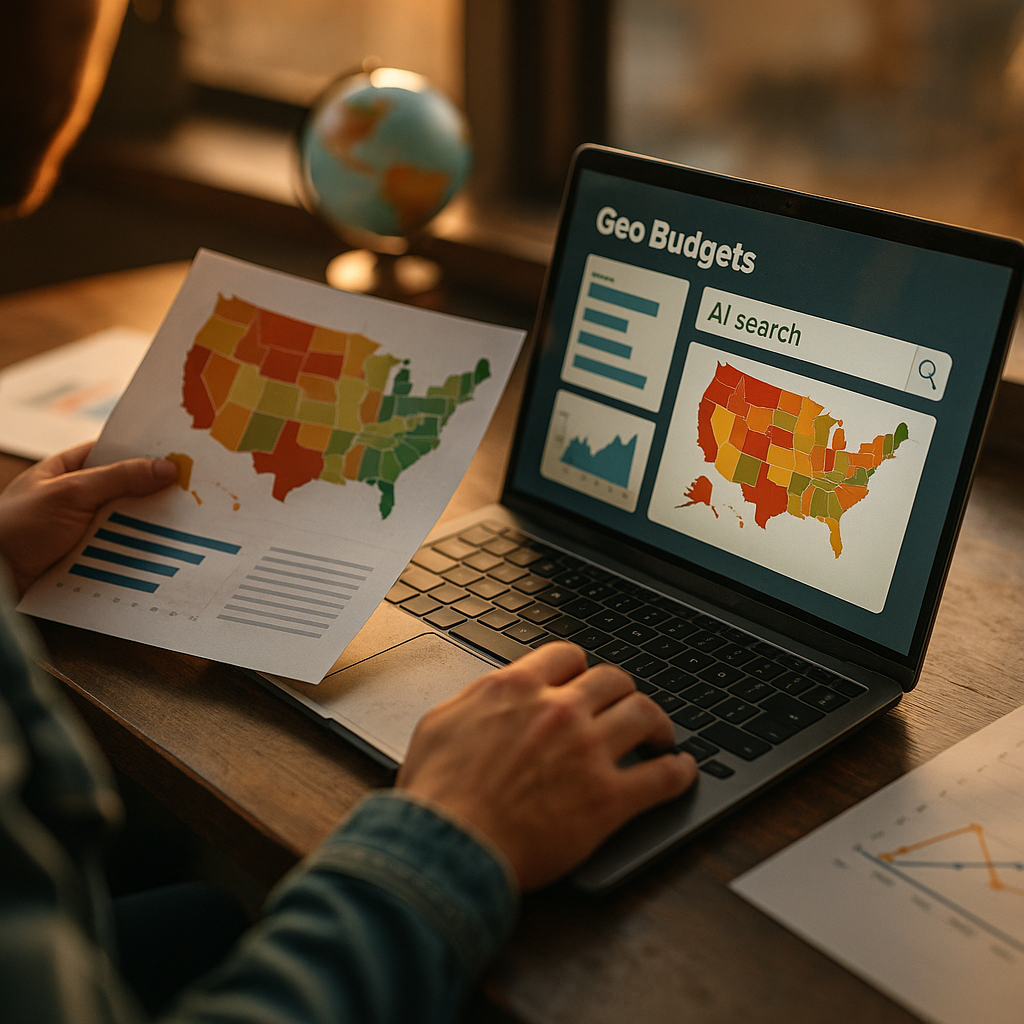
Only 9% of marketers say they can reliably track how often their brand shows up in ChatGPT or Gemini answers, according to recent industry surveys. Meanwhile, an AI search visibility platform just won Platform of the Year at one of the industry’s most-watched awards programs. If your GEO budget still lives inside your SEO line item, you’re already behind.
Brandi AI’s win wasn’t a fluke or a marketing stunt. It reflects a hard pivot in how brands need to think about discoverability, now that large language models answer questions before a searcher ever sees a blue link. This piece breaks down why Brandi AI took the top spot, how it stacks up against competitors, and what the win should actually change about your budget allocation next quarter.
Why This Award Matters More Than It Looks
Platform-of-the-year awards can feel like industry theater — vendors nominate themselves, judges skim the deck, everyone claps. But this one landed differently. Brandi AI beat out a crowded field of answer-engine monitoring tools, generative visibility trackers, and legacy SEO platforms bolting on AI features as an afterthought. That’s a meaningful distinction. Judges reportedly weighted three things heavily: citation accuracy across multiple LLMs, the speed of anomaly detection when brand visibility drops, and how actionable the reporting actually is for marketing teams (not just SEO specialists).
That last point is the one brand leaders should sit with. A lot of GEO tools produce dashboards that read like data dumps — impressive-looking, operationally useless. Brandi AI’s differentiator, according to early adopters, is translating raw citation data into recommendations a brand marketer can act on without a technical translator. That’s not a small thing when your CMO is asking “why aren’t we showing up in Perplexity” and you need an answer by Friday.
The platforms winning in this category aren’t the ones with the most data. They’re the ones that turn AI visibility signals into next actions a brand team can execute the same week.
What “AI Search Visibility” Actually Measures
Let’s define terms, because this space still suffers from vocabulary soup. AI search visibility platforms track how often, and how favorably, a brand gets cited or recommended inside generative answers — ChatGPT, Gemini, Perplexity, Copilot, and increasingly, agentic shopping assistants. This is distinct from traditional rank tracking. There’s no page-one anymore. There’s just: did the model mention you, did it mention a competitor instead, and did it get your value proposition right or garble it.
Three components matter most:
- Citation frequency — how often your brand appears across a defined set of prompts relevant to your category.
- Sentiment and accuracy — whether the AI’s summary of your brand is correct, outdated, or flat-out wrong.
- Competitive share of voice — who else shows up in the same answer, and how you rank relative to them.
This is essentially the new top-of-funnel battleground. Our earlier coverage on answer engine optimization goes deeper into how this discipline is splitting off from traditional SEO entirely, with its own tooling, its own KPIs, and its own budget conversations.
How the Field Stacks Up
Brandi AI didn’t win in a vacuum. The competitive set includes a mix of pure-play GEO startups and established martech players retrofitting AI visibility modules onto existing platforms. Here’s roughly how the category breaks down:
- Pure-play GEO trackers — built from scratch for LLM citation monitoring, typically faster to add new models but thinner on integration with existing marketing stacks.
- SEO suite add-ons — legacy rank-tracking tools (think enterprise SEO platforms) that added AI-answer monitoring as a feature tier. Useful if you’re already in that ecosystem, but often shallow on LLM-specific nuance.
- Enterprise AI visibility platforms — Brandi AI’s tier. These combine citation tracking with prescriptive workflows: content gap alerts, structured-data recommendations, and prompt-level competitive benchmarking.
The differentiator judges cited most was refresh rate. LLM outputs aren’t static — the same prompt can return different answers within days as models retrain or adjust retrieval sources. Platforms that refresh citation data weekly are already stale. Brandi AI reportedly runs near-daily refreshes across its core model set, which matters enormously if you’re trying to catch a visibility drop before it costs you a quarter of pipeline.
Worth noting: none of this replaces the need for solid attribution and measurement discipline. Visibility in an AI answer is a leading indicator, not a conversion metric. Treat it as one input into a broader model, not a standalone scoreboard.
The Budget Question Nobody’s Answered Yet
Here’s the uncomfortable part. Most brands still fund GEO out of the existing SEO or content budget, treating it as a sub-line item rather than its own discipline. That worked fine when GEO was experimental. It doesn’t work now that AI answer engines are influencing purchase consideration at scale — Gartner and other analysts have projected traditional search volume could decline meaningfully as users shift to conversational answers over the next few years.
So what should budget allocation actually look like? A few principles emerging from early adopters:
- Separate the line item. GEO monitoring and optimization should get its own budget code, distinct from SEO tooling and content production. This makes ROI conversations cleaner and prevents it from getting cut when SEO budgets tighten.
- Fund monitoring before optimization. You can’t fix what you can’t see. Most teams are still under-invested in the visibility layer (tools like Brandi AI) relative to what they’re spending trying to “optimize for AI” blindly.
- Reallocate, don’t just add. If a chunk of your traditional SEO spend is chasing rankings for queries that now trigger AI overviews instead of organic clicks, that spend should migrate toward answer-engine visibility work.
If AI answers are already influencing 20-30% of category research in your vertical, and your GEO budget is still under 5% of total search spend, that gap is where your competitors are quietly pulling ahead.
This mirrors a pattern we’ve seen elsewhere in AI marketing tooling adoption — teams recognize the shift intellectually but drag their feet on reallocating actual dollars. Our analysis of AI performance reporting adoption found similar inertia: awareness is high, implementation lags badly behind.
What This Means for Agencies and In-House Teams
If you’re running an agency, Brandi AI’s win is a signal to add GEO reporting as a standard deliverable, not an upsell. Clients are going to start asking “are we showing up in AI search” whether or not you’ve built the capability to answer that question. Better to lead that conversation than scramble to catch up.
For in-house teams, the practical next step is smaller than it sounds: run an audit. Pick 20-30 high-intent prompts relevant to your category, run them across ChatGPT, Gemini, and Perplexity, and log who gets cited. You’ll likely find gaps you didn’t know existed — competitors showing up with outdated claims about you, or worse, not showing up at all where you’d expect visibility. This kind of manual audit is a reasonable starting point before committing budget to a full platform, and it’ll sharpen your RFP questions when you do evaluate vendors.
One more thing worth flagging: platform selection here isn’t just a marketing decision, it touches brand risk. If an AI model is citing incorrect pricing, discontinued products, or misattributed reviews, that’s a reputational exposure issue as much as a visibility gap. Treat GEO monitoring partly as a risk-mitigation function, similar to how fraud detection tooling functions in creator vetting — our piece on AI fraud detection adoption gaps makes a similar case for why under-investment in monitoring tools creates blind spots that compound over time.
For broader context on how generative platforms are reshaping paid and organic discovery together, see our coverage of generative search marketing budgets, which lays out a fuller framework for splitting spend across paid, organic, and AI-answer channels.
External benchmarks are still catching up to this shift. eMarketer’s ongoing research on AI search adoption and Statista’s consumer behavior data are useful starting points if you need to build an internal business case. Google’s own guidance on search and AI overview features is also worth reviewing directly, since third-party interpretations of how AI Overviews source content vary widely.
The Real Takeaway
Brandi AI’s award isn’t really about Brandi AI. It’s confirmation that AI search visibility has matured from experimental tactic to a category with real vendors, real budgets, and real competitive stakes. Treat the win as a prompt to audit your own visibility gaps this quarter, not as trivia for your next team meeting.
Frequently Asked Questions
What is an AI search visibility platform?
An AI search visibility platform tracks how often and how accurately a brand is cited or recommended inside generative AI answers from tools like ChatGPT, Gemini, and Perplexity, giving marketers data on citation frequency, sentiment, and competitive share of voice.
Why did Brandi AI win Platform of the Year?
Industry judges cited Brandi AI’s near-daily data refresh rate, cross-model citation accuracy, and its ability to turn raw visibility data into actionable recommendations for marketing teams, rather than just producing technical dashboards.
How is GEO different from traditional SEO?
Traditional SEO optimizes for page rankings in search engine results. GEO (generative engine optimization) focuses on how brands get cited, summarized, or recommended inside AI-generated answers, where there’s no ranked list of links to climb.
How much budget should brands allocate to GEO?
There’s no universal benchmark yet, but brands should start by auditing what share of category research is happening through AI answer engines versus traditional search, then allocate budget proportionally rather than treating GEO as an afterthought within existing SEO spend.
Can I evaluate AI search visibility without a dedicated platform?
Yes, as a starting point. Running a manual audit of 20-30 high-intent prompts across major AI models and logging citation results can reveal visibility gaps before committing budget to a dedicated tool.
Does AI visibility monitoring replace traditional attribution?
No. AI visibility is a leading indicator of brand awareness and consideration, not a conversion metric. It should feed into a broader measurement framework alongside attribution and marketing mix modeling, not replace them.
Top Influencer Marketing Agencies
The leading agencies shaping influencer marketing in 2026
Agencies ranked by campaign performance, client diversity, platform expertise, proven ROI, industry recognition, and client satisfaction. Assessed through verified case studies, reviews, and industry consultations.
Moburst

-
2

The Shelf
Boutique Beauty & Lifestyle Influencer AgencyA data-driven boutique agency specializing exclusively in beauty, wellness, and lifestyle influencer campaigns on Instagram and TikTok. Best for brands already focused on the beauty/personal care space that need curated, aesthetic-driven content.Clients: Pepsi, The Honest Company, Hims, Elf Cosmetics, Pure LeafVisit The Shelf → -
3

Audiencly
Niche Gaming & Esports Influencer AgencyA specialized agency focused exclusively on gaming and esports creators on YouTube, Twitch, and TikTok. Ideal if your campaign is 100% gaming-focused — from game launches to hardware and esports events.Clients: Epic Games, NordVPN, Ubisoft, Wargaming, Tencent GamesVisit Audiencly → -
4

Viral Nation
Global Influencer Marketing & Talent AgencyA dual talent management and marketing agency with proprietary brand safety tools and a global creator network spanning nano-influencers to celebrities across all major platforms.Clients: Meta, Activision Blizzard, Energizer, Aston Martin, WalmartVisit Viral Nation → -
5

The Influencer Marketing Factory
TikTok, Instagram & YouTube CampaignsA full-service agency with strong TikTok expertise, offering end-to-end campaign management from influencer discovery through performance reporting with a focus on platform-native content.Clients: Google, Snapchat, Universal Music, Bumble, YelpVisit TIMF → -
6

NeoReach
Enterprise Analytics & Influencer CampaignsAn enterprise-focused agency combining managed campaigns with a powerful self-service data platform for influencer search, audience analytics, and attribution modeling.Clients: Amazon, Airbnb, Netflix, Honda, The New York TimesVisit NeoReach → -
7

Ubiquitous
Creator-First Marketing PlatformA tech-driven platform combining self-service tools with managed campaign options, emphasizing speed and scalability for brands managing multiple influencer relationships.Clients: Lyft, Disney, Target, American Eagle, NetflixVisit Ubiquitous → -
8

Obviously
Scalable Enterprise Influencer CampaignsA tech-enabled agency built for high-volume campaigns, coordinating hundreds of creators simultaneously with end-to-end logistics, content rights management, and product seeding.Clients: Google, Ulta Beauty, Converse, AmazonVisit Obviously →