


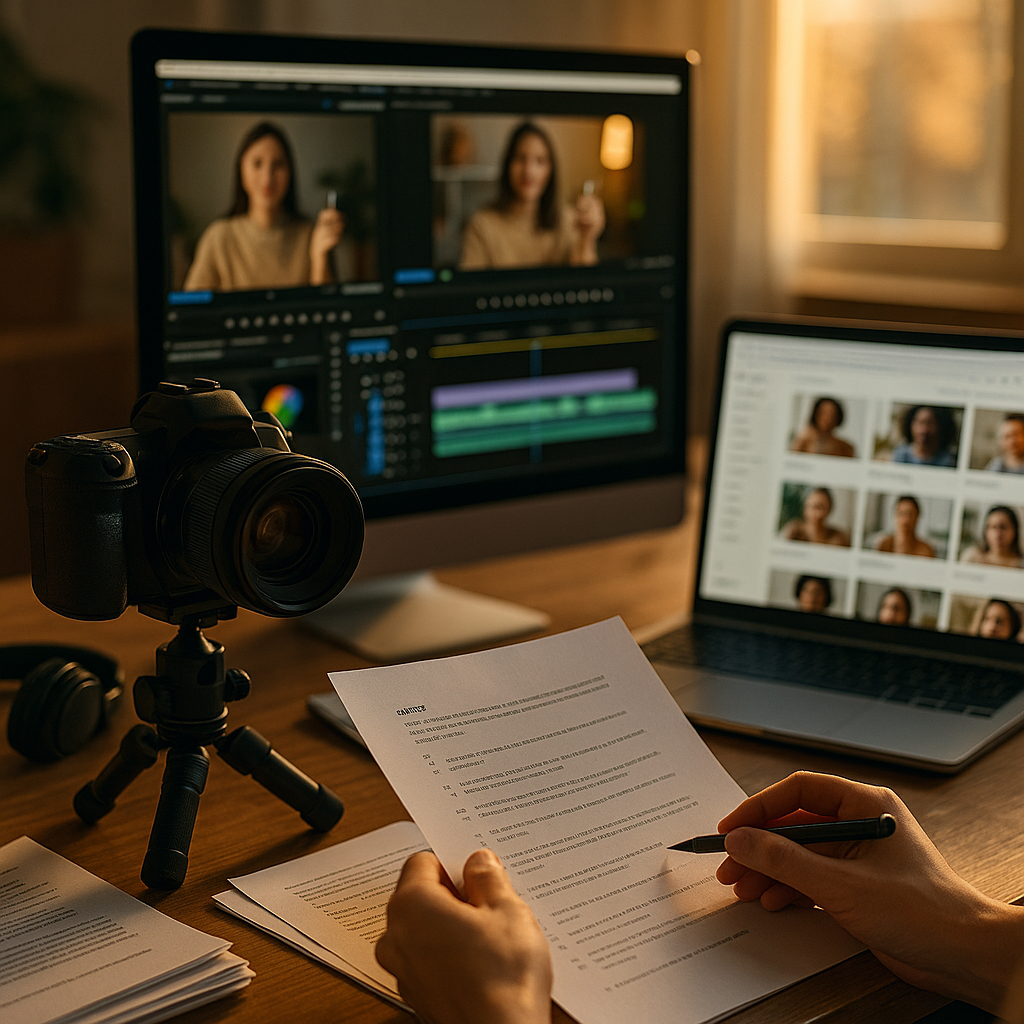
Some UGC shops now turn around fifty licensed assets a week with the operational rigor of a manufacturing line. That’s not a fluke — it’s the product of standardized scripts, editing templates, and licensing paperwork built to scale. UGC operations have quietly stopped being a scrappy side hustle for creators and started looking like actual businesses with repeatable processes, org charts, and margins to defend.
Brands that treated UGC as a one-off tactic two years ago are now watching agencies and creator collectives professionalize the entire supply chain. If you’re still buying UGC piecemeal, you’re leaving money and leverage on the table.
Why This Shift Is Happening Now
Three forces converged. First, brands cut content budgets but not content demand — agency contracts have already changed shape to reflect fewer dollars chasing more deliverables. Second, platforms like TikTok Shop and Instagram rewarded native-feeling content over polished ads, making UGC the default creative format rather than a nice-to-have. Third, and most underappreciated: buyers got tired of chaos. Nobody wants to chase down a rogue creator for a missing usage release six months after a campaign ships.
Repeatability solves all three problems at once. When scripting, editing, and licensing become standard infrastructure, cost per asset drops, turnaround shrinks, and legal risk shrinks with it. That’s the entire pitch of the modern full-service UGC vendor category, and it’s why so many are raising and scaling right now.
The brands winning at UGC aren’t the ones with the biggest creator rosters — they’re the ones with the tightest operational playbook behind every asset.
Scripting Stops Being Freelance Guesswork
Early UGC briefs were vague: “talk about the product, keep it casual.” That approach produced wildly inconsistent output and forced brands to shoot ten videos to get two usable ones. Today’s operators write modular scripts — hooks, problem statements, demo beats, CTAs — that creators can plug into without sounding scripted on camera.
This matters more than it sounds. Modular scripting means a brand can brief fifty creators simultaneously and get consistent structure back, even if tone varies. It also means faster QA. Editors know exactly what beats to expect in raw footage, which speeds cutting and reduces back-and-forth revisions.
Some shops now use AI to generate first-draft scripts from product data sheets, then have human creative leads punch them up for voice. It’s not full automation — creators still need room to sound like themselves — but it cuts brief-writing time dramatically. This mirrors what’s happening across the broader industry, where AI-native advertising workflows are consolidating previously manual steps into templated systems.
What Standardized Scripting Actually Looks Like
- Reusable hook libraries tested against past performance data
- Brand voice guides translated into do’s/don’ts for creators, not legal jargon
- Pre-approved claim language to avoid compliance rewrites later
- Modular CTA blocks swappable by platform (TikTok Shop vs. Instagram Reels vs. paid spark ads)
None of this is glamorous. But it’s the difference between a shop that ships 20 assets a month and one that ships 200.
Editing Pipelines Are the Real Differentiator
Scripting gets the attention, but editing is where margins actually get made or lost. Raw creator footage is inconsistent — bad lighting, mismatched aspect ratios, inconsistent pacing. The shops that scale have built editing pipelines that treat this as a solvable production problem, not a creative one.
That means templated cut structures, standardized caption and subtitle styles, batch color correction, and increasingly, AI-assisted rough cuts that human editors polish rather than build from scratch. Tools that auto-detect the strongest 3-second hook in a clip, or auto-generate multiple aspect ratios from one master file, are shaving hours off per-asset turnaround.
The result is a genuinely different cost structure. When cost per usable asset becomes the metric that matters, editing efficiency is the lever that moves it most. A shop that nails its pipeline can quote lower rates and still protect margin, because the marginal cost of the tenth video is much lower than the first.
Editing used to be an afterthought bolted onto creator payouts. Now it’s the production layer that determines whether a UGC business is profitable at scale.
Licensing: The Infrastructure Nobody Wants to Talk About
Here’s the uncomfortable truth: most UGC licensing chaos of the past few years came down to brands not thinking past the first campaign. A creator posts a video, the brand boosts it as an ad, everyone’s happy — until the brand wants to reuse it eight months later for a different campaign and nobody can find the signed release.
Repeatable UGC operations fix this by treating licensing as infrastructure, not paperwork. That means standardized contract templates with clear usage windows, whitelisting rights, geographic scope, and renewal terms baked in at the point of booking, not negotiated after the fact. Some shops now issue licenses programmatically through their booking platforms, the same way stock footage sites handle rights management.
This is also where owned-asset strategy intersects with licensing discipline. Brands building internal owned UGC libraries need airtight, perpetual-use licensing from day one, or they end up paying twice for content they thought they already owned. The shift toward UGC libraries replacing rented reach only works if the underlying rights are clean.
For brands, the practical takeaway is simple: never book UGC without specifying usage rights, duration, and whitelisting terms in writing before the shoot. If your vendor can’t produce a standard contract template on request, that’s a red flag about how repeatable their operation actually is.
Common Licensing Terms Brands Should Standardize
- Usage duration: 6, 12, or perpetual — spelled out, not assumed
- Whitelisting/spark ad rights: separate from organic usage rights
- Geographic scope: especially critical for cross-border campaigns
- Exclusivity clauses: does the creator agree not to do similar work for competitors during the term?
- Renewal and kill-fee terms: what happens if the brand wants to extend or the creator wants out early
The FTC has also sharpened its expectations around disclosure and endorsement transparency, so licensing infrastructure now needs to fold in compliance language too — not just usage rights. Brands unfamiliar with current guidance should review the FTC’s endorsement guidance directly rather than relying on secondhand summaries from vendors.
What “Repeatable” Actually Buys a Brand
Repeatability isn’t just operational tidiness for vendors — it changes the economics for the brands buying UGC. When scripting, editing, and licensing are systematized, brands get three concrete benefits.
Predictable pricing. Once a shop has standardized its pipeline, quotes stop being guesswork and start reflecting real unit costs. That makes budgeting far easier, especially as marketing teams face the kind of scrutiny reflected in eMarketer’s creator economy spend tracking.
Faster iteration cycles. Standard scripts and editing templates mean a brand can test five hook variations in the time it used to take to produce one polished ad. That speed compounds, particularly for performance-driven TikTok Shop campaigns where creative velocity directly affects sales.
Lower legal exposure. Clean, standardized licensing means fewer surprises when a brand wants to repurpose an asset for a new channel or extend a campaign past its original window.
None of this means creativity gets flattened. If anything, standardizing the boring parts — contracts, file formats, brief structure — frees up creative energy for the parts that actually move performance: hooks, storytelling, product demos that feel native to the platform.
The Risk of Over-Standardizing
There’s a real danger here too. Push repeatability too far and UGC starts looking like the polished branded content it was supposed to replace. Audiences are good at smelling formula. TikTok’s algorithm changes have already started rewarding creator credibility over polish, which should worry any shop optimizing purely for production efficiency.
The smartest operators standardize process, not voice. Scripts give structure; creators still improvise the delivery. Editing templates enforce technical consistency; the actual footage still needs to feel unscripted. Brands vetting vendors should ask to see raw footage alongside finished cuts — if every creator sounds identical, that’s a warning sign, not proof of a tight pipeline.
This is also why sales-attributed reporting matters more than ever. As vanity metrics give way to attribution data, brands can actually test whether standardized production is helping or hurting conversion, rather than relying on gut feel about “authenticity.”
What Brands Should Do Next
Treat your UGC vendor relationships like supply chain relationships, not one-off creative gigs. Ask vendors directly: what’s your scripting process, what’s your editing turnaround time, and can you show me your standard licensing contract? A shop that can’t answer clearly and quickly probably isn’t as repeatable as its pitch deck suggests, and that unpredictability will eventually show up in your invoices or your legal exposure.
Frequently Asked Questions
What does “UGC operations infrastructure” actually mean?
It refers to the standardized systems — scripting templates, editing pipelines, and licensing contracts — that UGC agencies and creator collectives use to produce content at scale with predictable cost, quality, and legal terms, rather than treating each project as a custom one-off.
How is scripting different from a traditional creative brief?
Traditional briefs are often loose creative direction. Modular scripting breaks content into reusable structural beats (hook, problem, demo, CTA) that creators personalize, allowing brands to brief many creators consistently while preserving individual voice.
Why does licensing matter more now than it did a few years ago?
Brands increasingly want to reuse UGC across multiple campaigns and channels, including paid whitelisting. Without clear usage duration, geographic scope, and whitelisting rights defined upfront, brands risk either legal exposure or having to repay for content they assumed they already owned.
Does standardizing UGC production hurt authenticity?
It can, if vendors standardize voice and delivery rather than just process. The best operators keep scripts and editing templates flexible enough that creators still sound natural on camera, since platforms increasingly reward credibility over polish.
How should brands evaluate a UGC vendor’s operational maturity?
Ask for their standard licensing contract, average turnaround time per asset, and examples of raw footage versus finished cuts. Vendors with genuinely repeatable operations should answer these questions quickly and specifically.
Top Influencer Marketing Agencies
The leading agencies shaping influencer marketing in 2026
Agencies ranked by campaign performance, client diversity, platform expertise, proven ROI, industry recognition, and client satisfaction. Assessed through verified case studies, reviews, and industry consultations.
Moburst

-
2

The Shelf
Boutique Beauty & Lifestyle Influencer AgencyA data-driven boutique agency specializing exclusively in beauty, wellness, and lifestyle influencer campaigns on Instagram and TikTok. Best for brands already focused on the beauty/personal care space that need curated, aesthetic-driven content.Clients: Pepsi, The Honest Company, Hims, Elf Cosmetics, Pure LeafVisit The Shelf → -
3

Audiencly
Niche Gaming & Esports Influencer AgencyA specialized agency focused exclusively on gaming and esports creators on YouTube, Twitch, and TikTok. Ideal if your campaign is 100% gaming-focused — from game launches to hardware and esports events.Clients: Epic Games, NordVPN, Ubisoft, Wargaming, Tencent GamesVisit Audiencly → -
4

Viral Nation
Global Influencer Marketing & Talent AgencyA dual talent management and marketing agency with proprietary brand safety tools and a global creator network spanning nano-influencers to celebrities across all major platforms.Clients: Meta, Activision Blizzard, Energizer, Aston Martin, WalmartVisit Viral Nation → -
5

The Influencer Marketing Factory
TikTok, Instagram & YouTube CampaignsA full-service agency with strong TikTok expertise, offering end-to-end campaign management from influencer discovery through performance reporting with a focus on platform-native content.Clients: Google, Snapchat, Universal Music, Bumble, YelpVisit TIMF → -
6

NeoReach
Enterprise Analytics & Influencer CampaignsAn enterprise-focused agency combining managed campaigns with a powerful self-service data platform for influencer search, audience analytics, and attribution modeling.Clients: Amazon, Airbnb, Netflix, Honda, The New York TimesVisit NeoReach → -
7

Ubiquitous
Creator-First Marketing PlatformA tech-driven platform combining self-service tools with managed campaign options, emphasizing speed and scalability for brands managing multiple influencer relationships.Clients: Lyft, Disney, Target, American Eagle, NetflixVisit Ubiquitous → -
8

Obviously
Scalable Enterprise Influencer CampaignsA tech-enabled agency built for high-volume campaigns, coordinating hundreds of creators simultaneously with end-to-end logistics, content rights management, and product seeding.Clients: Google, Ulta Beauty, Converse, AmazonVisit Obviously →