


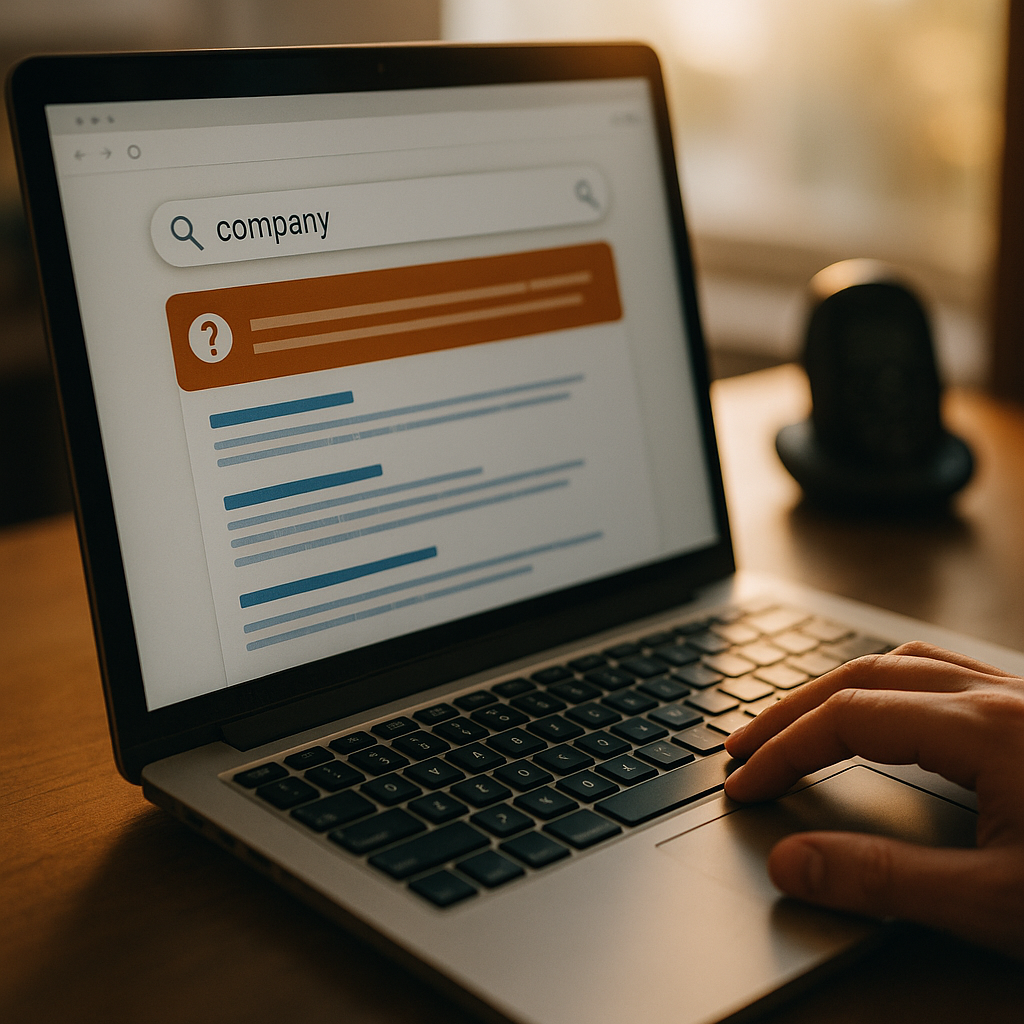
Nearly 60% of Google searches now end without a click, and generative engines like ChatGPT and Perplexity are eating into the query volume that’s left. So what happens to your brand when the “search results page” disappears entirely? Answer Engine Optimization is the discipline racing to answer that question, and two companies, Brandi AI and PR Newswire Amplify, are quietly building the pipes that make it possible.
This isn’t another acronym to file next to SEO and slap on a slide. It’s a structural shift in how brands earn visibility, and it’s happening faster than most marketing orgs are prepared for.
What Answer Engine Optimization Actually Means
Answer Engine Optimization, or AEO, is the practice of structuring brand content, data, and signals so that AI systems, think ChatGPT, Gemini, Claude, Perplexity, and Google’s AI Overviews, can accurately retrieve, synthesize, and cite them in generated answers. Traditional SEO optimizes for ranking. AEO optimizes for selection. The AI doesn’t show ten blue links; it picks a handful of sources, blends them into a paragraph, and moves on.
That’s a fundamentally different game. You’re no longer competing for position one. You’re competing to be one of maybe three to five sources an LLM decides is trustworthy enough to cite, paraphrase, or summarize. Miss that cut, and you’re invisible, regardless of how well you’d have ranked in 2019-era Google.
In generative search, there is no page two. There’s cited, or there’s nothing.
Brands that have already started tracking this shift are seeing how volatile citation share can be week to week. If you haven’t looked at how to track AI citation share across the major models, that’s the first gap to close before investing further in AEO infrastructure.
Why This Is an Infrastructure Problem, Not a Content Problem
Most marketing teams still treat AI visibility like a content exercise: write better FAQs, add more schema, hope for the best. That’s the equivalent of optimizing a billboard for a world that’s moved to programmatic bidding. The real issue is upstream — it’s about data structure, licensing, and machine-readability at scale.
Large language models don’t crawl the web the way Googlebot does. Many rely on licensed data partnerships, retrieval-augmented generation (RAG) pipelines, and curated knowledge bases. If your brand’s information isn’t feeding those pipelines in a structured, verifiable way, you’re not in the running. This is exactly the infrastructure gap Brandi AI and PR Newswire Amplify are stepping into.
Brandi AI: Structuring Brand Truth for Machine Consumption
Brandi AI positions itself as a layer that translates brand facts, product specs, pricing, positioning, executive bios, brand voice, into structured formats that AI systems can ingest cleanly. Think of it as a brand’s canonical “knowledge graph,” built specifically so that when an LLM is asked about your category, your product details show up accurately instead of hallucinated or scraped from a stale third-party listing.
This matters more than it sounds. Ask ChatGPT about a mid-size SaaS brand’s pricing tiers today, and there’s a real chance it’s wrong, outdated, or blended with a competitor’s. That’s not a hypothetical risk; it’s a brand safety issue. Wrong information cited confidently by an AI can shape a buyer’s decision before your sales team ever gets a call.
Brandi AI’s approach essentially treats structured brand data as a defensive asset. Get it right, and you control the narrative AI systems repeat about you. Get it wrong, or ignore it, and the models fill the gap with whatever scraps they find, forums, outdated press, review sites with an axe to grind.
PR Newswire Amplify: Distribution Built for Machine Readers, Not Just Journalists
PR Newswire has spent decades as the backbone of press release distribution to human journalists and editors. Amplify reorients that infrastructure toward a new audience: AI crawlers and retrieval systems. The core idea is that press releases, when properly tagged, structured, and distributed through trusted, high-authority channels, become high-quality training and retrieval fodder for generative engines.
Why does that matter? Because AI models weight source credibility heavily. A press release distributed through an established, verifiable wire service carries more retrieval trust than a blog post on a brand’s own site. PR Newswire Amplify essentially turns earned and owned media into structured, citable assets, formatted with the metadata and schema markup that make them attractive to answer engines rather than just search bots.
Put simply: Brandi AI structures the “who we are” data, and PR Newswire Amplify structures the “what we’re saying, right now” data. Together they cover both the static and dynamic layers of brand truth that AI systems need to answer questions accurately.
The ROI Case: Why Brands Should Care Before It’s Mandatory
Skeptical CMOs will ask the obvious question: is this worth budget right now, or is it another martech land grab? Fair question. Here’s the honest answer.
- Zero-click behavior is accelerating. Data from various search studies consistently shows a majority of queries now resolve without a click-through, and AI Overviews and chat interfaces are compounding that trend.
- Citation share is the new SERP ranking. If your brand isn’t cited when a prospect asks an AI assistant “best CRM for a 50-person sales team,” you don’t exist in that moment, full stop.
- First-mover accuracy compounds. Models retrain and re-index over time. Brands that establish clean, structured data now have a head start when the next model refresh happens.
- Risk mitigation, not just upside. Incorrect AI-generated claims about pricing, product capability, or compliance status can create real liability. Structured data reduces that exposure.
This isn’t hypothetical spend chasing a trend. It’s closer to insurance plus lead generation, bundled into one infrastructure investment. Brands already running GEO vs SEO budget frameworks should be folding AEO-specific tooling like this into that planning cycle now, not next fiscal year.
How This Fits Into the Broader GEO and Structured Data Shift
AEO doesn’t exist in a vacuum. It’s part of a broader move toward Generative Engine Optimization (GEO), which encompasses everything from schema markup to entity clarity to third-party citation building. Tools like Brandi AI and PR Newswire Amplify are specific infrastructure plays within that larger discipline, but they don’t replace the foundational work.
Brands still need clean structured data across their own properties. If you haven’t run a structured data audit, that’s the baseline before any third-party tool can amplify your signal effectively. Garbage in, garbage out applies just as much to LLM retrieval as it ever did to search indexing.
It’s also worth measuring where you currently stand. A share of model framework gives you a baseline metric, essentially, what percentage of relevant AI-generated answers mention your brand versus competitors. Without that benchmark, you’re investing in AEO infrastructure blind.
You can’t optimize for AI citations you’re not measuring. Share of model is becoming what share of voice was to traditional PR — except now it’s algorithmically determined and updates in near real time.
Practical Steps for Brands Starting Now
Nobody needs another 40-point checklist. Here’s what actually moves the needle in the first ninety days:
- Audit current AI citations. Run your brand name and key product categories through ChatGPT, Perplexity, and Gemini. Document what’s accurate, what’s outdated, and what’s flat wrong.
- Structure your core brand facts. Pricing, positioning, leadership, product specs, compliance claims, whatever a buyer might ask an AI about, needs to live somewhere structured and verifiable, not buried in a PDF from three years ago.
- Distribute through trusted, machine-readable channels. This is where wire services with AEO-aware formatting, like PR Newswire Amplify, earn their fee. Press releases aren’t just for journalists anymore.
- Build a monitoring cadence. Citation share shifts with every model update. Monthly tracking, minimum, is the new normal for any brand serious about AI visibility.
- Loop in legal and compliance early. If AI systems are going to repeat your product claims verbatim, your compliance team needs visibility into what’s being structured and distributed.
For teams evaluating whether to build this in-house or bring in outside help, it’s worth running any prospective partner through a rigorous intake process. Vetting a GEO agency properly before signing anything protects budget and avoids vendors promising citation guarantees no one can actually deliver.
It’s also smart to pair this with a hard look at your attribution stack. If AI referral traffic isn’t showing up cleanly in your analytics, you’re optimizing blind on the back end too. A GA4 attribution rebuild focused specifically on AI referral sources closes that loop.
Where This Is Headed
Expect consolidation. Right now, AEO tooling is fragmented across brand data platforms, PR distribution networks, schema markup tools, and citation monitoring dashboards. Within a couple of product cycles, expect the winners to bundle these functions, structured brand data, distribution, and monitoring, into single platforms. Brandi AI and PR Newswire Amplify represent two ends of that eventual consolidation: one focused on static brand truth, the other on dynamic distribution.
Industry data from firms like eMarketer and Statista continues to show AI-driven search interactions climbing quarter over quarter, and platforms like Google’s AI Overviews are only expanding coverage. Brands that treat this as a 2027 problem will spend the next two years watching competitors get cited instead of them.
Frequently Asked Questions
FAQs
What is Answer Engine Optimization?
Answer Engine Optimization (AEO) is the practice of structuring brand content and data so AI systems like ChatGPT, Gemini, and Perplexity can accurately retrieve and cite it in generated answers, rather than optimizing purely for search engine rankings.
How is AEO different from traditional SEO?
Traditional SEO competes for ranking position on a results page. AEO competes to be one of a small number of sources an AI model selects to synthesize into a direct answer, meaning there’s no equivalent of “page two” visibility.
What do Brandi AI and PR Newswire Amplify actually do?
Brandi AI structures static brand facts, like pricing, positioning, and product specs, into machine-readable formats for AI retrieval. PR Newswire Amplify distributes dynamic brand news, like press releases, through trusted wire channels formatted for AI crawlers and retrieval systems.
Why should brands invest in AEO infrastructure now?
Zero-click search behavior is accelerating, and AI-generated answers increasingly resolve queries without a website visit. Brands not structured for AI citation risk being invisible in these interactions, and risk inaccurate information about them circulating unchecked.
How do I measure whether my brand is being cited by AI models?
Run your brand and key product terms through ChatGPT, Perplexity, Gemini, and Claude regularly, documenting citation frequency and accuracy. This is often tracked using a “share of model” metric, similar to share of voice, but measured against AI-generated answers.
Does AEO replace traditional SEO and PR efforts?
No. AEO builds on structured data, schema markup, and credible distribution channels that traditional SEO and PR already rely on. It’s an additional layer optimized specifically for generative AI retrieval, not a replacement for foundational digital presence work.
The brands winning AI citations a year from now are the ones structuring their data today. Start with a citation audit this week, then decide whether tools like Brandi AI or PR Newswire Amplify fit your infrastructure gap.
Top Influencer Marketing Agencies
The leading agencies shaping influencer marketing in 2026
Agencies ranked by campaign performance, client diversity, platform expertise, proven ROI, industry recognition, and client satisfaction. Assessed through verified case studies, reviews, and industry consultations.
Moburst

-
2

The Shelf
Boutique Beauty & Lifestyle Influencer AgencyA data-driven boutique agency specializing exclusively in beauty, wellness, and lifestyle influencer campaigns on Instagram and TikTok. Best for brands already focused on the beauty/personal care space that need curated, aesthetic-driven content.Clients: Pepsi, The Honest Company, Hims, Elf Cosmetics, Pure LeafVisit The Shelf → -
3

Audiencly
Niche Gaming & Esports Influencer AgencyA specialized agency focused exclusively on gaming and esports creators on YouTube, Twitch, and TikTok. Ideal if your campaign is 100% gaming-focused — from game launches to hardware and esports events.Clients: Epic Games, NordVPN, Ubisoft, Wargaming, Tencent GamesVisit Audiencly → -
4

Viral Nation
Global Influencer Marketing & Talent AgencyA dual talent management and marketing agency with proprietary brand safety tools and a global creator network spanning nano-influencers to celebrities across all major platforms.Clients: Meta, Activision Blizzard, Energizer, Aston Martin, WalmartVisit Viral Nation → -
5

The Influencer Marketing Factory
TikTok, Instagram & YouTube CampaignsA full-service agency with strong TikTok expertise, offering end-to-end campaign management from influencer discovery through performance reporting with a focus on platform-native content.Clients: Google, Snapchat, Universal Music, Bumble, YelpVisit TIMF → -
6

NeoReach
Enterprise Analytics & Influencer CampaignsAn enterprise-focused agency combining managed campaigns with a powerful self-service data platform for influencer search, audience analytics, and attribution modeling.Clients: Amazon, Airbnb, Netflix, Honda, The New York TimesVisit NeoReach → -
7

Ubiquitous
Creator-First Marketing PlatformA tech-driven platform combining self-service tools with managed campaign options, emphasizing speed and scalability for brands managing multiple influencer relationships.Clients: Lyft, Disney, Target, American Eagle, NetflixVisit Ubiquitous → -
8

Obviously
Scalable Enterprise Influencer CampaignsA tech-enabled agency built for high-volume campaigns, coordinating hundreds of creators simultaneously with end-to-end logistics, content rights management, and product seeding.Clients: Google, Ulta Beauty, Converse, AmazonVisit Obviously →