


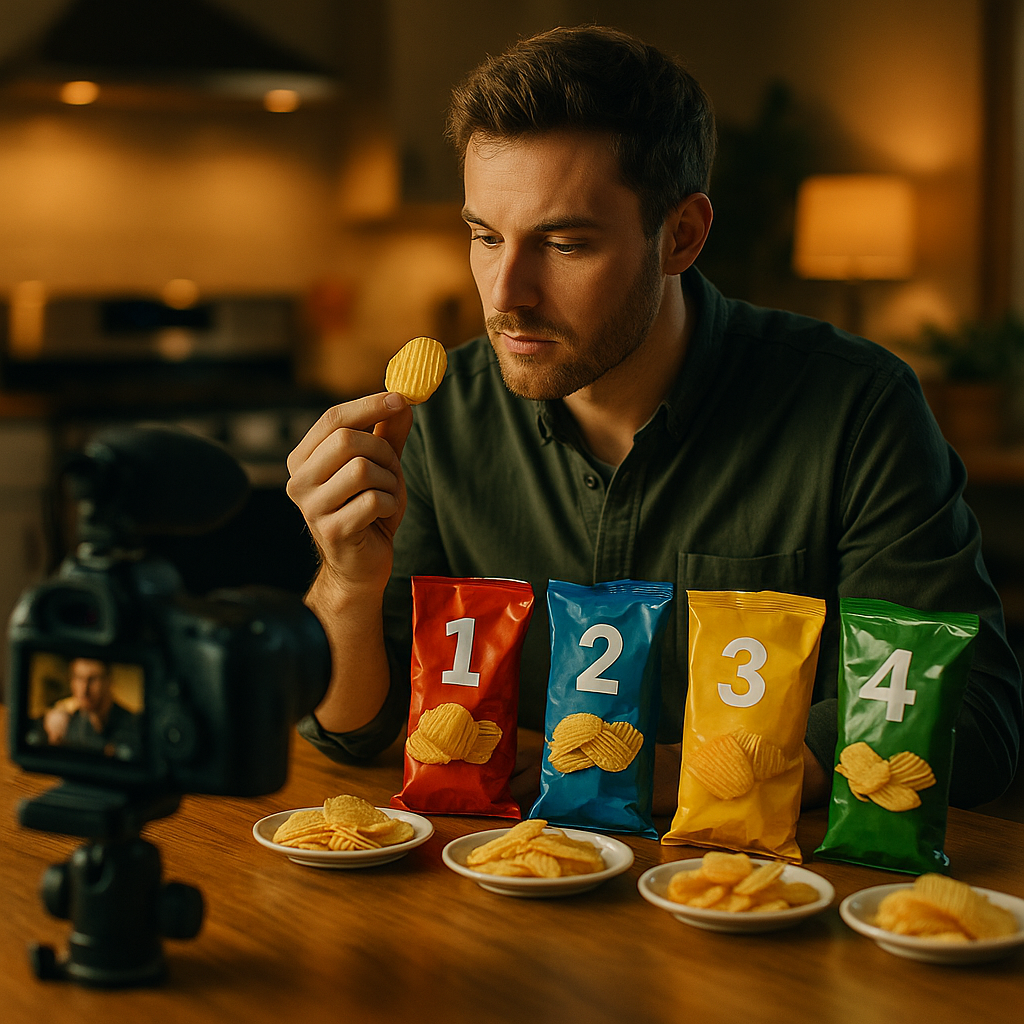
73% of consumers say they don’t trust a single-product review anymore. They want the comparison. They want to know why Product A beat Product B, not just that Product A was “amazing.” That’s the gap the taste-test ranking format fills, and it’s quietly becoming one of the highest-converting creator briefs in retail, beauty, food and beverage, and consumer tech.
The format is simple on its face: a creator ranks several competing products in a category, including yours, on camera. What makes it work is what happens underneath — a structured brief that protects your brand from looking desperate while giving the creator enough room to be genuinely critical. Done right, it’s the closest thing to word-of-mouth at scale.
Why Ranking Formats Outperform Standard Reviews
A standard sponsored review has a trust ceiling. Viewers know the brand paid for it, so they discount the praise before they even finish watching. A ranking format resets that skepticism because the creator is visibly comparing you against rivals, including ones who didn’t pay for placement. That single structural choice — including competitors — is what makes the content feel like research instead of advertising.
Category rankings also mirror how people actually shop. Nobody buys a moisturizer in a vacuum. They compare three or four options, read a few reviews, then decide. A creator who does that comparison publicly is doing the exact task the viewer was already planning to do themselves. You’re not interrupting the buying journey, you’re narrating it.
When a creator ranks your product third out of five and explains exactly why, that ranking carries more weight than ten “best product ever” testimonials combined.
This is also why the format performs so well on retention metrics. Ranking videos have built-in suspense — who wins? — which keeps viewers watching to the end, past the point where your product gets its screen time. Compare that to a standard unboxing, where drop-off often happens before the sponsor message even lands.
The Brief: Give Structure, Not a Script
The single biggest mistake brands make with this format is over-controlling the outcome. If a creator’s ranking is transparently rigged toward the sponsor, the entire format collapses — and audiences call it out in comments within minutes. Your brief needs to set criteria, not conclusions.
- Define the ranking criteria upfront. Taste, texture, price-per-use, ingredient quality, ease of use — pick three to five measurable factors and require the creator to score each product against all of them, not just yours.
- Mandate real competitor inclusion. Two or three genuine market competitors, not strawman products nobody buys. If you sell premium olive oil, the comparison set should include the other premium brands people actually cross-shop, not a bargain-bin filler that makes your product win by default.
- Set the disclosure terms clearly. Sponsorship must be disclosed regardless of where your product lands in the ranking. This isn’t optional — the FTC’s endorsement guidelines apply whether you win, lose, or tie.
- Allow an honest lower placement. If your brief effectively requires a first-place finish, you’ve built an ad, not a ranking. Build contractual language that permits second or third place, with the requirement that the creator explains the trade-off honestly (e.g., “pricier, but the texture justifies it”).
This is where legal and marketing teams need to align early. If your compliance team wants full script approval and your marketing team wants an authentic-feeling ranking, those two goals are in tension. Resolve it in the brief, not after the video is filmed.
Choosing the Right Category and Creator
Not every product category lends itself to a taste-test structure. It works best in categories with clear, comparable attributes: food and beverage, skincare, supplements, kitchen gadgets, gaming peripherals, even software with side-by-side feature sets. Categories with heavy subjectivity (fashion, art supplies) can still work, but the ranking criteria need to be even more explicit or the video reads as arbitrary opinion.
Creator selection matters more here than in almost any other format. You want someone with existing category credibility — a skincare creator who’s reviewed forty moisturizers, a coffee creator who’s done comparison content before. Audiences trust rankings from creators who’ve built a reputation for being picky. A creator who loves everything they touch has no credibility to lend a ranking format.
Look at engagement history, not just follower count. A mid-tier creator with 40,000 followers and a track record of ranking content — say, “Ranking Every Drugstore Sunscreen” style videos that consistently hit high completion rates — will outperform a bigger creator doing their first-ever comparison. This is a format where audience engagement data should weigh more heavily than raw reach in your selection criteria.
Where This Fits in the Bigger Creator Strategy
Taste-test rankings work particularly well as a mid-funnel format, sitting between broad awareness content and bottom-funnel conversion pushes. Someone who’s already aware of your category but hasn’t picked a brand is exactly the audience segment this format targets. Pair it with other trust-building formats for a fuller funnel: a skeptic-to-convert arc can soften resistance before the comparison video runs, and an ingredient-label breakdown can supply the technical credibility that makes your ranking criteria feel rigorous rather than arbitrary.
If you’re running this at scale across multiple creators, treat it like a testable content system rather than a one-off campaign. Brief three or four creators in the same category with the same criteria set, and see whether your product’s placement is consistent. If it wins with one creator and loses badly with three others, that’s useful signal about a real product weakness, not just a briefing problem. This is also a natural fit for a diversified content budget, since ranking videos can be repurposed into shorts, carousel breakdowns, and even paid social assets.
One operational note: don’t restrict this to video-only. A grocery-list swap style brief pairs naturally with a ranking format for CPG brands, where the creator ranks products while narrating a real shopping trip. It adds a layer of real-world context that pure studio comparison videos lack.
Handling the Risk of Losing
Every brand asks the same question before greenlighting this format: what if we come in last? It’s a fair concern, and it deserves an honest answer, not a hopeful one.
First, understand the base rate. If you’re confident in your product relative to competitors, a well-designed ranking test should land you in the top half most of the time. If it doesn’t, that’s a signal worth taking seriously before you scale creator spend in that category at all.
Second, build a response plan into the campaign, not after it airs. Decide in advance: will you comment on the video if the ranking is unfavorable? Will you follow up with a reformulated product test in six months? Brands that treat a lower ranking as market research, rather than a PR crisis, tend to come out ahead. Consumers respect a brand that can take a middling review in stride far more than one that scrubs comments or pulls the sponsorship after the fact.
A brand that survives an honest third-place finish gains more long-term trust than one that only ever appears in rigged first-place videos.
Third, use paid amplification selectively. If your product wins, boost the video. If it places respectably but not first, you can still use segments — the honest criteria breakdown, the specific praise you did receive — in owned channels without misrepresenting the full result. This is similar to the selective-clip approach used in live-unboxing content, where imperfect real-time moments get repurposed rather than hidden.
Measuring What Actually Matters
Standard view counts and engagement rates only tell you part of the story with ranking content. Track these instead:
- Completion rate to the reveal moment. If viewers drop off before the ranking is announced, your setup is too slow.
- Comment sentiment on placement, specifically. Are viewers disputing the ranking, or debating the criteria? Disputes about criteria are healthy; accusations of bias are a red flag.
- Branded search lift post-publish. Category comparison content tends to drive direct search behavior — “[Product] vs [Competitor]” queries spike after a well-performing ranking video. eMarketer’s research on comparison-shopping behavior consistently shows this pattern across retail categories.
- Attributed conversion within the comparison window. Someone who watches a five-product ranking is close to a purchase decision. Track conversion within 48-72 hours, not just last-click.
If you’re running this format regularly, build it into your broader creator brief framework so measurement stays consistent across campaigns instead of being reinvented every time.
The taste-test ranking format isn’t for brands that need to win every time. It’s for brands confident enough to be measured against the field — and that confidence, communicated honestly, is exactly what turns a comparison video into a trust asset instead of a gamble.
Frequently Asked Questions
Does the FTC require special disclosure for ranking or comparison videos?
Yes. The same endorsement rules apply as any sponsored content: the creator must clearly disclose the brand relationship regardless of where the sponsoring product places in the ranking. Check current guidance at ftc.gov before finalizing your brief.
What if the creator ranks our product last?
Treat it as market intelligence rather than a failure. Build a response plan before the campaign launches, including whether you’ll comment publicly, and consider repurposing honest positive segments rather than pulling support from the creator.
How many competitor products should be included in the ranking?
Two to four genuine market competitors is typically enough. Fewer feels thin, more can dilute the narrative and make the video too long to sustain completion rates.
Which categories work best for taste-test ranking content?
Categories with clear, comparable attributes perform best: food and beverage, skincare, supplements, kitchen tools, and tech accessories. Highly subjective categories can still work but need very explicit ranking criteria.
Should the brand approve the final ranking before publishing?
No. Approving criteria, disclosure language, and factual claims is standard. Approving or influencing the actual placement undermines the format’s credibility and risks FTC scrutiny for deceptive endorsement.
FAQs
Does the FTC require special disclosure for ranking or comparison videos?
Yes. The same endorsement rules apply as any sponsored content: the creator must clearly disclose the brand relationship regardless of where the sponsoring product places in the ranking. Check current guidance at the FTC before finalizing your brief.
What if the creator ranks our product last?
Treat it as market intelligence rather than a failure. Build a response plan before the campaign launches, including whether you’ll comment publicly, and consider repurposing honest positive segments rather than pulling support from the creator.
How many competitor products should be included in the ranking?
Two to four genuine market competitors is typically enough. Fewer feels thin, more can dilute the narrative and make the video too long to sustain completion rates.
Which categories work best for taste-test ranking content?
Categories with clear, comparable attributes perform best: food and beverage, skincare, supplements, kitchen tools, and tech accessories. Highly subjective categories can still work but need very explicit ranking criteria.
Should the brand approve the final ranking before publishing?
No. Approving criteria, disclosure language, and factual claims is standard. Approving or influencing the actual placement undermines the format’s credibility and risks FTC scrutiny for deceptive endorsement.
Top Influencer Marketing Agencies
The leading agencies shaping influencer marketing in 2026
Agencies ranked by campaign performance, client diversity, platform expertise, proven ROI, industry recognition, and client satisfaction. Assessed through verified case studies, reviews, and industry consultations.
Moburst

-
2

The Shelf
Boutique Beauty & Lifestyle Influencer AgencyA data-driven boutique agency specializing exclusively in beauty, wellness, and lifestyle influencer campaigns on Instagram and TikTok. Best for brands already focused on the beauty/personal care space that need curated, aesthetic-driven content.Clients: Pepsi, The Honest Company, Hims, Elf Cosmetics, Pure LeafVisit The Shelf → -
3

Audiencly
Niche Gaming & Esports Influencer AgencyA specialized agency focused exclusively on gaming and esports creators on YouTube, Twitch, and TikTok. Ideal if your campaign is 100% gaming-focused — from game launches to hardware and esports events.Clients: Epic Games, NordVPN, Ubisoft, Wargaming, Tencent GamesVisit Audiencly → -
4

Viral Nation
Global Influencer Marketing & Talent AgencyA dual talent management and marketing agency with proprietary brand safety tools and a global creator network spanning nano-influencers to celebrities across all major platforms.Clients: Meta, Activision Blizzard, Energizer, Aston Martin, WalmartVisit Viral Nation → -
5

The Influencer Marketing Factory
TikTok, Instagram & YouTube CampaignsA full-service agency with strong TikTok expertise, offering end-to-end campaign management from influencer discovery through performance reporting with a focus on platform-native content.Clients: Google, Snapchat, Universal Music, Bumble, YelpVisit TIMF → -
6

NeoReach
Enterprise Analytics & Influencer CampaignsAn enterprise-focused agency combining managed campaigns with a powerful self-service data platform for influencer search, audience analytics, and attribution modeling.Clients: Amazon, Airbnb, Netflix, Honda, The New York TimesVisit NeoReach → -
7

Ubiquitous
Creator-First Marketing PlatformA tech-driven platform combining self-service tools with managed campaign options, emphasizing speed and scalability for brands managing multiple influencer relationships.Clients: Lyft, Disney, Target, American Eagle, NetflixVisit Ubiquitous → -
8

Obviously
Scalable Enterprise Influencer CampaignsA tech-enabled agency built for high-volume campaigns, coordinating hundreds of creators simultaneously with end-to-end logistics, content rights management, and product seeding.Clients: Google, Ulta Beauty, Converse, AmazonVisit Obviously →