


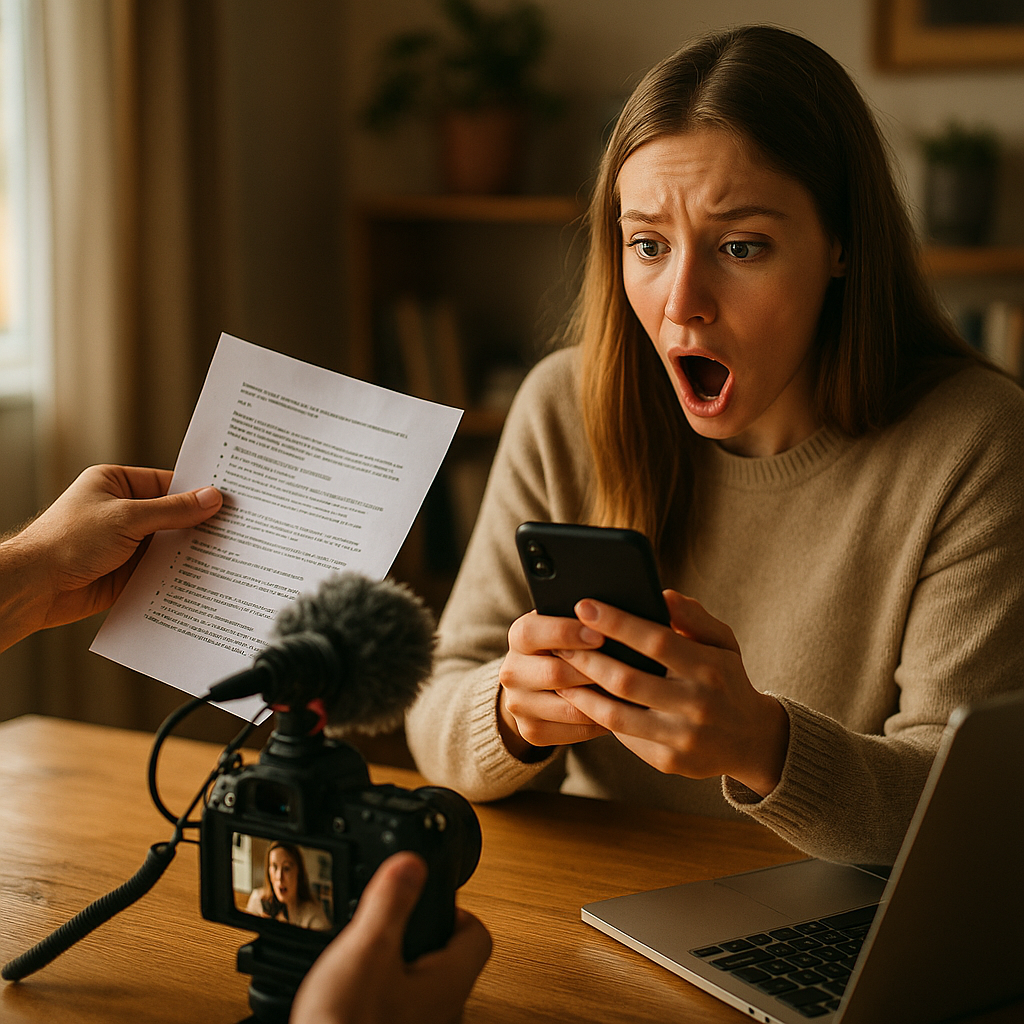
Ninety seconds. That’s roughly how long it takes most viewers to decide whether an influencer’s product review feels staged or sincere. Yet brands keep briefing polished, three-minute reviews stuffed with talking points nobody actually believes. The first-impressions-only format flips that script: it directs creators to film their unfiltered initial reaction within the first five minutes of using a product, no retakes, no script, no second-guessing.
It sounds risky. It is, a little. But the payoff in trust and watch-time is starting to outweigh the discomfort of losing control over the message.
Why Polished Reviews Are Losing to Raw Reactions
Audiences have gotten good at spotting a script. The pause before the compliment, the suspiciously specific brand language, the cut that happens right when something goes wrong — viewers clock all of it, even subconsciously. Sprout Social’s ongoing research into consumer trust in social content keeps landing on the same conclusion: authenticity beats production value, especially with Gen Z and younger millennial buyers.
First-impressions content works because it removes the thing audiences distrust most: editorial distance between the creator and the moment. There’s no time to think of the “right” thing to say. What you get instead is a raw gut reaction, complete with confusion, delight, or mild disappointment. That imperfection is the entire value proposition.
A scripted five-star review builds awareness. An unscripted five-minute reaction builds belief — and belief is what actually drives conversion.
Compare this to the traditional real product use briefing model, which already pushed brands away from over-rehearsed demos. First-impressions content takes that same philosophy and compresses it into a tighter, higher-stakes window.
What “Unfiltered” Actually Means for a Brief
Unfiltered doesn’t mean unbriefed. That’s the mistake a lot of brand teams make when they first try this format — they either over-script it (defeating the purpose) or send zero direction and hope for the best (inviting chaos). The sweet spot is a brief that sets guardrails, not lines.
- Set the moment, not the message. Tell the creator when to hit record (unboxing, first bite, first swipe) but not what to say.
- Define the five-minute window clearly. Does the clock start at unboxing or at first use? Ambiguity here creates inconsistent content across creators.
- Ban pre-briefing on product benefits. If a creator already knows the “correct” reaction, you’ve killed the format before it started.
- Require one continuous take. Editing within the window undermines the entire credibility play.
- Allow negative reactions to stay in. This is the hard part for brand safety teams, and it’s non-negotiable if you want the format to retain trust value.
This is a close cousin to the approach outlined in live-unboxing-gone-wrong briefs, where imperfection is treated as an asset rather than a liability. The difference is that first-impressions content doesn’t wait for something to go wrong. It just captures whatever happens, good or bad, in real time.
The Compliance Question Nobody Wants to Ask
Here’s the uncomfortable part. If a creator’s honest first reaction is lukewarm, negative, or just confused, what do you do with that footage? Legally, you can’t cherry-pick only the flattering reactions and call the format “authentic” — that starts drifting into deceptive advertising territory under FTC endorsement guidelines.
Three practical rules keep this format compliant:
- Disclosure happens before the reaction, not after. #ad or #partner tags need to appear in the first few seconds, not buried in a caption after the fact.
- You can’t selectively publish only positive takes and market the format as “unfiltered.” That’s a material misrepresentation. If you’re going to brand the series as authentic reactions, be prepared to actually publish a range of them.
- Product claims still need substantiation. A creator can say “this feels lighter than I expected,” but if they claim a specific performance benefit on camera, unscripted or not, your legal team needs to have already validated that claim exists in your substantiation file.
This mirrors the compliance logic covered in two-week diary format briefs and the countdown-to-restock playbook — the format changes, but the FTC’s expectations around disclosure timing and honesty don’t.
Building the Five-Minute Window Into Production
Operationally, this format is cheaper than a traditional UGC shoot, which is part of why brand teams are warming to it despite the risk. There’s no multi-take schedule, no elaborate lighting setup, often not even a script review call. What it does require is tighter logistics on the front end.
Send the product with instructions that arrive after the creator has already committed to filming, not before. Some brands now use timed unboxing kits: the product ships sealed with a card that says “film before opening,” removing the temptation to preview and mentally prepare a reaction. It’s a small trick, but it meaningfully increases the rawness of the footage.
Also worth deciding upfront: vertical or horizontal, single camera or phone-only, and whether creators need to hold up the packaging for brand visibility in frame. These logistical details matter more in an unscripted format because there’s no second take to fix a framing mistake.
If you’re running this across multiple creators, treat it like the multi-format UGC shoot template approach: one clear technical brief, minimal creative direction, and a fast turnaround expectation so the content doesn’t go stale before it publishes.
Where This Format Performs Best (and Where It Falls Flat)
Not every product category benefits equally. First impressions work best where sensory or emotional reaction is immediate and visible: food and beverage, skincare, fragrance, tech unboxings, fitness gear. The reaction has to be observable within minutes for the format to have any payoff.
It performs worse for products with delayed gratification. A supplement, a mattress, a B2B SaaS tool — nobody’s first five minutes with these tells you much of anything. Forcing the format onto a category where the real value only emerges over weeks just produces empty, awkward footage. In those cases, longer-arc formats like the two-week diary format remain the better fit.
If the product’s value can’t be felt in five minutes, don’t force a five-minute format. Match the timeline to the actual customer experience, or the content reads as gimmicky rather than genuine.
Brands running paid influencer programs at scale are increasingly A/B testing format types by category rather than committing to one house style. eMarketer’s coverage of creator content performance trends has repeatedly flagged that format-fit-to-category is now a bigger performance lever than creator follower count.
Measuring Success Without Vanity Metrics
Watch time and completion rate matter more here than likes. Because the format is inherently short and front-loaded with reaction, a high drop-off in the first fifteen seconds usually signals the reaction wasn’t compelling enough to hook — which is useful diagnostic data, not just a vanity miss.
Track three things specifically:
- Completion rate against the five-minute runtime (or however long the edited-down version runs).
- Comment sentiment split between “this feels real” language and skepticism callouts. If viewers are accusing the creator of faking it, the format has failed at its core job.
- Save and share rate relative to your brand’s typical UGC benchmark. Authenticity-driven content tends to outperform on shares because people forward it as a recommendation, not just entertainment.
If you’re distributing this content across multiple channels afterward, funnel it through a unified content library rather than treating each platform cut as a separate asset. The raw footage itself becomes valuable across paid social, product pages, and even sales enablement decks, particularly the moments where a creator reacts with genuine surprise.
The Takeaway
The first-impressions-only format works because it trades your control over the message for the audience’s belief in it — a trade most legacy review formats can no longer make. Brief the moment, not the script, publish the range of reactions you actually get, and reserve this format for products whose value shows up fast. Do that, and you’ll have content that outperforms your polished reviews without costing more to produce.
FAQs
What makes a first-impressions-only video different from a standard product review?
A standard review is scripted and often filmed after the creator has already formed and rehearsed an opinion. First-impressions content captures the reaction live, within the first five minutes of contact with the product, with no retakes or pre-briefing on messaging.
Is this format compliant with FTC disclosure rules?
Yes, as long as disclosure (#ad, #partner) appears at the very start of the video rather than buried in the caption, and brands don’t selectively publish only flattering reactions while marketing the series as authentic or unfiltered.
What if the creator’s honest first reaction is negative?
That’s part of the risk you accept with this format. Publishing only positive reactions while calling the content “unfiltered” can constitute a misleading endorsement claim under FTC guidelines, so brands need a plan for handling mixed or negative reactions before launching the campaign.
Which product categories work best for this format?
Categories with immediate sensory or emotional feedback — food, beverage, skincare, fragrance, tech unboxing, fitness gear — perform best. Products with delayed value, like supplements or mattresses, don’t suit a five-minute reaction window.
How should brands brief creators without scripting the reaction?
Direct the moment (when to start filming) rather than the message (what to say). Avoid pre-briefing creators on product benefits, require a single continuous take, and clearly define when the five-minute window begins.
FAQs
What makes a first-impressions-only video different from a standard product review?
A standard review is scripted and often filmed after the creator has already formed and rehearsed an opinion. First-impressions content captures the reaction live, within the first five minutes of contact with the product, with no retakes or pre-briefing on messaging.
Is this format compliant with FTC disclosure rules?
Yes, as long as disclosure (#ad, #partner) appears at the very start of the video rather than buried in the caption, and brands don’t selectively publish only flattering reactions while marketing the series as authentic or unfiltered.
What if the creator’s honest first reaction is negative?
That’s part of the risk you accept with this format. Publishing only positive reactions while calling the content “unfiltered” can constitute a misleading endorsement claim under FTC guidelines, so brands need a plan for handling mixed or negative reactions before launching the campaign.
Which product categories work best for this format?
Categories with immediate sensory or emotional feedback — food, beverage, skincare, fragrance, tech unboxing, fitness gear — perform best. Products with delayed value, like supplements or mattresses, don’t suit a five-minute reaction window.
How should brands brief creators without scripting the reaction?
Direct the moment (when to start filming) rather than the message (what to say). Avoid pre-briefing creators on product benefits, require a single continuous take, and clearly define when the five-minute window begins.
Top Influencer Marketing Agencies
The leading agencies shaping influencer marketing in 2026
Agencies ranked by campaign performance, client diversity, platform expertise, proven ROI, industry recognition, and client satisfaction. Assessed through verified case studies, reviews, and industry consultations.
Moburst

-
2

The Shelf
Boutique Beauty & Lifestyle Influencer AgencyA data-driven boutique agency specializing exclusively in beauty, wellness, and lifestyle influencer campaigns on Instagram and TikTok. Best for brands already focused on the beauty/personal care space that need curated, aesthetic-driven content.Clients: Pepsi, The Honest Company, Hims, Elf Cosmetics, Pure LeafVisit The Shelf → -
3

Audiencly
Niche Gaming & Esports Influencer AgencyA specialized agency focused exclusively on gaming and esports creators on YouTube, Twitch, and TikTok. Ideal if your campaign is 100% gaming-focused — from game launches to hardware and esports events.Clients: Epic Games, NordVPN, Ubisoft, Wargaming, Tencent GamesVisit Audiencly → -
4

Viral Nation
Global Influencer Marketing & Talent AgencyA dual talent management and marketing agency with proprietary brand safety tools and a global creator network spanning nano-influencers to celebrities across all major platforms.Clients: Meta, Activision Blizzard, Energizer, Aston Martin, WalmartVisit Viral Nation → -
5

The Influencer Marketing Factory
TikTok, Instagram & YouTube CampaignsA full-service agency with strong TikTok expertise, offering end-to-end campaign management from influencer discovery through performance reporting with a focus on platform-native content.Clients: Google, Snapchat, Universal Music, Bumble, YelpVisit TIMF → -
6

NeoReach
Enterprise Analytics & Influencer CampaignsAn enterprise-focused agency combining managed campaigns with a powerful self-service data platform for influencer search, audience analytics, and attribution modeling.Clients: Amazon, Airbnb, Netflix, Honda, The New York TimesVisit NeoReach → -
7

Ubiquitous
Creator-First Marketing PlatformA tech-driven platform combining self-service tools with managed campaign options, emphasizing speed and scalability for brands managing multiple influencer relationships.Clients: Lyft, Disney, Target, American Eagle, NetflixVisit Ubiquitous → -
8

Obviously
Scalable Enterprise Influencer CampaignsA tech-enabled agency built for high-volume campaigns, coordinating hundreds of creators simultaneously with end-to-end logistics, content rights management, and product seeding.Clients: Google, Ulta Beauty, Converse, AmazonVisit Obviously →