


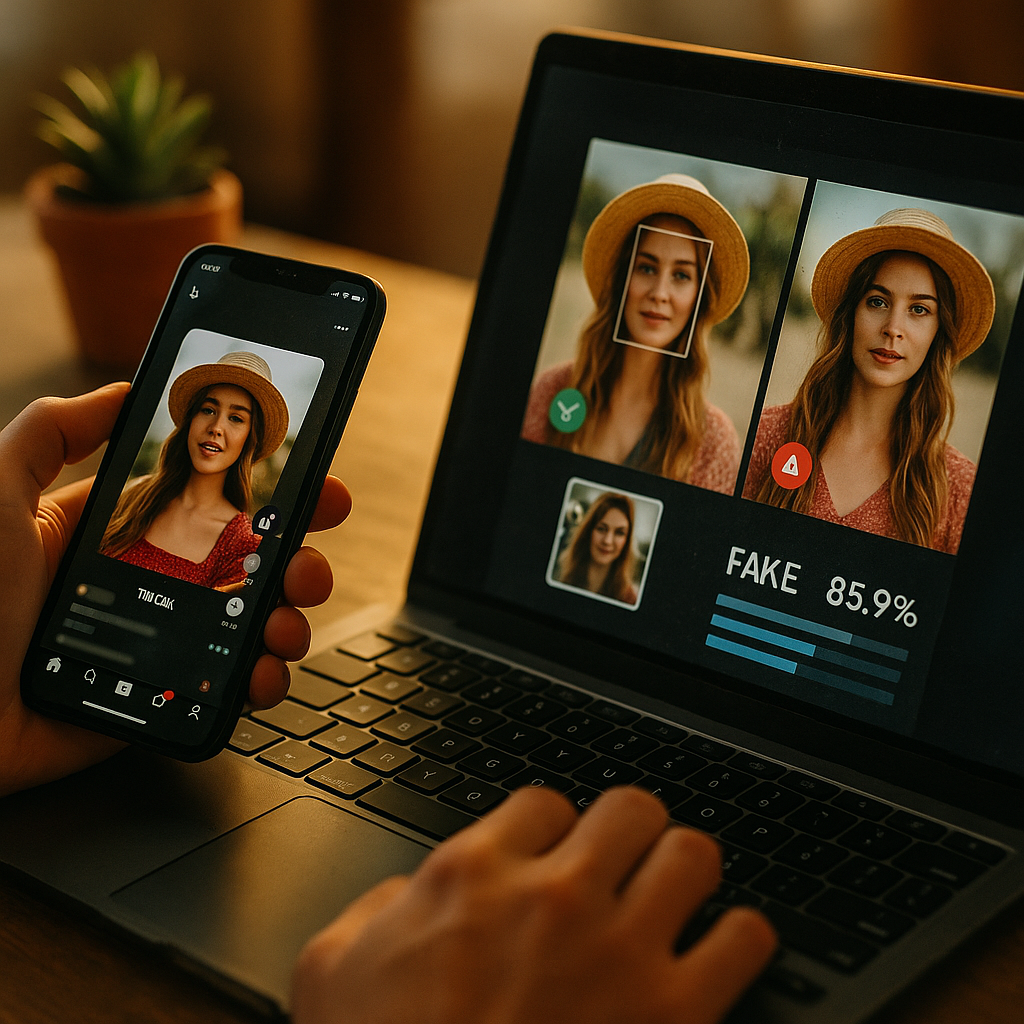
73% of consumers say they’d trust a brand less if they found out it used undisclosed AI-generated content in an ad. Now put that stat next to this one: TikTok and Instagram are both rolling out stricter AI-labeling enforcement in the same window, which means brands running influencer and UGC-style campaigns across both platforms are suddenly exposed on two fronts at once. Synthetic-media detection isn’t a nice-to-have anymore. It’s becoming compliance infrastructure.
The problem is that most marketing teams don’t know how to evaluate these tools. They buy on vendor demos and marketing copy, not on accuracy benchmarks or legal defensibility. That’s a mistake you can’t afford when two of your biggest distribution channels are tightening the same screws simultaneously.
Why This Is Happening on Both Platforms at Once
TikTok and Instagram didn’t coordinate, but they’re converging for the same reason: regulatory pressure, generative AI’s flood of synthetic content, and a genuine trust problem with audiences who can no longer tell what’s real. Meta has expanded its “AI info” labeling requirements to cover a wider range of manipulated and synthetic media, and TikTok has pushed similar disclosure mandates for AI-generated content, including creator-made synthetic voices and faces. Both platforms now lean on a mix of self-disclosure prompts and automated detection to flag content that creators don’t label themselves.
This matters more for brands than it might first appear. If your influencer partners use AI avatars, voice cloning, or synthetic backgrounds without proper disclosure, and the platform’s detection systems catch it before your compliance team does, you’re the one facing the brand-safety fallout. Not the creator. You.
When platform enforcement and regulatory scrutiny move at the same time, the brands caught flat-footed aren’t the ones without AI content — they’re the ones without a detection and disclosure process.
What “Synthetic-Media Detection” Actually Means in Practice
Let’s separate hype from function. A synthetic-media detection tool typically does one or more of the following:
- Forensic analysis — examining pixel-level artifacts, compression inconsistencies, or metadata signatures that indicate AI generation or manipulation.
- Provenance verification — checking for embedded content credentials (like C2PA metadata) that confirm how and where an asset was created.
- Voice and face-swap detection — flagging cloned voices or deepfaked faces using biometric pattern matching.
- Behavioral and contextual signals — cross-referencing posting patterns, account history, and engagement anomalies that often correlate with synthetic or bot-amplified content.
No single vendor nails all four. That’s the first thing brands get wrong: they assume “detection tool” is a category with interchangeable products, when really it’s a spectrum of narrow capabilities bundled differently by each vendor.
The Evaluation Framework: Five Questions Before You Sign
1. What’s the false-positive rate, and who validated it?
Ask for third-party benchmark data, not internal marketing claims. A tool that flags 15% of legitimate human-shot UGC as “likely synthetic” will create more operational chaos than it solves — your team will spend hours re-reviewing content that never needed a second look. Demand to see testing methodology. If a vendor can’t produce it, that’s your answer.
2. Does it cover both platforms’ specific formats?
TikTok’s short-form, heavily edited native content behaves differently than Instagram Reels or static carousel posts. A detection tool trained primarily on one platform’s content style may underperform badly on the other. If you’re running influencer programs across both, ask vendors directly: was your model trained on cross-platform data, or optimized for one format?
3. Can it detect voice cloning and face-swaps separately from generic “AI-generated” flags?
Not all synthetic content is equal risk. A brand using an AI voiceover for accessibility is a very different disclosure situation than a creator using a deepfaked celebrity likeness. Tools that lump everything into one binary “AI or not AI” score aren’t giving you the granularity you need to make compliance decisions.
4. How does it integrate with your existing creator workflow?
A detection tool that requires manual upload-and-check for every asset won’t survive contact with a real influencer program running dozens of creators and hundreds of assets a month. Look for API access, bulk scanning, and integration with your influencer management or DAM platform. This is the same operational logic that applies to martech vendor evaluations more broadly: interoperability isn’t optional, it’s the difference between a tool people actually use and one that gets abandoned after month two.
5. What’s the audit trail and legal defensibility?
If the FTC or a regulator ever asks why an undisclosed AI-generated ad ran on your account, “we used a detection tool” isn’t a defense unless you can produce a timestamped record of what was scanned, when, and what the result was. Ask vendors about reporting exports, retention periods, and whether their output would hold up as documentation in a compliance review.
Buy, Build, or Blend? The Real Decision Brands Face
Most mid-market brands don’t need to build in-house detection capability. That’s a job for platforms and specialized vendors with access to training data at scale. But relying entirely on TikTok’s and Instagram’s native detection is risky too, because platform-side flagging happens after publication, when the reputational damage is already underway.
The pragmatic middle ground: use a third-party detection layer as a pre-publication gate for high-risk content categories (paid partnerships, political or health-adjacent claims, anything using synthetic voice or likeness), while relying on platform-native tools as a secondary check. This mirrors how smart teams have started treating AI content governance generally, layering verification rather than trusting one system to catch everything.
It’s worth noting that this problem sits inside a bigger shift in how marketing organizations think about AI governance. The same discipline that’s forcing teams to rebuild governance checklists for agentic AI systems applies here: know what the system can touch, know what it can miss, and don’t assume vendor defaults protect you.
What Happens If You Get This Wrong
Skip the framework and here’s the realistic downside: a flagged creator post triggers platform-level restrictions on your branded content, your paid partnership ads get paused pending review, and your compliance team scrambles to produce disclosure documentation that doesn’t exist. Meanwhile, competitors who built detection into their creator onboarding process keep running campaigns without interruption.
There’s also a slower-burning risk: erosion of audience trust. Sprout Social’s research on social trust consistently shows that perceived authenticity drives engagement and purchase intent more than production value. Brands that get caught flat-footed on AI disclosure don’t just risk a platform penalty. They risk the audience relationship the entire influencer strategy was built on.
Detection tools aren’t just a compliance expense. They’re becoming a trust signal you can put in front of partners and regulators alike.
Building This Into Creator Contracts and Briefs
Detection tools solve half the problem. The other half is upstream: your creator briefs and contracts need explicit AI-disclosure clauses now, not after your first platform strike. Require creators to disclose any synthetic media use before content goes live, and build a verification step into your approval workflow rather than trusting self-reporting alone.
This is the same logic driving better creative brief processes elsewhere in the AI marketing stack: the earlier you catch a compliance issue, the cheaper it is to fix. Catching an undisclosed AI avatar during brief review costs you a conversation. Catching it after publication costs you a platform strike and possibly a regulatory inquiry.
Also worth checking: does your detection vendor track evolving guidance from bodies like the FTC, which has been increasingly active on AI-generated endorsement disclosure? A tool that hasn’t updated its flagging criteria against current regulatory guidance is already behind.
Where This Is Headed
Expect platform enforcement to get stricter, not looser, as generative tools get better and harder to spot with the naked eye. Meta’s business platform guidance and TikTok’s advertiser resources are both likely to expand labeling requirements over the coming cycles, particularly around AI voice and likeness use in paid partnerships. Brands that build detection and disclosure into standard operating procedure now will treat future policy tightening as a minor update. Brands that don’t will treat every policy change as a fire drill.
The Bottom Line
Pick a synthetic-media detection tool based on false-positive transparency, cross-platform coverage, and audit-trail quality, then pair it with disclosure clauses baked into every creator contract. Do that now, before the next round of platform enforcement, not after your first strike.
Frequently Asked Questions
What is synthetic-media detection in the context of influencer marketing?
It refers to tools and processes that identify AI-generated or AI-manipulated content, such as cloned voices, deepfaked faces, or fully synthetic video, before it’s published or flagged by a platform. Brands use it to verify creator content complies with disclosure rules on platforms like TikTok and Instagram.
Are TikTok and Instagram using the same detection standards?
No. Both platforms have their own labeling policies and detection systems, and they don’t share a unified standard. Brands running cross-platform campaigns need to check each platform’s current AI-content policy separately and confirm their detection vendor covers both formats.
Who is legally responsible if a creator posts undisclosed AI content?
Regulatory guidance, including from the FTC, increasingly points to brands and advertisers sharing responsibility alongside creators for disclosure failures in sponsored content. Contracts should explicitly assign disclosure obligations, but brands can still face platform-level and reputational consequences regardless of contract terms.
How much do synthetic-media detection tools typically cost?
Pricing varies widely based on scan volume and detection depth, ranging from per-asset API pricing for smaller programs to enterprise licensing for brands scanning thousands of creator assets monthly. Cost should be weighed against the operational risk of platform strikes or paused ad accounts.
Can these tools guarantee 100% detection accuracy?
No current tool guarantees perfect accuracy. Detection technology is in an ongoing arms race with generative AI tools, so brands should treat detection as risk reduction, not risk elimination, and pair it with strong disclosure requirements in creator agreements.
Top Influencer Marketing Agencies
The leading agencies shaping influencer marketing in 2026
Agencies ranked by campaign performance, client diversity, platform expertise, proven ROI, industry recognition, and client satisfaction. Assessed through verified case studies, reviews, and industry consultations.
Moburst

-
2

The Shelf
Boutique Beauty & Lifestyle Influencer AgencyA data-driven boutique agency specializing exclusively in beauty, wellness, and lifestyle influencer campaigns on Instagram and TikTok. Best for brands already focused on the beauty/personal care space that need curated, aesthetic-driven content.Clients: Pepsi, The Honest Company, Hims, Elf Cosmetics, Pure LeafVisit The Shelf → -
3

Audiencly
Niche Gaming & Esports Influencer AgencyA specialized agency focused exclusively on gaming and esports creators on YouTube, Twitch, and TikTok. Ideal if your campaign is 100% gaming-focused — from game launches to hardware and esports events.Clients: Epic Games, NordVPN, Ubisoft, Wargaming, Tencent GamesVisit Audiencly → -
4

Viral Nation
Global Influencer Marketing & Talent AgencyA dual talent management and marketing agency with proprietary brand safety tools and a global creator network spanning nano-influencers to celebrities across all major platforms.Clients: Meta, Activision Blizzard, Energizer, Aston Martin, WalmartVisit Viral Nation → -
5

The Influencer Marketing Factory
TikTok, Instagram & YouTube CampaignsA full-service agency with strong TikTok expertise, offering end-to-end campaign management from influencer discovery through performance reporting with a focus on platform-native content.Clients: Google, Snapchat, Universal Music, Bumble, YelpVisit TIMF → -
6

NeoReach
Enterprise Analytics & Influencer CampaignsAn enterprise-focused agency combining managed campaigns with a powerful self-service data platform for influencer search, audience analytics, and attribution modeling.Clients: Amazon, Airbnb, Netflix, Honda, The New York TimesVisit NeoReach → -
7

Ubiquitous
Creator-First Marketing PlatformA tech-driven platform combining self-service tools with managed campaign options, emphasizing speed and scalability for brands managing multiple influencer relationships.Clients: Lyft, Disney, Target, American Eagle, NetflixVisit Ubiquitous → -
8

Obviously
Scalable Enterprise Influencer CampaignsA tech-enabled agency built for high-volume campaigns, coordinating hundreds of creators simultaneously with end-to-end logistics, content rights management, and product seeding.Clients: Google, Ulta Beauty, Converse, AmazonVisit Obviously →