


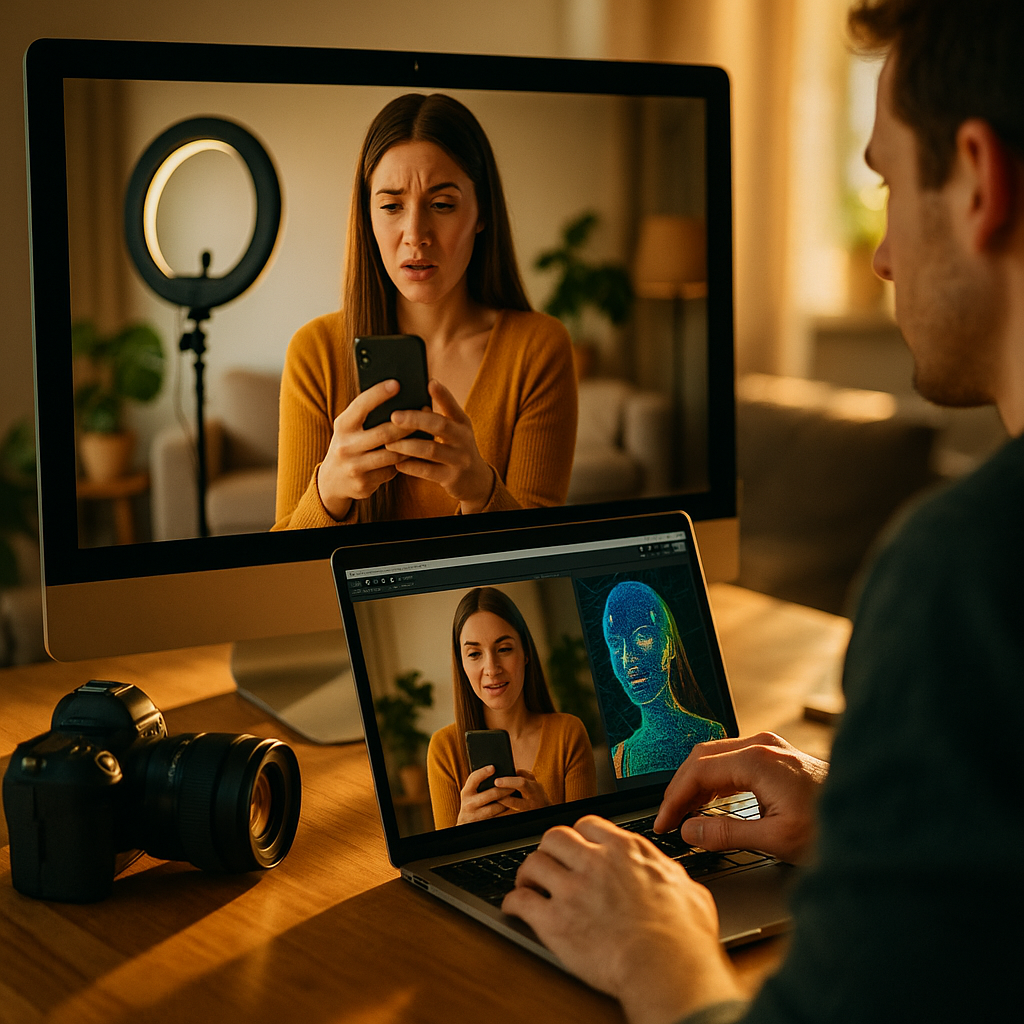
Nearly 60% of influencer content never breaks past the first 48 hours of relevance, yet most brands still wait until the campaign post-mortem to figure out why. AI-powered creative refinement is closing that gap, using live performance signals to flag weak creator assets and suggest fixes before the budget’s spent. It’s not autopilot creative direction. It’s a faster feedback loop than any human team can run manually.
Why “Set It and Forget It” Creative Is Dying
For years, the influencer content workflow looked the same: brief the creator, approve the draft, post, wait for the recap deck. By the time anyone noticed an asset was underperforming, the flight was already over. Budget gone. Lesson learned, maybe, for next quarter.
That model doesn’t survive contact with how fast platforms move now. Instagram Reels and TikTok both reward or punish content within hours, not days. A hook that flops on day one rarely recovers. Brands running paid amplification behind creator content are essentially burning media spend on an asset nobody bothered to check.
This is the same operational gap that pushed brands toward mid-campaign A/B testing for influencer creative. AI-powered refinement tools take that logic a step further: instead of just testing variants, they analyze why an asset is underperforming and generate specific edit recommendations.
What “AI-Powered Creative Refinement” Actually Means
Strip away the marketing language and the mechanics are fairly simple. These platforms ingest performance data (watch-through rate, drop-off points, comment sentiment, click-through, save rate) and cross-reference it against a library of prior creative patterns. When an asset underperforms against a benchmark, the system doesn’t just flag it. It suggests why, and often how to fix it.
- Hook diagnostics: Flagging the first 1-3 seconds when retention craters, then suggesting alternative openings based on top-performing patterns in the same vertical.
- Pacing analysis: Identifying where viewers drop off mid-video and recommending cut points or re-sequencing.
- Caption and CTA rewrites: Generating alternate copy based on language that’s driven clicks in similar campaigns.
- Visual composition flags: Noting when product placement, text overlay timing, or thumbnail choice correlates with lower completion rates.
Tools like Vidmob, Motion, and Pattern89’s successors have pushed this into paid creative for a while. What’s changed recently is the extension of these engines into organic and branded creator content, where the data is noisier and the creative is less standardized. That’s a harder problem, and it’s why most vendors are still iterating on accuracy rather than claiming a finished product.
The shift isn’t from human to AI creative direction. It’s from quarterly retros to real-time triage, where underperforming assets get a second chance inside the same media window instead of a note in next quarter’s deck.
The Data Behind the Suggestions
None of this works without a performance data layer that’s actually clean. Most brands underestimate how messy their creator content data is until they try to automate decisions off it. Platform-native metrics (TikTok’s creator analytics, Meta’s Insights) don’t always sync cleanly with brand-side attribution tools, and definitions of “engagement” vary wildly between platforms.
This is where the connection to AI attribution linking influencer spend to revenue becomes relevant. Creative refinement engines are only as good as the attribution data feeding them. If a platform is optimizing toward vanity engagement instead of downstream conversion, you’ll get a beautifully “improved” asset that still doesn’t move product.
According to eMarketer, brands citing measurement and attribution as their top influencer marketing challenge has stayed stubbornly high for several consecutive years. AI creative tools don’t solve that problem outright, they just make the consequences of bad attribution visible faster.
Where This Gets Genuinely Useful
Say a beauty brand runs a 40-creator seeding campaign for a new serum launch. Within the first six hours, the refinement engine flags eleven assets with retention drop-off before the five-second mark. It clusters them: most open with a static product shot instead of a face or motion. The system suggests re-cutting with the demo moment moved to the front three seconds, based on patterns pulled from the brand’s own historical top performers.
That’s a genuinely useful signal. It’s specific, it’s grounded in the brand’s own data (not generic industry benchmarks), and it’s actionable inside the flight window rather than after it closes. Compare that to the old workflow: someone on the social team eyeballs a spreadsheet three weeks later and writes “hooks need work” in a recap slide nobody reads.
The Limits Nobody Talks About
Here’s the part vendors gloss over in the sales deck: creative suggestion engines are pattern-matchers, not strategists. They’re excellent at telling you what correlates with better retention across a dataset. They’re bad at understanding why a specific creator’s voice works for their specific audience.
Push a nano-creator to adopt a “high-performing” hook style lifted from a mega-influencer’s content, and you risk flattening the exact authenticity that made them worth partnering with in the first place. This is a version of the problem covered in why influencer-matching AI overlooks emerging creators: algorithms trained on aggregate data tend to regress everyone toward the mean, and the mean is rarely where the magic is.
There’s also a data volume issue. Refinement suggestions get more reliable with more historical assets to learn from. A brand running its first influencer campaign has almost no proprietary data for the model to draw on, so early suggestions lean on generic cross-brand benchmarks that may not map to a specific niche, audience, or platform quirk.
An AI suggestion engine can tell you what usually works. It can’t tell you what will work for a creator whose entire value is that they don’t do what usually works.
Governance: Who Signs Off on an AI-Edited Creator Asset?
This is where brand and legal teams need to get involved early, not after a vendor’s already mid-implementation. Auto-suggested edits raise real questions about creator consent, contract scope, and disclosure compliance.
If a platform generates an alternate caption or recommends re-cutting a video, who approves that before it goes live? Does the creator’s original agreement even cover AI-modified versions of their content? The FTC’s endorsement guidelines already require disclosures to be clear and tied to the actual content presented to the audience. An AI-rewritten CTA that changes the substance of a claim needs the same scrutiny as the original copy.
This is functionally the same governance gap explored in the Ask Ad Manager autonomy audit on sign-off rules: more autonomy for the tool means more clarity needed on who’s accountable when something goes wrong. Brands that skip this step tend to find out the hard way, usually when a creator objects to their content being algorithmically “improved” without a conversation first.
A few non-negotiables worth building into any vendor contract or internal SOP:
- Human review required before any AI-suggested edit goes live, no exceptions for “minor” copy changes.
- Creator notification and consent built into the workflow, not bolted on after complaints.
- Clear audit trail showing what was AI-suggested versus originally created, in case of a dispute or regulatory inquiry.
- Explicit contract language covering AI-assisted modification rights, reviewed by legal before rollout.
How to Evaluate These Platforms Without Getting Sold a Demo
Vendor demos in this space are polished and, frankly, a little deceptive. They show you the clean use case: an obvious hook failure, an obvious fix, a satisfying before/after. Real campaigns are messier. Before signing a contract, push on a few specifics.
- Data source transparency: Ask exactly which metrics feed the model and whether it’s trained on your historical data or aggregate industry data.
- Suggestion specificity: Generic advice (“try a stronger hook”) is worthless. Demand examples of platform-specific, brand-specific recommendations from a pilot period.
- Integration depth: Does it connect to your existing CRM and creator management stack, or does it live in a silo? This overlaps heavily with the questions raised in MCP and A2A protocol support for martech buyers, since a refinement engine that can’t talk to your other systems creates more manual work, not less.
- False positive rate: Ask how often the tool flags an asset as underperforming when it’s actually just early in its lifecycle. Retention curves differ by format and platform, and a naive model will misread normal variance as failure.
Run a pilot on one platform and one content format before rolling this out across your entire creator roster. The tools that are genuinely useful will show measurable lift within a single campaign cycle. The ones that aren’t will hide behind “the model needs more data” indefinitely.
Frequently Asked Questions
FAQs
What is AI-powered creative refinement in influencer marketing?
It’s the use of AI systems to analyze real-time performance data on creator content, identify underperforming assets, and generate specific edit recommendations, such as new hooks, pacing changes, or CTA rewrites, aimed at improving results within the same campaign window.
How is this different from standard A/B testing?
A/B testing compares pre-built variants against each other. Creative refinement tools go a step further by diagnosing why an asset underperforms and generating new edit suggestions based on that diagnosis, often without requiring the brand to have built alternate versions in advance.
Can AI actually improve creator content, or does it just flatten creator voice?
It can genuinely help with structural issues like pacing or hook placement, but it’s less reliable for judgment calls about tone or authenticity. Brands should treat suggestions as directional input for human review, not automatic replacements for creator judgment.
Who is legally responsible if an AI-suggested edit creates a compliance issue?
Ultimately the brand and creator, not the platform vendor. This is why human sign-off and clear contract language covering AI-assisted modifications are essential before deploying these tools at scale.
How much historical data does a brand need before these tools are useful?
There’s no fixed threshold, but tools trained only on generic cross-brand benchmarks tend to produce less relevant suggestions than those with access to a brand’s own historical creative performance. Expect early suggestions to improve significantly after a few campaign cycles of proprietary data.
Does this replace the need for a human creative strategist?
No. It changes what strategists spend time on, shifting focus from manual data review to evaluating and approving AI-generated suggestions, and making the final creative judgment calls the tools can’t make.
Next step: Before adopting an AI creative refinement platform, run a single-campaign pilot with clear human sign-off checkpoints, and measure whether the suggestions actually move revenue metrics, not just engagement, before expanding it across your creator roster.
Top Influencer Marketing Agencies
The leading agencies shaping influencer marketing in 2026
Agencies ranked by campaign performance, client diversity, platform expertise, proven ROI, industry recognition, and client satisfaction. Assessed through verified case studies, reviews, and industry consultations.
Moburst

-
2

The Shelf
Boutique Beauty & Lifestyle Influencer AgencyA data-driven boutique agency specializing exclusively in beauty, wellness, and lifestyle influencer campaigns on Instagram and TikTok. Best for brands already focused on the beauty/personal care space that need curated, aesthetic-driven content.Clients: Pepsi, The Honest Company, Hims, Elf Cosmetics, Pure LeafVisit The Shelf → -
3

Audiencly
Niche Gaming & Esports Influencer AgencyA specialized agency focused exclusively on gaming and esports creators on YouTube, Twitch, and TikTok. Ideal if your campaign is 100% gaming-focused — from game launches to hardware and esports events.Clients: Epic Games, NordVPN, Ubisoft, Wargaming, Tencent GamesVisit Audiencly → -
4

Viral Nation
Global Influencer Marketing & Talent AgencyA dual talent management and marketing agency with proprietary brand safety tools and a global creator network spanning nano-influencers to celebrities across all major platforms.Clients: Meta, Activision Blizzard, Energizer, Aston Martin, WalmartVisit Viral Nation → -
5

The Influencer Marketing Factory
TikTok, Instagram & YouTube CampaignsA full-service agency with strong TikTok expertise, offering end-to-end campaign management from influencer discovery through performance reporting with a focus on platform-native content.Clients: Google, Snapchat, Universal Music, Bumble, YelpVisit TIMF → -
6

NeoReach
Enterprise Analytics & Influencer CampaignsAn enterprise-focused agency combining managed campaigns with a powerful self-service data platform for influencer search, audience analytics, and attribution modeling.Clients: Amazon, Airbnb, Netflix, Honda, The New York TimesVisit NeoReach → -
7

Ubiquitous
Creator-First Marketing PlatformA tech-driven platform combining self-service tools with managed campaign options, emphasizing speed and scalability for brands managing multiple influencer relationships.Clients: Lyft, Disney, Target, American Eagle, NetflixVisit Ubiquitous → -
8

Obviously
Scalable Enterprise Influencer CampaignsA tech-enabled agency built for high-volume campaigns, coordinating hundreds of creators simultaneously with end-to-end logistics, content rights management, and product seeding.Clients: Google, Ulta Beauty, Converse, AmazonVisit Obviously →