


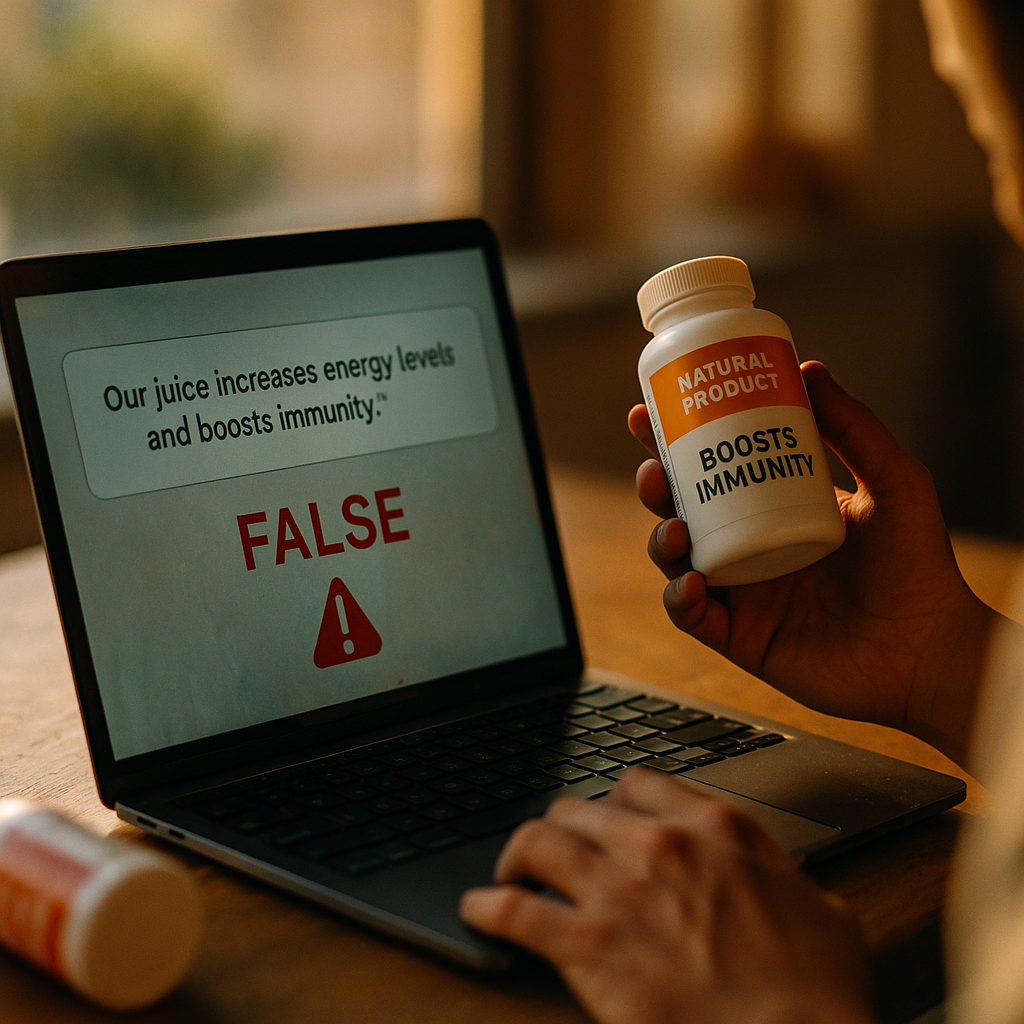
Forty-six percent of marketers using generative AI for product copy have shipped a claim that wasn’t true — a stat that should terrify anyone signing off on ad creative. Retrieval-augmented generation is quietly fixing that. No press releases, no big vendor keynotes. Just fewer legal escalations and faster approval cycles for the brands paying attention.
If you’ve never heard of RAG outside a technical whitepaper, that’s fine. You don’t need to understand the architecture to understand why it matters. You need to understand why your product copy keeps inventing specs that don’t exist, and why the fix isn’t “better prompting.”
The Hallucination Problem Was Never About Prompting
Marketing teams spent the better part of two years trying to prompt their way out of AI hallucinations. Add more context. Add examples. Tell the model to “only use facts you’re certain about.” None of it worked reliably, because large language models don’t actually know what they know. They generate the statistically likely next word based on training data, not a verified lookup of your product spec sheet.
That’s fine for a blog intro. It’s a liability when the model tells a customer your moisturizer is “clinically proven” to reduce wrinkles by 40% and no such clinical trial exists. Or when it claims a supplement is “FDA approved” — a phrase that alone could trigger a Federal Trade Commission inquiry, since FTC guidance treats unsubstantiated health claims as a compliance red flag regardless of intent.
Prompting can reduce the frequency of fabrication. It can’t eliminate the root cause, because the model has no mechanism to distinguish “true fact from my training data” from “plausible-sounding fabrication.” That distinction requires an external source of truth the model can actually check against.
Prompt engineering reduces hallucination frequency. It does not eliminate the root cause, because the model still has no way to verify its own output against ground truth.
What RAG Actually Does (Without the Jargon)
Retrieval-augmented generation splits the job in two. Instead of asking a model to generate copy purely from memory, you first retrieve the relevant, verified source material — your actual product database, your legal-approved claims library, your ingredient specs — and feed that directly into the prompt as grounding context. The model then generates copy constrained to what’s in front of it, rather than what it “remembers” from training.
Think of it like the difference between asking someone to describe a product from memory versus handing them the spec sheet and asking them to summarize it. Same writer, wildly different accuracy rate.
This isn’t theoretical. Teams running RAG pipelines against structured product catalogs report dramatic drops in fabricated specs, because the model is no longer guessing — it’s paraphrasing retrieved, verified text. We covered the mechanics of this in detail in our earlier breakdown of RAG for product claims, and the operational pattern holds across categories: beauty, supplements, electronics, financial services copy.
The retrieval layer is doing the heavy lifting most marketers assumed the model itself was responsible for.
Why It’s Happening Quietly
You won’t see “Now Powered by RAG” as a marketing slogan, and that’s precisely the point. RAG isn’t a feature brands advertise. It’s infrastructure — the plumbing sitting underneath tools like enterprise search platforms and AI copy assistants that marketing teams already use daily. Anthropic’s Claude and OpenAI’s enterprise offerings both now support retrieval grounding against private data sources, letting brands point the model at their own verified claims libraries rather than the open internet’s noise. We compared the two approaches in Claude vs OpenAI enterprise search grounding, and the practical differences matter more for compliance teams than most vendor pitch decks let on.
The shift is happening at the tooling layer, not the campaign layer — which is exactly why most CMOs haven’t noticed it yet, even as their legal review queues get shorter.
Where Brands Are Actually Deploying This
Three use cases dominate right now, and none of them are glamorous.
- Claims libraries as retrieval sources. Legal and regulatory teams maintain an approved-language database. RAG pipelines retrieve from that database first, so generated copy can only reference substantiated claims, not invented ones.
- Product catalog grounding for ecommerce. Retailers running thousands of SKUs use RAG to generate product descriptions grounded in actual spec data, cutting the manual QA burden that used to require a human checking every generated paragraph against the source sheet.
- Competitive and category research. Tools that retrieve live competitor data before generating comparison copy avoid the trap of citing outdated pricing or discontinued features. We’ve tested how different browser-based research tools handle this in our Dia vs Comet vs Copilot Vision comparison, and grounding quality varies a lot more than the marketing copy suggests.
The common thread: every one of these use cases treats the model as a summarizer, not a source of truth. That reframing is the real unlock. Marketers who understand this stop asking “how do I get the AI to stop lying” and start asking “what’s my retrieval source, and how current is it?”
The Retrieval Source Is the Whole Game
Here’s the part nobody wants to hear: RAG doesn’t fix hallucination if your retrieval source is garbage. Garbage in, confidently-stated garbage out. If your product database has stale SKUs, outdated ingredient lists, or claims your legal team never actually approved, RAG will retrieve and paraphrase that garbage with the same fluency it would apply to accurate data.
This is why the brands seeing real ROI from RAG aren’t the ones who bought the flashiest AI copy tool. They’re the ones who did the unglamorous work of building a clean, current, tagged claims repository first.
That’s an operational project, not a procurement decision. It requires legal, brand, and content teams to agree on a single source of truth, version it, and keep it updated as regulations shift — a discipline that overlaps heavily with the governance work we described in prompt library governance. Same principle, applied to source data instead of prompts.
Skip that step and RAG becomes an expensive way to hallucinate faster.
Stress-Testing Before You Trust It
Even a well-grounded RAG pipeline needs adversarial testing before it touches customer-facing copy. What happens when the retrieval system finds no relevant match? Does it fall back to model memory (bad) or flag the gap for human review (good)? What happens with ambiguous product variants — does it accidentally pull specs from a discontinued SKU with a similar name?
These are exactly the scenarios worth red-teaming before launch, not after a customer complaint. Our piece on building an AI red-team to stress-test ad creative covers the practical framework for this: assign someone to actively try to break the pipeline, document every failure mode, and fix the retrieval logic before it fixes itself in production, in front of customers.
A RAG pipeline is only as trustworthy as its worst retrieval failure. Brands that skip adversarial testing find out about that failure from a customer complaint, not a QA report.
The Compliance Angle Nobody’s Pricing In
Regulators haven’t caught up to generative AI copy yet, but they’re not far behind. The FTC has already signaled that AI-generated marketing claims face the same substantiation standards as human-written ones — the tool doesn’t excuse the claim. In the UK, the Information Commissioner’s Office has similarly emphasized accountability for automated decision-making and content generation, regardless of what produced it.
For brands, that means the “the AI said it, not us” defense doesn’t hold up. RAG-grounded pipelines create something regulators actually like: a documented, auditable trail from claim to source. If a generated line of copy says a product is “dermatologist tested,” you can point to the exact retrieved document that substantiates it, timestamped and version-controlled.
That auditability is arguably the bigger win over pure hallucination reduction. It’s not just about being right more often. It’s about being able to prove you were right, on demand, to a regulator or a plaintiff’s attorney.
Compare that to the pre-RAG world, where “why did the AI say that” had no good answer beyond “it seemed statistically plausible.” Try explaining that in a deposition.
What This Means for Budget and Headcount
The efficiency story is real but it’s not the free lunch some vendors promise. Yes, RAG-grounded copy tools cut the manual fact-checking cycle dramatically — some ecommerce teams report review time dropping by more than half. But someone still has to build and maintain the retrieval source, audit outputs periodically, and own the escalation path when the system flags a gap it can’t fill confidently.
That’s a new role in a lot of organizations, not a headcount reduction. Marketing ops teams are increasingly the ones owning this, which tracks with the broader shift we’ve written about in the agentic marketing skills gap. The tools got smarter. The operational literacy required to run them safely didn’t shrink to match.
Budget-wise, expect the line item to shift from “AI copy tool subscription” to “AI copy tool subscription plus retrieval infrastructure plus ongoing claims-library maintenance.” It’s a bigger number upfront. It’s a much smaller number than a single FTC consent decree or a product recall triggered by a hallucinated safety claim.
Industry data backs the urgency here too. Gartner and other analyst firms have flagged AI-generated content accuracy as a top governance concern for marketing leaders heading into next year, and HubSpot‘s own marketing research has repeatedly shown trust in AI-generated content lagging well behind adoption rates. The gap between “we’re using AI to write copy” and “we trust the copy AI writes” is exactly where RAG is doing its quiet work.
Next step: audit your current AI copy pipeline for one question — does it retrieve from a verified source before generating, or does it generate first and hope? If it’s the latter, that’s your highest-priority fix this quarter, not next year’s roadmap item.
FAQs
What is retrieval-augmented generation, in plain terms?
It’s a method where an AI model retrieves relevant, verified information from a trusted source before generating text, rather than relying solely on patterns learned during training. For product copy, that means pulling from your actual spec sheets or approved claims library instead of the model’s general knowledge.
Does RAG completely eliminate hallucinations in AI-generated copy?
No. It significantly reduces fabrication when the retrieval source is accurate and current, but it can’t fix a bad or outdated source. RAG also needs proper fallback handling for cases where no relevant match exists, otherwise the model may still default to guessing.
Is RAG expensive to implement for a mid-sized marketing team?
Costs vary, but the bigger investment is usually operational, not technical: building and maintaining a clean, tagged claims database and assigning ownership for keeping it updated. Many enterprise AI platforms now include retrieval grounding as a built-in feature, lowering the technical barrier.
How does RAG help with regulatory compliance?
It creates an auditable trail from a generated claim back to its verified source document, which matters if a regulator like the FTC questions a product claim. That documentation is harder to produce with ungrounded generative AI, where outputs can’t be traced to a specific verified fact.
Who should own the retrieval source data inside a marketing organization?
Typically a cross-functional group spanning legal, brand, and marketing ops, since the claims library needs regulatory accuracy, brand consistency, and technical maintenance. Treating it as a one-department project usually leads to staleness within a few months.
Top Influencer Marketing Agencies
The leading agencies shaping influencer marketing in 2026
Agencies ranked by campaign performance, client diversity, platform expertise, proven ROI, industry recognition, and client satisfaction. Assessed through verified case studies, reviews, and industry consultations.
Moburst

-
2

The Shelf
Boutique Beauty & Lifestyle Influencer AgencyA data-driven boutique agency specializing exclusively in beauty, wellness, and lifestyle influencer campaigns on Instagram and TikTok. Best for brands already focused on the beauty/personal care space that need curated, aesthetic-driven content.Clients: Pepsi, The Honest Company, Hims, Elf Cosmetics, Pure LeafVisit The Shelf → -
3

Audiencly
Niche Gaming & Esports Influencer AgencyA specialized agency focused exclusively on gaming and esports creators on YouTube, Twitch, and TikTok. Ideal if your campaign is 100% gaming-focused — from game launches to hardware and esports events.Clients: Epic Games, NordVPN, Ubisoft, Wargaming, Tencent GamesVisit Audiencly → -
4

Viral Nation
Global Influencer Marketing & Talent AgencyA dual talent management and marketing agency with proprietary brand safety tools and a global creator network spanning nano-influencers to celebrities across all major platforms.Clients: Meta, Activision Blizzard, Energizer, Aston Martin, WalmartVisit Viral Nation → -
5

The Influencer Marketing Factory
TikTok, Instagram & YouTube CampaignsA full-service agency with strong TikTok expertise, offering end-to-end campaign management from influencer discovery through performance reporting with a focus on platform-native content.Clients: Google, Snapchat, Universal Music, Bumble, YelpVisit TIMF → -
6

NeoReach
Enterprise Analytics & Influencer CampaignsAn enterprise-focused agency combining managed campaigns with a powerful self-service data platform for influencer search, audience analytics, and attribution modeling.Clients: Amazon, Airbnb, Netflix, Honda, The New York TimesVisit NeoReach → -
7

Ubiquitous
Creator-First Marketing PlatformA tech-driven platform combining self-service tools with managed campaign options, emphasizing speed and scalability for brands managing multiple influencer relationships.Clients: Lyft, Disney, Target, American Eagle, NetflixVisit Ubiquitous → -
8

Obviously
Scalable Enterprise Influencer CampaignsA tech-enabled agency built for high-volume campaigns, coordinating hundreds of creators simultaneously with end-to-end logistics, content rights management, and product seeding.Clients: Google, Ulta Beauty, Converse, AmazonVisit Obviously →